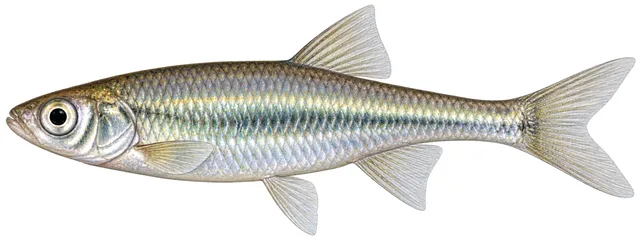
Texas Shiner

Notropis amabilis

Leuciscidae · freshwater water fish

6 minute read · Species guide

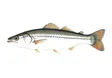
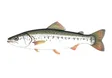
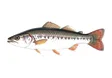
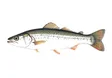
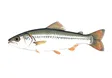
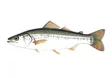
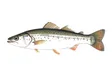
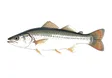
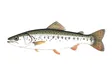
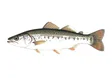
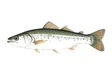
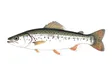
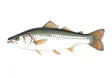
Texas Shiner field guide illustration

About Texas Shiner

The Texas shiner (Notropis amabilis) is a species of ray-finned fish in the genus Notropis. It is found in the Colorado River to Rio Grande drainage from Texas and northeastern Mexico and the Rio Salado and Rio San Juan systems in Mexico to the lower Pecos River in Texas.

Habitat associations

Macrohabitat of the Texas shiner is typically springs and headwater tributaries, where may be very common; sometimes limited number occurring in larger streams. Collections from the Blanco River (Texas) and its tributaries found N. amabilis generally associated with flowing pools, deep runs, avoiding shallow high-velocity riffles and lentic backwater areas; abundant in deep pools and silt substrates, in fall; deeper pools and runs in fall and winter. Clear waters with substrate usually sand, gravel and rubble. Often found in moderately large schools in streams with moderately fast currents; can be found in the upstream ends of pools below riffle areas, in the swiftly moving waters along gravel bars and in moderately flowing pools; commonly found in areas below lower water dams and road crossings where turbulent water flows. Where sympatric with Cyprinella lutrensis and C. venusta, N. amabilis usually selects areas having a greater current velocity than the other two species and also tends to maintain school integrity to a greater extent than do the other two species. N. amabilis is rarely found in upstream portions of tributary creeks and is common in streams with significant spring flow components. N. amabilis is dependent upon currents; most often abundant in swift water areas, often swimming near the surface in eddies created by upstream obstructions and in dense schools in swift moving water. In the Devils River, Texas, taken pre-flood in habitats intermediate between channels and pools, shifting into riffles and riffle-like habitats after the flood; study indicated species adaptation to a flood-prone existence presumably typical of a desert stream.

Spawning season

In Texas, February through September. Collection of specimens, in Texas, less than 20 mm (0.79 in) SL from mid-April to mid-December, suggests spawning begins in approximately late March and continues through approximately mid-November. In Mexico, N. amabilis evidently spawns over a protracted period from early spring into summer.

Fecundity

Oocyte diameters exhibited a trimodal distribution suggesting development of multiple cohorts throughout the spawning season. In October mature ovaries present in three of fourteen females collected; all ovaries classified as mature or resting in individuals collected in November and December. As early as January, 24% of females collected contained developing ovaries; mature ovaries first appeared in February in 17% of females; in April, 75% of females contained mature ovaries; May–July, mature ovaries found in 25-31% of females; reproduction peaked again in August and September when 86% and 71% of females, respectively, contained mature ovaries. Clutch size ranged from 102 to 286 with a mean (±SD) of 174.5 (62.2;).

Food Habits

Gut contents suggest species is an invertivore drift predator (Goldstein and Simon 1999) feeding primarily in the water column on aquatic insects. Common food items were aquatic insects (71%) and algae (61%); among aquatic insects, mayflies were most abundant (31% of insects), caddisflies (26%), flies/midges (22%), beatles (12%), and moths/butterflies (4%); terrestrial insects found in 6% of guts, comprising 5% of all insect taxa identified; sediment and detritus found in 13% of Notropis amabilis examined. In Devil's River, Texas, observed feeding near the surface. The few specimens collected contained terrestrial insects during the summer; no other information about the food habits is known.

Phylogeny and Paleobiogeography

In (Craig et al. 2017) "Texas Shiner is in the subgenus Notropis and its closest extant relatives are Rio Grande Shiner Notropis jemezanus, Sharpnose Shiner Notropis oxyrhynchus, and Emerald Shiner Notropis atherinoides (Bielawski and Gold, 2001). Although the paleobiogeography of Texas Shiner is currently unclear, a proposed pathway of speciation is that the subgenus Notropis ancestor gained access to the Pecos River from the north through historical connections with eastern flowing drainages of the Southern Great Plains during the Neogene (Conner and Suttkus, 1986) or Quaternary (Echelle and Echelle, 1978) periods. A later derived ancestor of Texas Shiner and its closest phylogenetic relative Rio Grande Shiner (Bielawski and Gold, 2001) were exchanged through Pleistocene connectivity between the Pecos River and Edwards Plateau drainages (e.g., Colorado River) and eventually the Rio Grande drainage (Echelle and Echelle, 1978). During Pleistocene interglacial climates, the ancestral form of Texas Shiner became isolated in refugia of persistent spring complexes within the Edwards Plateau drainages (Coburn, 1982)."

Population status

As of 2017, populations of the Texas Shiner are currently secure. From (Craig et al. 2017) "Populations of Texas Shiners were temporally stable or increasing in six streams or stream reaches (Bonner et al., 2005; Runyan, 2007; Perkin et al., 2010; Kollaus et al., 2015) with abundances categorized as occasional (7 to 22% in relative abundances) to frequent (30 to 37%) in 10 other streams or stream reaches among five drainages (Colorado River, Guadalupe River, San Antonio River, Nueces River, Pecos River, and Rio Grande). Texas Shiners are not reported recently in three streams or stream reaches. Lack of recent collection in the San Gabriel River (Brazos River drainage) might be attributed to extirpation events or incorrect listing of the Brazos River drainage as part of Texas Shiner's range. Historical occurrences of Texas Shiners in the Brazos River drainage are under review by others (Hendrickson and Cohen, pers. comm.). Lack of recent collection of Texas Shiners and other native fishes in urbanized Barton Creek (Colorado River drainage) is associated with instream and downstream dams and nonnative fishes (Labay et al., 2011). However, other spring-associated fishes (e.g., native Etheostoma lepidum and nonnative Astyanax mexicanus) persist in Barton Creek. Texas Shiners were reported in the upper San Antonio River, another urbanized stream reach, as recent as 2000 (Edwards et al., 2001), but specimens were not taken in 2012 to 2013 (Craig and Bonner, in review). Upper San Antonio River has long history of water quality and water quantity concerns, along with nonnative species introductions. Despite two possible extirpation events in urban streams and possibly a third in a Brazos River drainage, populations of Texas Shiner temporally persist with occasional and frequent abundances among multiple and independent streams, stream reaches, and drainages. Therefore, we conclude the conservation status of the Texas Shiner is currently secure.

Article text: Wikipedia contributors, Texas shiner (source revision). Licensed under CC BY-SA 4.0. Retrieved 2026-10-11.


Diet and feeding

The FishTraits compilation records these diet categories for this species: invertebrates or larval fish. These are broad categories, not a claim that every individual consumes every example in a category.

Reported feeding positions include bottom feeding and surface or water-column feeding. The compilation combines published observations; diets can vary with age, locality, and available food.

Habitat preferences

Reported habitat associations include medium to large rivers, streams and small rivers, creeks.

The source records associations with gravel, cobble, vegetation. An association indicates reported use, rather than an exclusive requirement.

Reproduction and parental care

The compilation reports a representative maturity age of 1 years. Its maturity field summarizes mean, median, or modal estimates, usually for females; male estimates can be used when female data are unavailable. It is not a fixed age at which every fish first breeds.

Batch or serial spawning has been reported somewhere in the species’ range. This does not establish the same spawning pattern for every population.

Recorded spawning months are Mar, Apr, May, Jun, Jul, Aug, Sep, Oct, Nov for the source’s reporting region (TX). This is a regional calendar, not a range-wide schedule.

The reproductive-guild classification includes spawning on open substrates without guarding the brood.

Size and recorded longevity

FishTraits reports a maximum total length of 7 centimetres. Some entries use an estimated asymptotic length; this value should not be treated as a certified record catch.

Recorded longevity in the compilation is 2 years. Wild observations were preferred, but captive records were accepted where wild records were unavailable, and unspecified records were assumed wild. The value is not a guaranteed wild lifespan or an aquarium life expectancy.

Range

Where it lives

Share of 2,639 GBIF observation records with a state location, across 10 states. The orange dots are USGS stream-survey sites where this species was caught.
0%
99.3%
Share of 2,639 GBIF observation records with a state location, across 10 states. The orange dots are USGS stream-survey sites where this species was caught.

A blank area on the dot layer usually means nobody sampled there, not that the fish is absent. Turn on “every survey site” to see where the survey looked.

The USGS stream survey caught it at 38 of its sites, in 1 state. That survey and the GBIF records are two different counts of two different things, so the site keeps them apart.

Habitat

Water and movement

Water
WoRMS records this species in fresh water.
USGS NAS habitat
Freshwater
US status
Native transplant — native to part of the United States, moved to other waters inside it.
Migration
Undetermined

Classification

Taxonomy

Kingdom
Animalia
Phylum
Chordata
Superclass
Actinopterygii
Class
Teleostei
Order
Cypriniformes
Genus
Notropis
Species
Notropis amabilis
ITIS TSN
163410
WoRMS AphiaID
1019845
GBIF key
2362227
Outside the US
ITIS also files it in Mexico.

Common questions about Texas Shiner

What is the scientific name of Texas Shiner?
The scientific name is Notropis amabilis, in the family Leuciscidae. Classification follows ITIS.
Does Texas Shiner live in fresh water or salt water?
WoRMS records this species in fresh water.
Where has Texas Shiner been recorded in the United States?
GBIF has observations in 10 states, with the most records in Texas, Louisiana, New Mexico. The map shows observation records, which do not establish the complete natural range.

Closest relatives

Other Notropis species

Arkansas River Shiner5 states
Notropis girardiLeuciscidaeNative and introducedFresh
Bedrock Shiner3 states
Notropis rupestrisLeuciscidaeNativeFresh
Bigeye Shiner17 states
Notropis boopsLeuciscidaeNative and introducedFresh
Bigmouth Shiner21 states
Notropis dorsalisLeuciscidaeNative and introducedFresh
Blackchin Shiner13 states
Notropis heterodonLeuciscidaeNativeFresh
Blackmouth Shiner3 states
Notropis melanostomusLeuciscidaeNativeFresh
Blacknose Shiner21 states
Notropis heterolepisLeuciscidaeNative and introducedFresh
Blackspot Shiner5 states
Notropis atrocaudalisLeuciscidaeNativeFresh
Bluntnose Shiner3 states
Notropis simusLeuciscidaeNativeFresh
Bridle Shiner22 states
Notropis bifrenatusLeuciscidaeNativeFresh
Burrhead Shiner3 states
Notropis asperifronsLeuciscidaeNativeFresh
Cahaba Shiner1 states
Notropis cahabaeLeuciscidaeNativeFresh
Cape Fear Shiner1 states
Notropis mekistocholasLeuciscidaeNativeFresh
Carmine Shiner16 states
Notropis percobromusLeuciscidaeNativeFresh
Channel Shiner15 states
Notropis wickliffiLeuciscidaeNativeFresh
Chihuahua Shiner1 states
Notropis chihuahuaLeuciscidaeNative and introducedFresh
Chub Shiner4 states
Notropis potteriLeuciscidaeNative and introducedFresh
Coastal Shiner8 states
Notropis petersoniLeuciscidaeNativeFresh
Comely Shiner11 states
Notropis amoenusLeuciscidaeNative and introducedFresh
Coosa Shiner9 states
Notropis xaenocephalusLeuciscidaeNative and introducedFresh
Dusky Shiner6 states
Notropis cummingsaeLeuciscidaeNativeFresh
Emerald Shiner35 states
Notropis atherinoidesLeuciscidaeNative and introducedFresh
Fluvial Shiner3 states
Notropis edwardraneyiLeuciscidaeNativeFresh
Ghost Shiner16 states
Notropis buchananiLeuciscidaeNative and introducedFresh

Same family

More Leuciscidae

Alabama Shiner4 states
Cyprinella callistiaLeuciscidaeNativeFresh
Allegheny Pearl Dace19 states
Margariscus margaritaLeuciscidaeNative and introducedFresh
Altamaha Shiner1 states
Cyprinella xaenuraLeuciscidaeNativeFresh
Alvord Chub2 states
Siphateles alvordensisLeuciscidaeNativeFresh
Apalachee Shiner3 states
Pteronotropis grandipinnisLeuciscidaeNativeFresh
Arkansas River Shiner5 states
Notropis girardiLeuciscidaeNative and introducedFresh
Arroyo Chub1 states
Gila orcuttiiLeuciscidaeNative and introducedFresh
Bandfin Shiner5 states
Luxilus zonistiusLeuciscidaeNative and introducedFresh
Bannerfin Shiner5 states
Cyprinella leedsiLeuciscidaeNativeFresh
Beautiful Shiner3 states
Cyprinella formosaLeuciscidaeNativeFresh
Bedrock Shiner3 states
Notropis rupestrisLeuciscidaeNativeFresh
Bigeye Chub25 states
Hybopsis amblopsLeuciscidaeNative and introducedFresh
Bigeye Shiner17 states
Notropis boopsLeuciscidaeNative and introducedFresh
Bigmouth Chub3 states
Nocomis platyrhynchusLeuciscidaeNativeFresh
Bigmouth Shiner21 states
Notropis dorsalisLeuciscidaeNative and introducedFresh
Blackchin Shiner13 states
Notropis heterodonLeuciscidaeNativeFresh
Blackmouth Shiner3 states
Notropis melanostomusLeuciscidaeNativeFresh
Blacknose Shiner21 states
Notropis heterolepisLeuciscidaeNative and introducedFresh
Blackside Dace2 states
Chrosomus cumberlandensisLeuciscidaeNativeFresh
Blackspot Shiner5 states
Notropis atrocaudalisLeuciscidaeNativeFresh
Blacktail Shiner14 states
Cyprinella venustaLeuciscidaeNative and introducedFresh
Blacktip Shiner4 states
Lythrurus atrapiculusLeuciscidaeNative and introducedFresh
Bleeding Shiner8 states
Luxilus zonatusLeuciscidaeNativeFresh
Blotched Chub6 states
Erimystax insignisLeuciscidaeNativeFresh

All 267 species in Leuciscidae