Redlip Shiner

Notropis chiliticus

Leuciscidae · freshwater water fish

5 minute read · Species guide

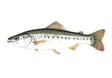
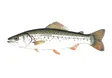
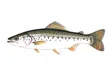
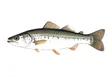
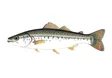
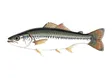
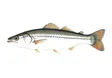
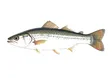
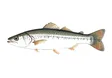
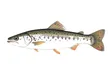
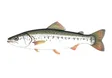
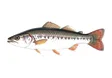
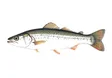
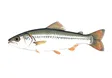
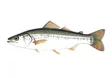
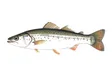
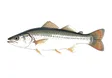
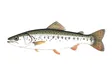
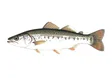
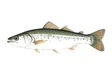
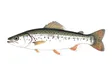
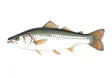
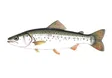
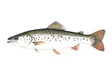
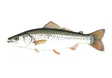
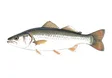
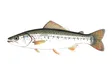
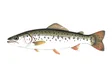
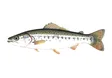
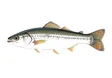
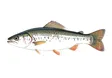
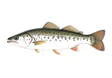
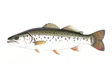
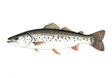
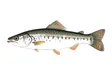
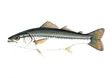
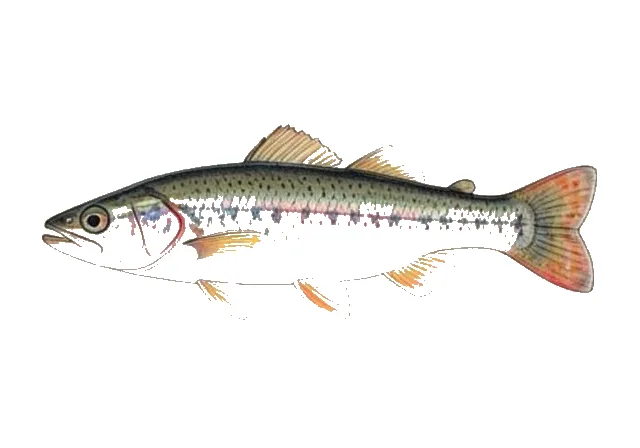
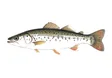
Redlip Shiner field guide illustration

About Redlip Shiner

The redlip shiner (Hydrophlox chiliticus) is a species of freshwater ray-finned fishes belonging to the family Leuciscidae, the shiners, daces and minnows. This shiner can be found in a few streams located in North Carolina, South Carolina, and Virginia. It inhabits rocky pools of clear headwaters, creeks and small rivers. Adults range in length from 40 to 55 mm (1.6 to 2.2 in).

Description

The redlip shiner is characterized by bright red lips with a similar coloration in the dorsal, anal, and caudal fins. The body is slender and compressed, with the dorsal fin origin slightly behind pelvic fin origin. The muzzle is acuminate and greater than the interorbital width. The maxillary extends beyond anterior rim of orbit and the premaxillaries are opposite of the middle of the pupil. They have large eyes and a slightly subterminal mouth. The pharyngeal tooth count for the redlip shiner is 2, 4-4, 2. The length of the body, not including the caudal fin, is four times the length of the head and five and a half times the body depth. These shiners have around 34-37 lateral scales and seven rows of scales between the base of the dorsal fin and lateral line. There is also an average of 14-18 scales before the dorsal fin. The lateral line is strongly decurved and a thin golden band is present along its upper margin. A wider and silver band, located along the flank, stretches from the head and ends at a dark caudal spot. N. chiliticus usually have eight or nine anal rays.

An olivaceous color is dominant in redlip shiners, along with scattered black blotches on the side of the body. Mature males become very colorful during breeding season. They obtain a scarlet-red color in their eyes and on their underbelly, while their heads become a bright yellow-gold. Males' fins also become a bright yellow-gold color and the red of their lips seems more pronounced during this time.

Habitat and distribution

The redlip shiner occupies flowing pools of clear headwaters, creeks, and small rivers of the Piedmont and Appalachian Mountains. It is believed to be established in the New River drainage and Cape Fear drainage in North Carolina and Virginia. This shiner has a very limited distribution in South Carolina, which is the southernmost extreme portion of its range. It is thought that Notropis chiliticus, along with several other Notropis species, might have been introduced in areas such as the PeeDee drainage. Though this is a possibility, the historical absence of redlip shiners in these areas may be due to inadequate sampling.

N. chiliticus prefers cold to cool water temperatures and areas with sand-gravel or rubble bottom.

Behavior and reproduction

The redlip shiner breeds at 53 to 62 °F (12 to 17 °C). Males will aggregate over nests of Nocomis leptocephalus. The female initiates spawning by swimming over a nest until she is pursued. The nest is built in small pits and once the male drives the female to the nest, clasping occurs. Near these functional nests are artificial nests that are not used by the fish. This suggests that the presence of live Nocomis leptocephalus is attractive to N. chiliticus. This behavior towards Nocomis has also been observed in other species of Notropis. Redlip shiners reach maturity in 1 to 2 years and spawn around the month of May.

N. chiliticus are often found in groups of a dozen or more in the middle of the water column. They are often mixed with Luxilus cerasinus and other minnows.

Article text: Wikipedia contributors, Redlip shiner (source revision). Licensed under CC BY-SA 4.0. Retrieved 2026-10-12.
Diet and feeding

The FishTraits compilation records these diet categories for this species: algae or phytoplankton; detritus or unidentified plant material; invertebrates or larval fish. These are broad categories, not a claim that every individual consumes every example in a category.
Reported feeding positions include bottom feeding and surface or water-column feeding. The compilation combines published observations; diets can vary with age, locality, and available food.

Habitat preferences

Reported habitat associations include streams and small rivers, creeks.

The source records associations with gravel, cobble. An association indicates reported use, rather than an exclusive requirement.

Reproduction and parental care

The compilation reports a representative maturity age of 1 years. Its maturity field summarizes mean, median, or modal estimates, usually for females; male estimates can be used when female data are unavailable. It is not a fixed age at which every fish first breeds.

Recorded spawning months are Apr, May, Jun for the source’s reporting region (VA). This is a regional calendar, not a range-wide schedule.

Size and recorded longevity

FishTraits reports a maximum total length of 6 centimetres. Some entries use an estimated asymptotic length; this value should not be treated as a certified record catch.

Native range

Dan River (Roanoke River drainage) and Peedee River drainages, Virginia and North Carolina (Page and Burr 1991).

Introduction history

Possible bait bucket releases. Richardson and Carnes (1964, in Jenkins and Burkhead 1994) speculated that it probably was introduced into the Little River system by bait fishermen. It was first discovered in the Little River system in 1963 (Richardson and Carnes 1964); in Big Chestnut Creek, Virginia, in 1976; and in the Deep River system, North Carolina, in 1985 (Jenkins and Burkhead 1994).

Ecological impacts

In the Dutchmans Creek subbasin of the Catawba River (Lincoln & Gaston Counties, NC) N. chiliticus hybridizes profusely with N. chlorocephalus. Limited sampling during the 90's, reported hybrids as abundant and "pure" chlorocephalus (based on appearance) as uncommon (Gerald Potten, personal communication). Some of these hybrids were nearly indistinguishable from N. lutipinnis, which (supposedly) doesn't occur in the Catawba River

Range

Where it lives

Share of 945 GBIF observation records with a state location, across 3 states. The orange dots are USGS stream-survey sites where this species was caught.
0%
92.5%
Share of 945 GBIF observation records with a state location, across 3 states. The orange dots are USGS stream-survey sites where this species was caught.

A blank area on the dot layer usually means nobody sampled there, not that the fish is absent. Turn on “every survey site” to see where the survey looked.

The USGS stream survey caught it at 201 of its sites, in 2 states. That survey and the GBIF records are two different counts of two different things, so the site keeps them apart.

Habitat

Water and movement

Water
WoRMS records this species in fresh water.
USGS NAS habitat
Freshwater
US status
Native transplant — native to part of the United States, moved to other waters inside it.
Migration
Undetermined

Classification

Taxonomy

Kingdom
Animalia
Phylum
Chordata
Superclass
Actinopterygii
Class
Teleostei
Order
Cypriniformes
Genus
Notropis
Species
Notropis chiliticus
ITIS TSN
163435
WoRMS AphiaID
1020630
GBIF key
2362267

Common questions about Redlip Shiner

What is the scientific name of Redlip Shiner?
The scientific name is Notropis chiliticus, in the family Leuciscidae. Classification follows ITIS.
Does Redlip Shiner live in fresh water or salt water?
WoRMS records this species in fresh water.
Where has Redlip Shiner been recorded in the United States?
GBIF has observations in 3 states, with the most records in North Carolina, Virginia, South Carolina. The map shows observation records, which do not establish the complete natural range.

Closest relatives

Other Notropis species

Arkansas River Shiner5 states
Notropis girardiLeuciscidaeNative and introducedFresh
Bedrock Shiner3 states
Notropis rupestrisLeuciscidaeNativeFresh
Bigeye Shiner17 states
Notropis boopsLeuciscidaeNative and introducedFresh
Bigmouth Shiner21 states
Notropis dorsalisLeuciscidaeNative and introducedFresh
Blackchin Shiner13 states
Notropis heterodonLeuciscidaeNativeFresh
Blackmouth Shiner3 states
Notropis melanostomusLeuciscidaeNativeFresh
Blacknose Shiner21 states
Notropis heterolepisLeuciscidaeNative and introducedFresh
Blackspot Shiner5 states
Notropis atrocaudalisLeuciscidaeNativeFresh
Bluntnose Shiner3 states
Notropis simusLeuciscidaeNativeFresh
Bridle Shiner22 states
Notropis bifrenatusLeuciscidaeNativeFresh
Burrhead Shiner3 states
Notropis asperifronsLeuciscidaeNativeFresh
Cahaba Shiner1 states
Notropis cahabaeLeuciscidaeNativeFresh
Cape Fear Shiner1 states
Notropis mekistocholasLeuciscidaeNativeFresh
Carmine Shiner16 states
Notropis percobromusLeuciscidaeNativeFresh
Channel Shiner15 states
Notropis wickliffiLeuciscidaeNativeFresh
Chihuahua Shiner1 states
Notropis chihuahuaLeuciscidaeNative and introducedFresh
Chub Shiner4 states
Notropis potteriLeuciscidaeNative and introducedFresh
Coastal Shiner8 states
Notropis petersoniLeuciscidaeNativeFresh
Comely Shiner11 states
Notropis amoenusLeuciscidaeNative and introducedFresh
Coosa Shiner9 states
Notropis xaenocephalusLeuciscidaeNative and introducedFresh
Dusky Shiner6 states
Notropis cummingsaeLeuciscidaeNativeFresh
Emerald Shiner35 states
Notropis atherinoidesLeuciscidaeNative and introducedFresh
Fluvial Shiner3 states
Notropis edwardraneyiLeuciscidaeNativeFresh
Ghost Shiner16 states
Notropis buchananiLeuciscidaeNative and introducedFresh

Same family

More Leuciscidae

Alabama Shiner4 states
Cyprinella callistiaLeuciscidaeNativeFresh
Allegheny Pearl Dace19 states
Margariscus margaritaLeuciscidaeNative and introducedFresh
Altamaha Shiner1 states
Cyprinella xaenuraLeuciscidaeNativeFresh
Alvord Chub2 states
Siphateles alvordensisLeuciscidaeNativeFresh
Apalachee Shiner3 states
Pteronotropis grandipinnisLeuciscidaeNativeFresh
Arkansas River Shiner5 states
Notropis girardiLeuciscidaeNative and introducedFresh
Arroyo Chub1 states
Gila orcuttiiLeuciscidaeNative and introducedFresh
Bandfin Shiner5 states
Luxilus zonistiusLeuciscidaeNative and introducedFresh
Bannerfin Shiner5 states
Cyprinella leedsiLeuciscidaeNativeFresh
Beautiful Shiner3 states
Cyprinella formosaLeuciscidaeNativeFresh
Bedrock Shiner3 states
Notropis rupestrisLeuciscidaeNativeFresh
Bigeye Chub25 states
Hybopsis amblopsLeuciscidaeNative and introducedFresh
Bigeye Shiner17 states
Notropis boopsLeuciscidaeNative and introducedFresh
Bigmouth Chub3 states
Nocomis platyrhynchusLeuciscidaeNativeFresh
Bigmouth Shiner21 states
Notropis dorsalisLeuciscidaeNative and introducedFresh
Blackchin Shiner13 states
Notropis heterodonLeuciscidaeNativeFresh
Blackmouth Shiner3 states
Notropis melanostomusLeuciscidaeNativeFresh
Blacknose Shiner21 states
Notropis heterolepisLeuciscidaeNative and introducedFresh
Blackside Dace2 states
Chrosomus cumberlandensisLeuciscidaeNativeFresh
Blackspot Shiner5 states
Notropis atrocaudalisLeuciscidaeNativeFresh
Blacktail Shiner14 states
Cyprinella venustaLeuciscidaeNative and introducedFresh
Blacktip Shiner4 states
Lythrurus atrapiculusLeuciscidaeNative and introducedFresh
Bleeding Shiner8 states
Luxilus zonatusLeuciscidaeNativeFresh
Blotched Chub6 states
Erimystax insignisLeuciscidaeNativeFresh

All 267 species in Leuciscidae