Rainbow Shiner

Notropis chrosomus

Leuciscidae · freshwater water fish

6 minute read · Species guide

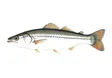
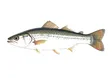
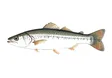
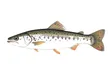
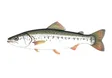
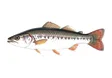
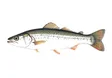
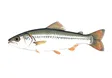
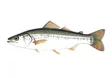
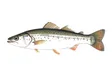
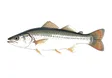
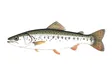
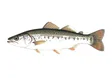
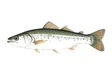
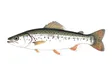
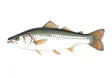
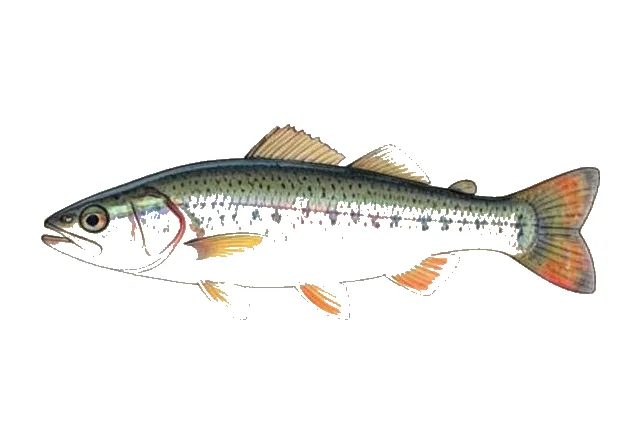
Rainbow Shiner field guide illustration

About Rainbow Shiner

The rainbow shiner (Hydrophlox chrosomus) is a species of freshwater ray-finned fishes belonging to the family Leuciscidae, the shiners, daces and minnows. This fish is found in North America.

The rainbow shiner has a length of 5 to 8 centimetres (2.0 to 3.1 in). It has translucent color from pink to golden with a silver-black stripe along its flanks. The base of its fins are of a reddish color. Adult males change their color during the mating period. Their ventral fins become blue, their head turns purple and their nose turns red.

The rainbow shiner was originally endemic to the Mobile River system, where it can be found in small clear rivers of drainage areas of the Alabama, Coosa and Black Warrior rivers in particular. Now it also appears in some rivers in Tennessee and is a popular pet fish for aquariums and ponds.

Introduction

This species of fish is usually found in small streams along river drainages of Northwest Georgia, Northeastern Alabama, and as more recent research suggests, southwest Tennessee. H. chrosomus is a freshwater, benthopelagic fish that inhabits riffles and pools with gravelly bottoms in creeks and small rivers and are usually found accompanied by species of Campostoma. They are mainly insectivorous and although studies show the predominant prey of H. chrosomus come from the family Chironomidae, they are found to be more opportunistic feeders and are not very selective. The maximum age is typically two years for both sexes and sexual maturity occurs at one year of age. H. chrosomus increase their food intake during the late winter and spring months before spawning in order to meet the increased energy needs for gamete production and sexual reproduction. Hybridization has been observed between Alburnops baileyi and H. chrosomus in areas where H. chiliticus populations have been introduced. There is limited information available pertaining to the current and past management of H. chrosomus. What is known, is that this species was once endemic to parts of northern Alabama and populations have spread further north to Tennessee within recent decades. The latitudinal movement northward may be of particular interest to researchers since H. chrosomus favors warmer waters.

Geographic distribution

The native range of the rainbow shiner consists of the Mobile Bay basin, including the Coosa, Cahaba, and Alabama River drainages. This species is known from, and was possibly introduced into the Black Warrior River system. These reports however, have been questioned recently based on the fact that this species is typically found in streams with limestone outcrops in the watershed. H. chrosomus is found along the southeast edge of the Black Warrior River system consisting of streams that have headwaters in limestone formations. H. chrosomus is also known from, and may have been introduced into, tributaries of the Tennessee River, including Town Creek in northern Alabama and the South Chickamauga Creek system in north Georgia. The means of their introduction is unknown but it is hypothesized that it was by bait bucket release.

Ecology

Hydrophlox chrosomus is typically found in small, low-turbidity headwater streams flowing over gravelly and sandy riffles and pools but can also be found in springs and small, clear streams. H. chrosomus inhabit freshwater benthopelagic habitats in temperate waters. It is typical that rainbow shiners co-occur with Fundulus stellifer (also considered to have been introduced by recent accidental bait bucket introductions) in small streams. H. chrosomus are considered opportunistic insectivores. Over 80% of food items preyed on are invertebrates, the bulk of which are aquatic and terrestrial insects. Studies show gut contents largely consisting largely of Chironomidae larvae, unidentified insect parts, unidentified Diptera adults, and Collembola.

Hydrophlox chrosomus is considered a disturbance sensitive species, however, their percent occurrence in the Upper Cahaba River (an area recently plagued with urban construction and habitat disturbance) has nearly doubled. Populations increased from 6.5% in 1983 to 12.5% in 1995 as opposed to other disturbance-sensitive species also found in the Upper Cahaba River such as Cyprinella callistia, Etheostoma jordani, and Percina brevicauda whose populations significantly decreased within the same time span.

Life history

In a study of a wild population in Moore Creek in northern Georgia, rainbow shiners reached sexual maturity at approximately one year of age. The oldest individuals examined were approximately two years old, with maximum estimated ages of 23 months for males and 25 months for females. Growth in both length and weight increases during spring with adults reaching 1.6 to 2.4 inches (41 to 61 mm) in length. Spawning occurs in 16–25 °C (61–77 °F) waters in late spring/early summer. Rainbow shiners are nest-associating minnows that spawn in nests constructed by other species. Spawning aggregations have been observed over pit nests of largescale stonerollers (Campostoma oligolepis) and gravel-mound nests of bluehead chubs (Nocomis leptocephalus). Rainbow shiners increase food intake during late winter and early spring, coinciding with increased growth before the spawning season and preceding the increased energy requirements of gamete production and courtship behaviors.

Current management

Currently, H. chrosomus is a species of relatively low conservation concern and does not require significant additional protection or management, monitoring or research action. However, a detailed recovery plan for the Mobile River Basin aquatic ecosystem, to which H. chrosomus is native, is underway. The plan was created by the U. S. Fish and Wildlife Service and aims to protect the Basin's native aquatic fauna and flora through aquatic ecosystem management. The decline of many other aquatic species within the Basin is a result of increasing human populations, modifications to meet their needs, and impacts of current land use. Human populations and their associated needs for housing, recreation, and agricultural products is projected to increase within the Basin. The recovery plan therefore seeks to emphasize stewardship responsibilities shared by all inhabitants of the Basin by promoting three basic tenets:

By seeking to improve habitat conditions within the Basin, it is likely that populations of H. chrosomus will continue to remain stable or increase with these improvements.

Article text: Wikipedia contributors, Rainbow shiner (source revision). Licensed under CC BY-SA 4.0. Retrieved 2026-10-12.


Diet and feeding

The FishTraits compilation records these diet categories for this species: algae or phytoplankton; invertebrates or larval fish. These are broad categories, not a claim that every individual consumes every example in a category.

Reported feeding positions include bottom feeding and surface or water-column feeding. The compilation combines published observations; diets can vary with age, locality, and available food.

Habitat preferences

Reported habitat associations include streams and small rivers, creeks, springs or subterranean waters.

The source records associations with clay or silt, sand, gravel. An association indicates reported use, rather than an exclusive requirement.

Reproduction and parental care

The compilation reports a representative maturity age of 1 years. Its maturity field summarizes mean, median, or modal estimates, usually for females; male estimates can be used when female data are unavailable. It is not a fixed age at which every fish first breeds.

Batch or serial spawning has been reported somewhere in the species’ range. This does not establish the same spawning pattern for every population.

Recorded spawning months are Apr, May, Jun for the source’s reporting region (TN). This is a regional calendar, not a range-wide schedule.

The reproductive-guild classification includes hiding a brood without subsequent guarding.

Size and recorded longevity

FishTraits reports a maximum total length of 8.1 centimetres. Some entries use an estimated asymptotic length; this value should not be treated as a certified record catch.

Recorded longevity in the compilation is 2 years. Wild observations were preferred, but captive records were accepted where wild records were unavailable, and unspecified records were assumed wild. The value is not a guaranteed wild lifespan or an aquarium life expectancy.

Native range

Mobile Bay basin, including the Coosa, Cahaba and Alabama river drainages, and possibly the upper Black Warrior River system (Lee et al. 1980 et seq.; Page and Burr 1991).

Introduction history

Unknown; possible bait bucket release (Starnes and Etnier 1986).

Range

Where it lives

Share of 531 GBIF observation records with a state location, across 3 states. The orange dots are USGS stream-survey sites where this species was caught.
0%
58.8%
Share of 531 GBIF observation records with a state location, across 3 states. The orange dots are USGS stream-survey sites where this species was caught.

A blank area on the dot layer usually means nobody sampled there, not that the fish is absent. Turn on “every survey site” to see where the survey looked.

Share of records by state

The USGS stream survey caught it at 20 of its sites, in 3 states. That survey and the GBIF records are two different counts of two different things, so the site keeps them apart.

Habitat

Water and movement

Water
WoRMS records this species in fresh water.
USGS NAS habitat
Freshwater
US status
Native transplant — native to part of the United States, moved to other waters inside it.
Migration
Undetermined

Classification

Taxonomy

Kingdom
Animalia
Phylum
Chordata
Superclass
Actinopterygii
Class
Teleostei
Order
Cypriniformes
Genus
Notropis
Species
Notropis chrosomus
ITIS TSN
163437
WoRMS AphiaID
1020251
GBIF key
2362339

Common questions about Rainbow Shiner

What is the scientific name of Rainbow Shiner?
The scientific name is Notropis chrosomus, in the family Leuciscidae. Classification follows ITIS.
Does Rainbow Shiner live in fresh water or salt water?
WoRMS records this species in fresh water.
Where has Rainbow Shiner been recorded in the United States?
GBIF has observations in 3 states, with the most records in Alabama, Georgia, Tennessee. The map shows observation records, which do not establish the complete natural range.

Closest relatives

Other Notropis species

Arkansas River Shiner5 states
Notropis girardiLeuciscidaeNative and introducedFresh
Bedrock Shiner3 states
Notropis rupestrisLeuciscidaeNativeFresh
Bigeye Shiner17 states
Notropis boopsLeuciscidaeNative and introducedFresh
Bigmouth Shiner21 states
Notropis dorsalisLeuciscidaeNative and introducedFresh
Blackchin Shiner13 states
Notropis heterodonLeuciscidaeNativeFresh
Blackmouth Shiner3 states
Notropis melanostomusLeuciscidaeNativeFresh
Blacknose Shiner21 states
Notropis heterolepisLeuciscidaeNative and introducedFresh
Blackspot Shiner5 states
Notropis atrocaudalisLeuciscidaeNativeFresh
Bluntnose Shiner3 states
Notropis simusLeuciscidaeNativeFresh
Bridle Shiner22 states
Notropis bifrenatusLeuciscidaeNativeFresh
Burrhead Shiner3 states
Notropis asperifronsLeuciscidaeNativeFresh
Cahaba Shiner1 states
Notropis cahabaeLeuciscidaeNativeFresh
Cape Fear Shiner1 states
Notropis mekistocholasLeuciscidaeNativeFresh
Carmine Shiner16 states
Notropis percobromusLeuciscidaeNativeFresh
Channel Shiner15 states
Notropis wickliffiLeuciscidaeNativeFresh
Chihuahua Shiner1 states
Notropis chihuahuaLeuciscidaeNative and introducedFresh
Chub Shiner4 states
Notropis potteriLeuciscidaeNative and introducedFresh
Coastal Shiner8 states
Notropis petersoniLeuciscidaeNativeFresh
Comely Shiner11 states
Notropis amoenusLeuciscidaeNative and introducedFresh
Coosa Shiner9 states
Notropis xaenocephalusLeuciscidaeNative and introducedFresh
Dusky Shiner6 states
Notropis cummingsaeLeuciscidaeNativeFresh
Emerald Shiner35 states
Notropis atherinoidesLeuciscidaeNative and introducedFresh
Fluvial Shiner3 states
Notropis edwardraneyiLeuciscidaeNativeFresh
Ghost Shiner16 states
Notropis buchananiLeuciscidaeNative and introducedFresh

Same family

More Leuciscidae

Alabama Shiner4 states
Cyprinella callistiaLeuciscidaeNativeFresh
Allegheny Pearl Dace19 states
Margariscus margaritaLeuciscidaeNative and introducedFresh
Altamaha Shiner1 states
Cyprinella xaenuraLeuciscidaeNativeFresh
Alvord Chub2 states
Siphateles alvordensisLeuciscidaeNativeFresh
Apalachee Shiner3 states
Pteronotropis grandipinnisLeuciscidaeNativeFresh
Arkansas River Shiner5 states
Notropis girardiLeuciscidaeNative and introducedFresh
Arroyo Chub1 states
Gila orcuttiiLeuciscidaeNative and introducedFresh
Bandfin Shiner5 states
Luxilus zonistiusLeuciscidaeNative and introducedFresh
Bannerfin Shiner5 states
Cyprinella leedsiLeuciscidaeNativeFresh
Beautiful Shiner3 states
Cyprinella formosaLeuciscidaeNativeFresh
Bedrock Shiner3 states
Notropis rupestrisLeuciscidaeNativeFresh
Bigeye Chub25 states
Hybopsis amblopsLeuciscidaeNative and introducedFresh
Bigeye Shiner17 states
Notropis boopsLeuciscidaeNative and introducedFresh
Bigmouth Chub3 states
Nocomis platyrhynchusLeuciscidaeNativeFresh
Bigmouth Shiner21 states
Notropis dorsalisLeuciscidaeNative and introducedFresh
Blackchin Shiner13 states
Notropis heterodonLeuciscidaeNativeFresh
Blackmouth Shiner3 states
Notropis melanostomusLeuciscidaeNativeFresh
Blacknose Shiner21 states
Notropis heterolepisLeuciscidaeNative and introducedFresh
Blackside Dace2 states
Chrosomus cumberlandensisLeuciscidaeNativeFresh
Blackspot Shiner5 states
Notropis atrocaudalisLeuciscidaeNativeFresh
Blacktail Shiner14 states
Cyprinella venustaLeuciscidaeNative and introducedFresh
Blacktip Shiner4 states
Lythrurus atrapiculusLeuciscidaeNative and introducedFresh
Bleeding Shiner8 states
Luxilus zonatusLeuciscidaeNativeFresh
Blotched Chub6 states
Erimystax insignisLeuciscidaeNativeFresh

All 267 species in Leuciscidae