Popeye Shiner

Notropis ariommus

Leuciscidae · freshwater water fish

4 minute read · Species guide

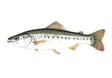
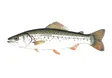
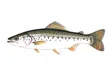
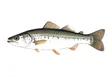
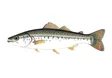
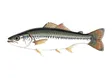
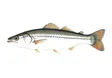
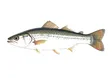
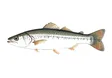
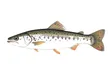
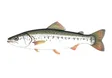
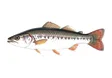
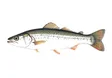
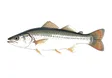
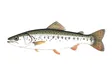
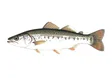
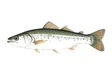
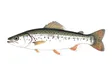
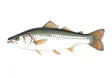
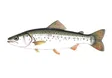
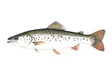
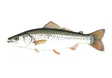
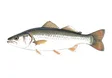
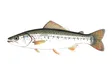
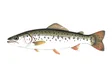
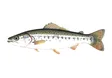
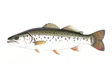
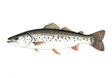
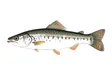
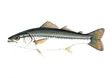
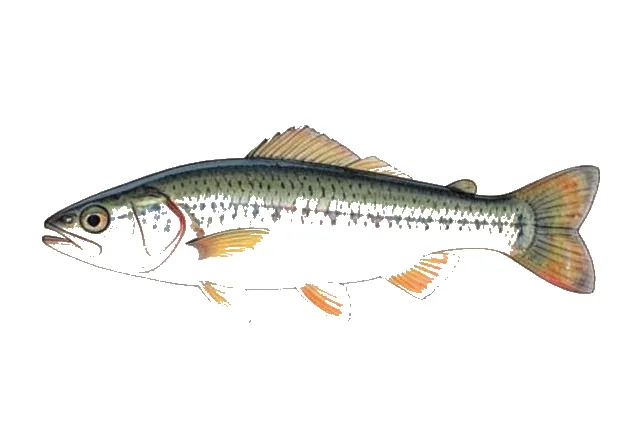
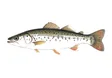
Popeye Shiner field guide illustration

About Popeye Shiner

The popeye shiner (Notropis ariommus) is a species of freshwater ray-finned fish belonging to the family Leuciscidae, the shiners, daces and minnows. This species is found in the United States.

Geographic distribution

The popeye shiner is native to the United States, particularly the Ohio River basin and the Tennessee River drainage, spanning the states of Alabama, Georgia, Indiana, Kentucky, Ohio, Pennsylvania, Tennessee, and West Virginia. Specific locations include the Tennessee River in Alabama and Georgia; the Wabash River in Indiana; and the Cheat River, Kanawha River (non-native), and New River in West Virginia. Between 1894 and 1949, only three specimens had been definitively identified. Later, however, the number of Popeye shiners began to increase, even in places that had been well documented previously and showed no trace of the Popeye shiner.

Ecology

Popeye shiners are freshwater insectivores. They consume aquatic insects, including midges, caddisflies, mayflies, and beetles. These benthopelagic fish are found in temperate waters, particularly large creeks and small rivers that are extremely clear and have gravel bottoms. The bodies of water in which they are found also tend to have slow to moderate flow.

It is precisely the water flow and preferred clarity of water that makes survival difficult. Since the popeye shiner lives in pristine clear water, any contamination may adversely affect this property and subsequently diminish the ability of these fish to thrive. Industrialization may lead to sedimentation as well as siltation due to increased runoff as a result of agricultural practices. Over time, the erosion will create an unsuitable habitat for the popeye shiner, and species abundance will decrease. Another source of habitat destruction includes pollution. Based on the size of the streams the popeye shiner inhabits, it has likely been exposed to more of these negative impacts than other fish.

Similarly, the rate at which these bodies of water flow is in jeopardy. Popeye shiners inhabit slowly or moderately flowing rivers or creeks. The industrial practice of building dams may result in a modification of the flow, and, like increased siltation, transform rivers into unsuitable habitats for the popeye shiner.

Life history

The minnows spawn in the spring or summer. Other aspects of their life history are relatively unknown.

Current management

Popeye shiners are listed as endangered by Georgia and Ohio, and extirpated in Indiana. This could potentially be due to destruction of their preferred habitat, as industrialization (i.e. logging, damming, strip mining) continues, although a better culprit may be due to the influx of invasive species.

Very little is being done to manage the Popeye shiner. A major threat to these fish is an influx of exotic fish species. In Indiana, an influx of three species of Asian carp — grass carp (Ctenopharyngodon idella), bighead carp (Hypothalmichthys nobilis), and silver carp (Hypothalmichthys molitrix)—likely contributed to the total extirpation of the Popeye shiner.

Ohio has a program that strives to protect and restore stream habitats of native species that are endangered or threatened in some way. This program is known as the Division of Wildlife's Stream Conservation Program. The intent of this program is to assess and record the number of species deemed "Species of Greatest Conservation Need".

Article text: Wikipedia contributors, Popeye shiner (source revision). Licensed under CC BY-SA 4.0. Retrieved 2026-10-11.
Diet and feeding

The FishTraits compilation records these diet categories for this species: invertebrates or larval fish. These are broad categories, not a claim that every individual consumes every example in a category.
Reported feeding positions include bottom feeding and surface or water-column feeding. The compilation combines published observations; diets can vary with age, locality, and available food.

Habitat preferences

Reported habitat associations include medium to large rivers, streams and small rivers.

The source records associations with gravel, cobble, boulders, bedrock. An association indicates reported use, rather than an exclusive requirement.

Reproduction and parental care

The compilation reports a representative maturity age of 1 years. Its maturity field summarizes mean, median, or modal estimates, usually for females; male estimates can be used when female data are unavailable. It is not a fixed age at which every fish first breeds.

Recorded spawning months are May, Jun for the source’s reporting region (VA). This is a regional calendar, not a range-wide schedule.

The reproductive-guild classification includes spawning on open substrates without guarding the brood.

Size and recorded longevity

FishTraits reports a maximum total length of 9.5 centimetres. Some entries use an estimated asymptotic length; this value should not be treated as a certified record catch.

Recorded longevity in the compilation is 2.5 years. Wild observations were preferred, but captive records were accepted where wild records were unavailable, and unspecified records were assumed wild. The value is not a guaranteed wild lifespan or an aquarium life expectancy.

Native range

Ohio River basin from Pennsylvania to Indiana and south to Tennessee River drainage, Georgia and Alabama. One record from Maumee River (Lake Erie drainage), Ohio; population now extirpated (Page and Burr 1991).

Introduction history

Unknown; possible bait bucket release.

Range

Where it lives

Share of 443 GBIF observation records with a state location, across 12 states. The orange dots are USGS stream-survey sites where this species was caught.
0%
36.6%
Share of 443 GBIF observation records with a state location, across 12 states. The orange dots are USGS stream-survey sites where this species was caught.

A blank area on the dot layer usually means nobody sampled there, not that the fish is absent. Turn on “every survey site” to see where the survey looked.

The USGS stream survey caught it at 33 of its sites, in 5 states. That survey and the GBIF records are two different counts of two different things, so the site keeps them apart.

Habitat

Water and movement

Water
WoRMS records this species in fresh water.
USGS NAS habitat
Freshwater
US status
Native transplant — native to part of the United States, moved to other waters inside it.
Migration
Undetermined

Classification

Taxonomy

Kingdom
Animalia
Phylum
Chordata
Superclass
Actinopterygii
Class
Teleostei
Order
Cypriniformes
Genus
Notropis
Species
Notropis ariommus
ITIS TSN
163425
WoRMS AphiaID
1421075
GBIF key
2362337

Common questions about Popeye Shiner

What is the scientific name of Popeye Shiner?
The scientific name is Notropis ariommus, in the family Leuciscidae. Classification follows ITIS.
Does Popeye Shiner live in fresh water or salt water?
WoRMS records this species in fresh water.
Where has Popeye Shiner been recorded in the United States?
GBIF has observations in 12 states, with the most records in Kentucky, Tennessee, Missouri. The map shows observation records, which do not establish the complete natural range.

Closest relatives

Other Notropis species

Arkansas River Shiner5 states
Notropis girardiLeuciscidaeNative and introducedFresh
Bedrock Shiner3 states
Notropis rupestrisLeuciscidaeNativeFresh
Bigeye Shiner17 states
Notropis boopsLeuciscidaeNative and introducedFresh
Bigmouth Shiner21 states
Notropis dorsalisLeuciscidaeNative and introducedFresh
Blackchin Shiner13 states
Notropis heterodonLeuciscidaeNativeFresh
Blackmouth Shiner3 states
Notropis melanostomusLeuciscidaeNativeFresh
Blacknose Shiner21 states
Notropis heterolepisLeuciscidaeNative and introducedFresh
Blackspot Shiner5 states
Notropis atrocaudalisLeuciscidaeNativeFresh
Bluntnose Shiner3 states
Notropis simusLeuciscidaeNativeFresh
Bridle Shiner22 states
Notropis bifrenatusLeuciscidaeNativeFresh
Burrhead Shiner3 states
Notropis asperifronsLeuciscidaeNativeFresh
Cahaba Shiner1 states
Notropis cahabaeLeuciscidaeNativeFresh
Cape Fear Shiner1 states
Notropis mekistocholasLeuciscidaeNativeFresh
Carmine Shiner16 states
Notropis percobromusLeuciscidaeNativeFresh
Channel Shiner15 states
Notropis wickliffiLeuciscidaeNativeFresh
Chihuahua Shiner1 states
Notropis chihuahuaLeuciscidaeNative and introducedFresh
Chub Shiner4 states
Notropis potteriLeuciscidaeNative and introducedFresh
Coastal Shiner8 states
Notropis petersoniLeuciscidaeNativeFresh
Comely Shiner11 states
Notropis amoenusLeuciscidaeNative and introducedFresh
Coosa Shiner9 states
Notropis xaenocephalusLeuciscidaeNative and introducedFresh
Dusky Shiner6 states
Notropis cummingsaeLeuciscidaeNativeFresh
Emerald Shiner35 states
Notropis atherinoidesLeuciscidaeNative and introducedFresh
Fluvial Shiner3 states
Notropis edwardraneyiLeuciscidaeNativeFresh
Ghost Shiner16 states
Notropis buchananiLeuciscidaeNative and introducedFresh

Same family

More Leuciscidae

Alabama Shiner4 states
Cyprinella callistiaLeuciscidaeNativeFresh
Allegheny Pearl Dace19 states
Margariscus margaritaLeuciscidaeNative and introducedFresh
Altamaha Shiner1 states
Cyprinella xaenuraLeuciscidaeNativeFresh
Alvord Chub2 states
Siphateles alvordensisLeuciscidaeNativeFresh
Apalachee Shiner3 states
Pteronotropis grandipinnisLeuciscidaeNativeFresh
Arkansas River Shiner5 states
Notropis girardiLeuciscidaeNative and introducedFresh
Arroyo Chub1 states
Gila orcuttiiLeuciscidaeNative and introducedFresh
Bandfin Shiner5 states
Luxilus zonistiusLeuciscidaeNative and introducedFresh
Bannerfin Shiner5 states
Cyprinella leedsiLeuciscidaeNativeFresh
Beautiful Shiner3 states
Cyprinella formosaLeuciscidaeNativeFresh
Bedrock Shiner3 states
Notropis rupestrisLeuciscidaeNativeFresh
Bigeye Chub25 states
Hybopsis amblopsLeuciscidaeNative and introducedFresh
Bigeye Shiner17 states
Notropis boopsLeuciscidaeNative and introducedFresh
Bigmouth Chub3 states
Nocomis platyrhynchusLeuciscidaeNativeFresh
Bigmouth Shiner21 states
Notropis dorsalisLeuciscidaeNative and introducedFresh
Blackchin Shiner13 states
Notropis heterodonLeuciscidaeNativeFresh
Blackmouth Shiner3 states
Notropis melanostomusLeuciscidaeNativeFresh
Blacknose Shiner21 states
Notropis heterolepisLeuciscidaeNative and introducedFresh
Blackside Dace2 states
Chrosomus cumberlandensisLeuciscidaeNativeFresh
Blackspot Shiner5 states
Notropis atrocaudalisLeuciscidaeNativeFresh
Blacktail Shiner14 states
Cyprinella venustaLeuciscidaeNative and introducedFresh
Blacktip Shiner4 states
Lythrurus atrapiculusLeuciscidaeNative and introducedFresh
Bleeding Shiner8 states
Luxilus zonatusLeuciscidaeNativeFresh
Blotched Chub6 states
Erimystax insignisLeuciscidaeNativeFresh

All 267 species in Leuciscidae