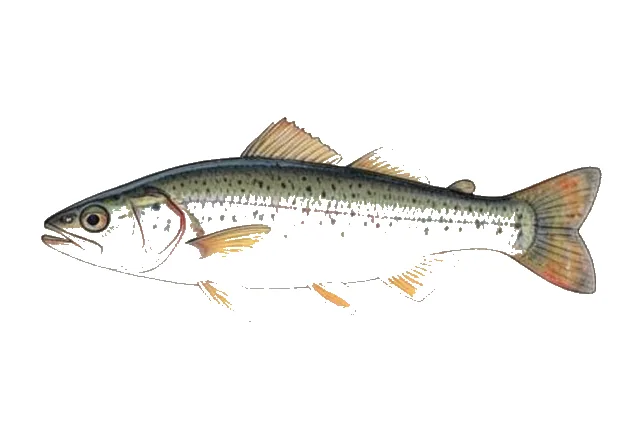
Peppered Shiner

Notropis perpallidus

Leuciscidae · freshwater water fish

3 minute read · Species guide

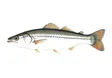
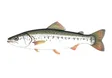
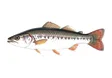
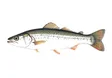
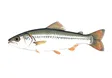
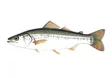
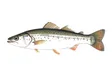
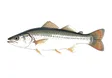
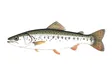
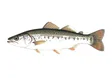
Peppered Shiner field guide illustration

About Peppered Shiner

The peppered shiner or colorless shiner (Miniellus perpallidus) is a species of freshwater ray-finned fish belonging to the family Leuciscidae, the true minnows. It is endemic to the United States where it is found in the Red and Ouachita river drainages in southeastern Oklahoma and southern Arkansas.

Historically the species was found in the Little, Kiamichi, Mountain Fork rivers in Oklahoma and the Antoine, Caddo, Little Missouri, Ouachita, and Saline rivers in Arkansas. However, due to reservoir construction and changes to habitat Peppered Shiners have not been documented outside of the Saline River since 2001 (Robison, 2006).

Taxonomy

The Peppered Shiner was formally described in 1940 by American ichthyologists Carl L. Hubbs and John D. Black with the type locality given as the Saline River 5 miles north of Warren in Bradley County, Arkansas. The specific name refers to the extreme pallor and the species distinctly translucent appearance (Hubbs & Black, 1940).

The phylogenetic position of the Peppered Shiner has moved around since its original placement sister to Kiamichi Shiner (Miniellus ortenburgeri) in 1940. The most recent evaluation of the species phylogeny by Hollingsworth et al. (2013) placed Peppered Shiner next to Swallowtail Shiner (Miniellus procne).

Ecology and Life History

Peppered Shiner habitat preferences are best known from the Saline River population. In summers 2019 and 2020 adults were typically found in deep run habitats adjacent to beds of water willow. Their habitat preferences likely change seasonally, although temporal monitoring of the species is required to support that hypothesis (Miller, 2022). Snelson & Jenkins (1973) reported the species has a short lifespan, with most individuals living two to three years; only a few males have been documented to reach four years. Spawning occurs from late May through August, with sexually mature individuals—especially age 2 and 3 fish—found in reproductive condition during this period. Miller (2022) found individuals larger than the reported maximum size, indicating the species may live longer than four years. Adult Peppered Shiners feeds primarily on aquatic insects, especially dipteran larvae (Snelson & Jenkins, 1973).

Conservation

Snelson & Jenkins (1973) suggested Peppered Shiner be placed on the Endangered Species list due to extensive reservoir construction within its range. The species was petitioned for federal listing in 2010 and is currently under review by the U.S. Fish and Wildlife Service in 2025. Peppered Shiner has been listed as vulnerable by the IUCN Red List since 2013.

Article text: Wikipedia contributors, Peppered shiner (source revision). Licensed under CC BY-SA 4.0. Retrieved 2026-10-12.


Diet and feeding

The FishTraits compilation records these diet categories for this species: invertebrates or larval fish. These are broad categories, not a claim that every individual consumes every example in a category.

Reported feeding positions include bottom feeding and surface or water-column feeding. The compilation combines published observations; diets can vary with age, locality, and available food.

Habitat preferences

Reported habitat associations include streams and small rivers.

The source records associations with sand, gravel, vegetation, organic debris. An association indicates reported use, rather than an exclusive requirement.

Reproduction and parental care

The compilation reports a representative maturity age of 1.5 years. Its maturity field summarizes mean, median, or modal estimates, usually for females; male estimates can be used when female data are unavailable. It is not a fixed age at which every fish first breeds.

Recorded spawning months are May, Jun, Jul, Aug for the source’s reporting region (AR). This is a regional calendar, not a range-wide schedule.

The reproductive-guild classification includes spawning on open substrates without guarding the brood.

Size and recorded longevity

FishTraits reports a maximum total length of 6.9 centimetres. Some entries use an estimated asymptotic length; this value should not be treated as a certified record catch.

Recorded longevity in the compilation is 4 years. Wild observations were preferred, but captive records were accepted where wild records were unavailable, and unspecified records were assumed wild. The value is not a guaranteed wild lifespan or an aquarium life expectancy.

Range

Where it lives

Share of 93 GBIF observation records with a state location, across 2 states.
0%
50.5%
Share of 93 GBIF observation records with a state location, across 2 states.

Share of records by state

Habitat

Water and movement

Water
WoRMS records this species in fresh water.
Migration
Undetermined

Classification

Taxonomy

Kingdom
Animalia
Phylum
Chordata
Superclass
Actinopterygii
Class
Teleostei
Order
Cypriniformes
Genus
Notropis
Species
Notropis perpallidus
ITIS TSN
163459
WoRMS AphiaID
1014836
GBIF key
2362276

Common questions about Peppered Shiner

What is the scientific name of Peppered Shiner?
The scientific name is Notropis perpallidus, in the family Leuciscidae. Classification follows ITIS.
Does Peppered Shiner live in fresh water or salt water?
WoRMS records this species in fresh water.
Where has Peppered Shiner been recorded in the United States?
GBIF has observations in 2 states, with the most records in Oklahoma, Arkansas. The map shows observation records, which do not establish the complete natural range.

Closest relatives

Other Notropis species

Arkansas River Shiner5 states
Notropis girardiLeuciscidaeNative and introducedFresh
Bedrock Shiner3 states
Notropis rupestrisLeuciscidaeNativeFresh
Bigeye Shiner17 states
Notropis boopsLeuciscidaeNative and introducedFresh
Bigmouth Shiner21 states
Notropis dorsalisLeuciscidaeNative and introducedFresh
Blackchin Shiner13 states
Notropis heterodonLeuciscidaeNativeFresh
Blackmouth Shiner3 states
Notropis melanostomusLeuciscidaeNativeFresh
Blacknose Shiner21 states
Notropis heterolepisLeuciscidaeNative and introducedFresh
Blackspot Shiner5 states
Notropis atrocaudalisLeuciscidaeNativeFresh
Bluntnose Shiner3 states
Notropis simusLeuciscidaeNativeFresh
Bridle Shiner22 states
Notropis bifrenatusLeuciscidaeNativeFresh
Burrhead Shiner3 states
Notropis asperifronsLeuciscidaeNativeFresh
Cahaba Shiner1 states
Notropis cahabaeLeuciscidaeNativeFresh
Cape Fear Shiner1 states
Notropis mekistocholasLeuciscidaeNativeFresh
Carmine Shiner16 states
Notropis percobromusLeuciscidaeNativeFresh
Channel Shiner15 states
Notropis wickliffiLeuciscidaeNativeFresh
Chihuahua Shiner1 states
Notropis chihuahuaLeuciscidaeNative and introducedFresh
Chub Shiner4 states
Notropis potteriLeuciscidaeNative and introducedFresh
Coastal Shiner8 states
Notropis petersoniLeuciscidaeNativeFresh
Comely Shiner11 states
Notropis amoenusLeuciscidaeNative and introducedFresh
Coosa Shiner9 states
Notropis xaenocephalusLeuciscidaeNative and introducedFresh
Dusky Shiner6 states
Notropis cummingsaeLeuciscidaeNativeFresh
Emerald Shiner35 states
Notropis atherinoidesLeuciscidaeNative and introducedFresh
Fluvial Shiner3 states
Notropis edwardraneyiLeuciscidaeNativeFresh
Ghost Shiner16 states
Notropis buchananiLeuciscidaeNative and introducedFresh

Same family

More Leuciscidae

Alabama Shiner4 states
Cyprinella callistiaLeuciscidaeNativeFresh
Allegheny Pearl Dace19 states
Margariscus margaritaLeuciscidaeNative and introducedFresh
Altamaha Shiner1 states
Cyprinella xaenuraLeuciscidaeNativeFresh
Alvord Chub2 states
Siphateles alvordensisLeuciscidaeNativeFresh
Apalachee Shiner3 states
Pteronotropis grandipinnisLeuciscidaeNativeFresh
Arkansas River Shiner5 states
Notropis girardiLeuciscidaeNative and introducedFresh
Arroyo Chub1 states
Gila orcuttiiLeuciscidaeNative and introducedFresh
Bandfin Shiner5 states
Luxilus zonistiusLeuciscidaeNative and introducedFresh
Bannerfin Shiner5 states
Cyprinella leedsiLeuciscidaeNativeFresh
Beautiful Shiner3 states
Cyprinella formosaLeuciscidaeNativeFresh
Bedrock Shiner3 states
Notropis rupestrisLeuciscidaeNativeFresh
Bigeye Chub25 states
Hybopsis amblopsLeuciscidaeNative and introducedFresh
Bigeye Shiner17 states
Notropis boopsLeuciscidaeNative and introducedFresh
Bigmouth Chub3 states
Nocomis platyrhynchusLeuciscidaeNativeFresh
Bigmouth Shiner21 states
Notropis dorsalisLeuciscidaeNative and introducedFresh
Blackchin Shiner13 states
Notropis heterodonLeuciscidaeNativeFresh
Blackmouth Shiner3 states
Notropis melanostomusLeuciscidaeNativeFresh
Blacknose Shiner21 states
Notropis heterolepisLeuciscidaeNative and introducedFresh
Blackside Dace2 states
Chrosomus cumberlandensisLeuciscidaeNativeFresh
Blackspot Shiner5 states
Notropis atrocaudalisLeuciscidaeNativeFresh
Blacktail Shiner14 states
Cyprinella venustaLeuciscidaeNative and introducedFresh
Blacktip Shiner4 states
Lythrurus atrapiculusLeuciscidaeNative and introducedFresh
Bleeding Shiner8 states
Luxilus zonatusLeuciscidaeNativeFresh
Blotched Chub6 states
Erimystax insignisLeuciscidaeNativeFresh

All 267 species in Leuciscidae