Bullhead Minnow

Pimephales vigilax

Leuciscidae · freshwater water fish

6 minute read · Species guide

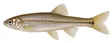
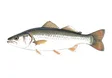
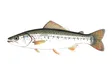
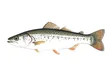
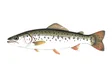
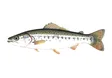
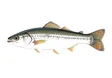
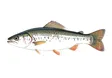
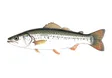
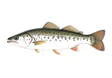
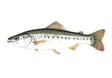
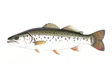
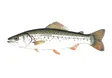
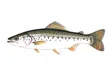
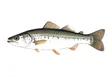
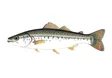
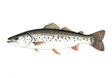
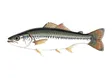
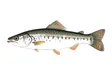
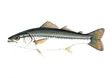
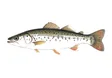
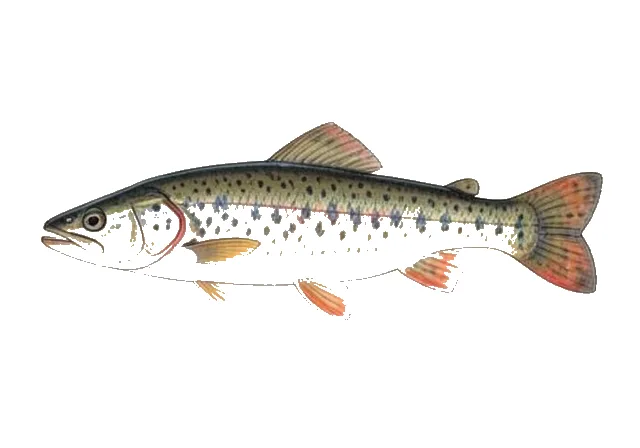
Bullhead Minnow field guide illustration

About Bullhead Minnow

The bullhead minnow (Pimephales vigilax) is a species of freshwater ray-finned fish belonging to the family Leuciscidae, the shiners, daces and minnows. This demersal fish is native to the Mississippi River system in the United States, to tributaries of Lake Huron and Lake Michigan and to northern Mexico.

History

The bullhead minnow was first described by Spencer Baird and Charles Girard in 1853.

Characteristics

The bullhead minnow is cylindrical and small in size, with an average length of 5.7 centimetres (2.2 in) and a maximum length of 9.2 centimetres (3.6 in). The males of the species are dark in color, brown, olive, or tan, with two light colored vertical lines down their side, while the females are plain in comparison. The snout is rounded. There are eight total pharyngeal teeth distributed equally bilaterally. There is a dark spot present on the anterior dorsal fin. The tail is forked with rounded ends, with a dark spot present at the fin's base at the level of the lateral line. The single dorsal fin contains eight rays, with a dark spot present anteriorly and no spine. The anal fin contains seven rays with no spine, pelvic fins are abdominal and no adipose fin is present. The pectoral fins have a dark leading edge. The lateral line dips anteriorly.

Distribution

The bullhead minnow is mainly located in the southern United States, in the Gulf Coast of the United States and Mississippi River Basin. It can be found in the basin of the Mobile River, as well as connected backwaters, streams and rivers. They are found more often in waters that typically have little to no movement, such as in river pools. It is one of the 324 fish species found in Tennessee. They have been introduced to the Osage River and Kansas River systems in Kansas, to the Missouri in Nebraska, the Rio Grande in New Mexico, Lake St Marys in Ohio, the James drainage in South Dakota, the Red River, Canadian River and Rio Grande in Texas and to the upper Fox River and possibly the Menomonee River in Wisconsin. They were probably introduced to these areas as bait fish carried by anglers. It has also been introduced to Utah where it occurs in two closed drainages within the Great Basin, that of the Sevier River, where it seems to have been introduced accidentally in releases of channel catfish (Ictalurus punctatus) imported from Texas in the 1950s, and of Lake Utah.

Biology

The spawning season extends from the middle of May through early September. They reproduce in an egg-clustering fashion. For a mating location, the males build a nest, normally protected by rocks, tree roots or limbs, or boards, The female lays eggs on the underside of the nest's structural associate, and the male guards and oxygenates the eggs throughout spawning. The male may also clean the eggs using its special dorsal spongy pad. There is currently no known age of maturation for this fish. They live an average of three to five years. They are a bottom-living species, and feed on organisms found in the mud covering the ground.

Article text: Wikipedia contributors, Bullhead minnow (source revision). Licensed under CC BY-SA 4.0. Retrieved 2026-10-11.
Diet and feeding

The FishTraits compilation records these diet categories for this species: algae or phytoplankton; aquatic or other vascular plants; detritus or unidentified plant material; invertebrates or larval fish. These are broad categories, not a claim that every individual consumes every example in a category.

Reported feeding positions include bottom feeding. The compilation combines published observations; diets can vary with age, locality, and available food.

Habitat preferences

Reported habitat associations include medium to large rivers, streams and small rivers, creeks.

The source records associations with gravel, cobble, boulders, bedrock, vegetation, organic debris, large woody material. An association indicates reported use, rather than an exclusive requirement.

Reproduction and parental care

The compilation reports a representative maturity age of 1 years. Its maturity field summarizes mean, median, or modal estimates, usually for females; male estimates can be used when female data are unavailable. It is not a fixed age at which every fish first breeds.

Batch or serial spawning has been reported somewhere in the species’ range. This does not establish the same spawning pattern for every population.

Recorded spawning months are May, Jun, Jul for the source’s reporting region (NC). This is a regional calendar, not a range-wide schedule.

The reproductive-guild classification includes guarding eggs or young at a spawning substrate or nest.

Size and recorded longevity

FishTraits reports a maximum total length of 7 centimetres. Some entries use an estimated asymptotic length; this value should not be treated as a certified record catch.

Recorded longevity in the compilation is 5 years. Wild observations were preferred, but captive records were accepted where wild records were unavailable, and unspecified records were assumed wild. The value is not a guaranteed wild lifespan or an aquarium life expectancy.

Identification and appearance

Complete lateral line, silver peritoneum.Check for rosy red color in mutants sold as bait ()Hubbs et al 2004).

Native range

Native to Lake Michigan and Lake Huron tributaries (Hocutt and Wiley 1986)

Habitat and ecology

In silty streams, feeds on invertebrates (Hubbs et al 2004)

Introduction history

Hubbs and Black (1947) noted that the one known locality record for this species in the Osage River system of Kansas, was based on material taken from Jones Pond, Coffee County, and "no doubt represents an introduction from the Neosho River system."This species apparently was introduced into the Kansas River system of eastern Kansas before 1976 (Cross and Haslouer 1984). It was first recorded in the Missouri River in Missouri in 1994, apparently the result of dispersal of populations introduced into the Kansas River system of Kansas (Pflieger 1997). It is uncertain if the records from the Missouri River drainage in Nebraska and South Dakota (and also Iowa) are valid, and, if valid, if they represent introductions (see discussion in Remarks section). Hubbs and Black (1947) stated that the single record (under the name Ceratichthys perspicuus) from Lake St. Marys (Great Lakes drainage) in Ohio should be considered valid. These researchers also mentioned that M. B. Trautman suspected it of being a bait introduction. Maintaining that same position years later, Trautman (1981) stated that the Lake St. Marys record"probably was an escape from the minnow bucket of a fisherman." He also remarked that by 1945 it was of common occurrence in the tanks of commercial bait dealers in Ohio. In their summary table on fishes of the Great Lakes basin, Bailey and Smith (1981) indicated that Pimephales vigilax perspicuus had colonized tributaries of Lake Erie recently via canal or by natural dispersal following introduction. Sublette et al. (1990) stated that it was introduced to the Rio Grande drainage of New Mexico during and since the 1970s. The possible method of introduction was not discussed. Similarly, Hubbs et al. (1991) did not provide explanation for its apparent introduction into the Rio Grande and the Red and Canadian river drainages in Texas. Presumably these were by bait-bucket release or stock contaminants. According to Sigler and Miller (1963), Pimephales vigilax vigilax was accidentally introduced into the Sevier River drainage in Utah in 1953 along with several thousand channel catfish received from San Angelo, Texas. Sigler and Sigler (1987) indicated that it was introduced to Utah Lake, Utah, in 1969, but these authors did not provide additional details. The first record of this species in the Fox River, Wisconsin, is based on nine specimens taken in July 1960. Johnson and Becker (1980) and Becker (1983) suspected that the fish entered that drainage from the Mississippi River basin via the old Fox-Wisconsin Canal at Portage, also known as the Portage Canal. The Menomonee River record is based on a report from the early 1900s. Greene (1935, cited by Becker 1983) suggested that the record may have been based on a bait bucket release, or a recent immigrant via highwater connections between the Rock and Milwaukee river systems.

Range

Where it lives

Share of 22,395 GBIF observation records with a state location, across 24 states. The orange dots are USGS stream-survey sites where this species was caught.
0%
41%
Share of 22,395 GBIF observation records with a state location, across 24 states. The orange dots are USGS stream-survey sites where this species was caught.

A blank area on the dot layer usually means nobody sampled there, not that the fish is absent. Turn on “every survey site” to see where the survey looked.

The USGS stream survey caught it at 1,373 of its sites, in 18 states. That survey and the GBIF records are two different counts of two different things, so the site keeps them apart.

Habitat

Water and movement

Water
WoRMS records this species in fresh water.
USGS NAS habitat
Freshwater
US status
Native transplant — native to part of the United States, moved to other waters inside it.
Migration
Undetermined

Classification

Taxonomy

Kingdom
Animalia
Phylum
Chordata
Superclass
Actinopterygii
Class
Teleostei
Order
Cypriniformes
Genus
Pimephales
Species
Pimephales vigilax
ITIS TSN
163518
WoRMS AphiaID
1044815
GBIF key
2367733
Outside the US
ITIS also files it in Mexico.

Common questions about Bullhead Minnow

What is the scientific name of Bullhead Minnow?
The scientific name is Pimephales vigilax, in the family Leuciscidae. Classification follows ITIS.
Does Bullhead Minnow live in fresh water or salt water?
WoRMS records this species in fresh water.
Where has Bullhead Minnow been recorded in the United States?
GBIF has observations in 24 states, with the most records in Texas, Oklahoma, Mississippi. The map shows observation records, which do not establish the complete natural range.

Closest relatives

Other Pimephales species

Same family

More Leuciscidae

Alabama Shiner4 states
Cyprinella callistiaLeuciscidaeNativeFresh
Allegheny Pearl Dace19 states
Margariscus margaritaLeuciscidaeNative and introducedFresh
Altamaha Shiner1 states
Cyprinella xaenuraLeuciscidaeNativeFresh
Alvord Chub2 states
Siphateles alvordensisLeuciscidaeNativeFresh
Apalachee Shiner3 states
Pteronotropis grandipinnisLeuciscidaeNativeFresh
Arkansas River Shiner5 states
Notropis girardiLeuciscidaeNative and introducedFresh
Arroyo Chub1 states
Gila orcuttiiLeuciscidaeNative and introducedFresh
Bandfin Shiner5 states
Luxilus zonistiusLeuciscidaeNative and introducedFresh
Bannerfin Shiner5 states
Cyprinella leedsiLeuciscidaeNativeFresh
Beautiful Shiner3 states
Cyprinella formosaLeuciscidaeNativeFresh
Bedrock Shiner3 states
Notropis rupestrisLeuciscidaeNativeFresh
Bigeye Chub25 states
Hybopsis amblopsLeuciscidaeNative and introducedFresh
Bigeye Shiner17 states
Notropis boopsLeuciscidaeNative and introducedFresh
Bigmouth Chub3 states
Nocomis platyrhynchusLeuciscidaeNativeFresh
Bigmouth Shiner21 states
Notropis dorsalisLeuciscidaeNative and introducedFresh
Blackchin Shiner13 states
Notropis heterodonLeuciscidaeNativeFresh
Blackmouth Shiner3 states
Notropis melanostomusLeuciscidaeNativeFresh
Blacknose Shiner21 states
Notropis heterolepisLeuciscidaeNative and introducedFresh
Blackside Dace2 states
Chrosomus cumberlandensisLeuciscidaeNativeFresh
Blackspot Shiner5 states
Notropis atrocaudalisLeuciscidaeNativeFresh
Blacktail Shiner14 states
Cyprinella venustaLeuciscidaeNative and introducedFresh
Blacktip Shiner4 states
Lythrurus atrapiculusLeuciscidaeNative and introducedFresh
Bleeding Shiner8 states
Luxilus zonatusLeuciscidaeNativeFresh
Blotched Chub6 states
Erimystax insignisLeuciscidaeNativeFresh

All 267 species in Leuciscidae