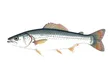
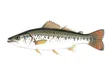
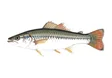
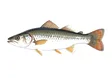
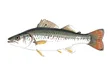
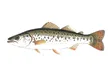
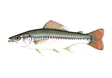
Common names

Types of killifish

21 species carry killifish in an English common name. They sit in 4 families, so the group is a name, not a scientific rank.

About killifish

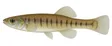
A killifish is any of various oviparous (egg-laying) cyprinodontiform fish, including families Aplocheilidae, Pantanodontidae, Cyprinodontidae, Fundulidae, Nothobranchiidae, Profundulidae, Aphaniidae and Valenciidae. All together, there are 1,270 species of killifish, the biggest family being Rivulidae, containing more than 320 species. As an adaptation to living in ephemeral waters, the eggs of most killifish can survive periods of partial dehydration. Many of the species rely on such a diapause, since the eggs would not survive more than a few weeks if entirely submerged in water. The adults of some species, such as Kryptolebias marmoratus, can additionally survive out of the water for several weeks. Most killifish are small, measuring from 2.5 to 5 centimetres (1 to 2 in), with the largest species growing to just under 15 centimetres (6 in).

The word killifish is of uncertain origin, but is likely to have come from the Dutch kil for a kill (small stream). Although killifish is sometimes used as an English equivalent to the taxonomical term Cyprinodontidae, this is only one of several families that are referred to as killifish. Cyprinodontidae more specifically refers to the pupfish family.

Range and habitat

Killifish are found mainly in fresh or brackish waters in the Americas, as far south as Argentina and as far north as southern Ontario and even Newfoundland and Labrador. There are also species in southern Europe, in much of Africa as far south as KwaZulu-Natal, South Africa, in the Middle East and Asia (as far east as Vietnam), and on several Indian Ocean islands.

The majority of killifish are found in permanent streams, rivers, and lakes, and live between two and three years. Such killifish are common in the Americas (Cyprinodon, Fundulus and Rivulus) as well as in Africa and Asia (including Aphyosemion, Aplocheilus, Epiplatys, Fundulopanchax and Lacustricola) and southern Europe (Aphanius). Some of these habitats can be rather extreme; the only natural habitat of the Devils Hole pupfish (Cyprinodon diabolis) is Devils Hole: a cavern at least 91 metres (299 ft) deep, branching out from a small opening at the surface, approximately 1.8 metres (6 ft) by 5.5 metres (18 ft) wide.

Some specialized forms live in temporary ponds and flood plains, and typically have a much shorter lifespan. Such species, known as "annuals", live no longer than nine months, and are used as models for studies on aging. Examples include the African genus Nothobranchius and South American genera ranging from the cold water Austrolebias of Argentina and Uruguay to the more tropical Gnatholebias, Pterolebias, Simpsonichthys and Terranatos.

Territorial behaviour

A small number of species will shoal while most are territorial to varying degrees. Populations can be dense and territories can shift quickly, especially for species of the extreme shallows (a few centimetres of water). Many species exist as passive tribes in small streams where dominant males will defend a territory while allowing females and immature males to pass through the area. In the aquarium, territorial behaviour is different for every grouping, and will even vary by individuals. In a large enough aquarium, most species can live in groups as long as there are more than three males.

Diet

Killifish feed primarily on aquatic arthropods such as insect (mosquito) larvae, aquatic crustaceans and worms. Some species of Orestias from Lake Titicaca are planktonic filter feeders. Others, such as Cynolebias and Megalebias species and Nothobranchius ocellatus are predatory and feed mainly on other fish. The American Flagfish (Jordanella floridae) feeds heavily on algae and other plant matter as well as aquatic invertebrates. Nothobranchius furzeri needs much food because it grows quickly, so when food supplied is inadequate, bigger fish will eat the smaller fish.

In lifespan research

Some strains have a lifespan as short as several months and can thus serve as a model for biogerontological studies. The African turquoise killifish (Nothobranchius furzeri) is the shortest-living vertebrate that can be bred in captivity, having a lifespan of between three and nine months. Sexual maturation occurs within 3–4 weeks, with fecundity peaking in 8–10 weeks.

Nothobranchius furzeri shows no signs of telomere shortening, reduced telomerase activity, or replicative senescence with age, despite its short lifespan. Nonetheless, lipofuscin accumulates in the brain and liver (associated with age-related neurodegeneration), and there is an increased risk of cancer with age. Calorie restriction reduces these age-related disease conditions. Resveratrol has been shown to increase the mean (56%) and maximum life span (59%) of Nothobranchius furzeri, but resveratrol has not been shown to have this effect in mammals.

Transferring the gut microbiota from young killifish into middle-aged killifish significantly extends the lifespans of the middle-aged killifish.

Transgenic strains have been made, and precise genome editing was achieved in Nothobranchius furzeri using a draft genome and the CRISPR/Cas9 system. By targeting multiple genes, including telomerase, the killifish can now be used as an attractive vertebrate model organism for aging and diseases (such as Dyskeratosis congenita). Sequencing the whole killifish genome indicated modification to the IGF-1 receptor gene.

As pets

Many killifish are lavishly coloured and most species are easy to keep and breed in an aquarium. Specimens can be obtained from specialist societies and associations. Striped panchax (also known as the Golden Wonder killifish) are commonly found in pet shops, but caution must be exercised when considering tank mates, since the mouth of the Striped panchax is as wide as the head, and much smaller fish will be eaten. Flagfish, native to south Florida, is another species of killifish commonly found in pet stores. They are useful in aquariums for algae control. The golden topminnow (Fundulus chrysotus) is also native to the United States and often available at auction, but care must be taken with these fish to stop them from jumping out of the tank. A firm cover and a layer of floating plants is best when keeping these fish.

In the 1960s, the American toy company Wham-O sold African killifish eggs, marketed as "instant fish", to be hatched in aquariums.

Behaviour-altering infection

Normally, killifish avoid near-surface water to reduce the danger of being eaten by predators. However, when infected with a type of fluke the fish swim near the surface, and sometimes even swim upside down, exposing their camouflaged bellies. The fluke completes its lifecycle in the digestive tract of birds.

Evolved resistance to extreme levels of toxicity

The large populations of killifish and the genetic diversity of the species have enabled it to evolve and survive in areas where other species have died out, including Superfund sites. Over a few dozen generations of killifish in a relatively short period of time (50–60 years), killifish have evolved resistance against levels of dioxins, PCBs, mercury, and other industrial chemicals up to 8,000 times higher than the previously estimated lethal dose. Sequencing the genomes of the adapted individuals showed a common set of mutations among the pollution-tolerant fish, many of which help to deactivate or turn off a molecular pathway responsible for a large part of the cellular damage caused by the chemicals.

Killifish were found to fare relatively well in the wake of the Deepwater Horizon oil spill.

The resistance of killifish to environmental changes, including toxicity, appears to be a longstanding adaptation of theirs. Abundant fossils of the extinct Miocene -aged killifish Kenyaichthys have been recovered from a prehistoric lake of the Lukeino Formation where few other fish fossils have been found. It has been suggested that this lake was subject to frequent flash droughts and increased heavy metal load from a nearby volcano. The Kenyaichthys fossils show evidence of deformities as a result of this metal load, but were still successful inhabitants of the lake.
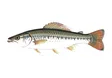
Killifish species in focus

These species profiles show how members of the group differ. Their biology describes each named species, rather than every fish in the group.

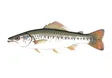
Banded Killifish

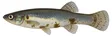
The banded killifish (Fundulus diaphanus) is a North American species of temperate freshwater killifish belonging to the genus Fundulus of the family Fundulidae. Its natural geographic range extends from Newfoundland to South Carolina, and west to Minnesota, including the Great Lakes drainages. This species is the only freshwater killifish found in the northeastern United States. While it is primarily a freshwater species, it can occasionally be found in brackish water.

Etymology

The common name, "banded killifish", commonly refers to the distinct black and white vertical bandings found along their sides. The Latin genus name Fundulus is the diminutive of fundus, which means "bottom", and the specific name diaphanus means "transparent" in Greek.

Description

The banded killifish has a narrow, elongate bluish-gray or olive-colored body with a darker dorsal surface and white or yellowish underparts extending to the anal fin. Spawning males develop yellow pectoral and pelvic fins, a bright blue patch on the anal fin, and brilliant blue iridescence on the lower portion of the body including the area around the anal fin. There are 12–20 vertical bands along the sides. In females the bands usually appear as thin and distinct black bands that often do not span the full width of the body. In males, the bands are silvery in color, are less distinct, and are closer together. The number of bands are useful in sexing an individual; male banded killifish have a greater (approximately >9) number of bands anterior to the dorsal fin. Fins rounded, base of first dorsal ray slightly ahead of or directly over first anal ray. Snout is blunt, with small superior mouth and projecting lower jaw. Lateral line is missing; 39–43 scales in the lateral series. There are 10 to 13 dorsal fin rays, 9 to 11 anal fin rays and 6 pelvic fin rays. Max length is 13 cm (5.1 in) total length (TL), average length is 6.3 cm (2.5 in) TL.

The eastern subspecies, F. d. diaphanus, can be differentiated from the western subspecies, F. d. menona, by the presence of a further anterior dorsal fin position, increased number of anterior bars in the males of the subspecies (9–15 compared to 5-0 for F. d. menona) with more intense bars along the side that stay intact along the anterior back, a higher number of scale rows (40–44 F. d. menona, 45–49 F. d. diaphanus), and a combined number of dorsal and anal fin rays totaling 24 to 26, compared to 23 to 24 for F. d. menona. Larger maximum sizes have been reported for F. d. diaphanus than F. d. menona.

Range and distribution

The banded killifish is widely distributed throughout eastern North America, ranging from the Pee Dee River, South Carolina to Newfoundland; also found in southern Pennsylvania, northeastern Nebraska, and northern Illinois, and north to St. Lawrence-Great Lakes and Mississippi River basins from Manitoba to Quebec. The eastern subspecies is found on the Atlantic Slope, and the western subspecies in the rest of its range. Westward expansion by the eastern subspecies may be the result of introductions as bait or aquarium fish into novel waterbodies, climate change expanding favorable habitat, or a higher pollution tolerance compared to the western subspecies.

The population of banded killifish in Newfoundland was assigned a status of special concern by the Committee on the Status of Endangered Wildlife in Canada (COSEWIC) due to biogeographical isolation and limitation of potential for range expansion. In the United States, Ohio and Illinois list the western subspecies as endangered and threatened, respectively, due to range expansion of the eastern subspecies which has been documented to hybridize wherever the ranges of the subspecies overlap. As such, Ohio also classifies F. d. diaphanus as an injurious aquatic invasive species. Intergrades occur in the Saint Lawrence and Lake Erie drainages where the ranges of the two subspecies naturally come in contact.

Read the full species guide.

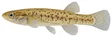
Spotfin Killifish

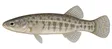
Fundulus luciae, the spotfin killifish, is a member of the genus Fundulus. This hardy fish is notable for spending its entire life in sporadically flooded salt marsh habitat, sheltering in shallow pools, puddles, and small tidal rivulets. It closely resembles the mummichog (Fundulus heteroclitus) in shape and coloration, but the two species can be distinguished by dorsal fin ray count: 8–9 in the spotfin versus 11–12 in the mummichog. Additionally, the dorsal fin of F. luciae originates farther back, and slightly behind the anal fin origin; in the mummichog, the dorsal fin begins anteriorly to the anal fin origin. The spotfin killifish is named for the pronounced ocellus found on the posterior dorsal fin of adult males. It is a small fish, seldom attaining 50 millimetres (2.0 in) in total length. Its distribution extends along the U.S. east coast from Massachusetts to Georgia.

Taxonomy

Fundulidae (Order: Cyprinodontiformes) is a family of topminnows, or killifishes, that are found in freshwater, marine, and brackish habitats in North America, Bermuda, and Yucatán. "Topminnow"was coined following observations of fishes using aquatic surface respiration (ASR), a behavior used to acquire more oxygen by hovering parallel to the surface near the air-water interface, during periods of hypoxia. The characteristic upturned mouth and flattened head of fundulids is believed to enhance ASR in low oxygen conditions. The scientific name Fundulus means exactly the opposite. Fundus is Latin for"bottom", and probably refers to the muddy substrate many common species inhabit and the propensity for fish to hide from predators in sediments. Killifish derives from the Dutch word "kill," meaning a stream or brook; it is a general name given to egg-laying toothcarps.

The genus Fundulus contains 38 extant species, found along U.S. coastal and inland regions, Bermuda, Cuba, and Yucatán. This species was described by Spencer Fullerton Baird as Hydrargyra luciae in 1855 with the type locality given as Robinson's Landing, Peck's Beach, opposite Beesley's Point, Cape May County. Baird gave it the specific name luciae in honor of his daughter, Lucy Hunter Baird (1848-1913).

Description

The spotfin killifish is the smallest member of its genus, rarely exceeding 50 millimetres (2.0 in) total length or 40 millimetres (1.6 in) standard length. Larval fish transition to juvenile stage at around 10 mm standard length. Sexual maturity is attained at approximately 24–27 mm TL (males) and 28–30 mm TL (females). Body shape is elongated and less stocky than Fundulus heteroclitus, with an upturned mouth, flattened head and rounded caudal fin characteristic of the genus. Adults are sexually dimorphic, although both sexes are darker on top with a lighter belly. Juveniles and adult females are similar in appearance, with a body that is grayish-green to olive green in color, lacking a dorsal ocellus, and generally without vertical bars, although females may sometimes have sidebars (usually faint). Mature adult females may also have a visible sheath of tissue along the front of the anal fin, which is believed to function as an oviduct. Adult males have 10–14 dark vertical bars and the eponymous dorsal ocellus. During spawning season males develop dramatic coloration, consisting of vivid yellow-orange pigment extending over the belly, pelvic and anal fins, caudal peduncle, and caudal fin. Breeding males may also develop contact organs–small fleshy protuberances–on the head, sides of the body, and medial fins. Dorsal fin rays number 8–9 (usually 8) which is different from the mummichog, which has 11–12 dorsal fin rays. The anal fin has 10 rays. The spotfin killifish's dorsal fin originates posteriorly to the anal fin origin; this is another useful character that differs from other fundulids, including F. heteroclitus. While adults are distinct, larval fundulids can be tricky to ID to species. Longitudinal scale rows number 34–36. The gill opening is restricted superiorly.

Distribution and habitat

The spotfin killifish inhabits the irregularly flooded zone of salt marshes, characterized largely by Spartina spp. (cordgrass) and Juncus roemarianus (needlerush), where it lives in puddles, shallow pools, small tidal rivulets, culms at the base of plants, and even crab burrows. It is a nonmigratory, permanent resident of the emergent marsh and stays even during low tides. Spotfin killifish prefer muddy substrate, probably because mud retains water at low tide more effectively than sand. This species is euryhaline but prefers medium to high salinities. In the wild, it has been captured from salinities ranging from 0–46 ppt. Due to difficulty in sampling the dense mud and thick plants characterizing F. luciae's preferred habitat, the species was once thought to be rare; however, more recent studies have shown that it can be locally abundant.

Spotfin killifish are distributed along the east coast of the United States, ranging from Massachusetts to Georgia.

Read the full species guide.

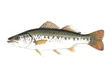
Striped Killifish

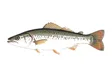
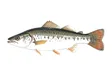
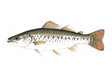
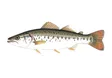
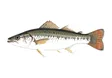
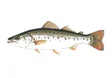
The striped killifish (Fundulus majalis), also called the striped mummichog, is a North American species of fundulid killifish. It lives in salt and brackish waters in shallow coastal regions from New Hampshire to Florida, and in the northern Gulf of Mexico.

It exhibits sexual dimorphism, with the males having vertical black stripes and the mature females having horizontal black stripes along the sides of their silver-colored bodies. Juvenile females have vertical stripes, however, and one or two vertical stripes remain at the end of the tail even on adult females. Striped killifish typically reach lengths of up to 6 in (15 cm), occasionally 7 in (18 cm).

Tidepool survival techniques

In Feb 1916, Popular Science Monthly had a news article on research being done by Professor S. O. Mast of the zoological department of Johns Hopkins University. The professor was studying the Fundulus majolisis and noted their ability to survive the draining of ocean tide pools. These fish would swim in and out of the tide pools on regular intervals, somehow knowing when to swim out before the tidewaters drained from the pools. If for some reason the outlet of the pool were to close off as the tide went out, the fish would quickly swim around the tide pool randomly looking for an alternate escape route.

If the fish cannot find an exit, they actually leave the water and flop over land to reach the ocean. Professor Mast saw scores and scores of these fish leave large tide pools and travel across sand bars up to 12 feet wide and six inches tall. The fish nearly always leave the pool on the side towards the ocean, and are able to travel straight towards the ocean rather than flopping around randomly. At the time it was not known how the fish are able to find the ocean so readily.

Read the full species guide.

Range

Where killifish live

How many of the 21 species are recorded in each state.
0
13
How many of the 21 species are recorded in each state.

Taxonomy

Families in this group

Species

All 21 killifish species

Ash Meadows Killifish2 states
Empetrichthys merriamiGoodeidaeNativeFresh
Banded Killifish31 states
Fundulus diaphanusFundulidaeNative and introducedFreshBrackish
Bayou Killifish6 states
Fundulus pulvereusFundulidaeNativeFreshSaltBrackish
Blue-fintop Minnow7 states
Lucania goodeiFundulidaeNativeFresh
California Killifish1 states
Fundulus parvipinnisFundulidaeNativeSaltBrackish
Diamond Killifish5 states
Adinia xenicaFundulidaeNativeFreshSaltBrackish
Dwarf Livebearer8 states
Heterandria formosaPoeciliidaeNativeFreshBrackish
Goldspotted Killifish3 states
Floridichthys carpioCyprinodontidaeNativeSaltBrackish
Gulf Killifish11 states
Fundulus grandisFundulidaeNative and introducedFreshBrackish
Longnose Killifish6 states
Fundulus similisFundulidaeNativeSalt
Marsh Killifish14 states
Fundulus confluentusFundulidaeNativeFreshSaltBrackish
Pahrump Killifish1 states
Empetrichthys latosGoodeidaeNative and introducedFresh
Piketop Minnow3 states
Belonesox belizanusPoeciliidaeIntroducedFreshBrackish
Plains Killifish16 states
Fundulus zebrinusFundulidaeNative and introducedFreshBrackish
Pygmy Killifish5 states
Leptolucania ommataFundulidaeNativeFresh
Rainwater Killifish20 states
Lucania parvaFundulidaeNative and introducedFreshSaltBrackish
Seminole Killifish4 states
Fundulus seminolisFundulidaeNativeFresh
Speckled Killifish2 states
Fundulus rathbuniFundulidaeNativeFresh
Spotfin Killifish12 states
Fundulus luciaeFundulidaeNativeSaltBrackish
Striped Killifish18 states
Fundulus majalisFundulidaeNativeSaltBrackish
Waccamaw Killifish1 states
Fundulus waccamensisFundulidaeNativeFresh