Spotfin Killifish

Fundulus luciae

Fundulidae · saltwater and brackish water fish

6 minute read · Species guide

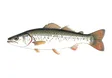
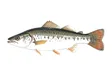
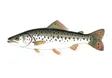
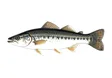
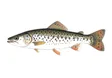
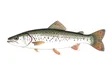
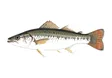
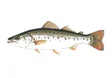
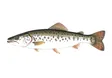
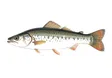
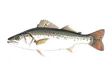
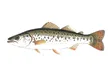
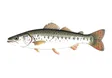
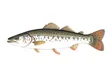
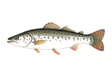
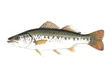
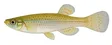
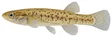
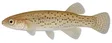
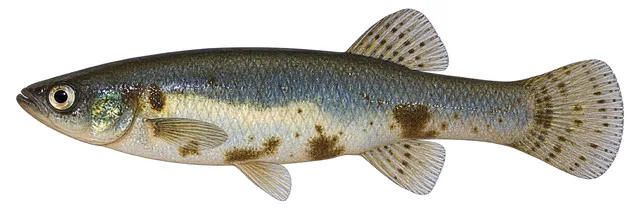
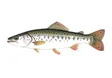
Spotfin Killifish field guide illustration

About Spotfin Killifish

Fundulus luciae, the spotfin killifish, is a member of the genus Fundulus. This hardy fish is notable for spending its entire life in sporadically flooded salt marsh habitat, sheltering in shallow pools, puddles, and small tidal rivulets. It closely resembles the mummichog (Fundulus heteroclitus) in shape and coloration, but the two species can be distinguished by dorsal fin ray count: 8–9 in the spotfin versus 11–12 in the mummichog. Additionally, the dorsal fin of F. luciae originates farther back, and slightly behind the anal fin origin; in the mummichog, the dorsal fin begins anteriorly to the anal fin origin. The spotfin killifish is named for the pronounced ocellus found on the posterior dorsal fin of adult males. It is a small fish, seldom attaining 50 millimetres (2.0 in) in total length. Its distribution extends along the U.S. east coast from Massachusetts to Georgia.

Taxonomy

Fundulidae (Order: Cyprinodontiformes) is a family of topminnows, or killifishes, that are found in freshwater, marine, and brackish habitats in North America, Bermuda, and Yucatán. "Topminnow"was coined following observations of fishes using aquatic surface respiration (ASR), a behavior used to acquire more oxygen by hovering parallel to the surface near the air-water interface, during periods of hypoxia. The characteristic upturned mouth and flattened head of fundulids is believed to enhance ASR in low oxygen conditions. The scientific name Fundulus means exactly the opposite. Fundus is Latin for"bottom", and probably refers to the muddy substrate many common species inhabit and the propensity for fish to hide from predators in sediments. Killifish derives from the Dutch word "kill," meaning a stream or brook; it is a general name given to egg-laying toothcarps.

The genus Fundulus contains 38 extant species, found along U.S. coastal and inland regions, Bermuda, Cuba, and Yucatán. This species was described by Spencer Fullerton Baird as Hydrargyra luciae in 1855 with the type locality given as Robinson's Landing, Peck's Beach, opposite Beesley's Point, Cape May County. Baird gave it the specific name luciae in honor of his daughter, Lucy Hunter Baird (1848-1913).

Description

The spotfin killifish is the smallest member of its genus, rarely exceeding 50 millimetres (2.0 in) total length or 40 millimetres (1.6 in) standard length. Larval fish transition to juvenile stage at around 10 mm standard length. Sexual maturity is attained at approximately 24–27 mm TL (males) and 28–30 mm TL (females). Body shape is elongated and less stocky than Fundulus heteroclitus, with an upturned mouth, flattened head and rounded caudal fin characteristic of the genus. Adults are sexually dimorphic, although both sexes are darker on top with a lighter belly. Juveniles and adult females are similar in appearance, with a body that is grayish-green to olive green in color, lacking a dorsal ocellus, and generally without vertical bars, although females may sometimes have sidebars (usually faint). Mature adult females may also have a visible sheath of tissue along the front of the anal fin, which is believed to function as an oviduct. Adult males have 10–14 dark vertical bars and the eponymous dorsal ocellus. During spawning season males develop dramatic coloration, consisting of vivid yellow-orange pigment extending over the belly, pelvic and anal fins, caudal peduncle, and caudal fin. Breeding males may also develop contact organs–small fleshy protuberances–on the head, sides of the body, and medial fins. Dorsal fin rays number 8–9 (usually 8) which is different from the mummichog, which has 11–12 dorsal fin rays. The anal fin has 10 rays. The spotfin killifish's dorsal fin originates posteriorly to the anal fin origin; this is another useful character that differs from other fundulids, including F. heteroclitus. While adults are distinct, larval fundulids can be tricky to ID to species. Longitudinal scale rows number 34–36. The gill opening is restricted superiorly.

Distribution and habitat

The spotfin killifish inhabits the irregularly flooded zone of salt marshes, characterized largely by Spartina spp. (cordgrass) and Juncus roemarianus (needlerush), where it lives in puddles, shallow pools, small tidal rivulets, culms at the base of plants, and even crab burrows. It is a nonmigratory, permanent resident of the emergent marsh and stays even during low tides. Spotfin killifish prefer muddy substrate, probably because mud retains water at low tide more effectively than sand. This species is euryhaline but prefers medium to high salinities. In the wild, it has been captured from salinities ranging from 0–46 ppt. Due to difficulty in sampling the dense mud and thick plants characterizing F. luciae's preferred habitat, the species was once thought to be rare; however, more recent studies have shown that it can be locally abundant.

Spotfin killifish are distributed along the east coast of the United States, ranging from Massachusetts to Georgia.

Conservation status

The spotfin killifish is listed as a species of "least concern" (LC) by the IUCN Red List of Threatened Species.

Diet

Spotfin killifish have a diet similar to the mummichog, consisting of detritus, diatoms, foraminiferans, rotifers, insects (dipterans–including mosquitoes and larval chironomids, homopterans, coleopterans, hymenopterans, lepidopterans, odonates, and hemipterans), collembolans, arachnids (spiders, pseudoscorpions, and acarina), crustaceans (copepods, tanaids, ostracods, cladocerans, isopods, and amphipods), annelid worms, mollusks (gastropods), and fish eggs.

Hardiness

Fundulids in general are known for high tolerance to extreme environmental fluctuation of parameters including temperature, salinity, and dissolved oxygen. In the wild, F. luciae have been collected in salinities ranging from 0–46 ppt, although medium to high salinities are preferred. In laboratory experiments, F. luciae tolerated salinities up to 106 ppt. Abrupt exposure to fresh water was fatal, but with gradual transition to fresh water ~40% of fish survived. Spotfin killifish have been found in temperatures ranging from 0.6–36.1 °C (33.1–97.0 °F).

Article text: Wikipedia contributors, Fundulus luciae (source revision). Licensed under CC BY-SA 4.0. Retrieved 2026-10-11.
Diet and feeding

The FishTraits compilation records these diet categories for this species: invertebrates or larval fish; fish or frog eggs. These are broad categories, not a claim that every individual consumes every example in a category.

Reported feeding positions include bottom feeding. The compilation combines published observations; diets can vary with age, locality, and available food.

Habitat preferences

Reported habitat associations include streams and small rivers, creeks.

The source records associations with muck, clay or silt, sand, vegetation, organic debris. An association indicates reported use, rather than an exclusive requirement.

The species is classified as tolerant of a broad range of salinities. This flag does not specify a salinity range for aquarium care.

Reproduction and parental care

The compilation reports a representative maturity age of 0.3 years. Its maturity field summarizes mean, median, or modal estimates, usually for females; male estimates can be used when female data are unavailable. It is not a fixed age at which every fish first breeds.

Batch or serial spawning has been reported somewhere in the species’ range. This does not establish the same spawning pattern for every population.

Recorded spawning months are Apr, May, Jun, Jul, Aug for the source’s reporting region (VA). This is a regional calendar, not a range-wide schedule.

The reproductive-guild classification includes spawning on open substrates without guarding the brood.

Size and recorded longevity

FishTraits reports a maximum total length of 5 centimetres. Some entries use an estimated asymptotic length; this value should not be treated as a certified record catch.

Recorded longevity in the compilation is 2.5 years. Wild observations were preferred, but captive records were accepted where wild records were unavailable, and unspecified records were assumed wild. The value is not a guaranteed wild lifespan or an aquarium life expectancy.

Range

Where it lives

Share of 175 GBIF observation records with a state location, across 12 states.
0%
23.4%
Share of 175 GBIF observation records with a state location, across 12 states.

Habitat

Water and movement

Water
WoRMS records this species in brackish water and the sea.
Migration
Not migratory

Classification

Taxonomy

Kingdom
Animalia
Phylum
Chordata
Superclass
Actinopterygii
Class
Teleostei
Order
Cyprinodontiformes
Genus
Fundulus
Species
Fundulus luciae
ITIS TSN
165648
WoRMS AphiaID
159307
GBIF key
5203663

Common questions about Spotfin Killifish

What is the scientific name of Spotfin Killifish?
The scientific name is Fundulus luciae, in the family Fundulidae. Classification follows ITIS.
Does Spotfin Killifish live in fresh water or salt water?
WoRMS records this species in brackish water and the sea.
Where has Spotfin Killifish been recorded in the United States?
GBIF has observations in 12 states, with the most records in New Jersey, North Carolina, Maryland. The map shows observation records, which do not establish the complete natural range.

Closest relatives

Other Fundulus species

Banded Killifish31 states
Fundulus diaphanusFundulidaeNative and introducedFreshBrackish
Banded Topminnow5 states
Fundulus cingulatusFundulidaeNativeFresh
Barrens Topminnow1 states
Fundulus julisiaFundulidaeNativeFresh
Bayou Killifish6 states
Fundulus pulvereusFundulidaeNativeFreshSaltBrackish
Blackspotted Topminnow17 states
Fundulus olivaceusFundulidaeNativeFresh
Blackstripe Topminnow20 states
Fundulus notatusFundulidaeNativeFresh
Broadstripe Topminnow2 states
Fundulus euryzonusFundulidaeNativeFresh
California Killifish1 states
Fundulus parvipinnisFundulidaeNativeSaltBrackish
Golden Topminnow14 states
Fundulus chrysotusFundulidaeNativeFresh
Gulf Killifish11 states
Fundulus grandisFundulidaeNative and introducedFreshBrackish
Lined Topminnow8 states
Fundulus lineolatusFundulidaeNativeFresh
Longnose Killifish6 states
Fundulus similisFundulidaeNativeSalt
Marsh Killifish14 states
Fundulus confluentusFundulidaeNativeFreshSaltBrackish
Mummichog22 states
Fundulus heteroclitusFundulidaeNativeFreshSaltBrackish
Northern Starhead Topminnow16 states
Fundulus disparFundulidaeNativeFresh
Northern Studfish21 states
Fundulus catenatusFundulidaeNative and introducedFresh
Plains Killifish16 states
Fundulus zebrinusFundulidaeNative and introducedFreshBrackish
Plains Topminnow11 states
Fundulus sciadicusFundulidaeNative and introducedFresh
Russetfin Topminnow3 states
Fundulus escambiaeFundulidaeNativeFresh
Saltmarsh Topminnow5 states
Fundulus jenkinsiFundulidaeNativeSaltBrackish
Seminole Killifish4 states
Fundulus seminolisFundulidaeNativeFresh
Southern Starhead Topminnow7 states
Fundulus blairaeFundulidaeNativeFresh
Speckled Killifish2 states
Fundulus rathbuniFundulidaeNativeFresh
Stippled Studfish1 states
Fundulus bifaxFundulidaeNativeFresh

Same family

More Fundulidae

Banded Killifish31 states
Fundulus diaphanusFundulidaeNative and introducedFreshBrackish
Banded Topminnow5 states
Fundulus cingulatusFundulidaeNativeFresh
Barrens Topminnow1 states
Fundulus julisiaFundulidaeNativeFresh
Bayou Killifish6 states
Fundulus pulvereusFundulidaeNativeFreshSaltBrackish
Blackspotted Topminnow17 states
Fundulus olivaceusFundulidaeNativeFresh
Blackstripe Topminnow20 states
Fundulus notatusFundulidaeNativeFresh
Blue-fintop Minnow7 states
Lucania goodeiFundulidaeNativeFresh
Broadstripe Topminnow2 states
Fundulus euryzonusFundulidaeNativeFresh
California Killifish1 states
Fundulus parvipinnisFundulidaeNativeSaltBrackish
Diamond Killifish5 states
Adinia xenicaFundulidaeNativeFreshSaltBrackish
Golden Topminnow14 states
Fundulus chrysotusFundulidaeNativeFresh
Gulf Killifish11 states
Fundulus grandisFundulidaeNative and introducedFreshBrackish
Lined Topminnow8 states
Fundulus lineolatusFundulidaeNativeFresh
Longnose Killifish6 states
Fundulus similisFundulidaeNativeSalt
Marsh Killifish14 states
Fundulus confluentusFundulidaeNativeFreshSaltBrackish
Mummichog22 states
Fundulus heteroclitusFundulidaeNativeFreshSaltBrackish
Northern Starhead Topminnow16 states
Fundulus disparFundulidaeNativeFresh
Northern Studfish21 states
Fundulus catenatusFundulidaeNative and introducedFresh
Plains Killifish16 states
Fundulus zebrinusFundulidaeNative and introducedFreshBrackish
Plains Topminnow11 states
Fundulus sciadicusFundulidaeNative and introducedFresh
Pygmy Killifish5 states
Leptolucania ommataFundulidaeNativeFresh
Rainwater Killifish20 states
Lucania parvaFundulidaeNative and introducedFreshSaltBrackish
Russetfin Topminnow3 states
Fundulus escambiaeFundulidaeNativeFresh
Saltmarsh Topminnow5 states
Fundulus jenkinsiFundulidaeNativeSaltBrackish

All 32 species in Fundulidae