Blue-fintop Minnow

Lucania goodei

Fundulidae · freshwater water fish

3 minute read · Species guide

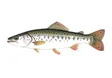
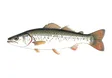
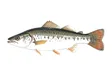
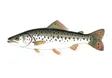
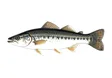
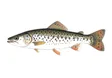
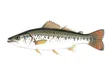
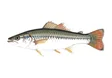
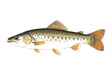
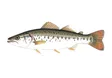
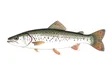
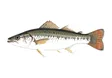
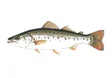
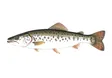
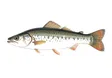
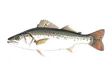
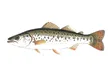
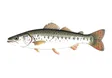
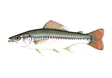
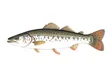
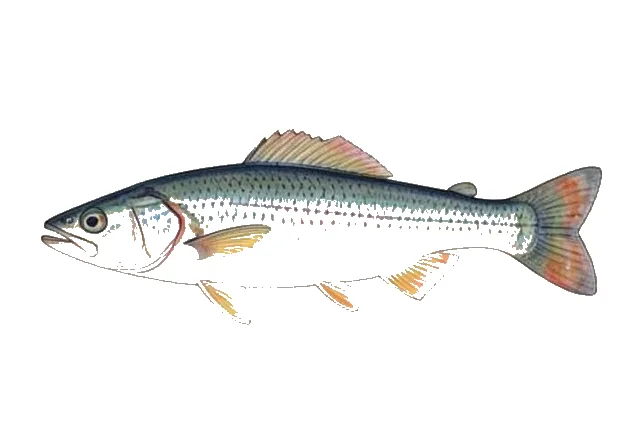
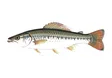
Blue-fintop Minnow field guide illustration

About Blue-fintop Minnow

Lucania goodei, the bluefin killifish, is a small species of fish in the topminnow family Fundulidae. It is native to the southeastern United States, but has been introduced to California, Texas and North Carolina. Other common names for the fish include Florida blue dace.

Distribution

The bluefin killifish is found throughout Florida, except for its panhandle, where it is not found west of the Choctawhatchee River. It is found in the Chipola River drainage of southeastern Alabama, and sporadically along the Atlantic coast up to central South Carolina. It has been introduced to Texas, North Carolina, and California.

Description

Normally, the bluefin killifish can grow up to 2.9 cm (1.1 in), but the maximum length recorded is 6 cm (2.4 in). The maximum recorded age of the bluefin killifish is 2 years.

Ecology

Lucania goodei lives in heavily vegetated ponds and streams with little to no current. It is often found in spring habitats, and can also survive in moderate salinity, as well as low oxygen environments where it uses its upturned mouth to gulp air at the surface. Otherwise, it swims well below the surface. It is not a seasonal fish, unlike some other killifish. To distinguish between a male and female, look for an orange tint on the fins, as males have an orange tint to them, while females’ fins are colorless.

The females are the ones carrying the eggs, and although they can breed year-round, peak breeding occurs from spring to summer.

Species naming

Lucania goodei was described by David Starr Jordan in 1880 with the type locality given as the Arlington River a tributary of St. John's River in Florida. The specific name honors the American ichthyologist George Brown Goode (1851–1896) who was the collector of the type.

Article text: Wikipedia contributors, Lucania goodei (source revision). Licensed under CC BY-SA 4.0. Retrieved 2026-10-11.
Diet and feeding

The FishTraits compilation records these diet categories for this species: algae or phytoplankton; aquatic or other vascular plants; invertebrates or larval fish. These are broad categories, not a claim that every individual consumes every example in a category.

Reported feeding positions include bottom feeding and surface or water-column feeding. The compilation combines published observations; diets can vary with age, locality, and available food.

Habitat preferences

Reported habitat associations include streams and small rivers, creeks, still-water habitats, springs or subterranean waters.

The source records associations with muck, clay or silt, sand, vegetation. An association indicates reported use, rather than an exclusive requirement.

Reproduction and parental care

The compilation reports a representative maturity age of 1 years. Its maturity field summarizes mean, median, or modal estimates, usually for females; male estimates can be used when female data are unavailable. It is not a fixed age at which every fish first breeds.

Batch or serial spawning has been reported somewhere in the species’ range. This does not establish the same spawning pattern for every population.

Recorded spawning months are Mar, Apr, May, Jun, Jul, Aug for the source’s reporting region (NC). This is a regional calendar, not a range-wide schedule.

The reproductive-guild classification includes spawning on open substrates without guarding the brood.

Size and recorded longevity

FishTraits reports a maximum total length of 6 centimetres. Some entries use an estimated asymptotic length; this value should not be treated as a certified record catch.

Recorded longevity in the compilation is 2 years. Wild observations were preferred, but captive records were accepted where wild records were unavailable, and unspecified records were assumed wild. The value is not a guaranteed wild lifespan or an aquarium life expectancy.

Native range

Throughout Florida, except in panhandle only as far west as Choctawhatchee River drainage and southeastern Alabama in Chipola River drainage (Page and Burr 1991); sporadically along Atlantic Coast as far north as central South Carolina (where possibly introduced).

Introduction history

Unknown. Based on meristics, the South Carolina population came from Florida (Christie and Curtis 1983). The Texas population was most likely introduced with shipments of aquatic nursery plants from Florida.

Range

Where it lives

Share of 3,086 GBIF observation records with a state location, across 7 states. The orange dots are USGS stream-survey sites where this species was caught.
0%
93.9%
Share of 3,086 GBIF observation records with a state location, across 7 states. The orange dots are USGS stream-survey sites where this species was caught.

A blank area on the dot layer usually means nobody sampled there, not that the fish is absent. Turn on “every survey site” to see where the survey looked.

The USGS stream survey caught it at 38 of its sites, in 1 state. That survey and the GBIF records are two different counts of two different things, so the site keeps them apart.

Habitat

Water and movement

Water
WoRMS records this species in fresh water.
USGS NAS habitat
Freshwater
US status
Native transplant — native to part of the United States, moved to other waters inside it.
Migration
Not migratory

Classification

Taxonomy

Kingdom
Animalia
Phylum
Chordata
Superclass
Actinopterygii
Class
Teleostei
Order
Cyprinodontiformes
Genus
Lucania
Species
Lucania goodei
ITIS TSN
165680
WoRMS AphiaID
422558
GBIF key
2349571

Common questions about Blue-fintop Minnow

What is the scientific name of Blue-fintop Minnow?
The scientific name is Lucania goodei, in the family Fundulidae. Classification follows ITIS.
Does Blue-fintop Minnow live in fresh water or salt water?
WoRMS records this species in fresh water.
Where has Blue-fintop Minnow been recorded in the United States?
GBIF has observations in 7 states, with the most records in Florida, Texas, California. The map shows observation records, which do not establish the complete natural range.

Closest relatives

Other Lucania species

Same family

More Fundulidae

Banded Killifish31 states
Fundulus diaphanusFundulidaeNative and introducedFreshBrackish
Banded Topminnow5 states
Fundulus cingulatusFundulidaeNativeFresh
Barrens Topminnow1 states
Fundulus julisiaFundulidaeNativeFresh
Bayou Killifish6 states
Fundulus pulvereusFundulidaeNativeFreshSaltBrackish
Blackspotted Topminnow17 states
Fundulus olivaceusFundulidaeNativeFresh
Blackstripe Topminnow20 states
Fundulus notatusFundulidaeNativeFresh
Broadstripe Topminnow2 states
Fundulus euryzonusFundulidaeNativeFresh
California Killifish1 states
Fundulus parvipinnisFundulidaeNativeSaltBrackish
Diamond Killifish5 states
Adinia xenicaFundulidaeNativeFreshSaltBrackish
Golden Topminnow14 states
Fundulus chrysotusFundulidaeNativeFresh
Gulf Killifish11 states
Fundulus grandisFundulidaeNative and introducedFreshBrackish
Lined Topminnow8 states
Fundulus lineolatusFundulidaeNativeFresh
Longnose Killifish6 states
Fundulus similisFundulidaeNativeSalt
Marsh Killifish14 states
Fundulus confluentusFundulidaeNativeFreshSaltBrackish
Mummichog22 states
Fundulus heteroclitusFundulidaeNativeFreshSaltBrackish
Northern Starhead Topminnow16 states
Fundulus disparFundulidaeNativeFresh
Northern Studfish21 states
Fundulus catenatusFundulidaeNative and introducedFresh
Plains Killifish16 states
Fundulus zebrinusFundulidaeNative and introducedFreshBrackish
Plains Topminnow11 states
Fundulus sciadicusFundulidaeNative and introducedFresh
Pygmy Killifish5 states
Leptolucania ommataFundulidaeNativeFresh
Rainwater Killifish20 states
Lucania parvaFundulidaeNative and introducedFreshSaltBrackish
Russetfin Topminnow3 states
Fundulus escambiaeFundulidaeNativeFresh
Saltmarsh Topminnow5 states
Fundulus jenkinsiFundulidaeNativeSaltBrackish
Seminole Killifish4 states
Fundulus seminolisFundulidaeNativeFresh

All 32 species in Fundulidae