Characteristics
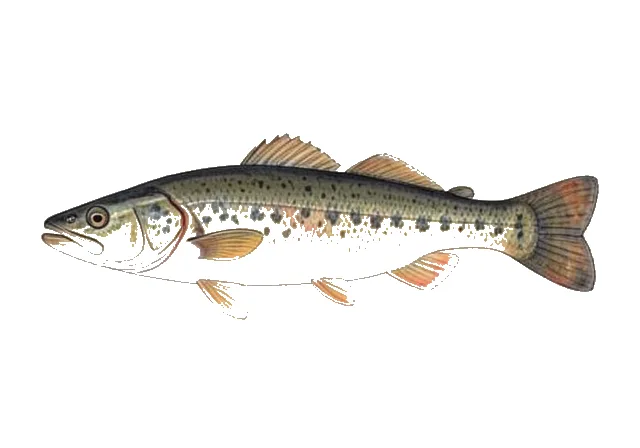
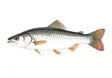
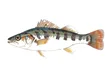
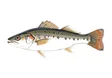
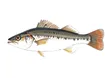
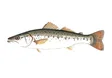
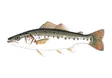
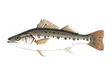
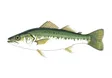
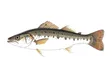
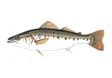
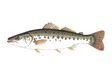
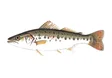
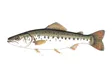
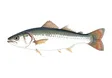
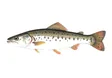
Round gobies are small, soft-bodied fish characterized by a distinctive black spot on the first dorsal fin. The eyes are large and protrude slightly from the top of the head and, like most gobies, the pelvic fins are fused to form a single disc (shaped like a suction cup) on the belly. Round gobies range in length from 10 to 25 centimetres (4 to 10 inches), with a maximum size of 24.6 cm (9.7 in). They weigh between 5.0 and 79.8 grams (0.176 and 2.816 ounces), their weight increasing with age. Male round gobies are larger than females. Juvenile round gobies (less than one year old) are grey. Upon maturation, round gobies become mottled with grey, black, brown, and olive green markings. Adult male round gobies turn inky black during the spawning season and develop swollen cheeks. Male and female round gobies are easily differentiated by the shape of their urogenital papilla, which in males is white to grey and long and pointed and in females is brown, short, and blunt-tipped.
Distribution and habitat
Round gobies are widespread in the Sea of Marmara and in the rivers of its basin and can also be found in the Black Sea and the Sea of Azov, along all coasts and fresh waters of their basins as well as in the coastal lakes and lagoons. They are also found in the rivers of Crimea and the Caucasus (Mezib, Pshada, Vulan, Kodori, and Çoruh) and in the Caspian Sea, represented by subspecies Neogobius melanostomus affinis.
Round gobies are euryhaline (salt-tolerant) and live in both freshwater and marine ecosystems, up to a mineralization of 18–24%. They are commonly found on continental shelves with sandy and rocky bottoms with low silting at depths from 1–2 m (3.3–6.6 ft) to 10–17 m (33–56 ft).
Introduced range
Since 1990, the round goby has been registered as introduced in the North American Great Lakes, in parts of Europe, and in the Baltic Sea as an invasive species. The first catch in North America was documented by Jude et al. 1992 and Crossman et al. 1992, caught by an angler in Sarnia, Ontario, fishing the St. Clair River on June 28, 1990. The studies of Jude, Crossman, together with Jude et al. 1995 found a range of sizes between 29 and 180 millimetres (1 + 1 ⁄ 8 and 7 + 1 ⁄ 8 in) in the St. Clair. Round gobies are also rapidly expanding into tributaries of the Great Lakes in North America and were recently discovered in at least one of the Finger Lakes in New York State (Cayuga Lake). The first round goby in the Hudson River was discovered by the state of New York in 2021.
The round goby is also considered invasive in parts of Europe. This process was started by its introduction to the Gulf of Gdańsk (southern Baltic Sea) in 1990. Locations recently invaded by round gobies include the Aegean Sea, different parts of the Baltic Sea, the North Sea basin, and the Danube and Rhine basins. In the German part of the Baltic Sea this fish was first noted near Rügen Island. It is now distributed all along the southwestern Baltic Sea coast, including Stettiner Haff (Szczecin Lagoon), the Unterwarnow (Warnow river estuary), the mouth of the Trave, and the Nord-Ostsee (Kiel) Canal.
As of 2010, the westernmost site of round goby occurrence in Europe was the lower Scheldt, including the tidal zone in the river mouth, and Albert Canal, Belgium. In 2011, the round goby began invading the fresh waters of France; the species appeared in the Rhine River (on the border between France and Germany) and in the French part of the Moselle River.
In the Volga-Kama basin, the round goby has successfully colonized all major reservoirs of the Volga River and has been recorded as far upstream as the upper part of the Votkinsk Reservoir in the Kama River. Genetic analysis of the Volga populations reveals a complex structure, indicating multiple invasion pathways and the mixing of phylogenetic lineages originating from both the Azov-Black Sea basin and the Caspian Sea. Genetic analysis of invasive populations in the Volga River basin has revealed a complex population structure comprising at least three distinct phylogenetic lineages based on mitochondrial and nuclear markers. Two lineages are distributed in the Upper and Middle Volga reservoirs, while a third is found in the Middle Volga and its lower reaches. This structure suggests multiple invasion pathways from both Azov-Black Sea and Caspian donor regions, with the Middle Volga reservoirs acting as a secondary mixing zone for these genetic lineages.
Feeding
Round gobies actively feed both nocturnally and diurnally and are believed to detect prey only while stationary. The primary diet of round gobies includes mollusks, crustaceans, worms, zebra mussels, insect larvae, and other small invertebrates (insects and amphipods) living on the bottom of lakes and streams. In spring, the main elements of their diet in the Sasyk Lagoon are Hydrobia, Cerastoderma, and Abra. In the same season, near the Romanian coasts of the Black Sea, the round goby feeds on polychaetes, crustaceans (Idotea balthica, Pachygrapsus marmoratus, Xantho poressa, etc.), and juvenile gobies. Near Sevastopol, the round goby feeds on molluscs (Mytilaster lineatus and Abra sp.). In the Baltic Sea, they impact Mytilus edulis populations.
In the Gulf of Odessa, twenty-three items are identified in the diet of the round goby; Mytilus galloprovincialis, Setia pulcherrima, Mytilaster lineatus, Lentidium mediterraneum, Idotea balthica, and Alitta (Nereis) succinea dominate in the spring, while in the summer, the diet consists mainly of Sphaeroma pulchellum and L. mediterraneum. The mussels M. galloprovincialis and M. lineatus are important in all seasons. In the Great Lakes, where it is invasive, they prey on Dreissena polymorpha, another Great Lakes exotic from the same native region.
Reproduction
Female round gobies reach sexual maturity in one to two years while males do so in three to four years. Gobies in the Laurentian Great Lakes typically mature up to one year earlier than in their native habitat in Europe. Females can spawn up to six times during the spawning season, which spans April to September in most areas.
Males will migrate from deeper water, where overwintering occurs, into shallower breeding grounds during the beginning of the mating season. They then release a steroid sex pheromone that attracts females to their territory. Males also use visual displays, including posturing and changing color from beige to black during mating season, and can produce sounds during courtship. The females deposit their eggs in male-guarded crevices between rocks. Eggs are 4 by 2.2 mm (0.16 by 0.087 in) in size, while egg clutches can contain up to five thousand eggs. Males are territorial and will defend eggs from predators as well as continuously fan them to provide the developing embryos with oxygenated water. This results in successful hatch rates of up to 95%.
Invasive species
The species was accidentally introduced into the North American Great Lakes by way of ballast water transfer in cargo ships. First discovered in North America in the St. Clair River in 1990, the round goby is considered an invasive species with significant ecological and economic impact. The consequences of introduction are quite complex, as the fish both competes with native species and provides an abundant source of food for them, while consuming other invasive species itself. In other words, the round goby behaves much like most biological invasive controls. An aggressive fish, the round goby outcompetes native species such as the sculpin and logperch for food (such as snails and mussels), shelter, and nesting sites, substantially reducing their numbers. The goby's robust ability to survive in degraded environmental conditions has helped to increase its competitive advantage compared to native species.
Many native predatory fish such as smallmouth bass, largemouth bass, walleye, lake trout, lake whitefish, burbot, lake sturgeon, salmon, and trout have begun to prey on round gobies. The incorporation of the round goby into native foodwebs, coupled with the goby's ability to consume large numbers of invasive mussels (zebra and quagga), may result in greater bioaccumulation of toxins such as PCBs higher in the food chain, since these mussels filter-feed and are known to accumulate persistent contaminants. However, this is partly beneficial because even though they do not reduce the population of zebra mussels, they do control their population. Hence, it prevents a large-scale spread of the zebra mussel, which is also an invasive species in the Great Lakes. Another unintended benefit of the round goby's introduction is that the Lake Erie watersnake, once listed as a threatened species, has found the goby to be a highly favorable addition to its diet. A recent study found the introduced fish now accounts for up to 90% of the snake's prey; this new food source means that the water snake is now staging a comeback. In 2017, round goby also made up over 86% of the recorded diet by weight of native lake sturgeon in the Niagara River region, where it had become the sturgeons' most important vertebrate prey. In Lake Erie, round gobies also became the most common prey item for burbot, entering their recorded diet in 2000-2001 and overtaking their previous most common prey item, rainbow smelt, around 2003. This predation forms a primary control mechanism for goby populations, as around 60% of a given year's gobies are estimated to be eaten by burbot. A recovery in burbot population between 1985 and 2000 was, consequently, associated with the leveling off and stabilizing of round goby population growth in the lake.
Parasites
In total, fifty-two parasite species are registered in the round goby in its native area. The most abundant parasites of the Black Sea round goby are metacercariae of trematodes of the Heterophyidae family, such as Cryptocotyle concavum, C. lingua, and Pygidiopsis genata. The trematodes C. lingua and P. genata can infest humans. In the 1950s, along the coast of the Gulf of Taganrog (Sea of Azov), the round goby was registered as a host of epizootic nematodes Tetrameres fissispina and Streptocara crassicauda, which were fatal to ducklings.
In the Gulf of Gdańsk, Baltic Sea, the parasites of the invasive round goby consist of twelve species. The core of the parasite fauna comprises two species of trematode metacercariae: C. concavum and Diplostomum spathaceum. Also in the Baltic Sea, the round goby is a paratenic host of the invasive nematode Anguillicoloides crassus. In the Vistula Lagoon, the most abundant parasites of the round goby are nematodes Hysterothylacium aduncum and Anguillicoloides crassus.
Twenty-five species of parasites are noted in the round goby in the American Great Lakes. The trematode D. spathaceum is the most abundant core species overall, while the cestode Proteocephalus sp. and the trematode Neochasmus umbellus are also well represented. The round goby may prevent some of the metacercariae of N. umbellus from completing their life cycle. The parasite "load"on the invasive gobies in the Great Lakes appears relatively low in comparison with their native habitats, lending support to the"enemy release hypothesis".
Article text: Wikipedia contributors, Round goby (source revision). Licensed under CC BY-SA 4.0. Retrieved 2026-10-11.
Diet and feeding
The FishTraits compilation records these diet categories for this species: invertebrates or larval fish; larger animal prey (a source category covering fish, crayfish, crabs, or frogs); fish or frog eggs. These are broad categories, not a claim that every individual consumes every example in a category.
Reported feeding positions include bottom feeding. The compilation combines published observations; diets can vary with age, locality, and available food.
Habitat preferences
Reported habitat associations include still-water habitats.
The source records associations with cobble. An association indicates reported use, rather than an exclusive requirement.
Reproduction and parental care
The compilation reports a representative maturity age of 3 years. Its maturity field summarizes mean, median, or modal estimates, usually for females; male estimates can be used when female data are unavailable. It is not a fixed age at which every fish first breeds.
Batch or serial spawning has been reported somewhere in the species’ range. This does not establish the same spawning pattern for every population.
Recorded spawning months are Apr, May, Jun, Jul, Aug, Sep for the source’s reporting region (MN). This is a regional calendar, not a range-wide schedule.
The reproductive-guild classification includes guarding eggs or young at a spawning substrate or nest.
Size and recorded longevity
FishTraits reports a maximum total length of 24.6 centimetres. Some entries use an estimated asymptotic length; this value should not be treated as a certified record catch.
Recorded longevity in the compilation is 4 years. Wild observations were preferred, but captive records were accepted where wild records were unavailable, and unspecified records were assumed wild. The value is not a guaranteed wild lifespan or an aquarium life expectancy.
Identification and appearance
Distinguishing characteristics have been given by Berg (1949), Miller (1986), Crossman et al. (1992), Marsden and Jude (1995), and Hubbs et al. (2004). Young round gobies are solid slate gray. Older fish are blotched with black and brown and have a white to greenish dorsal fin with a black spot at the posterior base (but note some Lake Erie specimens are spotless). This goby is superficially similar to native sculpins but can be distinguished by the presence of fused pelvic fins (sculpins have two separate fins) (Marsden and Jude 1995; Hubbs et al. 2004).
Native range
Freshwater, prefers brackish (Stepien and Tumeo 2006). Eurasia including Black Sea, Caspian Sea, and Sea of Azov and tributaries (Miller 1986).
Habitat and ecology
Female round gobies mature at 1-2 years with clutch (100-4000 eggs) related to body size. They can spawn every 20 days from April to September and have a maximum lifespan of about 4 years. Round goby has been shown to exhibit phenotypic plasticity in some life history characteristics, such as reproductive traits like number and size of mature oocytes, and this plasticity has been suggested to enhance establishment success at invasion fronts (Hôrková and Kovác 2015). Phenotypic plasticity has also been shown in Round goby to maintain or regain homeostasis after rapid temperature changes, thus increasing its invasion success (Wellband and Heath 2017).
The Round goby has a well-developed sensory system that enhances its ability to detect water movement. This allows it to feed in complete darkness, giving it an advantage over other fish in the same habitat (Wisconsin Sea Grant 2008). Round goby also forage efficiently in structured habitats that might otherwise serve as prey refugia (Gebauer et al 2019).
Round goby are dietary generalists feeding on both invertebrates – Dreissenid mussels, fingernail clams, small native mussels and snails, soft-shelled crayfish, Ephemeroptera, Plecoptera, Trichoptera, Chironomidae, Ceratapogonidae, Diptera, Odonata, Oligochaeta, Ostracoda, Isopoda, Amphipoda, Mysidae, and large Cladocerans (Jude et al 1992, Jude et al 1995, Ray and Corkum 1997, French and Jude 2001, Ricciardi 2001, Phillips et al 2003, Barton et al 2005, Hogan et al 2007, Walsh et al 2007, Krakowiak and Pennuto 2008, Polacik et al 2009, Kipp et al 2012) – as well as on small fishes and fish eggs (Crossman et al 1992, Jude et al 1995, Marsden and Jude 1995, Ray and Corkum 1997, Chotkowski and Marsden 1999, French and Jude 2001, Jude 2001, Ricciardi 2001, Hensler and Jude 2007, Gebauer et al 2018, Gebauer et al 2019, LeBlanc et al 2019). The zebra mussel (Dreissena polymorpha) may have facilitated the invasion of the Round goby by providing an abundant food source (Ricciardi and MacIsaac 2000).
Round gobies, particularly young gobies, are eaten by many native Great Lakes fishes including Lake Trout (Salvelinus namaycush), Smallmouth Bass (Micropterus dolomieu), Mottled Sculpin (Cottus bairdii), Northern Madtom (Noturus stigmosus), Burbot (Lota lota) and Lake Sturgeon (Acipenser fulvescens) (French and Jude 2001, Steinhart et al 2004, Dietrich et al 2006, Brey 2006, Hogan et al 2007, Taraborelli et al 2010, Madenjian et al 2011, Crane and Einhouse 2016, Jacobs et al 2017).
Round goby is one of the most frequently found prey items in the diet of the Double-Crested Cormorant (Phalacrocorax auritus) (Van Guilder and Seefelt 2013, Madura and Jones 2016). Round Gobies now comprise the majority of the diet for Lake Erie water snakes (Nerodia sipedon insularum), and the abundance of gobies has been credited for the increase in population size, increased growth rates, and larger body size of the snakes (King et al. 2006).
Introduction history
Introduced into the Great Lakes from the Black Sea via freighter ballast. Spread to Lake Superior by freighters operating within the Great Lakes (Hensler and Jude 2007); larval round goby have a diel vertical migration that facilitates them being taken in with ship ballast water and spread port to port. Round goby distribution in the Baltic Sea was partially determined by shipping activity, thus it is likely the same applies to the Great Lakes populations (Kotta et al. 2016). Evidence suggests that gobies make use of boat hulls as habitat, and could nest on boats and therefore be vectored to new areas via boat hulls (Bussmann and Burkhardt-Holm 2020).
Ecological impacts
The numbers of native fish species have declined in areas where the Round Goby has become abundant (Crossman et al., 1992). This species has been found to prey on darters, other small fish, and Lake Trout eggs and fry in laboratory experiments. They also may feed on eggs and fry of sculpins, darters, and Logperch (Marsden and Jude, 1995) and have also been found to have a significant overlap in diet preference with many native fish species. French and Jude (2001) suggested that Round Goby competes with Rainbow Darter (Etheostoma caeruleum), Logperch (Percina caprodes), and Northern Madtom (Noturus stigmosus) for small macroinvertebrates; however, Burkett and Jude (2015) found that gobies exhibited little diet overlap with most small benthic fishes.
Mottled Sculpins (Cottus bairdi) have been particularly affected since the establishment of N. melanostomus (Marsden and Jude 1995). This is almost certainly due to competition with sculpins for spawning sites in large Round Goby (greater than 100 mm), for space in medium Round Goby (60-100 mm) and for food in small Round Goby (less than 60 mm) (Janssen and Jude 2001). Janssen and Jude (2001) argued that the main cause of the dramatic decline in the native Mottled Sculpin population is due to nesting interference with Round Goby; the other competition factors having a less severe impact, although they acknowledge the need for further research on food competition. Adults aggressively defend spawning sites and occupy prime spawning areas, keeping natives out (Marsden and Jude 1995; Dubs and Corkum 1996). Laboratory experiments have shown that the more aggressive N. melanostomus will evict C. bairdi from rock shelters that are being used for spawning or daytime predator evasion (Dubs and Corkum 1996). In trials where gobies were introduced into tanks with Mottled Sculpin residents, the gobies approached and chased the resident sculpin (Dubs and Corkum 1996). When sculpin were released into resident Round Goby tanks, the sculpin were chased and bitten (Dubs and Corkum 1996). Sculpin did not exhibit any aggressive behavior towards the gobies in any scenario (Dubs and Corkum 1996). In Calumet Harbor, there has been an absence of Mottled Sculpin nests and fish aged 0 since 1994, coinciding with N. melanostomus establishment (Janssen and Jude 2001). Neogobius melanostomus and C. bairdi both take daytime refuge from predators under rocks, emerging to feed nocturnally (Dubs and Corkum 1996). This space competition could displace C. bairdi into deeper and unprotected spaces where they can easily be predated. Competition for food between N. melanostomus and C. bairdi occurs most heavily when they are young (less than 60 mm), due to the overlap of an arthropod diet at this age (Janessen and Jude 2001).
The diet of larger Round Gobies consists mainly of zebra mussels, which no other fish species of the Great Lakes consumes so heavily, allowing round gobies to uniquely exploit a resource that could fuel a population explosion (Vanderploeg et al. 2002). In LeBoeuf and French creeks, Pennsylvania, native juvenile Unionid mussels comprised a significant portion of Round Goby diets (Bradshaw-Wilson et al. 2019). Walleye anglers in Detroit report that at times, all they can catch are gobies, which eagerly attack bait (Marsden and Jude 1995).
The invasion of Round Goby into Lake Erie has had very real environmental and economic impacts. Beginning in 2004, The State of Ohio has closed the Smallmouth Bass fishery in Lake Erie during the months of May and June, due to high predation rates by gobies on nests affecting recruitment. Under normal circumstances male Smallmouth Bass guard nests and are effective in deterring gobies. When males are removed, gobies immediately invade and have been shown to eat up to 4,000 eggs within 15 minutes. The months of May and June normally account for 50 percent of the total Smallmouth Bass catch in Lake Erie so there will be a considerable loss in funds generated by recreational fishers (National Invasive Species Council 2004).
The Menasha Lock on the Fox River (Wisconsin) is closed to navigation to prevent upstream movement of N. melanostomus into Lake Winnebago. An electric barrier has been proposed to allow the lock to open but still prevent upstream fish movement (Prinsen, 2021).
Neogobius melanostomus introductions may also be a vector for the spread of avian botulism. The change in behavior of infected gobies make them preferred prey items to piscivorous birds (Yule et al. 2006). At Lake Erie, botulism infected birds had been feeding more on Round Goby compared to uninfected birds (Corkum et al. 2004). Increased abundance of Round Goby in the diet of double-crested cormorant (Phalacrocorax auritus) may reduce chick growth and reproductive success, due to a lower energy density compared to other native fishes (Ruetz et al. 2009), and thus could provide some control over cormorant populations (Van Guilder and Seefelt 2013). Round Goby may provide an entry point for polychlorinated biphenyls (PCBs) into trophic webs. Macksasitorn et al. (2015) found a weak correlation between sediment and goby tissue PCB concentrations, with smaller gobies having higher PCB concentration.
Not all impacts of the introduced Round Goby are negative. Round Gobies comprise the majority of the diet for Lake Erie water snakes (Nerodia sipedon insularum), and the abundance of gobies has been credited for the increase in population size, increased growth rates, and larger body size of the snakes (King et al. 2006). Due to their increase in abundance, the Lake Erie water snake was removed from the federal Endangered Species List in 2011. In addition, round gobies provide an abundant food source for several sportfishes including walleye (Taraborelli et al. 2010), yellow perch (Truemper and Lauer 2005), and largemouth/smallmouth bass (Steinhart et al. 2004; Taraborelli et al. 2010). Round goby became the primary food resource for smallmouth bass in New York waters of Lake Erie following invasion, with a marked decrease in crayfish consumption, and bass had a larger length-at-age in the post-invasion period (Crane and Einhouse 2016). Jacobs et al. (2017) used stable isotope analysis to examine Lake Sturgeon (Acipenser fulvescens) in Lake America and lower Nigara River pre- and post-invasion of Round Goby, finding an increased trophic position with age, an increased rate of δ 15 N enrichment, and a marked importance of Round Goby in Lake Sturgeon diets in the post-invasion period. Jacobs et al. (2017) suggest that high abundance of this novel food source has altered Lake Sturgeon feeding ecology and may have increased population growth and success.