Arrow Goby

Clevelandia ios

Gobiidae · saltwater and brackish water fish

3 minute read · Species guide

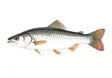
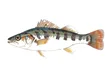
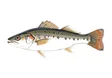
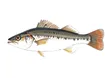
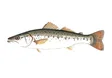
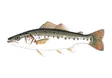
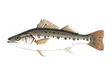
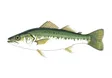
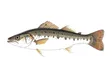
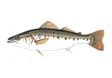
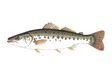
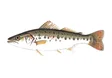
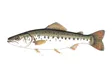
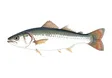
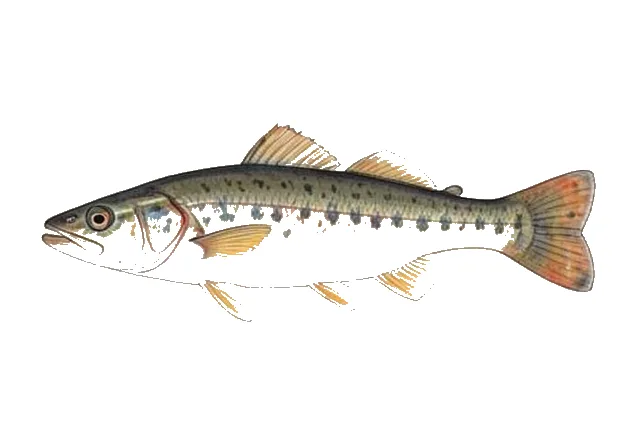
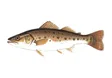
Arrow Goby field guide illustration

About Arrow Goby

The arrow goby (Clevelandia ios) is a species of goby native to marine and brackish waters of the Pacific coast of North America from British Columbia to Baja California. This species grows to a length of 6.4 centimetres (2.5 in) SL, though most do not exceed 4.2 centimetres (1.7 in) TL. This fish can also be found displayed in public aquaria. This species is the only known member of its genus.

Description

The arrow goby is a small, pale grey, translucent fish which grows to 6.4 centimetres (2.5 in) in length. It has two dorsal fins; the first is the shorter and has 4-5 spines while the dorsal fin has 15-17 soft fin rays. The anal fin is about equal in length to the second dorsal fin and has 14-17 fin rays. Like other gobies, the caudal fin is rounded and the pectoral fins form a cone which the goby uses to prop the anterior part of its body above the substrate. Its scales are minute, and the mouth extends beyond to the eye. The dorsal fins have short horizontal stripes and the body is pale brownish-grey in colour with darker mottling.

Distribution

Arrow gobies are found along the Pacific Coast of North America, from the Rivers Inlet in British Columbia to Baja California.

Habitat and biology

The arrow goby occurs in sand or mud substrates, where it uses burrows created by invertebrates as shelters when it is threatened and as a refuge at low tide. Some of the species which make burrows used by arrow gobies include the shrimps Neotrypaea californiensis and Upogebia pugettensis and the fat innkeeper worm Urechis caupo. It is a common species of estuaries, lagoons and tidal sloughs, and it has been reported in freshwater. The adults feed on diatoms, green algae, tintinnids, and the eggs and young of the host shrimp or prawn. This species will place large food items close to crabs so that the crab will tear it into smaller pieces. Arrow gobies are prey for Sebastes, staghorn sculpin, whitespot greenling and terns. This species does not build a nest or provide any care for its offspring, and the eggs are dispersed into the water column. The underside of this goby is silvery, and when threatened, they use this to make a brief signal to other gobies before quickly taking refuge in the burrow. This is also used to signal for mates. The individuals of this species are protogynous hermaphrodites; young adults are females and as they mature they become male.

Etymology

The generic name Clevelandia honours the lawyer Daniel Cleveland (1838–1929), who was a founder and president of the San Diego Natural History Society and who made significant contributions to the knowledge of the flora and fauna of southern California. Over a dozen plants – including the Cleveland sage and another genus Clevelandia – were also named after him.

The specific name ios is an Ancient Greek word for an arrow: ἰός. It refers to the slender fish's long body that is reminiscent of an arrow.

Article text: Wikipedia contributors, Arrow goby (source revision). Licensed under CC BY-SA 4.0. Retrieved 2026-10-11.
Range

Where it lives

Share of 822 GBIF observation records with a state location, across 3 states.
0%
94.2%
Share of 822 GBIF observation records with a state location, across 3 states.

Habitat

Water and movement

Water
WoRMS records this species in brackish water and the sea.

Classification

Taxonomy

Kingdom
Animalia
Phylum
Chordata
Superclass
Actinopterygii
Class
Teleostei
Order
Perciformes
Family
Gobiidae
Genus
Clevelandia
Species
Clevelandia ios
ITIS TSN
171748
WoRMS AphiaID
280215
GBIF key
5209085
Outside the US
ITIS also files it in Canada.

Common questions about Arrow Goby

What is the scientific name of Arrow Goby?
The scientific name is Clevelandia ios, in the family Gobiidae. Classification follows ITIS.
Does Arrow Goby live in fresh water or salt water?
WoRMS records this species in brackish water and the sea.
Where has Arrow Goby been recorded in the United States?
GBIF has observations in 3 states, with the most records in California, Washington, Oregon. The map shows observation records, which do not establish the complete natural range.

Same family

More Gobiidae

Blackfin Goby1 states
Gobionellus atripinnisGobiidaeNativeFreshSaltBrackish
Brown Goby2 states
Bathygobius fuscusGobiidaeIntroducedFreshSaltBrackish
Cabillus caudimacula1 states
GobiidaeNativeSalt
Chameleon Goby1 states
Tridentiger trigonocephalusGobiidaeIntroducedFreshSaltBrackish
Clown Goby7 states
Microgobius gulosusGobiidaeNativeFreshSaltBrackish
Cocos Frillfin Goby1 states
Bathygobius cocosensisGobiidaeIntroducedSaltBrackish
Code Goby7 states
Gobiosoma robustumGobiidaeNativeSaltBrackish
Crested Goby2 states
Lophogobius cyprinoidesGobiidaeNativeFreshSaltBrackish
Frillfin Goby9 states
Bathygobius soporatorGobiidaeNativeFreshSaltBrackish
Green Goby10 states
Microgobius thalassinusGobiidaeNativeSalt
Highfin Goby8 states
Gobionellus oceanicusGobiidaeNativeFreshSaltBrackish
Hiukole Goby1 states
Lentipes concolorGobiidaeNativeFreshBrackish
Longjaw Mudsucker3 states
Gillichthys mirabilisGobiidaeNative and introducedSaltBrackish
Lyre Goby8 states
Evorthodus lyricusGobiidaeNativeFreshSaltBrackish
Naked Goby16 states
Gobiosoma boscGobiidaeNative and introducedSaltBrackish
Naniha Goby1 states
Stenogobius hawaiiensisGobiidaeNativeFreshBrackish
Neon Goby1 states
Elacatinus oceanopsGobiidaeNativeSalt
Nopoli Rockclimbing Goby1 states
Sicyopterus stimpsoniGobiidaeNativeFreshSaltBrackish
Northern Tidewater Goby1 states
Eucyclogobius newberryiGobiidaeNativeSaltBrackish
Notchtongue Goby2 states
Bathygobius curacaoGobiidaeNativeSalt
Pacific River Goby1 states
Awaous guamensisGobiidaeNativeFreshSaltBrackish
Pleurosicya larsonae1 states
GobiidaeNativeSalt
River Goby3 states
Awaous bananaGobiidaeIntroducedFreshBrackish
Rockcut Goby1 states
Gobiosoma grosvenoriGobiidaeNativeSalt

All 33 species in Gobiidae