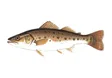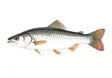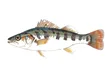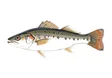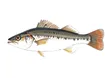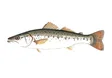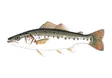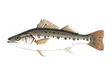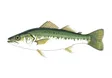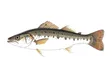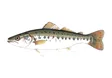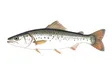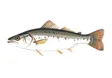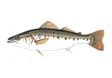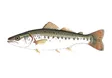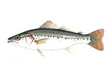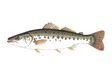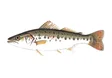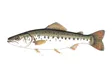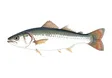
Nopoli Rockclimbing Goby

Sicyopterus stimpsoni

Gobiidae · freshwater and saltwater and brackish water fish

2 minute read · Species guide

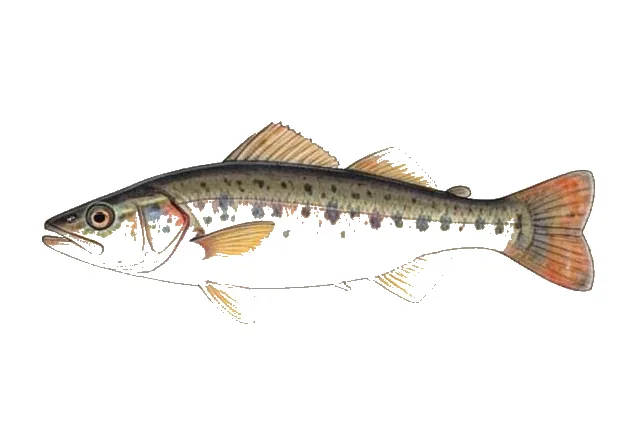
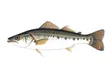
Nopoli Rockclimbing Goby field guide illustration

About Nopoli Rockclimbing Goby

Sicyopterus stimpsoni, commonly known as the Nopili rockclimbing goby, oopu nopili, or Stimpson's goby, is a species of amphidromous goby endemic to the islands of Hawaii. This species can reach a length of 19.8 centimetres (7.8 in) SL.

Ecology

Juveniles move from saltwater to freshwater streams shortly before changes in the anatomy of their mouths make eating plankton impossible. Their dietary behaviour depends critically on the benthic algal cycle, which is locked into the hydrological cycles of the island streams.

The species in its adult form is found in the upper parts of clear, fast-running mountain streams, where there is clean gravel and rocks with no sedimentation, allowing the growth of algae on rock surfaces. It is found on all the Hawaiian Islands, although it has become rare on Oahu. The species is herbivorous, feeding only on diatoms and filamentous algae, and vigorously defending its feeding patch. The fish cultivate gardens on the upper surfaces of stones and boulders. Here they encourage a short turf of diatoms, filamentous algae and blue-green algae. The males guard these territorial gardens, and they play a part in courtship.

The males display brilliant blue and red colours during the breeding season, colours which change with the mood of the fish. The females attach their eggs to rocks where they are fertilised by the males, and the hatchlings are immediately washed downstream into the sea, where they develop, later to return to the freshwater pools upstream, where they live for several years. To arrive at these pools the juveniles need to climb the vertical rock under and beside very high waterfalls. The climbing is postponed until their mouthparts have moved from a forward-facing position to under the body. This change is effected in two days, altering their diet from that of a filter feeder to feeding almost exclusively on algae growing on the rock surfaces, and not coincidentally enabling them to ascend slippery waterfall rocks by using mouth and pelvic suckers.

It is preyed upon by black-crowned night herons and during its upstream migration through the estuary by Caranx spp., Polydactylus sexfilis and Sphyraena barracuda.

Conservation

Five of the seven native freshwater fish species on Hawaii are gobioid. Three of these gobioids, S. stimpsoni (this article), Awaous stamineus (endemic) and Lentipes concolor (endemic) are amphidromous stream dwellers, which are adapted to the steep torrents of Hawaii's mountains (Eleotris sandwicensis and Stenogobius hawaiiensis, both endemic, are unable to pass steep torrents). This makes them extremely sensitive to habitat disturbance.

Etymology

The specific name honours the marine biologist William Stimpson (1832-1872), who was the collector of the type specimen.

Article text: Wikipedia contributors, Sicyopterus stimpsoni (source revision). Licensed under CC BY-SA 4.0. Retrieved 2026-10-11.
Range

Where it lives

Share of 99 GBIF observation records with a state location, across 1 states.
0%
100%
Share of 99 GBIF observation records with a state location, across 1 states.

Share of records by state

Habitat

Water and movement

Water
WoRMS records this species in fresh water, brackish water and the sea.
Migration
Migratory
Pattern
  • Diadromous — moves between fresh water and the sea
  • Amphidromous — moves between fresh water and the sea, but not to spawn

Classification

Taxonomy

Kingdom
Animalia
Phylum
Chordata
Superclass
Actinopterygii
Class
Teleostei
Order
Perciformes
Family
Gobiidae
Genus
Sicyopterus
Species
Sicyopterus stimpsoni
ITIS TSN
553350
WoRMS AphiaID
277438
GBIF key
2376610

Common questions about Nopoli Rockclimbing Goby

What is the scientific name of Nopoli Rockclimbing Goby?
The scientific name is Sicyopterus stimpsoni, in the family Gobiidae. Classification follows ITIS.
Does Nopoli Rockclimbing Goby live in fresh water or salt water?
WoRMS records this species in fresh water, brackish water and the sea.
Where has Nopoli Rockclimbing Goby been recorded in the United States?
GBIF has observations in 1 states, with the most records in Hawaii. The map shows observation records, which do not establish the complete natural range.

Same family

More Gobiidae

Arrow Goby3 states
Clevelandia iosGobiidaeNativeSaltBrackish
Blackfin Goby1 states
Gobionellus atripinnisGobiidaeNativeFreshSaltBrackish
Brown Goby2 states
Bathygobius fuscusGobiidaeIntroducedFreshSaltBrackish
Cabillus caudimacula1 states
GobiidaeNativeSalt
Chameleon Goby1 states
Tridentiger trigonocephalusGobiidaeIntroducedFreshSaltBrackish
Clown Goby7 states
Microgobius gulosusGobiidaeNativeFreshSaltBrackish
Cocos Frillfin Goby1 states
Bathygobius cocosensisGobiidaeIntroducedSaltBrackish
Code Goby7 states
Gobiosoma robustumGobiidaeNativeSaltBrackish
Crested Goby2 states
Lophogobius cyprinoidesGobiidaeNativeFreshSaltBrackish
Frillfin Goby9 states
Bathygobius soporatorGobiidaeNativeFreshSaltBrackish
Green Goby10 states
Microgobius thalassinusGobiidaeNativeSalt
Highfin Goby8 states
Gobionellus oceanicusGobiidaeNativeFreshSaltBrackish
Hiukole Goby1 states
Lentipes concolorGobiidaeNativeFreshBrackish
Longjaw Mudsucker3 states
Gillichthys mirabilisGobiidaeNative and introducedSaltBrackish
Lyre Goby8 states
Evorthodus lyricusGobiidaeNativeFreshSaltBrackish
Naked Goby16 states
Gobiosoma boscGobiidaeNative and introducedSaltBrackish
Naniha Goby1 states
Stenogobius hawaiiensisGobiidaeNativeFreshBrackish
Neon Goby1 states
Elacatinus oceanopsGobiidaeNativeSalt
Northern Tidewater Goby1 states
Eucyclogobius newberryiGobiidaeNativeSaltBrackish
Notchtongue Goby2 states
Bathygobius curacaoGobiidaeNativeSalt
Pacific River Goby1 states
Awaous guamensisGobiidaeNativeFreshSaltBrackish
Pleurosicya larsonae1 states
GobiidaeNativeSalt
River Goby3 states
Awaous bananaGobiidaeIntroducedFreshBrackish
Rockcut Goby1 states
Gobiosoma grosvenoriGobiidaeNativeSalt

All 33 species in Gobiidae