Mountain Redbelly Dace

Chrosomus oreas

Leuciscidae · freshwater water fish

3 minute read · Species guide

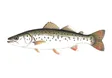
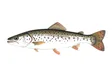
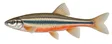
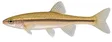
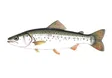
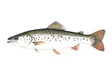
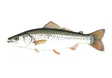
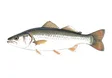
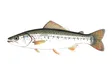
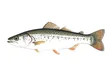
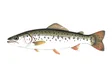
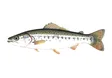
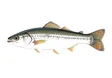
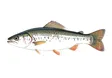
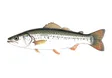
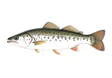
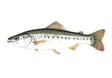
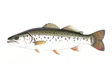
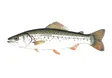
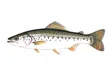
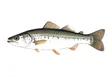
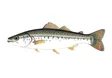
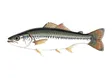
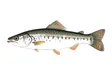
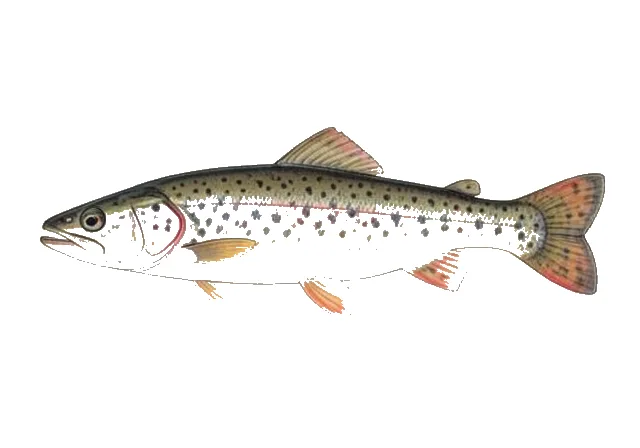
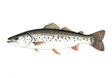
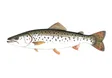
Mountain Redbelly Dace field guide illustration

About Mountain Redbelly Dace

The mountain redbelly dace (Chrosomus oreas) is a species of freshwater ray-finned fish belonging to the family Leuciscidae, which includes the daces, chubs, and related fishes. It is found in mountain and Piedmont regions of the Atlantic slope of North America from the Shenandoah River in Virginia, to the Neuse River drainage in North Carolina and the upper New River drainage in West Virginia, Virginia, and North Carolina.

Description

They are notable for a dark stripe across their midline that is misaligned under their dorsal fin, small blotches on the dorsal area of their bodies, a small body and mouth, and fine scales. Nuptial males will have more vibrant reds on their belly and fins that are yellow to chartreuse. There are no scales on the cheeks or operculum of the mountain redbelly dace and they have a forked tail. They have a singular dorsal fin, along with a pelvic fin that is positioned right underneath the dorsal fin.

Distribution

In Virginia waters, they are known to live for about 5 years and will grow up to about 55 millimeters or 2.1 inches in length. They are native in many of the streams in Virginia such as the ones across the ecological regions of Piedmont, Ridge and Valley, and Costal Plains. Due to what is likely the result of illegally discarded live bait by anglers, they have also been introduced into the southwest of Virginia, like the ecological regions in Holston and Big Sandy watersheds.

Overall, they have been spotted non-indigenously in many Hydrologic Unit Codes (HUCs), these being seven HUCs in North Carolina, one HUC in Pennsylvania, one HUC in Tennessee, and ten HUCs in Virginia. There are currently no studies that tell of the impact of the non-indigenous introduction of these fish.

Habitat and Biology

The mountain redbelly dace prefers to live in complex habitats within free-flowing streams, these typically being places with silt-free gravel, wood, or plants. They do best in medium-sized streams that have riffles, runs, and pools with moderate flows due to their need for clean water, generous amounts of oxygen, and different spaces that they can use during their biological life cycle.

They are considered tropic generalists who will eat a ranged diet, such as algae and other organisms.

They reproduce from around April to June, typically building on the gravel nests of nest building fish. Males are usually territorial and at nesting locations they will swarm single females. Similar spawning strategies with other species result in introgression at the sites.

Article text: Wikipedia contributors, Mountain redbelly dace (source revision). Licensed under CC BY-SA 4.0. Retrieved 2026-10-11.
Native range

Mountain and Piedmont regions of Atlantic Slope from Shenandoah River (Potomac River drainage), Virginia, to Neuse River drainage, North Carolina, upper New River drainage, West Virginia, Virginia, and North Carolina (Page and Burr 1991).

Introduction history

Probable bait bucket releases, multiple introductions to a drainage seem possible (Jenkins and Burkhead (1994). According to Jenkins and Burkhead (1994), the species was first recorded in the South Fork of the Shenandoah in 1956, Straight Creek in 1975, the Rapidan in 1951, the upper Rappahannock in 1974, the Pee Dee in North Carolina in 1970, the Pee Dee in Virginia in 1983-1984, and the Holston in 1966 (possibly as early as 1955). The population in the Rapidan likely came from the nearby James River. Jenkins and Burkhead noted that the availability of this species to bait seiners and its spectacular coloration increase the probability of this fish being moved about in bait buckets.

Range

Where it lives

Share of 1,418 GBIF observation records with a state location, across 6 states. The orange dots are USGS stream-survey sites where this species was caught.
0%
74.9%
Share of 1,418 GBIF observation records with a state location, across 6 states. The orange dots are USGS stream-survey sites where this species was caught.

A blank area on the dot layer usually means nobody sampled there, not that the fish is absent. Turn on “every survey site” to see where the survey looked.

The USGS stream survey caught it at 196 of its sites, in 5 states. That survey and the GBIF records are two different counts of two different things, so the site keeps them apart.

Habitat

Water and movement

Water
WoRMS records this species in fresh water.
USGS NAS habitat
Freshwater
US status
Native transplant — native to part of the United States, moved to other waters inside it.
Migration
Undetermined

Classification

Taxonomy

Kingdom
Animalia
Phylum
Chordata
Superclass
Actinopterygii
Class
Teleostei
Order
Cypriniformes
Genus
Chrosomus
Species
Chrosomus oreas
ITIS TSN
913996
WoRMS AphiaID
1018857
GBIF key
2365388

Common questions about Mountain Redbelly Dace

What is the scientific name of Mountain Redbelly Dace?
The scientific name is Chrosomus oreas, in the family Leuciscidae. Classification follows ITIS.
Does Mountain Redbelly Dace live in fresh water or salt water?
WoRMS records this species in fresh water.
Where has Mountain Redbelly Dace been recorded in the United States?
GBIF has observations in 6 states, with the most records in Virginia, North Carolina, West Virginia. The map shows observation records, which do not establish the complete natural range.

Closest relatives

Other Chrosomus species

Same family

More Leuciscidae

Alabama Shiner4 states
Cyprinella callistiaLeuciscidaeNativeFresh
Allegheny Pearl Dace19 states
Margariscus margaritaLeuciscidaeNative and introducedFresh
Altamaha Shiner1 states
Cyprinella xaenuraLeuciscidaeNativeFresh
Alvord Chub2 states
Siphateles alvordensisLeuciscidaeNativeFresh
Apalachee Shiner3 states
Pteronotropis grandipinnisLeuciscidaeNativeFresh
Arkansas River Shiner5 states
Notropis girardiLeuciscidaeNative and introducedFresh
Arroyo Chub1 states
Gila orcuttiiLeuciscidaeNative and introducedFresh
Bandfin Shiner5 states
Luxilus zonistiusLeuciscidaeNative and introducedFresh
Bannerfin Shiner5 states
Cyprinella leedsiLeuciscidaeNativeFresh
Beautiful Shiner3 states
Cyprinella formosaLeuciscidaeNativeFresh
Bedrock Shiner3 states
Notropis rupestrisLeuciscidaeNativeFresh
Bigeye Chub25 states
Hybopsis amblopsLeuciscidaeNative and introducedFresh
Bigeye Shiner17 states
Notropis boopsLeuciscidaeNative and introducedFresh
Bigmouth Chub3 states
Nocomis platyrhynchusLeuciscidaeNativeFresh
Bigmouth Shiner21 states
Notropis dorsalisLeuciscidaeNative and introducedFresh
Blackchin Shiner13 states
Notropis heterodonLeuciscidaeNativeFresh
Blackmouth Shiner3 states
Notropis melanostomusLeuciscidaeNativeFresh
Blacknose Shiner21 states
Notropis heterolepisLeuciscidaeNative and introducedFresh
Blackside Dace2 states
Chrosomus cumberlandensisLeuciscidaeNativeFresh
Blackspot Shiner5 states
Notropis atrocaudalisLeuciscidaeNativeFresh
Blacktail Shiner14 states
Cyprinella venustaLeuciscidaeNative and introducedFresh
Blacktip Shiner4 states
Lythrurus atrapiculusLeuciscidaeNative and introducedFresh
Bleeding Shiner8 states
Luxilus zonatusLeuciscidaeNativeFresh
Blotched Chub6 states
Erimystax insignisLeuciscidaeNativeFresh

All 267 species in Leuciscidae