European Rudd

Scardinius erythrophthalmus

Leuciscidae · freshwater and brackish water fish

10 minute read · Species guide

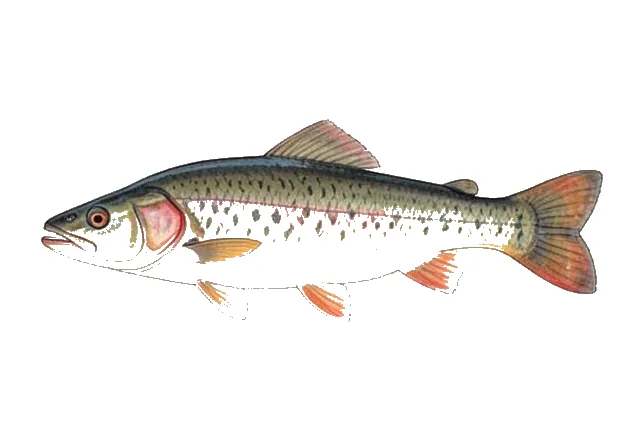
European Rudd field guide illustration

About European Rudd

The common rudd (Scardinius erythrophthalmus) is a bentho - pelagic freshwater ray-finned fish belonging to the family Leuciscidae. This species is widely spread in Europe and central Asia, around the basins of the North, Baltic, Black, Caspian and Aral seas.

Identification

Morphologically, this species is very similar to the roach (Rutilus rutilus), with which it can be easily confused. It can be identified by the yellow eye colour. The eye of the roach has a big red spot above the pupil, that can be more or less conspicuous. The rudd has an upturned mouth allowing it to feed easily at the top of the water. The placement of the dorsal fin is more to the rear which is even visible in very young fish. There are normally only one or two scales between the tip of the pelvic fins and the anal fins, while on the roach there are five. Also the skin of the rudd is yellowish green, while the roach is bluish on the flanks. Also the upturned mouth is visible even in young fish. Furthermore, the rudd's number of soft rays in the dorsal fin (8–9 compared to 10–12). There can be confusion with the ide also, which has smaller scales however.

There is a variety of the common rudd, popular among pond -keepers, known as the golden rudd, which has a gold-coloured body.

The rudd can grow to a size of about 45–50 cm with an average of about 25 cm.

The dorsal fin and pectoral fins are greyish with a reddish tint and all the other fins are bright red. This coloring of the fins is the feature to which the seventeenth century name 'rudd' refers.

Invasive species and artificial introduction

It has been artificially introduced to Ireland, United States, Morocco, Madagascar, Norway, Tunisia, New Zealand, Canada, and Spain.

Rudd have been found in the US states of Alabama, Arkansas, Colorado, Connecticut, Georgia, Illinois, Indiana, Kansas, Massachusetts, Maine, Missouri, Nebraska, New Jersey, New York, Oklahoma, Pennsylvania, South Dakota, Texas, Vermont, Virginia, West Virginia, and Wisconsin. This list may not include all states containing an introduced population of rudd.

Rudd were illegally introduced into New Zealand in the 1960s and have been actively spread around the country. They have the potential to irreversibly damage indigenous ecosystems.

Possession of rudd in the US

Rudd were reported in the United States at least as early as 1925. It is unlawful to possess or transport live specimens in the US state of Tennessee. No person, firm, corporation, partnership nor association shall possess, sell, offer for sale, import, bring, release or cause to be brought or imported into the State of Alabama any species of fish "rudd"(Scardinius erythrophthalmus) or"roach" (Rutilus rutilus) nor any hybrids of either species. This species was reported in Alabama from First Creek in Lauderdale County c. 1987.

Ecology

Rudd prefer clear waters rich in plants. They also feed on aquatic vegetation when the temperature exceeds 18 °C. They hunt for living prey in the upper levels. They prefer mesotrophic waters, while the roach is sometimes found together with the perch in waters that are nutrient poor. Rudd appear to prefer non-acidic water.

It prefers shallow weedy areas in lakes and river backwaters, where mature females lay up to 200,000 eggs on submerged vegetation. Young rudd eat zooplankton, aquatic insects, and occasionally other small fish. Mature rudd, which are about 18" in length and weigh about 3 pounds, eat mostly aquatic vegetation. The rudd can consume up to 40% of their body weight in vegetation per day, as much as 80% of which is discharged as waste, releasing nutrients into the water column. They can tolerate a wide range of temperatures and water conditions, including eutrophic or polluted waters. In the laboratory rudd readily hybridize with the U.S. golden shiner (Notemigonus crysoleucas). They come in both silver and gold, and are sometimes sold as pond ornamentals.

Maximum lifespan has been reported as 17 years. Sexual maturity has been reported at 2–3 years.

Article text: Wikipedia contributors, Common rudd (source revision). Licensed under CC BY-SA 4.0. Retrieved 2026-10-11.


Diet and feeding

The FishTraits compilation records these diet categories for this species: aquatic or other vascular plants; invertebrates or larval fish. These are broad categories, not a claim that every individual consumes every example in a category.

Habitat preferences

Reported habitat associations include medium to large rivers, streams and small rivers, creeks, still-water habitats.

The source records associations with muck, clay or silt, sand, vegetation, organic debris. An association indicates reported use, rather than an exclusive requirement.

The species is classified as tolerant of a broad range of salinities. This flag does not specify a salinity range for aquarium care.

Reproduction and parental care

The compilation reports a representative maturity age of 2 years. Its maturity field summarizes mean, median, or modal estimates, usually for females; male estimates can be used when female data are unavailable. It is not a fixed age at which every fish first breeds.

Batch or serial spawning has been reported somewhere in the species’ range. This does not establish the same spawning pattern for every population.

Recorded spawning months are May, Jun for the source’s reporting region (Russia). This is a regional calendar, not a range-wide schedule.

The reproductive-guild classification includes spawning on open substrates without guarding the brood.

Size and recorded longevity

FishTraits reports a maximum total length of 51 centimetres. Some entries use an estimated asymptotic length; this value should not be treated as a certified record catch.

Recorded longevity in the compilation is 19 years. Wild observations were preferred, but captive records were accepted where wild records were unavailable, and unspecified records were assumed wild. The value is not a guaranteed wild lifespan or an aquarium life expectancy.

Spawning movements

The compilation records significant spawning-related movement. Its combined migration flag covers movements within fresh water as well as between rivers and the sea; this flag alone does not establish which migration pattern applies.

Identification and appearance

Rudd can be distinguished from all native North American minnows (Cyprinidae) by the presense of a scaled keel along the belly between the pelvic and anal fins, along with a deep compressed body. Rudd is superficially similar to the native Golden Shiner (Notemigonus crysoleucas), and can be distinguished by the following characters (Howells 1990; Page and Burr 2011)

Native range

Western Europe to the Caspian and Aral sea basins (Berg 1949; Robins et al. 1991).

Habitat and ecology

Rudd is a benthic cyprinid fish that prefers water up to 3 meters deep and temperatures between 2 and 22°C (Gerstmeier and Romig 1998; Glinska-Lewczuk et al. 2016; Juza et al. 2018). Abundance decreases with depth, and Rudd populations benefit from artificial and natural coastal refuges that help them avoid predation (Lemmens et al. 2016; Virbickas and Stakenas 2016). Rudd were previously described as a littoral species that prefers lentic habitats (Johansson 1987; Lake et al. 2002), however, recent studies of Rudd populations in the Niagara River found higher abundance, growth, and reproductive success in lotic versus lentic habitats (Kapuscinski et al. 2012a). Rudd has omnivorous feeding habits that can change with temperature and season. Generally, their diet includes macrophytes, bryophytes, and filamentous algae along with fish and some other animal material and detritus (Nurmien et al. 2003; Guinan et al. 2015). Rudd in Lake Banyoles, an oligotrophic, karstic lake was more zooplanktivorous in spring and autumn and less in summer and showed a size-dependent diet shift from microcrustaceans while small, to macroinvertebrates at larger sizes (Garcia-Berthou and Moreno-Amich 2000). Guinan et al. (2015) showed Rudd in the upper Niagara River exhibited a diet switch from piscivory in early spring towards herbivory in summer/fall coinciding with increased macrophyte abundance and warmer water temperatures. The shift from piscivory to herbivory typically occurs once temperatures exceeded ~16°C, allowing Rudd to avoid competition with other fishes or to avoid predation by piscivorous fishes (Johansson 1987; Eklöv and Hamrin 1989; Kapuscinksi et al. 2012a). Another reason for a shift in diet at higher temperatures is that cellulase efficacy was reduced at temperatures greater than 15°C (Vejrikova et al. 2016). Feeding intensity of Rudd was also positively correlated with water temperature (Kapuscinski et al. 2012a) Reproduction occurs from April to August, typically beginning once water temperatures exceed 16°C (Domagala et al. 2020). Adhesive eggs are laid among submerged vegetation in warmer, calmer, waters near shore. Fecundity ranges from 3,500–232,000 eggs. In the upper Niagara River, the presence of age-0 Rudd was greater in lotic sites and poorer in ones without measurable flow, suggesting reproduction can be successful in lotic habitats (Kapuscinski et al. 2012a). Maturation occurs at 2 to 3 years when the fish is 90 to 150 mm in total length. Maximum life span can reach 17 years (Pfleiger 1997). Rudd are consumed by various predatory fish, including Pike (Esox lucius), Pike-Perch (Sander lucoperca), and Wels Catfish (Silurus glanis) (Gurbik et al. 2015; Djait et al. 2019). Rudd have similar energy density to other Great Lakes fishes and may be a useful food source (Forzono et al. 2017).

Introduction history

Bait bucket release seems to be the primary mechanism by which Rudd have gained access into open waters. However, the history of its introduction is complex and only partly known. The species apparently entered the United States during two widely separated periods of introduction. It was initially brought to this country either in the late 1800s or early 1900s. A second period of introduction presumably began in the late 1960s or early 1970s. The first verifiable U.S. record dates to 1916. In that year, some 300 specimens were obtained from the New York aquarium by B. O. Webster, the Wisconsin superintendent of fisheries, were transplanted to Lake Oconomowoc, Wisconsin (Cahn 1927; Greene 1935). Myers (1925) reported on a population in Central Park Lake in New York City. The Central Park population, now extirpated, may have originated from Copake Lake, Roeliff-Jansen Kill system, which also supported a population in 1916 and possibly earlier (M. N. Feinberg, personal communication to Burkhead). The origin of the very first New York fish is not known; however, because Rudd is popular in Europe as a food and game species, it may have been introduced for both purposes. The Central Park population also may have been the source for the transplant to a New Jersey park just across the Hudson (Myers 1925; Greeley 1935). The early 1950s capture of Rudd by C. R. Robins in Cascadilla Creek, Tompkins County, New York, appears to be the only and last known record from the creek (Courtenay et al. 1984; Smith 1985). The origin of this population is not documented, but the relatively close Roeliff-Jansen Kill population is a logical possibility. The earliest of the more recent records is a 1973 capture of Rudd from Cobbosseecontee Lake in Maine. Neither year nor origin of the Maine introduction is known. At about the same time, a bait dealer in Suffolk, Virginia, began rearing Rudd for bait. The source of the Suffolk, Virginia fish farmer's stock is uncertain. The interest in bait culture of Rudd dramatically intensified in the early 1980s. The central Arkansas region of Lonoke and Prairie counties, an area known for its active fish farming industry, apparently became the largest producer of Rudd in the United States. It appears that the greatest dispersal of Rudd has been through interstate traffic rather than direct European import. In fact, much of its recent culture and spread can be attributed to its popularity as a bait among Striped Bass Morone saxatilis anglers. As a result, Rudd have been widely introduced through a combination of bait bucket releases, escapes from aquaculture facilities and farm ponds, and, presumably, by dispersal from various points of introduction (e.g., Burkhead and Williams 1991). Although many Rudd introductions are considered accidental, it is likely that Rudd also have been intentionally released into public waters during the past few decades.

Ecological impacts

Largely unknown. In a laboratory setting, Burkhead and Williams (1991) demonstrated that rudd readily hybridize with native golden shiner, Notemigonus crysoleucas, a primary forage species of many native game fishes. As such, the probability exists that rudd introduced to open waters will hybridize with golden shiner, with unknown consequences to wild populations of the native species. First generation hybrids offspring should show heterosis (or hybrid vigor), but the "genetic pollution" in subsequent generations could prove detrimental due to a variety of factors, for instance spawning behavior and recruitment success, and general loss of fitness (Burkhead and Williams 1991; Courtenay and Williams 1992). Nevertheless, the interactions of the two species in nature are not known (Burkhead, personal communication). Cadwallader (1977) reviewed the potential impacts of the rudd in waters of the North Island of New Zealand. He concluded, in part, that rudd can be expected to compete for invertebrate food sources with native fishes. In addition, being omnivorous, the rudd can shift its diet to plants, unlike most native fishes. Because rudd are fairly hardy, Cadwallader also indicated that the fish will fare better than many native fishes in waters that are eutrophic or polluted.

Record fish

The Wisconsin state record

  • Wisconsin1 lb. 3 oz.

    North Lake · Waukesha · 03/10/1991

Each figure is the state agency’s own certified record. The site holds record tables for 11 states so far, so a state missing here has not been read yet. It is not a state where this fish holds no record.

Range

Where it lives

Share of 205 GBIF observation records with a state location, across 14 states.
0%
44.9%
Share of 205 GBIF observation records with a state location, across 14 states.

Habitat

Water and movement

Water
WoRMS records this species in fresh water and brackish water.
USGS NAS habitat
Freshwater
US status
Exotic — the USGS Nonindigenous Aquatic Species database lists it as introduced from outside North America.
Migration
Migratory
Pattern

Classification

Taxonomy

Kingdom
Animalia
Phylum
Chordata
Superclass
Actinopterygii
Class
Teleostei
Order
Cypriniformes
Genus
Scardinius
Species
Scardinius erythrophthalmus
ITIS TSN
163613
WoRMS AphiaID
154165
GBIF key
2362635
Outside the US
ITIS also files it in Canada.

Common questions about European Rudd

What is the scientific name of European Rudd?
The scientific name is Scardinius erythrophthalmus, in the family Leuciscidae. Classification follows ITIS.
Does European Rudd live in fresh water or salt water?
WoRMS records this species in fresh water and brackish water.
Where has European Rudd been recorded in the United States?
GBIF has observations in 14 states, with the most records in New York, Texas, Vermont. The map shows observation records, which do not establish the complete natural range.

Same family

More Leuciscidae

Alabama Shiner4 states
Cyprinella callistiaLeuciscidaeNativeFresh
Allegheny Pearl Dace19 states
Margariscus margaritaLeuciscidaeNative and introducedFresh
Altamaha Shiner1 states
Cyprinella xaenuraLeuciscidaeNativeFresh
Alvord Chub2 states
Siphateles alvordensisLeuciscidaeNativeFresh
Apalachee Shiner3 states
Pteronotropis grandipinnisLeuciscidaeNativeFresh
Arkansas River Shiner5 states
Notropis girardiLeuciscidaeNative and introducedFresh
Arroyo Chub1 states
Gila orcuttiiLeuciscidaeNative and introducedFresh
Bandfin Shiner5 states
Luxilus zonistiusLeuciscidaeNative and introducedFresh
Bannerfin Shiner5 states
Cyprinella leedsiLeuciscidaeNativeFresh
Beautiful Shiner3 states
Cyprinella formosaLeuciscidaeNativeFresh
Bedrock Shiner3 states
Notropis rupestrisLeuciscidaeNativeFresh
Bigeye Chub25 states
Hybopsis amblopsLeuciscidaeNative and introducedFresh
Bigeye Shiner17 states
Notropis boopsLeuciscidaeNative and introducedFresh
Bigmouth Chub3 states
Nocomis platyrhynchusLeuciscidaeNativeFresh
Bigmouth Shiner21 states
Notropis dorsalisLeuciscidaeNative and introducedFresh
Blackchin Shiner13 states
Notropis heterodonLeuciscidaeNativeFresh
Blackmouth Shiner3 states
Notropis melanostomusLeuciscidaeNativeFresh
Blacknose Shiner21 states
Notropis heterolepisLeuciscidaeNative and introducedFresh
Blackside Dace2 states
Chrosomus cumberlandensisLeuciscidaeNativeFresh
Blackspot Shiner5 states
Notropis atrocaudalisLeuciscidaeNativeFresh
Blacktail Shiner14 states
Cyprinella venustaLeuciscidaeNative and introducedFresh
Blacktip Shiner4 states
Lythrurus atrapiculusLeuciscidaeNative and introducedFresh
Bleeding Shiner8 states
Luxilus zonatusLeuciscidaeNativeFresh
Blotched Chub6 states
Erimystax insignisLeuciscidaeNativeFresh

All 267 species in Leuciscidae





















