Umpqua Pikeminnow

Ptychocheilus umpquae

Leuciscidae · freshwater water fish

4 minute read · Species guide

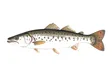
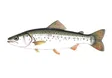
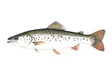
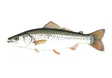
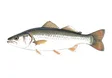
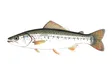
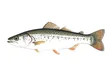
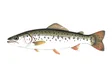
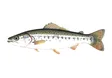
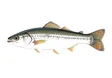
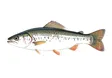
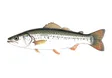
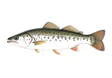
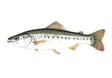
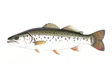
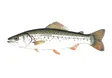
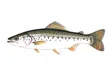
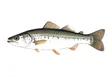
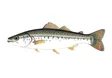
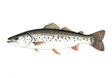
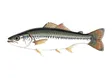
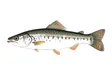
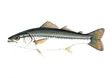
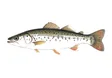
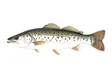
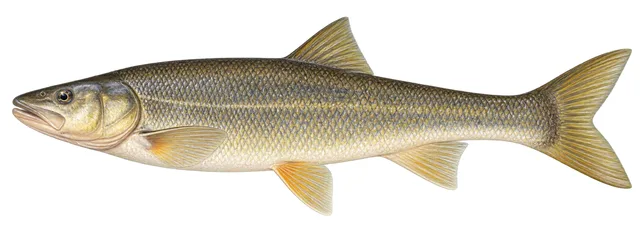
Umpqua Pikeminnow field guide illustration

About Umpqua Pikeminnow

The Umpqua pikeminnow formerly called the Umpqua squawfish (Ptychocheilus umpquae) is a species of freshwater ray-finned fish belonging to the family Leuciscidae, the daces, chubs, Eurasian minnows and related species. This large fish is endemic to Oregon, and is the smallest species of pikeminnow. It is native to the Umpqua and Siuslaw river drainages.

Description

The Umpqua pikeminnow has around 60 to 63 scales between the head and dorsal fin. It also usually has 66 to 81 scales along its lateral line, 9 rays on its dorsal fin, and 8 rays on its anal fin. They can reach 44 cm (17 in) in total length, but are more often 31 cm (12 in).

Distribution and habitat

Umpqua pikeminnow are found in the Southwest part of Oregon, usually along the Umpqua and Siuslaw river drainages, as well as the Siltcoos, Woahink, and Tahkenitch lakes. It has also been introduced in the Rogue River. The Rogue River introduction has two possible sources: 1) in 1994 a flood breached the north Rogue drainage divide, causing pikeminnow to escape through the Cow Creek system, or 2) in 1978 through an unscreened farm pond on Wolf Creek.

The fish inhabit the pools or sluggish runs of small rivers and creeks, usually found in waters less than 1 m deep.

Biology

While the Umpqua pikeminnow's life history is not well documented, it is likely similar to that of their closest relative, the Northern pikeminnow; adults move upriver to spawn in the summer months, typically distributing their eggs amongst substrate such as gravel. The eggs hatch within a week or two, and larvae drift downstream as they are caught against the current. The larvae eventually reach shallow, low-velocity parts of the rivers, where they feed and grow over the next few years, gradually moving into deeper waters as they grow.

Adult Umpqua pikeminnow predate on salmon, steelhead, and trout while juvenile individuals compete with these native fish for the same resources.

Juvenile Umpqua pikeminnow have been seen aggregating with other fish species, such as Umpqua chub and juvenile Redside shiner.

Conservation status

As of 2012, the IUCN Red List lists the Umpqua pikeminnow under least concern. Their population is considered stable with an undisclosed yet large population, but further studies may need to be conducted to determine if the population is slowly declining or not.

Taxonomy

The evolutionary history of the Ptychocheilus genus was never well understood, and many studies disputed where the Umpqua pikeminnow should be placed. There had been some previous studies that suggested that the Umpqua pikeminnow may actually be a variant of the Northern pikeminnow, given their very close range and subtle differences, but has been disproven.

The two prevailing theories grouped the Umpqua pikeminnow and Northern pikeminnow together as either the ancestral or most recent group of the genus. Recent studies that investigated the Ptychocheilus genome suggests that the latter may be correct, but further analysis is required to understand the relation between the species and their close relatives, as the pikeminnow family may actually be from separate lineages.

There is also evidence to suggest that the two Umpqua pikeminnow subpopulations in the Umpqua and Siuslaw drainages may actually represent two different species due to genomic differences between the two populations.

Population control

The Umpqua pikeminnow, along with the Northern pikeminnow, have been considered "undesirable"or"nuisance" fish that got in the way of stocking river systems with more favorable species, such as salmon and trout. Because of this, some studies have been conducted to find a way to control Umpqua pikeminnow populations without causing nearly as much damage to the desired fish species. These chemicals include 1,1'-methylenedi-2-naphthol, more commonly known as squoxin, and 2-hydroxy-l-naphthyl-methane. Squoxin was used in a field application treatment to exclusively eliminate all the pikeminnow in a small lagoon, proving to be an effective pikeminnow piscicide.

Article text: Wikipedia contributors, Umpqua pikeminnow (source revision). Licensed under CC BY-SA 4.0. Retrieved 2026-10-11.
Diet and feeding

The FishTraits compilation records these diet categories for this species: larger animal prey (a source category covering fish, crayfish, crabs, or frogs). These are broad categories, not a claim that every individual consumes every example in a category.

Habitat preferences

Reported habitat associations include medium to large rivers, streams and small rivers.

The source records associations with muck, clay or silt, sand, gravel. An association indicates reported use, rather than an exclusive requirement.

Reproduction and parental care

The compilation reports a representative maturity age of 3.5 years. Its maturity field summarizes mean, median, or modal estimates, usually for females; male estimates can be used when female data are unavailable. It is not a fixed age at which every fish first breeds.

Size and recorded longevity

FishTraits reports a maximum total length of 44 centimetres. Some entries use an estimated asymptotic length; this value should not be treated as a certified record catch.

Recorded longevity in the compilation is 17.5 years. Wild observations were preferred, but captive records were accepted where wild records were unavailable, and unspecified records were assumed wild. The value is not a guaranteed wild lifespan or an aquarium life expectancy.

Native range

Umpqua and Diuslaw River drainages, Oregon (Page and Burr 1991).

Introduction history

Escaped a pond in the Cow Creek system, north of the Rogue drainage, during a flood that breached the drainage divide (M. Parker, personal communication).

Range

Where it lives

Share of 196 GBIF observation records with a state location, across 2 states.
0%
99.5%
Share of 196 GBIF observation records with a state location, across 2 states.

Share of records by state

Habitat

Water and movement

Water
WoRMS records this species in fresh water.
USGS NAS habitat
Freshwater
US status
Native transplant — native to part of the United States, moved to other waters inside it.
Migration
Undetermined

Classification

Taxonomy

Kingdom
Animalia
Phylum
Chordata
Superclass
Actinopterygii
Class
Teleostei
Order
Cypriniformes
Genus
Ptychocheilus
Species
Ptychocheilus umpquae
ITIS TSN
163526
WoRMS AphiaID
1018041
GBIF key
5205691

Common questions about Umpqua Pikeminnow

What is the scientific name of Umpqua Pikeminnow?
The scientific name is Ptychocheilus umpquae, in the family Leuciscidae. Classification follows ITIS.
Does Umpqua Pikeminnow live in fresh water or salt water?
WoRMS records this species in fresh water.
Where has Umpqua Pikeminnow been recorded in the United States?
GBIF has observations in 2 states, with the most records in Oregon, California. The map shows observation records, which do not establish the complete natural range.

Closest relatives

Other Ptychocheilus species

Same family

More Leuciscidae

Alabama Shiner4 states
Cyprinella callistiaLeuciscidaeNativeFresh
Allegheny Pearl Dace19 states
Margariscus margaritaLeuciscidaeNative and introducedFresh
Altamaha Shiner1 states
Cyprinella xaenuraLeuciscidaeNativeFresh
Alvord Chub2 states
Siphateles alvordensisLeuciscidaeNativeFresh
Apalachee Shiner3 states
Pteronotropis grandipinnisLeuciscidaeNativeFresh
Arkansas River Shiner5 states
Notropis girardiLeuciscidaeNative and introducedFresh
Arroyo Chub1 states
Gila orcuttiiLeuciscidaeNative and introducedFresh
Bandfin Shiner5 states
Luxilus zonistiusLeuciscidaeNative and introducedFresh
Bannerfin Shiner5 states
Cyprinella leedsiLeuciscidaeNativeFresh
Beautiful Shiner3 states
Cyprinella formosaLeuciscidaeNativeFresh
Bedrock Shiner3 states
Notropis rupestrisLeuciscidaeNativeFresh
Bigeye Chub25 states
Hybopsis amblopsLeuciscidaeNative and introducedFresh
Bigeye Shiner17 states
Notropis boopsLeuciscidaeNative and introducedFresh
Bigmouth Chub3 states
Nocomis platyrhynchusLeuciscidaeNativeFresh
Bigmouth Shiner21 states
Notropis dorsalisLeuciscidaeNative and introducedFresh
Blackchin Shiner13 states
Notropis heterodonLeuciscidaeNativeFresh
Blackmouth Shiner3 states
Notropis melanostomusLeuciscidaeNativeFresh
Blacknose Shiner21 states
Notropis heterolepisLeuciscidaeNative and introducedFresh
Blackside Dace2 states
Chrosomus cumberlandensisLeuciscidaeNativeFresh
Blackspot Shiner5 states
Notropis atrocaudalisLeuciscidaeNativeFresh
Blacktail Shiner14 states
Cyprinella venustaLeuciscidaeNative and introducedFresh
Blacktip Shiner4 states
Lythrurus atrapiculusLeuciscidaeNative and introducedFresh
Bleeding Shiner8 states
Luxilus zonatusLeuciscidaeNativeFresh
Blotched Chub6 states
Erimystax insignisLeuciscidaeNativeFresh

All 267 species in Leuciscidae