Ecology
Umpqua chub generally inhabit slower moving waters. When found in faster waters, they typically reside close to banks in small pools and side-channels under riparian vegetation. Dietary habits for Umpqua chub are relatively unknown. In a sample of 20 individuals from the Calapooya River, a gut analysis showed traces of infaunal Chironomids, epifaunal Dytiscids, Ephemeroptera, and sand. Umpqua Chub populations are, overall, in decline. Introduced Smallmouth bass are presumed to be the cause of this decline for a variety of reasons (direct predation, competition, etc.).
Identification
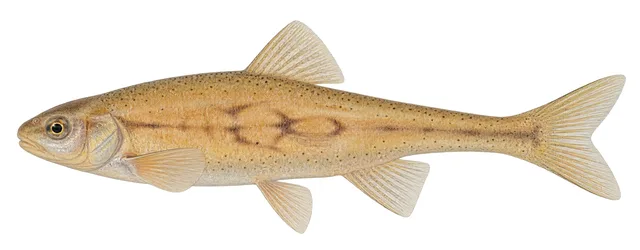
Umpqua Chub are typically less than 65 mm (2.6 in) (Fork Length). They have a dark brown lateral line. Above the lateral line is a peppering of brown scales that extends from the caudal peduncle to the nose of the fish. Umpqua chub have a distinctive upside-down heart shaped mark on top of their head behind their eyes. Umpqua chub have a terminal mouth and a lightly forked caudal fin.
Article text: Wikipedia contributors, Umpqua chub (source revision). Licensed under CC BY-SA 4.0. Retrieved 2026-10-11.