Golden Topminnow

Fundulus chrysotus

Fundulidae · freshwater water fish

6 minute read · Species guide

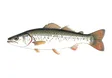
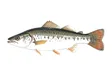
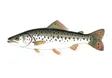
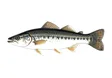
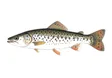
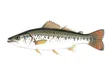
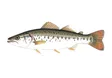
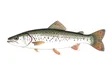
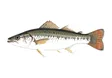
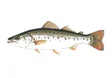
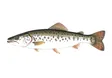
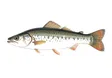
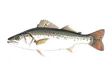
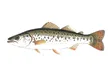
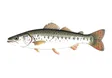
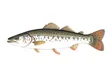
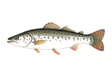
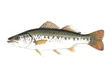
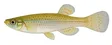
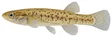
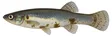
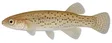
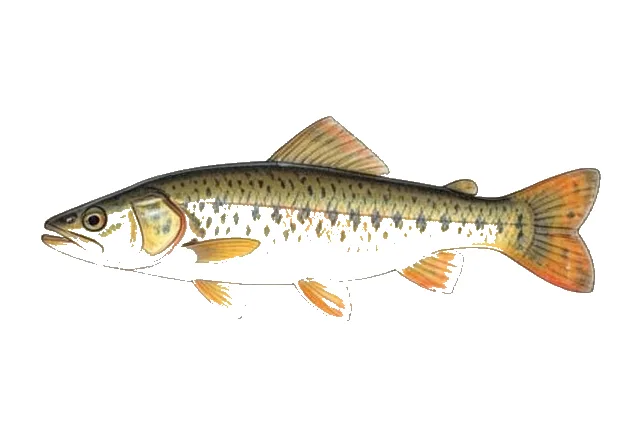
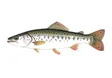
Golden Topminnow field guide illustration

About Golden Topminnow

The golden topminnow (Fundulus chrysotus) is a fish of the genus Fundulus and is a United States native fish mostly distributed throughout the southeast, ranging from Kentucky and Ohio south into Florida. Although it has such a wide distribution throughout the south, the habitats and micro-habitats that it occupies do not differ much from one area of distribution to others. The golden topminnow is a small surface feeding fish that tends to reproduce late in the spring season and on into the early parts of the summer, and although the fry reach maturity fairly quickly the longevity of the golden topminnow is quite short. Because the golden topminnow is lower in the trophic level and is a small fish, it primarily feeds on small and/or drifting organisms at, or near the surface of, vegetated areas. This particular topminnow is not currently listed as an endangered species, nor does it have any particular type of management plan.

Geographic distribution

The golden topminnow is geographically distributed throughout the southeastern portion of the continental U.S. Specifically, the golden topminnow inhabits the Santee River Drainage of South Carolina west to the Trinity River Drainage of Texas. It can also be found throughout the Mississippi Embayment north to Kentucky and Missouri. Further south, the golden topminnow inhabits the Lower Coastal Plain and is commonly scattered throughout Florida. It has even been documented stretching its distribution northwest, extending into the Gulf Coastal Plain in McCurtain County Oklahoma and Mississippi County Missouri. Outside of these areas, the golden topminnow is extremely localized and uncommon.

Ecology

The golden topminnow's diet ranges from aquatic plants to terrestrial invertebrates but consists mostly of aquatic invertebrates. Food habits were studied among many different species of fish throughout Lake Seminole, Florida-Georgia, including the food habits of the golden topminnow. The golden topminnow was observed feeding on small proportions of Macrophytes (aquatic vegetation) and a much wider array of aquatic invertebrates, including Gastropoda (snails/slugs), large quantities of Ostracoda (seed shrimp), Ephemeroptera (mayflies), Coleoptera (water-beetles), and Chironomidae (non-biting midge flies). The golden topminnow's diet does not include vertebrate prey, and the most common food sources are seed shrimp and midge larvae with water beetles and mayflies as minor contributors to its diet. Because of its trophic level position, the golden topminnow also has a wide array of predators that feed on smaller, surface feeding vertebrates. These include, but are not limited to, the largemouth bass Micropterus salmoides, the redear sunfish Lepomis microlophus, the bluegill sunfish Lepomis macrochirus, and the bluespotted sunfish Enneacanthus gloriosus.

The golden topminnow is able to tolerate a range of salinity levels. When observed in 7 and 14 percent salinity, the golden topminnow had a 100 percent mean survival rate, whereas at 21 percent salinity, the rate decreased to 91 percent survival; at 28 percent salinity, the mean survival rate decreased to 24 percent, and at 35 percent salinity the mean survival rate was 0 percent. The salinity tolerances described above account for the golden topminnow's native range throughout coastal waters and brackish waters, allowing for survival and reproduction in a narrow range of salinities. Some major human influences to the golden topminnow population include habitat pollution and the conversion of marshlands and brackish water for agricultural purposes.

Life cycle

The golden topminnow breeds throughout the spring and on into the summer months from April to July, and sometimes as late as September. During courtship the male swims in loops or circles above or beside the female, sometimes pausing to bob his head up and down. Eggs are released individually and deposited on the roots of floating plants or on other fibrous material by the female, where afterwards they are fertilized one at a time by the male. After hatching the larvae rest on leaves or on the bottom and begin to grow quickly reaching maturation after 10 months. At maturation, the golden topminnow becomes slender with a rounded caudal fin and a deep caudal peduncle. The mouth is small and slightly superior and the dorsal fin is set far back on the body and begins posterior to the anal fin origin. A lateral line is absent with 7–9 dorsal rays, 9–11 anal rays, 12–14 pectoral rays and 6 pelvic rays. During the breeding season, males develop prickly contact organs on the side of the body between the dorsal and anal fins, and on the ends of the last few dorsal rays, anal fin, and outermost rays of the pectoral fin. The life expectancy of the golden topminnow is around 2 years.

Ross, S. T. 2001. The Inland Fishes of Mississippi. University Press of Mississippi, Jackson. 624 pp.

Conservation and management

There is no current management plan specifically designed for the golden topminnow due to the fact that it is not listed as an endangered or threatened species.

Article text: Wikipedia contributors, Golden topminnow (source revision). Licensed under CC BY-SA 4.0. Retrieved 2026-10-11.
Diet and feeding

The FishTraits compilation records these diet categories for this species: invertebrates or larval fish. These are broad categories, not a claim that every individual consumes every example in a category.

Reported feeding positions include surface or water-column feeding. The compilation combines published observations; diets can vary with age, locality, and available food.

Habitat preferences

Reported habitat associations include streams and small rivers, creeks, still-water habitats.

The source records associations with muck, clay or silt, vegetation. An association indicates reported use, rather than an exclusive requirement.

The species is classified as tolerant of a broad range of salinities. This flag does not specify a salinity range for aquarium care.

Reproduction and parental care

The compilation reports a representative maturity age of 1 years. Its maturity field summarizes mean, median, or modal estimates, usually for females; male estimates can be used when female data are unavailable. It is not a fixed age at which every fish first breeds.

Batch or serial spawning has been reported somewhere in the species’ range. This does not establish the same spawning pattern for every population.

Recorded spawning months are Apr, May, Jun, Jul, Aug, Sep for the source’s reporting region (MS). This is a regional calendar, not a range-wide schedule.

The reproductive-guild classification includes spawning on open substrates without guarding the brood.

Size and recorded longevity

FishTraits reports a maximum total length of 8.5 centimetres. Some entries use an estimated asymptotic length; this value should not be treated as a certified record catch.

Recorded longevity in the compilation is 2.5 years. Wild observations were preferred, but captive records were accepted where wild records were unavailable, and unspecified records were assumed wild. The value is not a guaranteed wild lifespan or an aquarium life expectancy.

Native range

Atlantic and Gulf Coastal Plain from Santee River drainage, South Carolina, to Trinity River drainage, Texas; Former Mississippi Embayment north to Kentucky and Missouri. East of Mississippi River, mostly restricted to lower Coastal Plain (Page and Burr 1991).

Range

Where it lives

Share of 4,498 GBIF observation records with a state location, across 14 states. The orange dots are USGS stream-survey sites where this species was caught.
0%
54.9%
Share of 4,498 GBIF observation records with a state location, across 14 states. The orange dots are USGS stream-survey sites where this species was caught.

A blank area on the dot layer usually means nobody sampled there, not that the fish is absent. Turn on “every survey site” to see where the survey looked.

The USGS stream survey caught it at 46 of its sites, in 6 states. That survey and the GBIF records are two different counts of two different things, so the site keeps them apart.

Habitat

Water and movement

Water
WoRMS records this species in fresh water.
USGS NAS habitat
Freshwater
US status
Native transplant — native to part of the United States, moved to other waters inside it.
Migration
Not migratory

Classification

Taxonomy

Kingdom
Animalia
Phylum
Chordata
Superclass
Actinopterygii
Class
Teleostei
Order
Cyprinodontiformes
Genus
Fundulus
Species
Fundulus chrysotus
ITIS TSN
165652
WoRMS AphiaID
422553
GBIF key
5203617

Common questions about Golden Topminnow

What is the scientific name of Golden Topminnow?
The scientific name is Fundulus chrysotus, in the family Fundulidae. Classification follows ITIS.
Does Golden Topminnow live in fresh water or salt water?
WoRMS records this species in fresh water.
Where has Golden Topminnow been recorded in the United States?
GBIF has observations in 14 states, with the most records in Florida, Texas, Louisiana. The map shows observation records, which do not establish the complete natural range.

Closest relatives

Other Fundulus species

Banded Killifish31 states
Fundulus diaphanusFundulidaeNative and introducedFreshBrackish
Banded Topminnow5 states
Fundulus cingulatusFundulidaeNativeFresh
Barrens Topminnow1 states
Fundulus julisiaFundulidaeNativeFresh
Bayou Killifish6 states
Fundulus pulvereusFundulidaeNativeFreshSaltBrackish
Blackspotted Topminnow17 states
Fundulus olivaceusFundulidaeNativeFresh
Blackstripe Topminnow20 states
Fundulus notatusFundulidaeNativeFresh
Broadstripe Topminnow2 states
Fundulus euryzonusFundulidaeNativeFresh
California Killifish1 states
Fundulus parvipinnisFundulidaeNativeSaltBrackish
Gulf Killifish11 states
Fundulus grandisFundulidaeNative and introducedFreshBrackish
Lined Topminnow8 states
Fundulus lineolatusFundulidaeNativeFresh
Longnose Killifish6 states
Fundulus similisFundulidaeNativeSalt
Marsh Killifish14 states
Fundulus confluentusFundulidaeNativeFreshSaltBrackish
Mummichog22 states
Fundulus heteroclitusFundulidaeNativeFreshSaltBrackish
Northern Starhead Topminnow16 states
Fundulus disparFundulidaeNativeFresh
Northern Studfish21 states
Fundulus catenatusFundulidaeNative and introducedFresh
Plains Killifish16 states
Fundulus zebrinusFundulidaeNative and introducedFreshBrackish
Plains Topminnow11 states
Fundulus sciadicusFundulidaeNative and introducedFresh
Russetfin Topminnow3 states
Fundulus escambiaeFundulidaeNativeFresh
Saltmarsh Topminnow5 states
Fundulus jenkinsiFundulidaeNativeSaltBrackish
Seminole Killifish4 states
Fundulus seminolisFundulidaeNativeFresh
Southern Starhead Topminnow7 states
Fundulus blairaeFundulidaeNativeFresh
Speckled Killifish2 states
Fundulus rathbuniFundulidaeNativeFresh
Spotfin Killifish12 states
Fundulus luciaeFundulidaeNativeSaltBrackish
Stippled Studfish1 states
Fundulus bifaxFundulidaeNativeFresh

Same family

More Fundulidae

Banded Killifish31 states
Fundulus diaphanusFundulidaeNative and introducedFreshBrackish
Banded Topminnow5 states
Fundulus cingulatusFundulidaeNativeFresh
Barrens Topminnow1 states
Fundulus julisiaFundulidaeNativeFresh
Bayou Killifish6 states
Fundulus pulvereusFundulidaeNativeFreshSaltBrackish
Blackspotted Topminnow17 states
Fundulus olivaceusFundulidaeNativeFresh
Blackstripe Topminnow20 states
Fundulus notatusFundulidaeNativeFresh
Blue-fintop Minnow7 states
Lucania goodeiFundulidaeNativeFresh
Broadstripe Topminnow2 states
Fundulus euryzonusFundulidaeNativeFresh
California Killifish1 states
Fundulus parvipinnisFundulidaeNativeSaltBrackish
Diamond Killifish5 states
Adinia xenicaFundulidaeNativeFreshSaltBrackish
Gulf Killifish11 states
Fundulus grandisFundulidaeNative and introducedFreshBrackish
Lined Topminnow8 states
Fundulus lineolatusFundulidaeNativeFresh
Longnose Killifish6 states
Fundulus similisFundulidaeNativeSalt
Marsh Killifish14 states
Fundulus confluentusFundulidaeNativeFreshSaltBrackish
Mummichog22 states
Fundulus heteroclitusFundulidaeNativeFreshSaltBrackish
Northern Starhead Topminnow16 states
Fundulus disparFundulidaeNativeFresh
Northern Studfish21 states
Fundulus catenatusFundulidaeNative and introducedFresh
Plains Killifish16 states
Fundulus zebrinusFundulidaeNative and introducedFreshBrackish
Plains Topminnow11 states
Fundulus sciadicusFundulidaeNative and introducedFresh
Pygmy Killifish5 states
Leptolucania ommataFundulidaeNativeFresh
Rainwater Killifish20 states
Lucania parvaFundulidaeNative and introducedFreshSaltBrackish
Russetfin Topminnow3 states
Fundulus escambiaeFundulidaeNativeFresh
Saltmarsh Topminnow5 states
Fundulus jenkinsiFundulidaeNativeSaltBrackish
Seminole Killifish4 states
Fundulus seminolisFundulidaeNativeFresh

All 32 species in Fundulidae