Northern Studfish

Fundulus catenatus

Fundulidae · freshwater water fish

4 minute read · Species guide

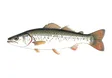
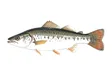
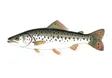
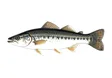
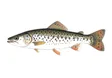
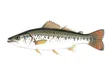
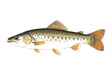
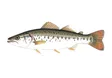
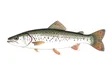
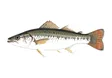
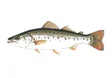
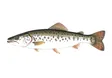
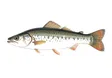
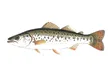
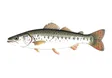
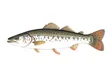
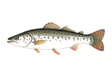
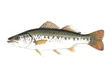
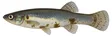
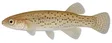
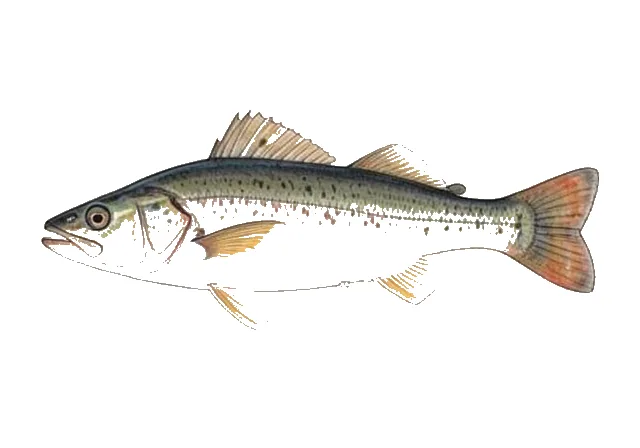
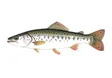
Northern Studfish field guide illustration

About Northern Studfish

The northern studfish (Fundulus catenatus) is among the largest of the killifish and is native to the southcentral United States.

Distribution

Upper East Fork White River system, Indiana; upper Salt and Kentucky River drainages, Kentucky; upper Green middle, and lower Cumberland, and Tennessee River drainages, Virginia, Kentucky, Tennessee, Alabama, and Mississippi; West of Mississippi River (primarily Ozark and Ouachita uplands) in central and southern Missouri, southeastern Kansas, eastern Oklahoma and southern Arkansas; southwestern Mississippi in the Mississippi drainage (Coles Creek, Homochitto River, and Buffalo Bayou) and Gulf Slope drainage (Amite River and Pearl River). Live bait buckets and releases of aquarium pets have caused expansion of the native distribution of this species.

Description

The mean length for adults is 3 to 6 inches (7.6 to 15.2 cm) with a maximum size of 7 inches (18 cm). Northern studfish are sexually dimorphic. Males have horizontal rows of bright orange spots on light blue background and a bright orange tail margin followed by a nearly black band during breeding season. Females are more cryptic colored in shades of beige and olive. Their body shape is elongate and narrow and lacks a lateral line. Northern studfish have spineless fins and both the anal and dorsal fins are large.

Ecology

Northern studfish are egg layers and prefer clear, shallow pools and rocky creeks that have a mixed sand/gravel substrate and constant, sluggish flow. Males do not build nests but they do stake out a territory and defend it. Females lay a clutch of 28 to 245 eggs and give no parental care to their young. Their main diet consists of insects which they skim from the surface of the water but they have also been known to consume snails.

Management

Causes for declining numbers in some areas range from introduction of aggressive non native fish species like the mosquitofish (Gambusia spp.) to anthropogenic loss of water quality and movement from habitat alteration. Northern studfish require clear water so control of sediment is integral. Current management practices are to plant riparian zones in order to stabilize the streambanks and control run off from agriculture and construction projects.

Article text: Wikipedia contributors, Northern studfish (source revision). Licensed under CC BY-SA 4.0. Retrieved 2026-10-11.
Diet and feeding

The FishTraits compilation records these diet categories for this species: invertebrates or larval fish; larger animal prey (a source category covering fish, crayfish, crabs, or frogs). These are broad categories, not a claim that every individual consumes every example in a category.

Reported feeding positions include bottom feeding and surface or water-column feeding. The compilation combines published observations; diets can vary with age, locality, and available food.

Habitat preferences

Reported habitat associations include medium to large rivers, streams and small rivers.

The source records associations with sand, gravel, cobble, boulders, bedrock, vegetation. An association indicates reported use, rather than an exclusive requirement.

Reproduction and parental care

The compilation reports a representative maturity age of 1 years. Its maturity field summarizes mean, median, or modal estimates, usually for females; male estimates can be used when female data are unavailable. It is not a fixed age at which every fish first breeds.

Batch or serial spawning has been reported somewhere in the species’ range. This does not establish the same spawning pattern for every population.

Recorded spawning months are May, Jun, Jul, Aug for the source’s reporting region (VA). This is a regional calendar, not a range-wide schedule.

The reproductive-guild classification includes spawning on open substrates without guarding the brood.

Size and recorded longevity

FishTraits reports a maximum total length of 20 centimetres. Some entries use an estimated asymptotic length; this value should not be treated as a certified record catch.

Recorded longevity in the compilation is 5 years. Wild observations were preferred, but captive records were accepted where wild records were unavailable, and unspecified records were assumed wild. The value is not a guaranteed wild lifespan or an aquarium life expectancy.

Native range

Upper East Fork White River system, Indiana; upper Salt and Kentucky River drainages, Kentucky; upper Green, middle, and lower Cumberland, and Tennessee River drainages, Virginia, Kentucky, Tennessee, Alabama, and Mississippi; west of Mississippi River (primarily Ozark and Ouachita uplands) in central and southern Missouri, southeastern Kansas, eastern Oklahoma, and southern Arkansas; southwestern Mississippi in Mississippi (Coles Creek, Homochitto River, and Buffalo Bayou) and Gulf Slope drainages (Amite River and Pearl River) (Page and Burr 1991). Recently reported from the Amity River in Louisiana (Warren and Denette 1992).

Introduction history

Bait bucket transfer may be responsible for most of the introductions in Kentucky, although some may be a result of stream capture (Burr and Warren 1986). The Oklahoma introductions are believed to be the result of a bait introduction prior to 1954 (Hall 1956; Pflieger 1997). This species was not taken from the Elk River drainage of Missouri until the 1960s, and Pflieger (1997) concluded that these populations represent range extensions and are descended from Northern Studfish originally introduced into northeastern Oklahoma streams. In West Virginia, the introductions may have been a result of bait bucket release, aquarium release, or pond escape (Cincotta et al. 1990).

Range

Where it lives

Share of 4,382 GBIF observation records with a state location, across 21 states. The orange dots are USGS stream-survey sites where this species was caught.
0%
25.7%
Share of 4,382 GBIF observation records with a state location, across 21 states. The orange dots are USGS stream-survey sites where this species was caught.

A blank area on the dot layer usually means nobody sampled there, not that the fish is absent. Turn on “every survey site” to see where the survey looked.

The USGS stream survey caught it at 568 of its sites, in 10 states. That survey and the GBIF records are two different counts of two different things, so the site keeps them apart.

Habitat

Water and movement

Water
WoRMS records this species in fresh water.
USGS NAS habitat
Freshwater
US status
Native transplant — native to part of the United States, moved to other waters inside it.
Migration
Not migratory

Classification

Taxonomy

Kingdom
Animalia
Phylum
Chordata
Superclass
Actinopterygii
Class
Teleostei
Order
Cyprinodontiformes
Genus
Fundulus
Species
Fundulus catenatus
ITIS TSN
165660
WoRMS AphiaID
1022012
GBIF key
5203654

Common questions about Northern Studfish

What is the scientific name of Northern Studfish?
The scientific name is Fundulus catenatus, in the family Fundulidae. Classification follows ITIS.
Does Northern Studfish live in fresh water or salt water?
WoRMS records this species in fresh water.
Where has Northern Studfish been recorded in the United States?
GBIF has observations in 21 states, with the most records in Arkansas, Tennessee, Missouri. The map shows observation records, which do not establish the complete natural range.

Closest relatives

Other Fundulus species

Banded Killifish31 states
Fundulus diaphanusFundulidaeNative and introducedFreshBrackish
Banded Topminnow5 states
Fundulus cingulatusFundulidaeNativeFresh
Barrens Topminnow1 states
Fundulus julisiaFundulidaeNativeFresh
Bayou Killifish6 states
Fundulus pulvereusFundulidaeNativeFreshSaltBrackish
Blackspotted Topminnow17 states
Fundulus olivaceusFundulidaeNativeFresh
Blackstripe Topminnow20 states
Fundulus notatusFundulidaeNativeFresh
Broadstripe Topminnow2 states
Fundulus euryzonusFundulidaeNativeFresh
California Killifish1 states
Fundulus parvipinnisFundulidaeNativeSaltBrackish
Golden Topminnow14 states
Fundulus chrysotusFundulidaeNativeFresh
Gulf Killifish11 states
Fundulus grandisFundulidaeNative and introducedFreshBrackish
Lined Topminnow8 states
Fundulus lineolatusFundulidaeNativeFresh
Longnose Killifish6 states
Fundulus similisFundulidaeNativeSalt
Marsh Killifish14 states
Fundulus confluentusFundulidaeNativeFreshSaltBrackish
Mummichog22 states
Fundulus heteroclitusFundulidaeNativeFreshSaltBrackish
Northern Starhead Topminnow16 states
Fundulus disparFundulidaeNativeFresh
Plains Killifish16 states
Fundulus zebrinusFundulidaeNative and introducedFreshBrackish
Plains Topminnow11 states
Fundulus sciadicusFundulidaeNative and introducedFresh
Russetfin Topminnow3 states
Fundulus escambiaeFundulidaeNativeFresh
Saltmarsh Topminnow5 states
Fundulus jenkinsiFundulidaeNativeSaltBrackish
Seminole Killifish4 states
Fundulus seminolisFundulidaeNativeFresh
Southern Starhead Topminnow7 states
Fundulus blairaeFundulidaeNativeFresh
Speckled Killifish2 states
Fundulus rathbuniFundulidaeNativeFresh
Spotfin Killifish12 states
Fundulus luciaeFundulidaeNativeSaltBrackish
Stippled Studfish1 states
Fundulus bifaxFundulidaeNativeFresh

Same family

More Fundulidae

Banded Killifish31 states
Fundulus diaphanusFundulidaeNative and introducedFreshBrackish
Banded Topminnow5 states
Fundulus cingulatusFundulidaeNativeFresh
Barrens Topminnow1 states
Fundulus julisiaFundulidaeNativeFresh
Bayou Killifish6 states
Fundulus pulvereusFundulidaeNativeFreshSaltBrackish
Blackspotted Topminnow17 states
Fundulus olivaceusFundulidaeNativeFresh
Blackstripe Topminnow20 states
Fundulus notatusFundulidaeNativeFresh
Blue-fintop Minnow7 states
Lucania goodeiFundulidaeNativeFresh
Broadstripe Topminnow2 states
Fundulus euryzonusFundulidaeNativeFresh
California Killifish1 states
Fundulus parvipinnisFundulidaeNativeSaltBrackish
Diamond Killifish5 states
Adinia xenicaFundulidaeNativeFreshSaltBrackish
Golden Topminnow14 states
Fundulus chrysotusFundulidaeNativeFresh
Gulf Killifish11 states
Fundulus grandisFundulidaeNative and introducedFreshBrackish
Lined Topminnow8 states
Fundulus lineolatusFundulidaeNativeFresh
Longnose Killifish6 states
Fundulus similisFundulidaeNativeSalt
Marsh Killifish14 states
Fundulus confluentusFundulidaeNativeFreshSaltBrackish
Mummichog22 states
Fundulus heteroclitusFundulidaeNativeFreshSaltBrackish
Northern Starhead Topminnow16 states
Fundulus disparFundulidaeNativeFresh
Plains Killifish16 states
Fundulus zebrinusFundulidaeNative and introducedFreshBrackish
Plains Topminnow11 states
Fundulus sciadicusFundulidaeNative and introducedFresh
Pygmy Killifish5 states
Leptolucania ommataFundulidaeNativeFresh
Rainwater Killifish20 states
Lucania parvaFundulidaeNative and introducedFreshSaltBrackish
Russetfin Topminnow3 states
Fundulus escambiaeFundulidaeNativeFresh
Saltmarsh Topminnow5 states
Fundulus jenkinsiFundulidaeNativeSaltBrackish
Seminole Killifish4 states
Fundulus seminolisFundulidaeNativeFresh

All 32 species in Fundulidae