Plains Topminnow

Fundulus sciadicus

Fundulidae · freshwater water fish

6 minute read · Species guide

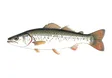
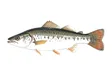
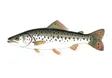
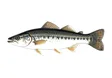
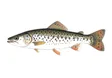
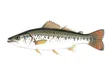
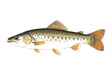
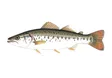
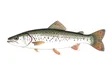
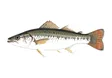
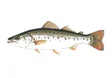
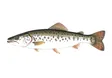
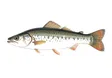
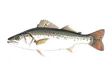
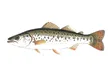
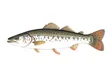
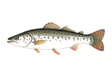
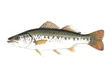
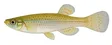
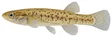
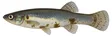
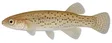
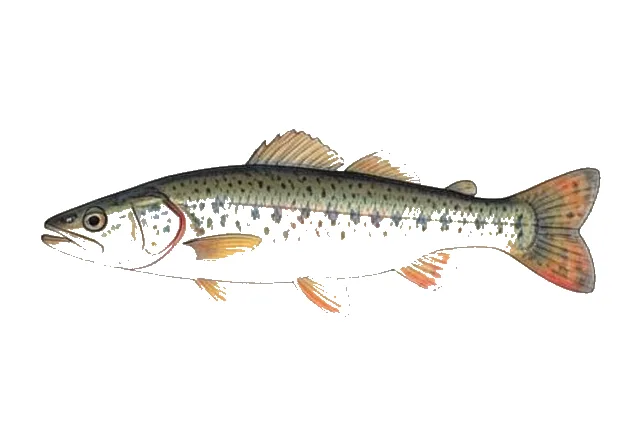
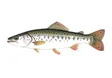
Plains Topminnow field guide illustration

About Plains Topminnow

The plains topminnow (Fundulus sciadicus) is a species of freshwater topminnow found in North America. The fish has a small range within the United States of America which consists of two major populations.

Description

The plains topminnow is small, almost always shorter than 2.5 inches (6.35 cm). The fish has a flat head and an upturned (superior) mouth. It lacks any distinctive markings. The male plains topminnow's fins are iridescent and have a red tip with blue-purple bands, as well as a gold stripe on the body. Both males and females are usually olive-brown with white on its underside. The plains topminnow also has bronze reflections with faint blue-green cross-hatching on its back and sides. Its fins are colorless or yellowish in immature fish, females and non-breeding males. There are no black bars on the fish's body, which makes it distinguishable from the banded killifish, a more common species, which is often found in the same habitats as the plains topminnow. Two other distinct features of the plains topminnow are its rounded caudal fin and the absence of an externally visible lateral line. The plains topminnow has 33 to 37 ctenoid scales in its lateral line. The dorsal fin has 9–12 rays, the anal fin 12–15 rays and the origin of the anal fin is slightly forward of the dorsal fin, the pelvic fin is small and in the abdominal position. The plains topminnow also has a squared caudal fin, a trait that many topminnows and killifish share. There is little sexual dimorphism between males and females except during breeding season, when males have bright orange-red fin tips.

Distribution and habitat

The historical distribution of plains topminnow includes two main populations. The first population of Plains topminnows is largely in Nebraska extending into Iowa, southwestern Minnesota, northeastern Colorado and southern South Dakota. The second population is located in Missouri, Kansas and south into Oklahoma. The plains topminnow was found only in one county each in Iowa and Kansas, the topminnow is now believed to be extirpated from both states, with recent studies supporting this.

Plains topminnows prefer places with slow water to faster currents. The plains topminnows are also usually found in places where there is shallow, clear water and heavy vegetation. Habitats with these characteristics include sloughs, backwaters and pools. The plains topminnow can be found in water with some turbidity and moderate current, however they prefer the conditions listed above. Most studies rank the plains topminnow as moderately tolerant to hyperthermic and hypoxic conditions. Habitat loss is a major concern for this species (see Conservation). Plains topminnows prefer water within the range of 5 °C-22 °C.

Reproduction and Life History

The plains topminnow spawns in the same vegetated areas that it lives in. Males develop red coloring on their fins and, both males and females gain a black border around their medial fins. The most studied populations in Nebraska show breeding color on the plains topminnow males from June 20 to July 21. However, the plains topminnow has been observed spawning anytime between late March to early August. The wide range of spawning time is believed to be due to water temperature. Thus, plains topminnow spawning times usually depend on the latitude of individual populations. The plains topminnow breeding season was observed at 60 days in Missouri and Nebraska, regardless of latitude and water temperature. Breeding behavior for the plains topminnow, demonstrated in wild individuals transplanted into an aquarium, includes direct male competition. The males size each other up by swimming in circles and attempting to bite the dorsal fin of the other male, some males will do this for up to 90 minutes. This behavior establishes a few dominant breeding males in each population. The males and females were seen moving wiggling in algae in their habitat, this was assumed to be ovipositing behavior since eggs were observed in the algae after the wiggling behavior. Mature plains topminnow eggs are 1.8 to 2.0 mm in diameter.

Conservation Status and Concerns

Although the plains topminnow is not considered a federally threatened, endangered, or sensitive species and has a Global Heritage Status Rank of G4 (apparently secure) from the Nature Conservancy, there has been a declining trend in the distribution of the plains topminnow, particularly in the Platte and Republican River Drainages. Currently, the plains topminnow are found in only 34.4% of sites that have historically been inhabited by the plains topminnow. In Minnesota, the plains topminnow is present in all historical locations, however, abundance is lower than normal at 69.2% compared to past collections. The primary threats to the plains topminnow are physical or chemical habitat degradation, stream fragmentation, introduction of nonnative fishes, reservoir creations, sewage discharge, feedlot runoff, intense livestock grazing and pumping of saline groundwater. It is also believed that eutrophication, causing low oxygen conditions and high ammonia concentrations, is adding to the depletion of plains topminnow levels. In order to prevent the decline of plains topminnow populations, certain measures should be taken, such as securing in stream flow, minimizing drying of stream channels due to irrigation withdrawals, establishing preserves in perennial stream reaches and the management of livestock around plains topminnow populated waters.

Diet Habits

The food habits of the plains topminnow are not well studied, however, they are believed to feed on a varied diet. The diet may include insects, mainly larvae; snails, and Ostracod crustaceans.

Article text: Wikipedia contributors, Plains topminnow (source revision). Licensed under CC BY-SA 4.0. Retrieved 2026-10-11.
Diet and feeding

The FishTraits compilation records these diet categories for this species: algae or phytoplankton; invertebrates or larval fish. These are broad categories, not a claim that every individual consumes every example in a category.

Reported feeding positions include surface or water-column feeding. The compilation combines published observations; diets can vary with age, locality, and available food.

Habitat preferences

Reported habitat associations include medium to large rivers, streams and small rivers, creeks.

The source records associations with muck, clay or silt, sand, vegetation. An association indicates reported use, rather than an exclusive requirement.

Reproduction and parental care

The compilation reports a representative maturity age of 1.5 years. Its maturity field summarizes mean, median, or modal estimates, usually for females; male estimates can be used when female data are unavailable. It is not a fixed age at which every fish first breeds.

Recorded spawning months are May, Jun for the source’s reporting region (MO). This is a regional calendar, not a range-wide schedule.

The reproductive-guild classification includes spawning on open substrates without guarding the brood.

Size and recorded longevity

FishTraits reports a maximum total length of 9 centimetres. Some entries use an estimated asymptotic length; this value should not be treated as a certified record catch.

Recorded longevity in the compilation is 3.5 years. Wild observations were preferred, but captive records were accepted where wild records were unavailable, and unspecified records were assumed wild. The value is not a guaranteed wild lifespan or an aquarium life expectancy.

Native range

Disjunct distribution, Missouri River basin from western Iowa to eastern Wyoming; Missouri drainage, central Missouri; and Neosho River system, southwestern Missouri, southeastern Kansas, and northeastern Oklahoma (Page and Burr 1991).

Introduction history

The species was introduced accidentally into the San Luis Valley by the Colorado Department of Wildlife (Zuckerman and Behnke 1986). It was introduced into Rio Blanco County via unknown means, probably bait bucket release. Probable bait bucket introduction in Nebraska (Cross 1967). This species was first captured below Enders Reservoir, an area commonly fished with bait minnows, in 1959. The fish likely came from the nearby Platte River (Cross 1967).

Range

Where it lives

Share of 752 GBIF observation records with a state location, across 11 states. The orange dots are USGS stream-survey sites where this species was caught.
0%
48%
Share of 752 GBIF observation records with a state location, across 11 states. The orange dots are USGS stream-survey sites where this species was caught.

A blank area on the dot layer usually means nobody sampled there, not that the fish is absent. Turn on “every survey site” to see where the survey looked.

The USGS stream survey caught it at 99 of its sites, in 5 states. That survey and the GBIF records are two different counts of two different things, so the site keeps them apart.

Habitat

Water and movement

Water
WoRMS records this species in fresh water.
USGS NAS habitat
Freshwater
US status
Native transplant — native to part of the United States, moved to other waters inside it.
Migration
Undetermined
Pattern

Classification

Taxonomy

Kingdom
Animalia
Phylum
Chordata
Superclass
Actinopterygii
Class
Teleostei
Order
Cyprinodontiformes
Genus
Fundulus
Species
Fundulus sciadicus
ITIS TSN
165666
WoRMS AphiaID
1019584
GBIF key
5203693

Common questions about Plains Topminnow

What is the scientific name of Plains Topminnow?
The scientific name is Fundulus sciadicus, in the family Fundulidae. Classification follows ITIS.
Does Plains Topminnow live in fresh water or salt water?
WoRMS records this species in fresh water.
Where has Plains Topminnow been recorded in the United States?
GBIF has observations in 11 states, with the most records in Nebraska, Colorado, Missouri. The map shows observation records, which do not establish the complete natural range.

Closest relatives

Other Fundulus species

Banded Killifish31 states
Fundulus diaphanusFundulidaeNative and introducedFreshBrackish
Banded Topminnow5 states
Fundulus cingulatusFundulidaeNativeFresh
Barrens Topminnow1 states
Fundulus julisiaFundulidaeNativeFresh
Bayou Killifish6 states
Fundulus pulvereusFundulidaeNativeFreshSaltBrackish
Blackspotted Topminnow17 states
Fundulus olivaceusFundulidaeNativeFresh
Blackstripe Topminnow20 states
Fundulus notatusFundulidaeNativeFresh
Broadstripe Topminnow2 states
Fundulus euryzonusFundulidaeNativeFresh
California Killifish1 states
Fundulus parvipinnisFundulidaeNativeSaltBrackish
Golden Topminnow14 states
Fundulus chrysotusFundulidaeNativeFresh
Gulf Killifish11 states
Fundulus grandisFundulidaeNative and introducedFreshBrackish
Lined Topminnow8 states
Fundulus lineolatusFundulidaeNativeFresh
Longnose Killifish6 states
Fundulus similisFundulidaeNativeSalt
Marsh Killifish14 states
Fundulus confluentusFundulidaeNativeFreshSaltBrackish
Mummichog22 states
Fundulus heteroclitusFundulidaeNativeFreshSaltBrackish
Northern Starhead Topminnow16 states
Fundulus disparFundulidaeNativeFresh
Northern Studfish21 states
Fundulus catenatusFundulidaeNative and introducedFresh
Plains Killifish16 states
Fundulus zebrinusFundulidaeNative and introducedFreshBrackish
Russetfin Topminnow3 states
Fundulus escambiaeFundulidaeNativeFresh
Saltmarsh Topminnow5 states
Fundulus jenkinsiFundulidaeNativeSaltBrackish
Seminole Killifish4 states
Fundulus seminolisFundulidaeNativeFresh
Southern Starhead Topminnow7 states
Fundulus blairaeFundulidaeNativeFresh
Speckled Killifish2 states
Fundulus rathbuniFundulidaeNativeFresh
Spotfin Killifish12 states
Fundulus luciaeFundulidaeNativeSaltBrackish
Stippled Studfish1 states
Fundulus bifaxFundulidaeNativeFresh

Same family

More Fundulidae

Banded Killifish31 states
Fundulus diaphanusFundulidaeNative and introducedFreshBrackish
Banded Topminnow5 states
Fundulus cingulatusFundulidaeNativeFresh
Barrens Topminnow1 states
Fundulus julisiaFundulidaeNativeFresh
Bayou Killifish6 states
Fundulus pulvereusFundulidaeNativeFreshSaltBrackish
Blackspotted Topminnow17 states
Fundulus olivaceusFundulidaeNativeFresh
Blackstripe Topminnow20 states
Fundulus notatusFundulidaeNativeFresh
Blue-fintop Minnow7 states
Lucania goodeiFundulidaeNativeFresh
Broadstripe Topminnow2 states
Fundulus euryzonusFundulidaeNativeFresh
California Killifish1 states
Fundulus parvipinnisFundulidaeNativeSaltBrackish
Diamond Killifish5 states
Adinia xenicaFundulidaeNativeFreshSaltBrackish
Golden Topminnow14 states
Fundulus chrysotusFundulidaeNativeFresh
Gulf Killifish11 states
Fundulus grandisFundulidaeNative and introducedFreshBrackish
Lined Topminnow8 states
Fundulus lineolatusFundulidaeNativeFresh
Longnose Killifish6 states
Fundulus similisFundulidaeNativeSalt
Marsh Killifish14 states
Fundulus confluentusFundulidaeNativeFreshSaltBrackish
Mummichog22 states
Fundulus heteroclitusFundulidaeNativeFreshSaltBrackish
Northern Starhead Topminnow16 states
Fundulus disparFundulidaeNativeFresh
Northern Studfish21 states
Fundulus catenatusFundulidaeNative and introducedFresh
Plains Killifish16 states
Fundulus zebrinusFundulidaeNative and introducedFreshBrackish
Pygmy Killifish5 states
Leptolucania ommataFundulidaeNativeFresh
Rainwater Killifish20 states
Lucania parvaFundulidaeNative and introducedFreshSaltBrackish
Russetfin Topminnow3 states
Fundulus escambiaeFundulidaeNativeFresh
Saltmarsh Topminnow5 states
Fundulus jenkinsiFundulidaeNativeSaltBrackish
Seminole Killifish4 states
Fundulus seminolisFundulidaeNativeFresh

All 32 species in Fundulidae