Redside Shiner

Richardsonius balteatus

Leuciscidae · freshwater water fish

5 minute read · Species guide

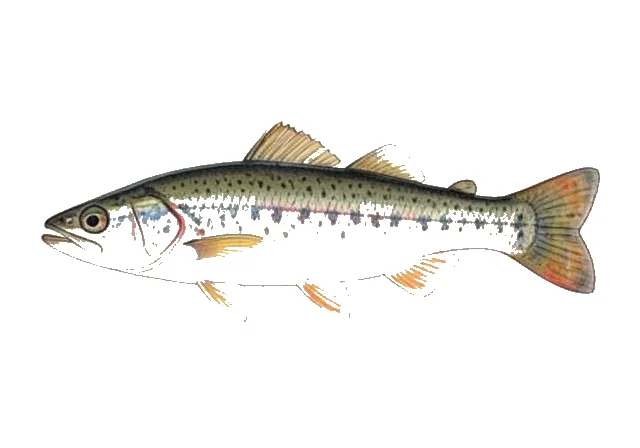
Redside Shiner field guide illustration

About Redside Shiner

The redside shiner (Richardsonius balteatus) is a species of freshwater ray-finned fish belonging to the family Leuciscidae, the shiners, daces and minnows. This fish is found in the Western United States and British Columbia. This species was first described by Sir John Richardson, a Scottish naturalist and naval surgeon. The type locality is from the Columbia River, and it is believed to have been sampled near Fort Vancouver. This species has a large native range, spanning from southern Utah to northern British Columbia. There are currently two subspecies (R. b. balteatus and R. b. hydrophlox), but phylogeographic analysis based on mitochondrial DNA sequence data suggests that there are three main clades, therefore the two subspecies taxonomy may not accurately reflect the evolution of the group. However, a formal taxonomic update has not been made.

Habitat and distribution

The redside shiner typically inhabits cold waters including ponds, lakes, pools, and backwaters of large rivers as well as small streams and shallow edges of lakes and ponds. Their natural range is mostly west of the Rocky Mountains of North America with the exception of the Peace River in northern British Columbia and Alberta, extending southward through most of Washington, Oregon and Idaho, western Montana, northern Nevada, and the Bonneville Basin in Utah. The species has been introduced into northwestern Colorado, southwestern Wyoming, the upper Missouri River drainage in Montana and in reservoirs outside its native distribution in southern Utah. Some of these introductions are from illegal bait bucket transfers, likely done by well-meaning anglers to increase forage for sport fish, but not an ecologically sound decision in most cases. Being aggressive colonizers, they rapidly expand in waters that fit their ecological niche requirements.

Subspecies R. b. balteaus is distributed across Washington, Oregon, northern Idaho, western Montana and British Columbia as well as the Peace system in northern Alberta. Subspecies R. b. hydrophlox is distributed in Utah's Bonneville Basin and waters in the Snake River Plain above Shoshone Falls as well as a disjunct population in the Malheur region of southeast Oregon.

It is broadly accepted that geological processes (river capture and lake spillover events such as the Bonneville flood) and changing climate (survival in and expansion from Pleistocene refugia) have contributed to this species current geographic distribution as described by Hubbs and Miller (1948), Minckley et al (1981), McPhail and Lindsey (1981).

Morphology

The redside shiner has a silver coloration on its sides and a dark (olive or brown) coloration on its back. It has a thick black stripe and a smaller red/gold stripe along the lateral line. Additional red coloration is exhibited on the lower half of the anterior end of the body during spring spawning, especially in males.

The fish has a deep, laterally compressed body shape, a forked homocercal tail, and a complete, decurved lateral line. Its anal fin is composed of 10–24 rays, and its dorsal fin is composed of 8–12 rays. Neither of these fins have any spines. The fish has between 52 and 67 lateral line scales, and typical specimens are between 55 and 80 millimeters in length (2.2-3.1 inches). It has a conical snout, no barbels, and a terminal mouth with pharyngeal teeth arranged as 2,4-4,2 or 2,5-5,2. Its eyes are relatively large in comparison to its body size. Meristics vary among the subspecies R. b. balteaus and R. b. hydrophlox.

Life cycle

The redside shiner is a short-lived fish, maturing around age 2, living on average 5–6 years but has been recorded living up to 8 years. They spawn in spring into the early summer, and their eggs are coated by a sticky adhesive that allows them to stick to rocks and vegetation. Their diet includes aquatic and terrestrial invertebrates, as well as the eggs and fry of other species. They are an intraguild predator meaning that they are both predators and prey to larger species such as salmon.

Conservation status

The redside shiner is considered to be a species of Least Concern according to the International Union for Conservation of Nature (IUCN). However, in areas where the redside shiner has been introduced outside its native range, the species can become invasive.

Article text: Wikipedia contributors, Redside shiner (source revision). Licensed under CC BY-SA 4.0. Retrieved 2026-10-11.

Diet and feeding

The FishTraits compilation records these diet categories for this species: algae or phytoplankton; invertebrates or larval fish; larger animal prey (a source category covering fish, crayfish, crabs, or frogs); fish or frog eggs. These are broad categories, not a claim that every individual consumes every example in a category.

Reported feeding positions include bottom feeding and surface or water-column feeding. The compilation combines published observations; diets can vary with age, locality, and available food.

Habitat preferences

Reported habitat associations include streams and small rivers, creeks, still-water habitats.

The source records associations with muck, clay or silt, sand, vegetation. An association indicates reported use, rather than an exclusive requirement.

Reproduction and parental care

The compilation reports a representative maturity age of 2.5 years. Its maturity field summarizes mean, median, or modal estimates, usually for females; male estimates can be used when female data are unavailable. It is not a fixed age at which every fish first breeds.

Recorded spawning months are Apr, May, Jun, Jul for the source’s reporting region (WA). This is a regional calendar, not a range-wide schedule.

The reproductive-guild classification includes spawning on open substrates without guarding the brood.

Size and recorded longevity

FishTraits reports a maximum total length of 18 centimetres. Some entries use an estimated asymptotic length; this value should not be treated as a certified record catch.

Recorded longevity in the compilation is 5.5 years. Wild observations were preferred, but captive records were accepted where wild records were unavailable, and unspecified records were assumed wild. The value is not a guaranteed wild lifespan or an aquarium life expectancy.

Ecological impacts

Richardsonius balteatus hydrophlox has been shown to feed on the eggs and fry of other fish species (Weisel and Newman 1951).

Record fish

State records in 2 states

  • Montana0.10 lbs.

    Lost Lake · 8/21/01 · Josh Ahles

  • Idaho0.08 lb

    Blackfoot River · 07/23/2022 · Raiden Schneider

Each figure is the state agency’s own certified record. The site holds record tables for 11 states so far, so a state missing here has not been read yet. It is not a state where this fish holds no record.

Range

Where it lives

Share of 2,787 GBIF observation records with a state location, across 11 states. The orange dots are USGS stream-survey sites where this species was caught.
0%
46.6%
Share of 2,787 GBIF observation records with a state location, across 11 states. The orange dots are USGS stream-survey sites where this species was caught.

A blank area on the dot layer usually means nobody sampled there, not that the fish is absent. Turn on “every survey site” to see where the survey looked.

The USGS stream survey caught it at 322 of its sites, in 9 states. That survey and the GBIF records are two different counts of two different things, so the site keeps them apart.

Habitat

Water and movement

Water
WoRMS records this species in fresh water.
USGS NAS habitat
Freshwater
US status
Native transplant — native to part of the United States, moved to other waters inside it.
Migration
Migratory
Pattern

Classification

Taxonomy

Kingdom
Animalia
Phylum
Chordata
Superclass
Actinopterygii
Class
Teleostei
Order
Cypriniformes
Genus
Richardsonius
Species
Richardsonius balteatus
ITIS TSN
163528
WoRMS AphiaID
592850
GBIF key
2362399
Outside the US
ITIS also files it in Canada.

Common questions about Redside Shiner

What is the scientific name of Redside Shiner?
The scientific name is Richardsonius balteatus, in the family Leuciscidae. Classification follows ITIS.
Does Redside Shiner live in fresh water or salt water?
WoRMS records this species in fresh water.
Where has Redside Shiner been recorded in the United States?
GBIF has observations in 11 states, with the most records in Oregon, Wyoming, Idaho. The map shows observation records, which do not establish the complete natural range.

Closest relatives

Other Richardsonius species

Same family

More Leuciscidae

Alabama Shiner4 states
Cyprinella callistiaLeuciscidaeNativeFresh
Allegheny Pearl Dace19 states
Margariscus margaritaLeuciscidaeNative and introducedFresh
Altamaha Shiner1 states
Cyprinella xaenuraLeuciscidaeNativeFresh
Alvord Chub2 states
Siphateles alvordensisLeuciscidaeNativeFresh
Apalachee Shiner3 states
Pteronotropis grandipinnisLeuciscidaeNativeFresh
Arkansas River Shiner5 states
Notropis girardiLeuciscidaeNative and introducedFresh
Arroyo Chub1 states
Gila orcuttiiLeuciscidaeNative and introducedFresh
Bandfin Shiner5 states
Luxilus zonistiusLeuciscidaeNative and introducedFresh
Bannerfin Shiner5 states
Cyprinella leedsiLeuciscidaeNativeFresh
Beautiful Shiner3 states
Cyprinella formosaLeuciscidaeNativeFresh
Bedrock Shiner3 states
Notropis rupestrisLeuciscidaeNativeFresh
Bigeye Chub25 states
Hybopsis amblopsLeuciscidaeNative and introducedFresh
Bigeye Shiner17 states
Notropis boopsLeuciscidaeNative and introducedFresh
Bigmouth Chub3 states
Nocomis platyrhynchusLeuciscidaeNativeFresh
Bigmouth Shiner21 states
Notropis dorsalisLeuciscidaeNative and introducedFresh
Blackchin Shiner13 states
Notropis heterodonLeuciscidaeNativeFresh
Blackmouth Shiner3 states
Notropis melanostomusLeuciscidaeNativeFresh
Blacknose Shiner21 states
Notropis heterolepisLeuciscidaeNative and introducedFresh
Blackside Dace2 states
Chrosomus cumberlandensisLeuciscidaeNativeFresh
Blackspot Shiner5 states
Notropis atrocaudalisLeuciscidaeNativeFresh
Blacktail Shiner14 states
Cyprinella venustaLeuciscidaeNative and introducedFresh
Blacktip Shiner4 states
Lythrurus atrapiculusLeuciscidaeNative and introducedFresh
Bleeding Shiner8 states
Luxilus zonatusLeuciscidaeNativeFresh
Blotched Chub6 states
Erimystax insignisLeuciscidaeNativeFresh

All 267 species in Leuciscidae






















