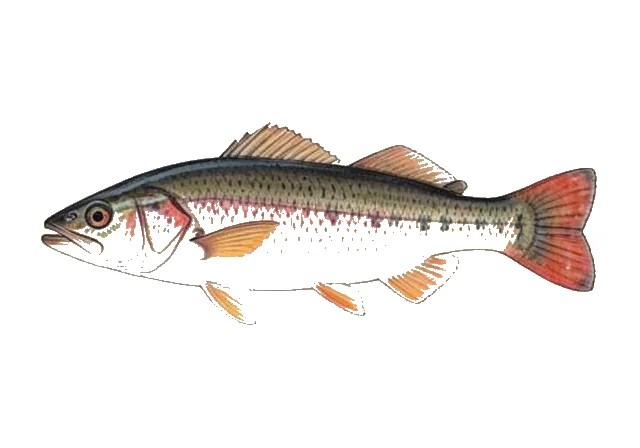
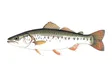
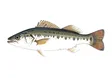
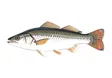
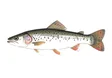
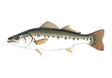
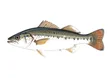
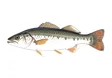
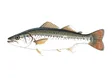
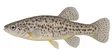
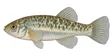
It grows to a total length of 5.8 cm (2.3 in) and feeds on midge larvae and other insects. It was first described by Henry Weed Fowler in 1916, as a subspecies of the species Cyprinodon bovinus; the specific epithet rubrofluviatilis refers to the Red River.
Article text: Wikipedia contributors, Cyprinodon rubrofluviatilis (source revision). Licensed under CC BY-SA 4.0. Retrieved 2026-10-11.
Diet and feeding
Reported feeding positions include bottom feeding. The compilation combines published observations; diets can vary with age, locality, and available food.
Habitat preferences
Reported habitat associations include streams and small rivers, creeks.
The source records associations with sand. An association indicates reported use, rather than an exclusive requirement.
Size and recorded longevity
FishTraits reports a maximum total length of 5 centimetres. Some entries use an estimated asymptotic length; this value should not be treated as a certified record catch.
Native range
Upper Red and Brazos River drainages, Oklahoma and Texas (Page and Burr 1991).
Introduction history
Unknown. Echelle et al. (1977) speculated that the species was transported to the Colorado River drainage by bait-bucket or other artificial means; however, they could not completely discount the slight possibility that it was native to the drainage. Ashbaugh et al. (1994) suggested that introduced populations in the South Canadian and Colorado river drainages appear to have been derived from Red River parent stock. Its spread within the Canadian River drainage may have been aided by lower than normal peak stream flows during recent years (Pigg et al. 1995).