Pecos Pupfish

Cyprinodon pecosensis

Cyprinodontidae · freshwater water fish

3 minute read · Species guide

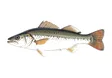
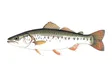
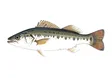
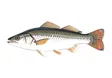
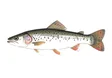
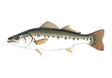
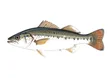
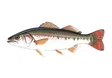
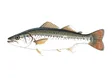
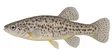
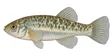
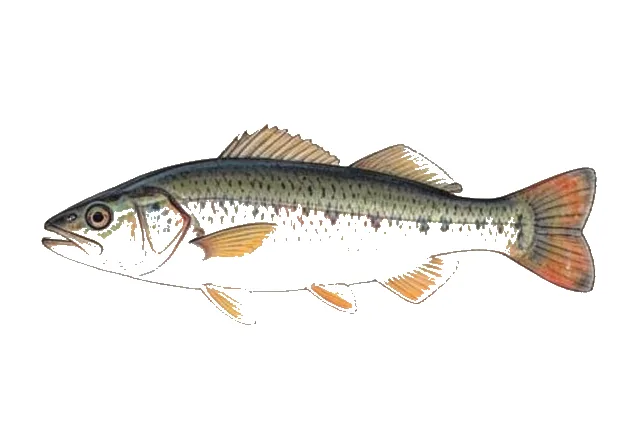
Pecos Pupfish field guide illustration

About Pecos Pupfish

The Pecos pupfish (Cyprinodon pecosensis) is a species of pupfish in the family Cyprinodontidae. It is endemic to the Pecos River watershed in eastern New Mexico and western Texas in the United States.

Distribution and habitat

Despite once existing throughout the Pecos River, C. pecosensis populations have become increasingly isolated due to significant portions of their native habitat being removed. Following the introduction of Cyprinodon variegatus (sheepshead minnow), pure Pecos pupfish populations have been further isolated and largely exist in scattered sinkholes, man-made impoundments, and marshes. Its natural habitat includes springs, sinkholes, and pools of streams.

Introduction of Cyprinodon variegatus

Cyprinodon variegatus is thought to have been introduced during the early 1980s, presumably via bait-bucket dumping. Shortly after the introduction of C. variegatus, C. variegatus X C. pecosensis hybrids quickly became widespread, occupying an estimated 50% of the native Pecos pupfish range by 1985. The widespread success of hybrids, and quick range expansion throughout native Pecos pupfish waters, has been hypothesized to be the result of selection mechanisms for hybrids during a period when the native C. pecosensis population had experienced a reduction.

Additionally, hybrid populations have been reported to have increased growth-rates and vigor (Heterosis), resulting in Pecos pupfish females to actively choose to mate with hybrids over pure male Pecos pupfish. Given this, conservation efforts have been difficult and efforts are being made to prevent C. variegatus from entering into isolated C. pecosensis populations.

Article text: Wikipedia contributors, Pecos pupfish (source revision). Licensed under CC BY-SA 4.0. Retrieved 2026-10-11.
Diet and feeding

The FishTraits compilation records these diet categories for this species: algae or phytoplankton; detritus or unidentified plant material; invertebrates or larval fish. These are broad categories, not a claim that every individual consumes every example in a category.

Reported feeding positions include bottom feeding and surface or water-column feeding. The compilation combines published observations; diets can vary with age, locality, and available food.

Habitat preferences

Reported habitat associations include streams and small rivers.

The source records associations with muck, clay or silt, sand, gravel, cobble, boulders, bedrock, vegetation. An association indicates reported use, rather than an exclusive requirement.

Reproduction and parental care

The compilation reports a representative maturity age of 0.5 years. Its maturity field summarizes mean, median, or modal estimates, usually for females; male estimates can be used when female data are unavailable. It is not a fixed age at which every fish first breeds.

Batch or serial spawning has been reported somewhere in the species’ range. This does not establish the same spawning pattern for every population.

Recorded spawning months are Apr, May, Jun, Jul for the source’s reporting region (NM). This is a regional calendar, not a range-wide schedule.

The reproductive-guild classification includes spawning on open substrates without guarding the brood.

Size and recorded longevity

FishTraits reports a maximum total length of 5 centimetres. Some entries use an estimated asymptotic length; this value should not be treated as a certified record catch.

Recorded longevity in the compilation is 3 years. Wild observations were preferred, but captive records were accepted where wild records were unavailable, and unspecified records were assumed wild. The value is not a guaranteed wild lifespan or an aquarium life expectancy.

Range

Where it lives

Share of 1,475 GBIF observation records with a state location, across 2 states.
0%
93.2%
Share of 1,475 GBIF observation records with a state location, across 2 states.

Share of records by state

Habitat

Water and movement

Water
WoRMS records this species in fresh water.
Migration
Not migratory

Classification

Taxonomy

Kingdom
Animalia
Phylum
Chordata
Superclass
Actinopterygii
Class
Teleostei
Order
Cyprinodontiformes
Genus
Cyprinodon
Species
Cyprinodon pecosensis
ITIS TSN
165639
WoRMS AphiaID
1012583
GBIF key
2347902

Common questions about Pecos Pupfish

What is the scientific name of Pecos Pupfish?
The scientific name is Cyprinodon pecosensis, in the family Cyprinodontidae. Classification follows ITIS.
Does Pecos Pupfish live in fresh water or salt water?
WoRMS records this species in fresh water.
Where has Pecos Pupfish been recorded in the United States?
GBIF has observations in 2 states, with the most records in New Mexico, Texas. The map shows observation records, which do not establish the complete natural range.

Closest relatives

Other Cyprinodon species

Same family

More Cyprinodontidae