Owens Pupfish

Cyprinodon radiosus

Cyprinodontidae · freshwater water fish

6 minute read · Species guide

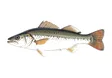
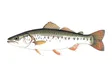
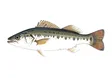
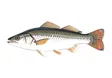
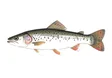
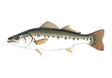
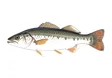
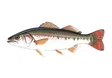
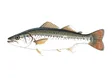
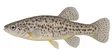
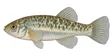
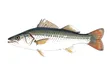
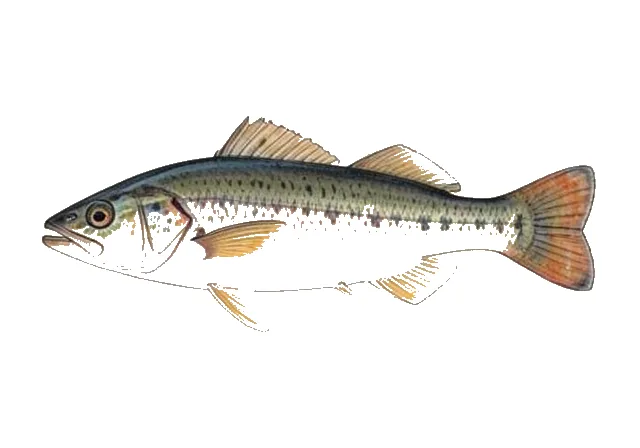
Owens Pupfish field guide illustration

About Owens Pupfish

The Owens pupfish (Cyprinodon radiosus) is a rare species of fish in the family Cyprinodontidae, the pupfish. It is endemic to California in the United States, where it is limited to the Owens Valley. It is a federally listed endangered species of the United States. This pupfish is up to 5 centimetres (2.0 inches) long, the largest males sometimes longer. The male is blue-gray, turning bright blue during spawning. The female is greenish brown with a silvery or whitish belly.

The pupfish tolerates a wide range of water conditions. Its native habitat includes desert marshes with water temperatures up to 33 °C in the summer and layers of ice during the winter. The water in some areas has four times the salt content of the ocean, as well as low oxygen.

Typically, species in the genus Cyprinodon reproduce ranging from May to September, with the season peaking in June and July in particular. There are territorial, satellite, and sneaker types of male mating behavior. Females can lay 10 eggs daily on average for multiple times during the reproductive season. However, pupfish have a very short reproductive cycle in April. When captured during the summer, both male and female fish were not in breeding season and died out within days despite being placed in the spring water they are used to living in.

This fish was once common in the Owens Valley of California, occurring in most water bodies between Fish Slough and Lone Pine, which are 70 miles apart. The bodies of water are shallow, up to 3 feet in depth, and have a temperature between 18 and 20 degrees Celsius. It occurred in the Owens River and associated sloughs and marshes. At that time the Paiute people scooped them out of the water and dried them for the winter.

The diversion of water from the Owens River to the Los Angeles Metropolitan Area during the California Water Wars eliminated most of the water bodies that were the pupfish's habitat. Predation by introduced species of fish may have decimated remaining populations. By 1942 this pupfish was believed to be extinct. It was rediscovered in 1969, when one population of about 800 individuals was found. When they were transferred to a safer location by Phil Pister, a retired district fishery biologist, the entire global population of this pupfish was contained in two buckets. Since the pupfish were a fragile species, many of them died before making it to relocation in Fish Slough. The California Department of Fish and Game established six populations in carefully managed refuge using these fish. While not all of the original six populations still exist today, the CDFW is still protecting and maintaining the population. The Endangered Species Act of 1973 was later passed on to help with more direct recovery efforts for different species on a grander scale. In 2021, another population of Owens pupfish was established at the River Spring Lakes Ecological Reserve in Mono County, California. This brought the total number of populations back up to 6. To establish this new population, pupfish were sourced from the five other extant populations and translocated to the approximately 650-acre (264-hectare) reserve.

Threats to the six populations include the encroachment of cattails into the waterways. The plant clogs the habitat and collects detritus, which eliminates the pupfish's breeding substrates. The CDFG tends the four populations, clearing out the cattails. Introduced species of aquatic organisms also pose a threat. They include predatory fish such as largemouth bass (Micropterus salmoides), smallmouth bass (Micropterus dolomieu), brown trout (Salmo trutta), and bluegill (Lepomis macrochirus), as well as crayfish (Pacifastacus leniusculus) and bullfrogs (Rana catesbeiana). The severe reduction of the species into a single small population may have created a genetic bottleneck; genetic analysis is underway.

Other local Cyprinodon include Death Valley pupfish (Cyprinodon salinus salinus), Shoshone pupfish (Cyprinodon nevadensis shoshone), the extinct Tecopa pupfish (Cyprinodon nevadensis calidae), Devils Hole pupfish (Cyprinodon diabolis), and the desert pupfish (Cyprinodon macularius).

Article text: Wikipedia contributors, Owens pupfish (source revision). Licensed under CC BY-SA 4.0. Retrieved 2026-10-11.
Diet and feeding

The FishTraits compilation records these diet categories for this species: algae or phytoplankton; aquatic or other vascular plants; invertebrates or larval fish. These are broad categories, not a claim that every individual consumes every example in a category.

Reported feeding positions include bottom feeding. The compilation combines published observations; diets can vary with age, locality, and available food.

Habitat preferences

Reported habitat associations include streams and small rivers, creeks, springs or subterranean waters.

The source records associations with muck, clay or silt, sand, bedrock, vegetation, organic debris. An association indicates reported use, rather than an exclusive requirement.

The species is classified as tolerant of a broad range of salinities. This flag does not specify a salinity range for aquarium care.

Reproduction and parental care

The compilation reports a representative maturity age of 0.5 years. Its maturity field summarizes mean, median, or modal estimates, usually for females; male estimates can be used when female data are unavailable. It is not a fixed age at which every fish first breeds.

Batch or serial spawning has been reported somewhere in the species’ range. This does not establish the same spawning pattern for every population.

Recorded spawning months are Jan, Feb, Mar, Apr, May, Jun, Jul for the source’s reporting region (CA). This is a regional calendar, not a range-wide schedule.

The reproductive-guild classification includes spawning on open substrates without guarding the brood.

Size and recorded longevity

FishTraits reports a maximum total length of 6.5 centimetres. Some entries use an estimated asymptotic length; this value should not be treated as a certified record catch.

Recorded longevity in the compilation is 2 years. Wild observations were preferred, but captive records were accepted where wild records were unavailable, and unspecified records were assumed wild. The value is not a guaranteed wild lifespan or an aquarium life expectancy.

Native range

Owens River system in Owens Valley, California, from the springs at Fish Slough in Mono County, to (but not in), Owens Lake, Inyo County, and in the springs around the lake. Currently only found naturally in the Owens Valley Native Fish Sanctuary and in BLM Spring in Fish Slough, a tributary of the Owens River, just north of Bishop (Miller 1968; Miller and Pister 1971; U.S. Fish and Wildlife Service 1984c).

Introduction history

Intentionally stocked to create an additional population of this endangered species where the pupfish could survive without danger of extermination by predatory, nonindigenous fishes or further threatened by competition with introduced mosquitofish (Miller 1968). According to Miller (1968), this site was also intended to study the interspecific relationships among various fishes native to the Owens Valley. The Warm Springs refuge was created in 1970 under the supervision of the California Department of Fish and Game (Miller 1968) and presumably stocked soon afterwards.

Range

Where it lives

Share of 58 GBIF observation records with a state location, across 1 states.
0%
100%
Share of 58 GBIF observation records with a state location, across 1 states.

Share of records by state

Habitat

Water and movement

Water
WoRMS records this species in fresh water.
USGS NAS habitat
Freshwater
US status
Native transplant — native to part of the United States, moved to other waters inside it.
Migration
Not migratory

Classification

Taxonomy

Kingdom
Animalia
Phylum
Chordata
Superclass
Actinopterygii
Class
Teleostei
Order
Cyprinodontiformes
Genus
Cyprinodon
Species
Cyprinodon radiosus
ITIS TSN
165640
WoRMS AphiaID
1014300
GBIF key
2347874

Common questions about Owens Pupfish

What is the scientific name of Owens Pupfish?
The scientific name is Cyprinodon radiosus, in the family Cyprinodontidae. Classification follows ITIS.
Does Owens Pupfish live in fresh water or salt water?
WoRMS records this species in fresh water.
Where has Owens Pupfish been recorded in the United States?
GBIF has observations in 1 states, with the most records in California. The map shows observation records, which do not establish the complete natural range.

Closest relatives

Other Cyprinodon species

Same family

More Cyprinodontidae