Northern Roach

Hesperoleucus mitrulus

Leuciscidae · freshwater water fish

2 minute read · Species guide

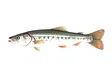
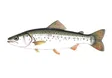
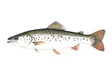
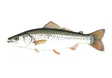
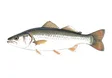
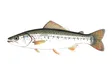
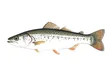
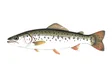
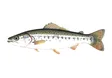
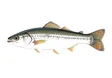
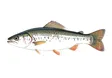
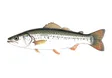
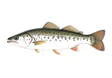
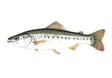
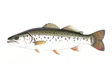
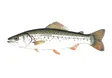
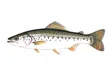
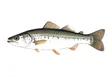
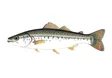
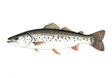
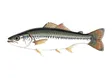
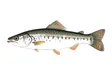
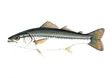
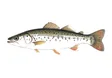
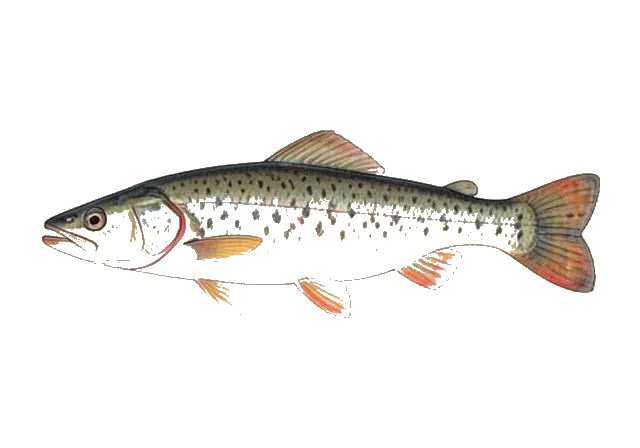
Northern Roach field guide illustration

About Northern Roach

Hesperoleucus mitrulus, the northern roach or pit roach, is a species of freshwater ray-finned fish belonging to the family Leuciscidae, which includes the daces, chubs, Eurasian minnows and related species. This species is found in the Western United States in California and Oregon.

Taxonomy

Hesperoleucus mitrulus was first formally described in 1913 by the American ichthyologist John Otterbein Snyder with its type locality given as Drew Creek, Drews Valley in Lake County, Oregon. This taxon was previously considered to be a synonym of the California roach (H. symmetricus) but in 2019 it was shown to be a valid species. Thie genus Hesperoleucus is classified within the subfamily Laviniinae, the Western chubs, within the family Leuciscidae.

Etymology

Hesperoleucus mitrulus is classified within the genus Hesperoleucus, this name combines the Latin word Hesperus, which means "western", and leucos, which is thought to be a shortening of Myloleucus, a synonym of Gila. This name reflects that the species in this genus are found in Western North America and their similarity to Gila. The specific name is an unnecessary masculization of mitrula, which means "turban". Snyder did not explain why this epithet was chosen but it may be an allusion to the convex shape of the scales, which could be said to resemble a turban.

Description

Hesperoleucus mitrulus are small fishes in which the adults have a typical total length of 5 to 10 cm (2.0 to 3.9 in). Like the California roach, the Pit roach has a bronzy body color and has a robust body with a deep caudal peduncle and a rounded snout. It can be told apart from the California roach by its short rounded fins and the convex scales. They have 7 dorsal fin rays and 8 anal fin rays and the pectoral fins of the males are relatively longer than those of the females.

Distribution and habitat

Hesperoleucus mitrulus is endemic to northern California and southern Oregon. In Oregon it is found in a number of Creeks draining into Goose Lake (Oregon–California) in Lake County. In California it is found in tributaries of the Pit River in Shasta, Lassen and Modoc counties. Here it was found in only 21 out of 261 tributaries sampled. These fishes are found in deep muddy or rocky pools in permanent tributary streams with slow flows, moderate gradient and mats of floating vegetation.

Conservation status

Hesperoleucus mitrulus is classified as Critically Imperiled by NatureServe and them main cause of its decline is given as habitat degradation through agriculture and overgrazing, other threats include logging, invasive non native fish and climate change, which may cause drought within its range.

Article text: Wikipedia contributors, Hesperoleucus mitrulus (source revision). Licensed under CC BY-SA 4.0. Retrieved 2026-10-11.
Range

Where it lives

Share of 1,218 GBIF observation records with a state location, across 2 states.
0%
95.3%
Share of 1,218 GBIF observation records with a state location, across 2 states.

Share of records by state

Habitat

Water and movement

Water
WoRMS records this species in fresh water.

Classification

Taxonomy

Kingdom
Animalia
Phylum
Chordata
Superclass
Actinopterygii
Class
Teleostei
Order
Cypriniformes
Genus
Hesperoleucus
Species
Hesperoleucus mitrulus
ITIS TSN
1199133
WoRMS AphiaID
1532876
GBIF key
2360051

Common questions about Northern Roach

What is the scientific name of Northern Roach?
The scientific name is Hesperoleucus mitrulus, in the family Leuciscidae. Classification follows ITIS.
Does Northern Roach live in fresh water or salt water?
WoRMS records this species in fresh water.
Where has Northern Roach been recorded in the United States?
GBIF has observations in 2 states, with the most records in California, Oregon. The map shows observation records, which do not establish the complete natural range.

Closest relatives

Other Hesperoleucus species

Same family

More Leuciscidae

Alabama Shiner4 states
Cyprinella callistiaLeuciscidaeNativeFresh
Allegheny Pearl Dace19 states
Margariscus margaritaLeuciscidaeNative and introducedFresh
Altamaha Shiner1 states
Cyprinella xaenuraLeuciscidaeNativeFresh
Alvord Chub2 states
Siphateles alvordensisLeuciscidaeNativeFresh
Apalachee Shiner3 states
Pteronotropis grandipinnisLeuciscidaeNativeFresh
Arkansas River Shiner5 states
Notropis girardiLeuciscidaeNative and introducedFresh
Arroyo Chub1 states
Gila orcuttiiLeuciscidaeNative and introducedFresh
Bandfin Shiner5 states
Luxilus zonistiusLeuciscidaeNative and introducedFresh
Bannerfin Shiner5 states
Cyprinella leedsiLeuciscidaeNativeFresh
Beautiful Shiner3 states
Cyprinella formosaLeuciscidaeNativeFresh
Bedrock Shiner3 states
Notropis rupestrisLeuciscidaeNativeFresh
Bigeye Chub25 states
Hybopsis amblopsLeuciscidaeNative and introducedFresh
Bigeye Shiner17 states
Notropis boopsLeuciscidaeNative and introducedFresh
Bigmouth Chub3 states
Nocomis platyrhynchusLeuciscidaeNativeFresh
Bigmouth Shiner21 states
Notropis dorsalisLeuciscidaeNative and introducedFresh
Blackchin Shiner13 states
Notropis heterodonLeuciscidaeNativeFresh
Blackmouth Shiner3 states
Notropis melanostomusLeuciscidaeNativeFresh
Blacknose Shiner21 states
Notropis heterolepisLeuciscidaeNative and introducedFresh
Blackside Dace2 states
Chrosomus cumberlandensisLeuciscidaeNativeFresh
Blackspot Shiner5 states
Notropis atrocaudalisLeuciscidaeNativeFresh
Blacktail Shiner14 states
Cyprinella venustaLeuciscidaeNative and introducedFresh
Blacktip Shiner4 states
Lythrurus atrapiculusLeuciscidaeNative and introducedFresh
Bleeding Shiner8 states
Luxilus zonatusLeuciscidaeNativeFresh
Blotched Chub6 states
Erimystax insignisLeuciscidaeNativeFresh

All 267 species in Leuciscidae