Mosquitofish

Gambusia affinis

Poeciliidae · freshwater and brackish water fish

14 minute read · Species guide

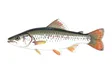
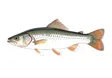
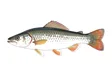
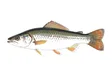
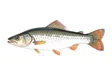
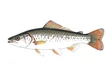
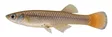
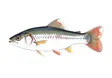
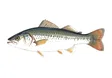
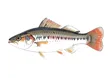
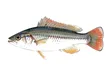
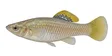
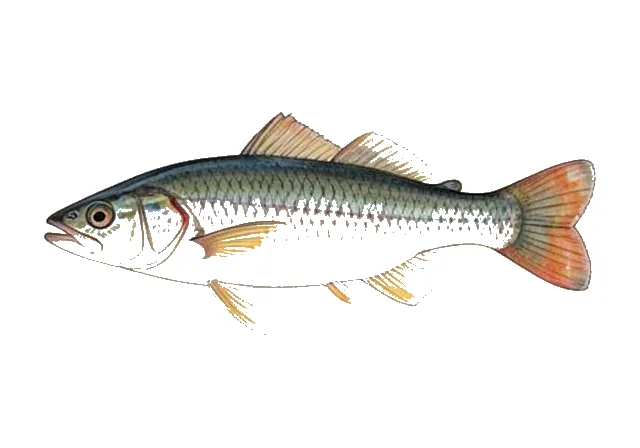
Mosquitofish field guide illustration

About Mosquitofish

The western mosquitofish (Gambusia affinis) is a North American freshwater poeciliid fish, also known commonly, if ambiguously, as simply mosquitofish or by its generic name, Gambusia, or by the common name gambezi. Its sister species, the eastern mosquitofish (Gambusia holbrooki) is also referred to by these names.

Mosquitofish are small in comparison to many other freshwater fish, with females reaching a maximum length of 7 cm (2.8 in) and males a maximum length of 4 cm (1.6 in). The female can be distinguished from the male by her larger size and a gravid spot at the posterior of her abdomen. The name "mosquitofish" was given because the fish eats mosquito larvae, and has been used more than any other fishes for the biological control of mosquitoes. Gambusia typically eat zooplankton, beetles, mayflies, caddisflies, mites, and other invertebrates; mosquito larvae make up only a small portion of their diet.

Mosquitofish were introduced directly into ecosystems in many parts of the world as a biocontrol to lower mosquito populations which in turn negatively affected many other species in each distinct bioregion. Mosquitofish in Australia are classified as a noxious pest and may have exacerbated the mosquito problem in many areas by outcompeting native invertebrate predators of mosquito larvae. Several counties in California distribute mosquitofish at no charge to residents with human-made fish ponds and pools as part of their mosquito abatement programs. The fish are made available to residents only and are intended to be used solely on their own property, not introduced into natural habitat. On 24 February 2014, Chennai Corporation in India introduced western mosquitofish in 660 ponds to control the mosquito population in freshwater bodies.

Fertilization is internal; the male secretes milt into the genital aperture of the female through his gonopodium. Within 16 to 28 days after mating, the female gives birth to about 60 young. The males reach sexual maturity within 43 to 62 days. The females, if born early in the reproductive season, reach sexual maturity within 21 to 28 days; females born later in the season reach sexual maturity the next season, in six to seven months.

Description

Mosquitofish are small and of a dull grey coloring, with a large abdomen, and have rounded dorsal and caudal fins and an upturned mouth. Sexual dimorphism is seen; mature females reach a maximum overall length of 7 cm (2.8 in), while males reach only 4 cm (1.6 in). Sexual dimorphism is also seen in the physiological structures of the body. The anal fins on adult females resemble the dorsal fins, while the anal fins of adult males are pointed. This pointed fin, referred to as a gonopodium, is used to deposit milt inside the female. The gonopodium of G. affinis has a smooth third ray (the anteriormost elongated ray), while that of G. holbrooki bears minute denticles. Adult female mosquitofish can be identified by a gravid spot they possess on the posterior of their abdomens. Other species considered similar to G. affinis include Poecilia reticulata, Poecilia latipinna, and Xiphophorus maculatus; they are commonly misidentified as mosquitofish.

Naming and taxonomy

The mosquitofish is a member of the family Poeciliidae of order Cyprinodontiformes. The genus name Gambusia is derived from the Cuban Spanish term gambusino, meaning "useless". The common name, mosquitofish, is derived from their use for biological control of mosquitoes, which itself was based on early observations that, in certain circumstances, they can reduce mosquito abundances. Classification of the western mosquitofish has been difficult due to their similarity to the eastern mosquitofish, and according to ITIS (Integrated Taxonomic Information System), G. holbrooki (eastern mosquitofish) may be an invalid taxonomic name, and could be considered a subspecies of G. affinis.

Diet

Mosquitofish are diet generalists, but they are considered "larvivorous" because they consume the larvae of mosquitoes and other aquatic insects. Their diet consists of zooplankton, small insects and insect larvae, and detritus material. Mosquitofish feed on mosquito larvae at all stages of life, if mosquito larvae are available in the environment. Adult females can consume up to hundreds of mosquito larvae in one day. Maximum consumption rate in a day by one mosquitofish has been observed to be from 42%–167% of its own body weight. However, they can suffer mortality if fed only mosquito larvae, and survivors of this diet show poor growth and maturation. As generalists, mosquitofish have also shown cannibalistic behavior on the young of their own species.

Habitat

The native range of the mosquitofish is from southern parts of Illinois and Indiana, throughout the Mississippi River and its tributary waters, to as far south as the Gulf Coast in the northeastern parts of Mexico. They are found most abundantly in shallow water protected from larger fish. Mosquitofish can survive relatively inhospitable environments, and are resilient to low oxygen concentrations, high salt concentrations (up to twice that of sea water), and temperatures up to 42 °C (108 °F) for short periods. Because of their notable adaptability to harsh conditions and their global introduction into many habitats for mosquito control, they have been described as the most widespread freshwater fish in the world. Some of their natural predators include the bass, catfish and bluegill.

Global invasion history and environmental impact

Mosquitofish were intentionally introduced in many areas with large mosquito populations to decrease the population of mosquitoes by eating the mosquito larvae. However, retrospectively, many introductions could be considered ill-advised; in most cases native fishes supplied control of mosquito populations, and introducing mosquitofish has been harmful to indigenous aquatic life. Mosquitofish introduction outside of their native range can also be harmful to ecosystems. Mosquitofish can consume or injure other small fish or otherwise harm them through competition. The ecological impacts of mosquitofish are partly dictated by their sex ratio, which can vary dramatically across their introduced range. Mosquitofish in Australia are considered noxious pests where they pose a threat to native fish and frog populations and little evidence indicates they have controlled mosquito populations or mosquito-borne diseases. They have been dubbed by scientists as "one of the most problematic animals on the planet".

However, from the 1920s to the 1950s, mosquitofish were considered by some to be a significant factor in eradicating malaria in South America, southern Russia, and Ukraine. Mosquitofish bred by Joice Loch were distributed through Greece, Serbia and the Middle east. On the coast of the Black Sea in Russia, the mosquitofish is commemorated for eradicating malaria by a monument in Sochi.

Mosquitofish are still employed for biological control of mosquitoes in some places. In 2008, in some parts of California and in Clark County, Nevada, mosquitofish were bred in aquariums so people could stock stagnant pools of water with the mosquitofish to reduce the number of West Nile virus cases.

Through species distribution models, it has been revealed that G. affinis exhibit significant niche expansions beyond their natural climatic ranges, with a notable shift towards tropical regions in Asia. These findings highlight the ecological flexibility of these species, contributing to their extensive success and posing a substantial risk for further range expansion. Furthermore, it is assumed that the species will continue to spread in the course of climate change.

In the European Union, due to the significant negative impacts of its introduction to the ecosystem, it is included in the list of invasive alien species of Union concern and hence cannot be imported, bred, transported, commercialized, or intentionally released into the environment in any of its member states.

Reproduction

Reproduction of the mosquitofish starts with the male arranging the rays of the gonopodium (modified anal fin) into a slight tube. The male mosquitofish uses this tubular fin to secrete milt into the female's genital aperture in the process of internal fertilization. The female's genital aperture is located just behind the anal fin and is an opening for the milt to fertilize the ova within the ovary. Mosquitofish are within the infraclass Teleostei and as all teleosts, mosquitofish lack a uterus, so production of oocytes and gestation occur within the ovary of a female mosquitofish. Inside the female, sperm from multiple males can be stored to later fertilize ova. Based on laboratory experiments, female mosquitofish become vitellogenic when springtime temperatures reach 14 °C (57 °F), and then the oocytes mature when the average temperature reaches about 18 °C (64 °F). Then late in the summer when the photoperiod is less than 12.5 hours long, the next clutch of oocytes develops. In one reproductive season, a female may fertilize, with stored milt, two to six broods of embryos, with the size of the brood decreasing as the season progresses. Reproduction rates are highly dependent on temperature and ration level. As temperature increases from 20 to 30 °C, mean age at first reproduction decreases from 191 to 56 days, and brood size and mass of offspring increase significantly. Interbrood interval estimates at 25 and 30 °C are 23 and 19 days, respectively.

Embryology

Mosquitofish have a 16- to 28-day gestation period. They are lecithotrophic, which means during gestation, nutrients are provided to the embryos by a yolk sac. If the gestation period is shorter, each newborn will at birth still have a yolk sac connected through a slit located on the ventral side of the body wall. Brood size of females depends on the size of the given female; larger females are more capable of a larger brood quantity than smaller females. Many females have a brood quantity of up to or more than 60 young. Mosquitofish are viviparous, which means after the gestation of a brood, the female will have live birth. In most cases, the newborn brood will have an equal male to female sex ratio.

Growth

After birth, newborn mosquitofish are about 8 to 9 mm (0.31 to 0.35 in) in length. As juveniles, they grow at a rate of about 0.2 mm (0.0079 in) per day, but growth is highly temperature-dependent. Growth rates of juvenile mosquitofish reach their peak when the water temperature is within a range of 24 to 30 °C (75 to 86 °F), depending on resource availability. As temperatures rise above or dip below this range, growth rates decrease. Consistent temperatures at or above 35 °C (95 °F) are typically lethal, while growth stops when temperatures are at or below 10 °C (50 °F). For male mosquitofish, sexual maturity is reached in about 43 to 62 days, but maturation age is also dependent on temperature and resources. Female mosquitofish reach sexual maturity in about 21 to 28 days if born early within the reproductive season. The lifespan of a mosquitofish averages less than a year and the maximum is about 1.5 years. However, mosquitofish kept as pets can live much longer, with owners reporting lifespans of over three years. Male mosquitofish lifespans are considerably shorter than females.

Article text: Wikipedia contributors, Mosquitofish (source revision). Licensed under CC BY-SA 4.0. Retrieved 2026-10-11.
Diet and feeding

The FishTraits compilation records these diet categories for this species: algae or phytoplankton; invertebrates or larval fish. These are broad categories, not a claim that every individual consumes every example in a category.

Reported feeding positions include bottom feeding and surface or water-column feeding. The compilation combines published observations; diets can vary with age, locality, and available food.

Habitat preferences

Reported habitat associations include streams and small rivers, creeks, still-water habitats.

The source records associations with muck, clay or silt, sand, gravel, cobble, vegetation. An association indicates reported use, rather than an exclusive requirement.

The species is classified as tolerant of a broad range of salinities. This flag does not specify a salinity range for aquarium care.

Reproduction and parental care

The compilation reports a representative maturity age of 0.3 years. Its maturity field summarizes mean, median, or modal estimates, usually for females; male estimates can be used when female data are unavailable. It is not a fixed age at which every fish first breeds.

Batch or serial spawning has been reported somewhere in the species’ range. This does not establish the same spawning pattern for every population.

Recorded spawning months are Mar, Apr, May, Jun, Jul, Aug, Sep, Oct for the source’s reporting region (TX). This is a regional calendar, not a range-wide schedule.

Size and recorded longevity

FishTraits reports a maximum total length of 4 centimetres. Some entries use an estimated asymptotic length; this value should not be treated as a certified record catch.

Recorded longevity in the compilation is 1 years. Wild observations were preferred, but captive records were accepted where wild records were unavailable, and unspecified records were assumed wild. The value is not a guaranteed wild lifespan or an aquarium life expectancy.

Identification and appearance

Gambuisa affinis can be distinguished from G. holbrooki by the number of dorsal and anal fin elements and the shape of the gonopodium on males. Boschung and Mayden (2004) suggest the following combination of characters:

Walters and Freeman (2000) recommend the follow combination of characters (where each element is counted individually):

Native range

Mississippi River basin from central Indiana and Illinois south to Gulf, and Gulf Slope drainages from Mobile Bay west to Tampico, Mexico (Rauchenberger 1989; Page and Burr 1991).

Habitat and ecology

Western Mosquitofish is a small live-bearing fish that feeds primarily on zooplankton and invertebrate prey at the top of the water column. Adults are known to feed on their young opportunistically (Benoit et al. 2000). This species is also well known for its high feeding capacity. Chips (2004) observed maximum consumption rates of 42–167% of their body weight per day. These organisms also require a high density of refuges to maintain populations at or near their asymptotic density (Benoit et at. 2000). Interestingly, equal numbers of male and female mosquitofish occur in the ovary and at birth while adult populations contain a disproportionately large number of females and exhibit increased male mortality after recruitment (Haynes and Cashner 1995). This is probably due to the females' ability to store sperm, a trait that renders males largely unnecessary after insemination and whose presence becomes merely increased competition for developing young.

Introduction history

Because of their reputation as mosquito-control agents, both G. holbrooki and G. affinis have been stocked routinely and indiscriminately in temperate and tropical areas around the world. In the United States the first known introductions of mosquitofish took place in the early 1900s (Krumholz 1948). In 1905 about 150 G. affinis were introduced into Hawaii from Texas to test their effectiveness in preying on mosquito larvae (Seale 1905), and by 1910 their descendants had been released into parts of Oahu, Hawaii, Maui, Kauai, and Molokai (Van Dine 1907; Stearns 1983). Also, in 1905 Gambusia, reportedly from North Carolina, were released into New Jersey waters for the purpose of controlling mosquitoes (Seal 1910; Krumholz 1948). In 1922 mosquitofish from Texas (900 from Austin and 300 from Hearne) were introduced into a lily pond a Sutter's Fort. That lily pond served as a hatchery used to spread G. affinis across California and Nevada during the 1920s and 1930s (Stockwell et al. 1996). Mosquitofish were commonly and widely introduced during the following decades by such organizations as the former U.S. Public Health Service, in large part because they were thought of as an effective and inexpensive means of combating malaria (Krumholz 1948). In more recent years, employees of many state and local health departments apparently view the use of mosquitofish to control mosquito larvae as an attractive alternative to the use of insecticides. In some areas range extensions have occurred through natural dispersal far from sites where originally introduced (e.g., Pflieger 1997).

Ecological impacts

Introduced mosquitofish have been particularly destructive in the American West where they have contributed to the elimination or decline of populations of federally endangered and threatened species (Courtenay and Meffe 1989). Specific examples of their negative effects include a habitat shift and a reduction in numbers of the threatened Railroad Valley springfish Crenichthys baileyi in springs in Nevada (Deacon et al. 1964) and the local elimination of the endangered Sonoran topminnow Poeciliopsis occidentalis in Arizona (Moyle 1976a; Meffe et al. 1983, Meffe 1985). Western Mosquitofish use the same habitat as the plains topminnow Fundulus sciadicus and have displaced these topminnows and other species with their aggressive behavior (Whitmore 1997). The mosquitofish is also responsible for the elimination of the least chub Iotichthys phlegethontis in several areas of Utah (Whitmore 1997). Meffe (1983, 1985) found that mosquitofish are very aggressive, even toward larger fish. They often attack, shred fins, and sometimes kill other species. Mosquitofish are known to prey on eggs, larvae, and juveniles of various fishes, including those of largemouth bass and common carp; they are also known to prey on adults of smaller species (Meffe 1985; Courtenay and Meffe 1989). Courtenay and Meffe (1989) listed impacts on a variety of native fishes.

Introducing mosquitofish also can precipitate algal blooms when the fish eat the zooplankton grazers (Hurlbert et al. 1972), or in an increase in the number of mosquitoes if the fish eat the invertebrate predators (Hoy et al. 1972, Bence 1988). Introduced fishes, including mosquitofish, are likely at least partially responsible for the decline of the Chiricahua leopard frog Rana chiricahuensis in southeastern Arizona (Rosen et al. 1995). In California, Gambusia affinis has been documented to prey heavily on California newt Taricha torosa larvae (Gamradt and Kats 1996) and Pacific treefrog Hyla regilla tadpoles (Goodsell and Kats 1999).

Mosquitofish, and other introduced poeciliids, have been implicated in the decline of native damselflies on Oahu, Hawaii. Often the distributions of the damselflies and introduced fishes were found to be mutually exclusive, probably resulting from predation of the fish on the insects (Englund 1999).

Introductions of Western Mosquitofish have been implicated in the current restricted distribution of plains topminnow in Nebraska and may be affecting populations in Wyoming (Rahel and Thel 2004; Wyoming Fish and Game Department 2010). Schumann et al. (2015) examined the impacts of mosquitofish on populations of plains topminnow and plains killifish (Fundulus kansae) in Nebraska using mesocosm trials, finding increased fundulid mortailty through direct predation on larval fishes and aggression towards juveniles, as well as alteration in activity patterns and microhabitat use by the native species in the presence of mosquitofish.

Range

Where it lives

Share of 64,666 GBIF observation records with a state location, across 41 states. The orange dots are USGS stream-survey sites where this species was caught.
0%
32.3%
Share of 64,666 GBIF observation records with a state location, across 41 states. The orange dots are USGS stream-survey sites where this species was caught.

A blank area on the dot layer usually means nobody sampled there, not that the fish is absent. Turn on “every survey site” to see where the survey looked.

The USGS stream survey caught it at 3,152 of its sites, in 32 states. That survey and the GBIF records are two different counts of two different things, so the site keeps them apart.

Habitat

Water and movement

Water
WoRMS records this species in fresh water and brackish water.
USGS NAS habitat
Freshwater
US status
Native transplant — native to part of the United States, moved to other waters inside it.
Migration
Migratory
Pattern

Classification

Taxonomy

Kingdom
Animalia
Phylum
Chordata
Superclass
Actinopterygii
Class
Teleostei
Order
Cyprinodontiformes
Genus
Gambusia
Species
Gambusia affinis
ITIS TSN
165878
WoRMS AphiaID
159325
GBIF key
2350580
Outside the US
ITIS also files it in Canada, Central Pacific Territories.

Common questions about Mosquitofish

What is the scientific name of Mosquitofish?
The scientific name is Gambusia affinis, in the family Poeciliidae. Classification follows ITIS.
Does Mosquitofish live in fresh water or salt water?
WoRMS records this species in fresh water and brackish water.
Where has Mosquitofish been recorded in the United States?
GBIF has observations in 41 states, with the most records in Texas, New Mexico, Oklahoma. The map shows observation records, which do not establish the complete natural range.

Closest relatives

Other Gambusia species

Same family

More Poeciliidae

Amazon Molly1 states
Poecilia formosaPoeciliidaeNative and introducedFreshBrackish
Amistad Gambusia2 states
Gambusia amistadensisPoeciliidaeNativeFresh
Big Bend Gambusia2 states
Gambusia gaigeiPoeciliidaeNativeFresh
Blotched Gambusia1 states
Gambusia senilisPoeciliidaeNativeFresh
Clear Creek Gambusia1 states
Gambusia heterochirPoeciliidaeNativeFreshBrackish
Cuban Limia1 states
Limia vittataPoeciliidaeIntroducedFreshBrackish
Dwarf Livebearer8 states
Heterandria formosaPoeciliidaeNativeFreshBrackish
Gila Topminnow3 states
Poeciliopsis occidentalisPoeciliidaeNative and introducedFresh
Guppy15 states
Poecilia reticulataPoeciliidaeIntroducedFreshBrackish
Largespring Gambusia2 states
Gambusia geiseriPoeciliidaeNative and introducedFresh
Mangrove Gambusia1 states
Gambusia rhizophoraePoeciliidaeNativeFreshBrackish
Mexican Molly7 states
Poecilia sphenopsPoeciliidaeIntroducedFreshBrackish
Pecos Gambusia3 states
Gambusia nobilisPoeciliidaeNative and introducedFresh
Piketop Minnow3 states
Belonesox belizanusPoeciliidaeIntroducedFreshBrackish
Poeciliopsis sonoriensis1 states
PoeciliidaeNativeFresh
Porthole Livebearer1 states
Poeciliopsis gracilisPoeciliidaeIntroducedFresh
Sailfin Molly15 states
Poecilia latipinnaPoeciliidaeNative and introducedFreshSaltBrackish
San Marcos Gambusia3 states
Gambusia georgeiPoeciliidaeNativeFresh
Shortfin Molly9 states
Poecilia mexicanaPoeciliidaeIntroducedFreshBrackish
Southern Platyfish7 states
Xiphophorus maculatusPoeciliidaeIntroducedFresh
Tex-mex Gambusia1 states
Gambusia speciosaPoeciliidaeNativeFresh
Variable Platyfish5 states
Xiphophorus variatusPoeciliidaeIntroducedFresh