Southern Platyfish

Xiphophorus maculatus

Poeciliidae · freshwater water fish

5 minute read · Species guide

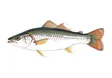
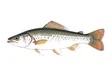
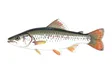
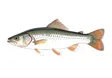
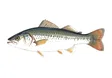
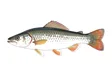
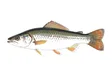
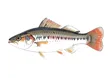
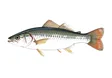
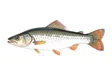
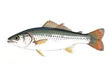
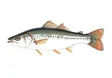
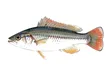
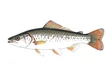
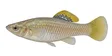
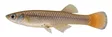
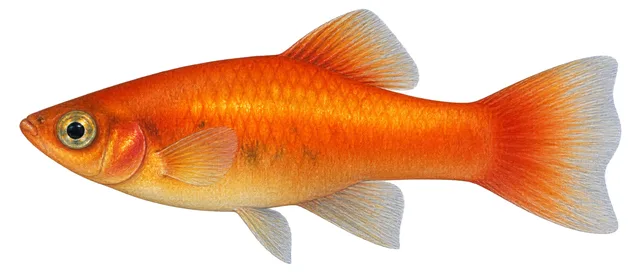
Southern Platyfish field guide illustration

About Southern Platyfish

The southern platyfish, common platy, or moonfish (Xiphophorus maculatus) is a species of freshwater fish in family Poeciliidae of order Cyprinodontiformes. A live-bearer, it is closely related to the green swordtail (X. hellerii) and can interbreed with it. It is native to an area of North and Central America stretching from Veracruz, Mexico, to northern Belize.

The southern platyfish grows to a maximum overall length of 6.0 cm (2.4 in). Sexual dimorphism is slight, the male's caudal fin being more pointed. The anal fin of the male fish has evolved into a gonopodium, a stick-shaped organ used for reproduction. The female southern platyfish's anal fin is fan shaped. Wild varieties are drab in coloration, lacking the distinctive dark lateral line common to many Xiphophorus species.

Xiphophorus maculatus prefers slow-moving waters of canals, ditches, and warm springs. Omnivorous, its diet includes both plants and small crustaceans, insects, and annelid worms.

Breeders have developed a multitude of color varieties (e.g. orange, red, yellow, red/black, and black/white) which are common aquarium fish for hobbyists.

The southern platyfish is commonly known simply as the platy (pl. platys or platies), from the fish's original generic name, Platypoecilus.

Nonindigenous occurrences

This species has been recorded from Orange County, California, near Westminster; near a fish farm in Conejos County and the South Platte drainage, Colorado; several counties in Florida; Hawaii; an unnamed tributary to Big Branch Bayou in Lacombe, Louisiana; Beaverhead Rock Pond (Madison County), Montana; Clark County, Nevada; and Texas. It has also been collected in the Loiza drainage near Loiza Reservoir, Quebrada Honda, and Rio Abajo Forest Station north of Utuado in Puerto Rico.

The southern platyfish has been released probably due to fish farm or aquarium releases. Specimens in Louisiana were collected near a tropical fish farm. Southern platies, and other introduced poeciliids, have been implicated in the decline of native damselflies on Oahu, Hawaii. Often the distributions of the damselflies and introduced fishes were found to be mutually exclusive, probably resulting from competition for limited insect food.

In the aquarium

Platies are easy to keep and well suited to a community aquarium. They prefer water with a 7.0–8.0 pH, a water hardness of 9.0–19.0 dGH, and a temperature range of 18–25 °C (64–77 °F).

In captivity, they reach maturity in three to four months, and breed readily, the females giving birth to about 20–40 young at a time. Often young are eaten by the adults or other inhabitants of a communal aquarium but given plants and gravel to hide in, some will probably survive as these are hardy fish. Platy young are first seen at approx 7mm long and will use cover to hide from predators and to look for food. Specialist fry food is available but any flake food, frozen or live food that floats their way will be easily consumed. These require excellent water quality and care must be taken to avoid fry being sucked up into a gravel cleaning syphon. A thin membrane covering the syphon opening such as a clean pair of tights will minimise this.

The fish commonly sold in pet shops is not a pure strain of X. maculatus, but is a hybrid between X. hellerii and X. maculatus. In general, if the male has a sword-shaped tail, they are called swordtails. Otherwise, they are labeled platy. (However, this basic assessment does not take into consideration the undeniable fact that the majority of fishes sold as 'platies' do share the same stout form as the wild X. maculatus, whilst aquarium 'hybrid' swordtail strains likewise share the longer, larger body-form of the wild X. hellerii, so caudal extension is not the sole differentiator and it is clear that decades of selective breeding have reinforced, within each captive strain, the appropriate or typical – and therefore desired – body shape of the name types.) Color and fin shape vary wildly in the aquarium trade.

A common statement in the trade is that it is harder to stop them breeding than to make them do so, with 'surprise' fry appearing in community tanks regularly.

Sex

The southern platyfish has three sex chromosomes W, X, and Y, that interact with autosomal genes. This creates a highly complex sex determination system.

There are 4 autosomal alleles that intervene in the sex determination system:

Article text: Wikipedia contributors, Southern platyfish (source revision). Licensed under CC BY-SA 4.0. Retrieved 2026-10-11.
Diet and feeding

The FishTraits compilation records these diet categories for this species: invertebrates or larval fish. These are broad categories, not a claim that every individual consumes every example in a category.

Habitat preferences

Reported habitat associations include springs or subterranean waters.

The source records associations with muck, vegetation, large woody material. An association indicates reported use, rather than an exclusive requirement.

Reproduction and parental care

Recorded spawning months are Jan, Feb, Mar, Apr, May, Jun, Jul for the source’s reporting region (MEX). This is a regional calendar, not a range-wide schedule.

Size and recorded longevity

FishTraits reports a maximum total length of 4 centimetres. Some entries use an estimated asymptotic length; this value should not be treated as a certified record catch.

Identification and appearance

Distinguishing characteristics were given by Rosen (1960, 1979) and Page and Burr (1991). It is included in identification keys of Rosen (1960, 1979) and Greenfield and Thomerson (1997). Photographs or illustrations appeared in Rosen (1960), Mills and Vevers (1982), Petrovicky (1988), Dawes (1991), Sakurai et al. (1993), and Wischnath (1993). Formerly known as Platypoecilus maculatus.

Native range

Atlantic Slope of Middle America from Ciudad Veracruz, Mexico, to Belize (Rosen 1960, 1979; Page and Burr 1991; Greenfield and Thomerson 1997), including Yucatan peninsula (Zambrano et al. 2006).

Introduction history

Probably the result of fish farm or aquarium releases. Specimens in Louisiana were collected near a tropical fish farm.

Ecological impacts

Southern platys, and other introduced poeciliids, have been implicated in the decline of native damselflies on Oahu, Hawaii. Often the distributions of the damselflies and introduced fishes were found to be mutually exclusive, probably resulting from predation by the fish on the insects (Englund 1999).

Range

Where it lives

Share of 62 GBIF observation records with a state location, across 7 states.
0%
82.3%
Share of 62 GBIF observation records with a state location, across 7 states.

Habitat

Water and movement

Water
WoRMS records this species in fresh water.
USGS NAS habitat
Freshwater
US status
Exotic — the USGS Nonindigenous Aquatic Species database lists it as introduced from outside North America.
Migration
Not migratory

Classification

Taxonomy

Kingdom
Animalia
Phylum
Chordata
Superclass
Actinopterygii
Class
Teleostei
Order
Cyprinodontiformes
Genus
Xiphophorus
Species
Xiphophorus maculatus
ITIS TSN
165922
WoRMS AphiaID
862549
GBIF key
2350164
Outside the US
ITIS also files it in Caribbean Territories, Central Pacific Territories.

Common questions about Southern Platyfish

What is the scientific name of Southern Platyfish?
The scientific name is Xiphophorus maculatus, in the family Poeciliidae. Classification follows ITIS.
Does Southern Platyfish live in fresh water or salt water?
WoRMS records this species in fresh water.
Where has Southern Platyfish been recorded in the United States?
GBIF has observations in 7 states, with the most records in Florida, Nevada, Alabama. The map shows observation records, which do not establish the complete natural range.

Closest relatives

Other Xiphophorus species

Same family

More Poeciliidae

Amazon Molly1 states
Poecilia formosaPoeciliidaeNative and introducedFreshBrackish
Amistad Gambusia2 states
Gambusia amistadensisPoeciliidaeNativeFresh
Big Bend Gambusia2 states
Gambusia gaigeiPoeciliidaeNativeFresh
Blotched Gambusia1 states
Gambusia senilisPoeciliidaeNativeFresh
Clear Creek Gambusia1 states
Gambusia heterochirPoeciliidaeNativeFreshBrackish
Cuban Limia1 states
Limia vittataPoeciliidaeIntroducedFreshBrackish
Dwarf Livebearer8 states
Heterandria formosaPoeciliidaeNativeFreshBrackish
Gila Topminnow3 states
Poeciliopsis occidentalisPoeciliidaeNative and introducedFresh
Guppy15 states
Poecilia reticulataPoeciliidaeIntroducedFreshBrackish
Largespring Gambusia2 states
Gambusia geiseriPoeciliidaeNative and introducedFresh
Mangrove Gambusia1 states
Gambusia rhizophoraePoeciliidaeNativeFreshBrackish
Mexican Molly7 states
Poecilia sphenopsPoeciliidaeIntroducedFreshBrackish
Mosquitofish41 states
Gambusia affinisPoeciliidaeNative and introducedFreshBrackish
Pecos Gambusia3 states
Gambusia nobilisPoeciliidaeNative and introducedFresh
Piketop Minnow3 states
Belonesox belizanusPoeciliidaeIntroducedFreshBrackish
Poeciliopsis sonoriensis1 states
PoeciliidaeNativeFresh
Porthole Livebearer1 states
Poeciliopsis gracilisPoeciliidaeIntroducedFresh
Sailfin Molly15 states
Poecilia latipinnaPoeciliidaeNative and introducedFreshSaltBrackish
San Marcos Gambusia3 states
Gambusia georgeiPoeciliidaeNativeFresh
Shortfin Molly9 states
Poecilia mexicanaPoeciliidaeIntroducedFreshBrackish
Tex-mex Gambusia1 states
Gambusia speciosaPoeciliidaeNativeFresh
Variable Platyfish5 states
Xiphophorus variatusPoeciliidaeIntroducedFresh