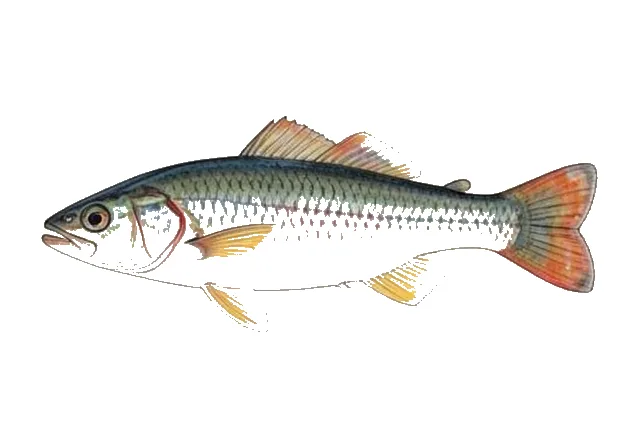
Poeciliopsis sonoriensis

Poeciliidae · freshwater water fish

2 minute read · Species guide

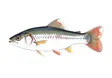
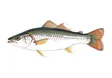
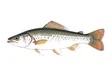
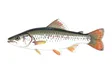
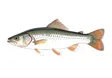
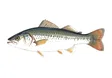
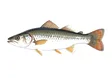
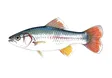
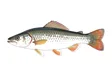
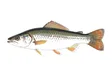
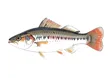
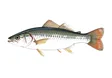
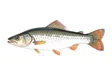
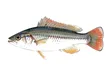
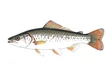
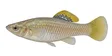
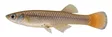
Poeciliopsis sonoriensis field guide illustration

About Poeciliopsis sonoriensis

The Yaqui topminnow is a species of fish in the family Poeciliidae. Its scientific name is Poeciliopsis sonoriensis; it is also sometimes considered a subspecies of Poeciliopsis occidentalis as P. o. sonoriensis. This fish is native of Mexico and the United States, with a few native and introduced populations persisting in Arizona in the United States and a number of populations in northern Sonora, Mexico.

Description

The Yaqui topminnow has an elongated, slightly curved body with a rounded to squared tail fin. The female is generally 3 to 4.5 centimeters (1.2 to 1.8 in) long, but may be longer. The male is smaller, generally under 2.5 cm (0.98 in) long. The anal fin of the male is elongated into a copulatory organ used to inseminate the female. Along with other species of topminnow, the Yaqui topminnow exhibits several somewhat unique reproductive characteristics among fish. The eggs are fertilized internally, the female can store sperm from several males in a special structure called the spermatheca, and she can fertilize eggs for a prolonged period after receiving the sperm; the female can simultaneously carry a number of different broods at different stages of development and bears live young rather than lays eggs.

During the breeding season, males may become jet black and exhibit aggressive breeding behavior, while other males may maintain the nonbreeding coloration and attempt to mate inconspicuously with females. The female is tan or olivaceous, with a pale belly and dark lateral band.

The species is closely related to the Gila topminnow (Poeciliopsis occidentalis) and is sometimes treated as a subspecies. The Yaqui topminnow can be distinguished by its superior mouth, longer snout, and the pattern of lateral banding on the body of the female, which rarely extends anterior to the bases of the pelvic fins.

Biology

This fish lives in shallow, warm, slow-moving waters containing thick algae and debris. It is most common in marshes, especially those fed by springs. It feeds on detritus and small bits of animal and plant material.

The female bears 20 or more young per brood, and may produce a brood about every 20 days. The species breeds year-round in many areas, but in habitats with fluctuating temperatures, breeding occurs during the warmer months. The fish rarely lives more than one year.

Conservation

The fish has a limited range. It was formerly considered to be a vulnerable species on the IUCN Red List. It faces the loss of its aquatic habitat types and competition with the western mosquitofish (Gambusia affinis).

Much of its United States population occurs on the San Bernardino National Wildlife Refuge, where it is protected.

Article text: Wikipedia contributors, Poeciliopsis sonoriensis (source revision). Licensed under CC BY-SA 4.0. Retrieved 2026-10-11.
Range

Where it lives

Share of 42 GBIF observation records with a state location, across 1 states.
0%
100%
Share of 42 GBIF observation records with a state location, across 1 states.

Share of records by state

Habitat

Water and movement

Water
WoRMS records this species in fresh water.
Migration
Undetermined

Classification

Taxonomy

Kingdom
Animalia
Phylum
Chordata
Superclass
Actinopterygii
Class
Teleostei
Order
Cyprinodontiformes
Genus
Poeciliopsis
Species
Poeciliopsis sonoriensis
ITIS TSN
913896
WoRMS AphiaID
1021276
GBIF key
2350481
Outside the US
ITIS also files it in Mexico.

Common questions about Poeciliopsis sonoriensis

What is the scientific name of Poeciliopsis sonoriensis?
The scientific name is Poeciliopsis sonoriensis, in the family Poeciliidae. Classification follows ITIS.
Does Poeciliopsis sonoriensis live in fresh water or salt water?
WoRMS records this species in fresh water.
Where has Poeciliopsis sonoriensis been recorded in the United States?
GBIF has observations in 1 states, with the most records in Arizona. The map shows observation records, which do not establish the complete natural range.

Closest relatives

Other Poeciliopsis species

Same family

More Poeciliidae

Amazon Molly1 states
Poecilia formosaPoeciliidaeNative and introducedFreshBrackish
Amistad Gambusia2 states
Gambusia amistadensisPoeciliidaeNativeFresh
Big Bend Gambusia2 states
Gambusia gaigeiPoeciliidaeNativeFresh
Blotched Gambusia1 states
Gambusia senilisPoeciliidaeNativeFresh
Clear Creek Gambusia1 states
Gambusia heterochirPoeciliidaeNativeFreshBrackish
Cuban Limia1 states
Limia vittataPoeciliidaeIntroducedFreshBrackish
Dwarf Livebearer8 states
Heterandria formosaPoeciliidaeNativeFreshBrackish
Gila Topminnow3 states
Poeciliopsis occidentalisPoeciliidaeNative and introducedFresh
Guppy15 states
Poecilia reticulataPoeciliidaeIntroducedFreshBrackish
Largespring Gambusia2 states
Gambusia geiseriPoeciliidaeNative and introducedFresh
Mangrove Gambusia1 states
Gambusia rhizophoraePoeciliidaeNativeFreshBrackish
Mexican Molly7 states
Poecilia sphenopsPoeciliidaeIntroducedFreshBrackish
Mosquitofish41 states
Gambusia affinisPoeciliidaeNative and introducedFreshBrackish
Pecos Gambusia3 states
Gambusia nobilisPoeciliidaeNative and introducedFresh
Piketop Minnow3 states
Belonesox belizanusPoeciliidaeIntroducedFreshBrackish
Porthole Livebearer1 states
Poeciliopsis gracilisPoeciliidaeIntroducedFresh
Sailfin Molly15 states
Poecilia latipinnaPoeciliidaeNative and introducedFreshSaltBrackish
San Marcos Gambusia3 states
Gambusia georgeiPoeciliidaeNativeFresh
Shortfin Molly9 states
Poecilia mexicanaPoeciliidaeIntroducedFreshBrackish
Southern Platyfish7 states
Xiphophorus maculatusPoeciliidaeIntroducedFresh
Tex-mex Gambusia1 states
Gambusia speciosaPoeciliidaeNativeFresh
Variable Platyfish5 states
Xiphophorus variatusPoeciliidaeIntroducedFresh