Pecos Gambusia

Gambusia nobilis

Poeciliidae · freshwater water fish

6 minute read · Species guide

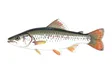
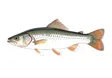
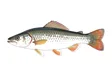
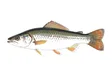
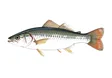
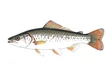
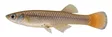
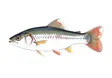
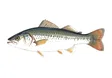
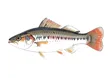
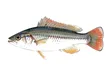
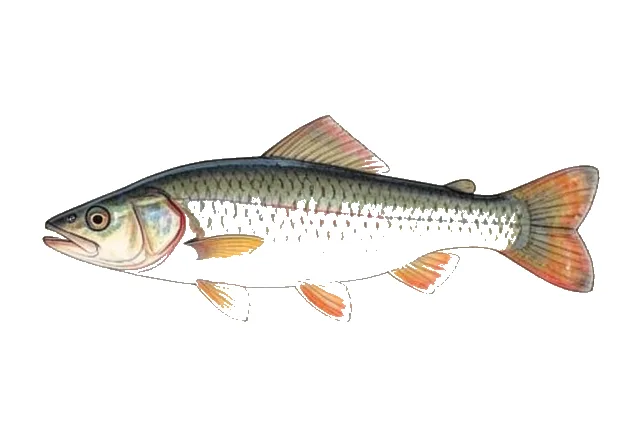
Pecos Gambusia field guide illustration

About Pecos Gambusia

The Pecos gambusia (Gambusia nobilis), also known as the Pecos mosquitofish, is a species of fish in the family Poeciliidae endemic to the Pecos River in Texas and New Mexico in the United States. This two-inch species, as most of its family, is a livebearer. Females produce broods of up to 40 fry every four to five days. The fish are omnivorous, eating algae and small invertebrates, and are endangered due to loss of their spring-fed desert habitat.

Physical description

The Pecos gambusia is a small, live-bearing fish that shows distinct differences in size and other morphological features between males and females. Males can reach a maximum length of 32 mm (1.2 in), while females may exceed 60 mm (2.36 in). This species has a dorsally flattened head and a mouth that is significantly angled upwards as the lower jaw is protruding. The back is curved, and the caudal peduncle is notably deep. The color of a Pecos gambusia is a light reddish-brown with a lighter abdomen. The broadly rounded caudal fin has few or no small spots. The male gonopodium or anal fin is elongated while females exhibit a smaller and rounded anal fin.

Distribution and habitat

The Pecos gambusia is endemic to the Pecos River basin in southeastern New Mexico and western Texas. The species inhabits the springs and spring systems. Historically, it inhabited Comanche Springs and Leon Springs drainages of Texas near Fort Stockton as well as a chain of springs within the Toyah drainage. Comanche Springs has since dried, however, the species can still be found in Leon Creek and Toyah drainages. In New Mexico, this species is currently only found in Bitter Lake National Wildlife Refuge and Blue Spring south of Roswell.

Pecos inhabit stenothermal springs, marshes affected by spring flow, and irrigation canals fed by spring water. Populations can also be found in gypsum sinkholes and sedge-covered marshes. They inhabit shallow, clear, and vegetated areas of the springs. They prefer areas with natural cover, such as aquatic vegetation, submerged cliffs, and overhanging banks, tending to avoid open water. They are typically found in the surrounding areas of springheads that experience still water or low-velocity flows.

Diet and reproduction

Pecos gambusia feed on insects found in the top half of the water column, most commonly on the surface. The species feeds throughout the day, but prime feeding time is at night when insect activity is highest. Corixidae and Culicidae are the most common sources of food, but they will prey on insects of a sufficient size.

Pecos gambusia are live-bearing fish. Males use their gonopodium during copulation, females carry fertilized eggs until they hatch internally and young fish emerge from the female. Breeding season is typically from April through August, females typically have one to four broods during this time with an average of around 38 embryos. This species has been found to shift reproductive strategies depending on the season. During early season females focus on caring for many of its small embryos, and fewer, larger offspring later into the season. Females also have shown indication of matrotrophy as they carry embryos at multiple stages of development.

Conservation status and threats

Pecos gambusia is currently listed on the IUCN Red List as endangered and was first federally listed as an endangered species by the U.S. Government in 1970. Pecos often coexist well with other small species of fish that are not of the same species. The western mosquitofish and largespring gambusia, both of which are of the Gambusia genus and often found in similar habitats, bring about problems of hybridization that are of significant concern to Pecos populations due to loss of genetic variation. Another concern for the Pecos gambusia is the degradation of aquatic habitat stemming from a decline in groundwater levels from which the springs they inhabit arise. Other threats include predation and increased competition due to introduced species of fish in their native range. Several reintroduction projects have been done to try and establish additional populations of the species but have been met with very limited success. Recovery plans have shifted towards keeping current populations secure and stable. There have been studies on this species with conservation in mind, including many focusing on preserving genetic integrity in the face of concerns over hybridization. Others have looked at mate-sampling in order to understand the species behavior and inform habitat management and further conservation efforts. A recovery plan for the species was last made in 1983.

Article text: Wikipedia contributors, Pecos gambusia (source revision). Licensed under CC BY-SA 4.0. Retrieved 2026-10-11.
Diet and feeding

The FishTraits compilation records these diet categories for this species: algae or phytoplankton; invertebrates or larval fish. These are broad categories, not a claim that every individual consumes every example in a category.

Reported feeding positions include surface or water-column feeding. The compilation combines published observations; diets can vary with age, locality, and available food.

Habitat preferences

Reported habitat associations include creeks, springs or subterranean waters.

The source records associations with muck, clay or silt, sand, gravel, cobble, vegetation. An association indicates reported use, rather than an exclusive requirement.

Reproduction and parental care

The compilation reports a representative maturity age of 0.3 years. Its maturity field summarizes mean, median, or modal estimates, usually for females; male estimates can be used when female data are unavailable. It is not a fixed age at which every fish first breeds.

Batch or serial spawning has been reported somewhere in the species’ range. This does not establish the same spawning pattern for every population.

Recorded spawning months are Mar, Apr, May, Jun, Jul, Aug, Sep, Oct for the source’s reporting region (TX). This is a regional calendar, not a range-wide schedule.

Size and recorded longevity

FishTraits reports a maximum total length of 4 centimetres. Some entries use an estimated asymptotic length; this value should not be treated as a certified record catch.

Recorded longevity in the compilation is 1 years. Wild observations were preferred, but captive records were accepted where wild records were unavailable, and unspecified records were assumed wild. The value is not a guaranteed wild lifespan or an aquarium life expectancy.

Native range

Endemic to springs and sinkholes in the Pecos River system, New Mexico and Texas (Hubbs et al. 1991; Page and Burr 1991).

Habitat and ecology

Prefers clear, vegetated waters in springs and sinkholes.

Introduction history

This endangered species was intentionally stocked to create additional populations. Ink Pot and one sinkhole at Bitter Lake were stocked in 1973. The source of the Living Desert State Park population stocked in 1975 is apparently Blue Spring, near Black River Village, Eddy County (U.S. Fish and Wildlife Service 1982b). Pecos Gambusia were transplanted from waters near the north end of the Bitter Lake National Wildlife Refuge into 19 new localities within the same refuge and within the Salt Creek Wilderness Areas in 1972 and 1973. Other sinkholes at Bitter Lake were stocked in July and August 1981 (U.S. Fish and Wildlife Service 1982b). As part of recovery efforts, health officials in New Mexico investigated the use of G. nobilis in stock ponds within the Pecos River drainage to control mosquitoes, but the project was stopped when stocked fish failed to survive (Johnson and Hubbs 1989).

Range

Where it lives

Share of 853 GBIF observation records with a state location, across 3 states.
0%
70.1%
Share of 853 GBIF observation records with a state location, across 3 states.

Share of records by state

Habitat

Water and movement

Water
WoRMS records this species in fresh water.
USGS NAS habitat
Freshwater
US status
Native transplant — native to part of the United States, moved to other waters inside it.
Migration
Undetermined

Classification

Taxonomy

Kingdom
Animalia
Phylum
Chordata
Superclass
Actinopterygii
Class
Teleostei
Order
Cyprinodontiformes
Genus
Gambusia
Species
Gambusia nobilis
ITIS TSN
165888
WoRMS AphiaID
1021672
GBIF key
2350562

Common questions about Pecos Gambusia

What is the scientific name of Pecos Gambusia?
The scientific name is Gambusia nobilis, in the family Poeciliidae. Classification follows ITIS.
Does Pecos Gambusia live in fresh water or salt water?
WoRMS records this species in fresh water.
Where has Pecos Gambusia been recorded in the United States?
GBIF has observations in 3 states, with the most records in New Mexico, Texas, Alabama. The map shows observation records, which do not establish the complete natural range.

Closest relatives

Other Gambusia species

Same family

More Poeciliidae

Amazon Molly1 states
Poecilia formosaPoeciliidaeNative and introducedFreshBrackish
Amistad Gambusia2 states
Gambusia amistadensisPoeciliidaeNativeFresh
Big Bend Gambusia2 states
Gambusia gaigeiPoeciliidaeNativeFresh
Blotched Gambusia1 states
Gambusia senilisPoeciliidaeNativeFresh
Clear Creek Gambusia1 states
Gambusia heterochirPoeciliidaeNativeFreshBrackish
Cuban Limia1 states
Limia vittataPoeciliidaeIntroducedFreshBrackish
Dwarf Livebearer8 states
Heterandria formosaPoeciliidaeNativeFreshBrackish
Gila Topminnow3 states
Poeciliopsis occidentalisPoeciliidaeNative and introducedFresh
Guppy15 states
Poecilia reticulataPoeciliidaeIntroducedFreshBrackish
Largespring Gambusia2 states
Gambusia geiseriPoeciliidaeNative and introducedFresh
Mangrove Gambusia1 states
Gambusia rhizophoraePoeciliidaeNativeFreshBrackish
Mexican Molly7 states
Poecilia sphenopsPoeciliidaeIntroducedFreshBrackish
Mosquitofish41 states
Gambusia affinisPoeciliidaeNative and introducedFreshBrackish
Piketop Minnow3 states
Belonesox belizanusPoeciliidaeIntroducedFreshBrackish
Poeciliopsis sonoriensis1 states
PoeciliidaeNativeFresh
Porthole Livebearer1 states
Poeciliopsis gracilisPoeciliidaeIntroducedFresh
Sailfin Molly15 states
Poecilia latipinnaPoeciliidaeNative and introducedFreshSaltBrackish
San Marcos Gambusia3 states
Gambusia georgeiPoeciliidaeNativeFresh
Shortfin Molly9 states
Poecilia mexicanaPoeciliidaeIntroducedFreshBrackish
Southern Platyfish7 states
Xiphophorus maculatusPoeciliidaeIntroducedFresh
Tex-mex Gambusia1 states
Gambusia speciosaPoeciliidaeNativeFresh
Variable Platyfish5 states
Xiphophorus variatusPoeciliidaeIntroducedFresh