Cuban Limia

Limia vittata

Poeciliidae · freshwater and brackish water fish

3 minute read · Species guide

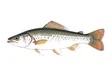
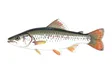
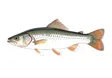
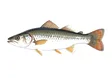
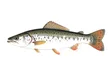
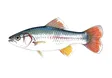
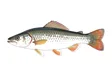
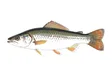
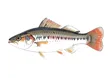
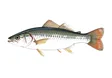
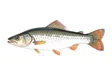
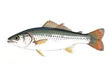
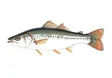
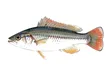
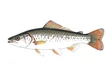
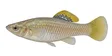
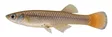
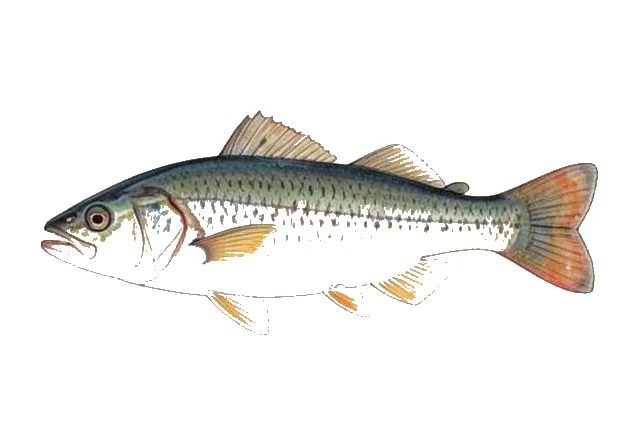
Cuban Limia field guide illustration

About Cuban Limia

The Cuban limia (Limia vittata), also known as banded limia, Cuban molly, Cuban topminnow or tabai is a species of livebearing freshwater fish from the family Poeciliidae. The species is native to Cuba where it was endemic but it has been introduced to Hawaii.

Description

The Cuban limia is olive-green in background colour and has a bluish-grey back, silvery flanks marked with black-edged scales and a white belly. There is a yellow patch close to the vent in females. In males, the dorsal fin and the anal fin are normally yellow-orange in colour and marked with blue-black spots. The females have colorless fins which are marked with a few scattered, black freckles. The females grow to over twice the size of the males which can have a total length of 5 centimetres (2.0 in), and females reach 10 centimetres (3.9 in). In structure it is a rather robust species, depressed towards the rear with a rounded tail and it has a compressed head which has a small, oblique mouth with a protruding lower jaw and a protractile upper jaw.

Distribution

The Cuban limia is, as the common name suggests, native to Cuba. It occurs throughout the island of Cuba and the neighbouring Isla de la Juventud. It has been introduced to Hawaii, where it is found on the islands of Oahu and Hawaii, where it is found in the Kaloko-Honokōhau National Historical Park.

Habitat and biology

Within its native range the Cuban limia inhabits streams, lakes, estuaries, coastal lagoons, and mangrove swamps and can be found in both freshwater and brackish water, or saline water. Its diet consists of worms, crustaceans, insects and plant material. It often forms mixed shoals with species such as sailfin mollies and mosquitofish. A larger female may give birth to up to 50 fry at a time and in a 4–6 week period can produce up to 100 young.

Human uses

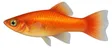
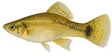
This species is present in the aquarium trade and a number of colour variations have been bred. It is thought that released aquarium fish are the origin of the population in Hawaii where they have been blamed for impacting the population of native damselflies. In Hawaii it has been given the local name tabai.

Taxonomy

The Cuban limia was described by the French zoologist Alphonse Guichenot in 1853 as Poecilia vittata. A year later the Cuban zoologist Felipe Poey described a fish he named Limia cubensis and designated this as the type species of the genus Limia. This was a synonym of Guichenot's Poecilia vittata and so L. vittata was considered the valid name.

Article text: Wikipedia contributors, Cuban limia (source revision). Licensed under CC BY-SA 4.0. Retrieved 2026-10-11.
Identification and appearance

The species has a blue-grey back, silvery sides and a white belly. Scales along flanks are edged in black. Females have a yellow patch near the vent. The dorsal fin and tail of the mail are usually a yellow-orange with blue-black speckles. Females may have a few scattered dark spots on their fins, but they are otherwise without color. Summarized from Yamamoto and Tagawa (2000).

Native range

Streams, lakes, estuaries, coastal lagoons, and mangrove swamps throughout Cuba and Isle of Pines (Lee et al. 1980 et seq.).

Habitat and ecology

The species is generally found in the lower reaches of streams or in coastal marshes near brackish and saline waters. The Cuban limia eats worms, crustaceans, insects and plant matter. Females can produce over 100 fry every 4-6 weeks. Summarized from Yamamoto and Tagawa (2000).

Introduction history

According to Brock (1960), the origin and date of introduction into Hawaii are not known. Devick (1991b) listed the species as an aquarium release some time between 1900 and 1940; although its presence in Hawaii was not known until about 1950.

Ecological impacts

Cuban limia, and other introduced poeciliids, have been implicated in the decline of native damselflies on Oahu, Hawaii. Often the distributions of the damselflies and introduced fishes were found to be mutually exclusive, probably resulting from predation of the fish on the insects (Englund 1999).

Range

Where it lives

Share of 6 GBIF observation records with a state location, across 1 states.
0%
100%
Share of 6 GBIF observation records with a state location, across 1 states.

Share of records by state

Habitat

Water and movement

Water
WoRMS records this species in fresh water and brackish water.
USGS NAS habitat
Freshwater
US status
Exotic — the USGS Nonindigenous Aquatic Species database lists it as introduced from outside North America.
Migration
Not migratory

Classification

Taxonomy

Kingdom
Animalia
Phylum
Chordata
Superclass
Actinopterygii
Class
Teleostei
Order
Cyprinodontiformes
Genus
Limia
Species
Limia vittata
ITIS TSN
165946
WoRMS AphiaID
281357
GBIF key
5203831

Common questions about Cuban Limia

What is the scientific name of Cuban Limia?
The scientific name is Limia vittata, in the family Poeciliidae. Classification follows ITIS.
Does Cuban Limia live in fresh water or salt water?
WoRMS records this species in fresh water and brackish water.
Where has Cuban Limia been recorded in the United States?
GBIF has observations in 1 states, with the most records in Hawaii. The map shows observation records, which do not establish the complete natural range.

Same family

More Poeciliidae

Amazon Molly1 states
Poecilia formosaPoeciliidaeNative and introducedFreshBrackish
Amistad Gambusia2 states
Gambusia amistadensisPoeciliidaeNativeFresh
Big Bend Gambusia2 states
Gambusia gaigeiPoeciliidaeNativeFresh
Blotched Gambusia1 states
Gambusia senilisPoeciliidaeNativeFresh
Clear Creek Gambusia1 states
Gambusia heterochirPoeciliidaeNativeFreshBrackish
Dwarf Livebearer8 states
Heterandria formosaPoeciliidaeNativeFreshBrackish
Gila Topminnow3 states
Poeciliopsis occidentalisPoeciliidaeNative and introducedFresh
Guppy15 states
Poecilia reticulataPoeciliidaeIntroducedFreshBrackish
Largespring Gambusia2 states
Gambusia geiseriPoeciliidaeNative and introducedFresh
Mangrove Gambusia1 states
Gambusia rhizophoraePoeciliidaeNativeFreshBrackish
Mexican Molly7 states
Poecilia sphenopsPoeciliidaeIntroducedFreshBrackish
Mosquitofish41 states
Gambusia affinisPoeciliidaeNative and introducedFreshBrackish
Pecos Gambusia3 states
Gambusia nobilisPoeciliidaeNative and introducedFresh
Piketop Minnow3 states
Belonesox belizanusPoeciliidaeIntroducedFreshBrackish
Poeciliopsis sonoriensis1 states
PoeciliidaeNativeFresh
Porthole Livebearer1 states
Poeciliopsis gracilisPoeciliidaeIntroducedFresh
Sailfin Molly15 states
Poecilia latipinnaPoeciliidaeNative and introducedFreshSaltBrackish
San Marcos Gambusia3 states
Gambusia georgeiPoeciliidaeNativeFresh
Shortfin Molly9 states
Poecilia mexicanaPoeciliidaeIntroducedFreshBrackish
Southern Platyfish7 states
Xiphophorus maculatusPoeciliidaeIntroducedFresh
Tex-mex Gambusia1 states
Gambusia speciosaPoeciliidaeNativeFresh
Variable Platyfish5 states
Xiphophorus variatusPoeciliidaeIntroducedFresh