Mexican Stoneroller

Campostoma ornatum

Leuciscidae · freshwater water fish

4 minute read · Species guide

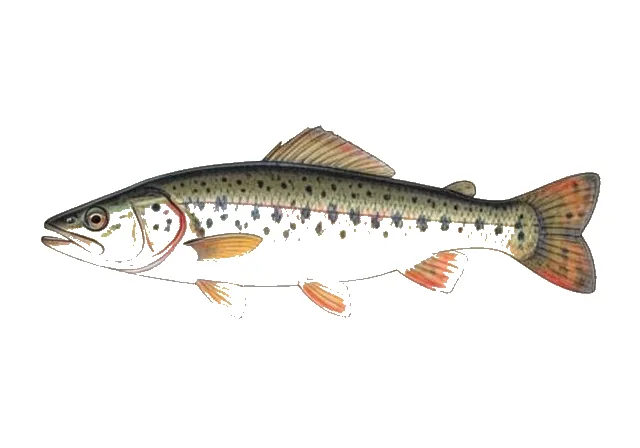
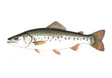
Mexican Stoneroller field guide illustration

About Mexican Stoneroller

The Mexican stoneroller (Campostoma ornatum) is a species of freshwater ray-finned fish in the family Leuciscidae, the shiners, daces and minnows. This fish is found in Arizona and Texas in the United States and parts of adjacent Mexico. The other species in this genus, Campostoma are morphologically similar.

Description

The Mexican stoneroller has a very stout body with a very large head and snout. The mouth is unique in that its teeth have cartilaginous sheaths, while the size of its mouth is usually very small. The fish's mature length can range anywhere from 3 to nearly 6 inches, however 6 inches is rare, and the average is about 3.5 inches. They have small scales that run along the lateral line, much like the Gila longfin dace and the Yaqui longfin dace. The scales of the Mexican stoneroller can sometimes form arches on its back. Sexual selection has dictated exaggerated male characteristics, which include larger heads and pre-dorsal areas in more successful males. These fish have color patterns with lighter bottoms and darker backs, with a distinct black stripe along the lateral line. They also have a somewhat blotched appearance.

Distribution

The Mexican stoneroller has been found as far as south as the Rio Yaqui drainage in Mexico and tributaries of the Rio Grande near the Big Bend region of Texas. The habitat of the Mexican stoneroller ranges in elevation between 2600 and 6500 feet.

Habitat

The Mexican stoneroller prefers shallow waters near gravel and stone substrates, and larger adults can be found in sandy-bottomed streams. They will use under-covered banks to protect themselves from predators and humans. The biotic community of the fish is primarily the Montane Conifer Forest in the Chiricahua Mountains. They are restricted to higher elevations because of their restricted diet of detritus and algae that thrive in colder waters. Aquatic insects are also part of the fish's diet, if these primary sources are not available due to droughts.

Reproduction

Very few studies of the reproduction of this species have been conducted, leaving a limited amount of information about their patterns. This species is capable of changing the colors on its fins during breeding. The color changes are more dramatic in males, due to sexual selection and female mate choice. The winter and late spring months seem to be the primary times in which the bulk of spawning occurs. Mexican stonerollers use their tubercles as weapons during male-to-male competition, and also to stimulate and attract females. The name stoneroller was given to the genus because males excavate breeding areas by rolling stones with their heads to invite the females. This also helps males defend against their rivals.

Biology and Conservation

The cartilaginous sheaths on their jaws are used for scraping algae and detritus along the gravel and stones within the habitat. An unusual amount of sexual selection has occurred in this species for unknown reasons, and large amounts of energy are expended in male competition and mating success because of this selection. This extra energy is perhaps wasted, and it could be contributing to the decline in fitness and ultimately the disappearance of the species. Populations are declining rapidly in Rucker Canyon along with San Bernardino Creek, however numbers in Texas and Mexico remain stable. The Arizona Game and Fish Department gave the species endangered status in 1988, and the Mexican stoneroller remains on the list. Aquifer pumping, reduction in stream flows, and predation from non-native green sunfish, are all major contributing factors to the decline of the species. The San Bernardino Ranch has current plans to reintroduce individuals in an attempt to recharge the population, and other projects involve federal habitat preservation.

Article text: Wikipedia contributors, Mexican stoneroller (source revision). Licensed under CC BY-SA 4.0. Retrieved 2026-10-11.
Diet and feeding

The FishTraits compilation records these diet categories for this species: algae or phytoplankton; detritus or unidentified plant material. These are broad categories, not a claim that every individual consumes every example in a category.

Reported feeding positions include bottom feeding. The compilation combines published observations; diets can vary with age, locality, and available food.

Habitat preferences

Reported habitat associations include streams and small rivers, creeks.

The source records associations with sand, gravel, cobble. An association indicates reported use, rather than an exclusive requirement.

Reproduction and parental care

The compilation reports a representative maturity age of 2 years. Its maturity field summarizes mean, median, or modal estimates, usually for females; male estimates can be used when female data are unavailable. It is not a fixed age at which every fish first breeds.

Recorded spawning months are Jan, Feb, Mar, Apr, May, Dec for the source’s reporting region (AZ). This is a regional calendar, not a range-wide schedule.

The reproductive-guild classification includes hiding a brood without subsequent guarding.

Size and recorded longevity

FishTraits reports a maximum total length of 11.4 centimetres. Some entries use an estimated asymptotic length; this value should not be treated as a certified record catch.

Recorded longevity in the compilation is 5 years. Wild observations were preferred, but captive records were accepted where wild records were unavailable, and unspecified records were assumed wild. The value is not a guaranteed wild lifespan or an aquarium life expectancy.

Range

Where it lives

Share of 282 GBIF observation records with a state location, across 3 states.
0%
90.1%
Share of 282 GBIF observation records with a state location, across 3 states.

Share of records by state

Habitat

Water and movement

Water
WoRMS records this species in fresh water.
Migration
Undetermined

Classification

Taxonomy

Kingdom
Animalia
Phylum
Chordata
Superclass
Actinopterygii
Class
Teleostei
Order
Cypriniformes
Genus
Campostoma
Species
Campostoma ornatum
ITIS TSN
163510
WoRMS AphiaID
1021386
GBIF key
2361360
Outside the US
ITIS also files it in Mexico.

Common questions about Mexican Stoneroller

What is the scientific name of Mexican Stoneroller?
The scientific name is Campostoma ornatum, in the family Leuciscidae. Classification follows ITIS.
Does Mexican Stoneroller live in fresh water or salt water?
WoRMS records this species in fresh water.
Where has Mexican Stoneroller been recorded in the United States?
GBIF has observations in 3 states, with the most records in Texas, Arizona, Virginia. The map shows observation records, which do not establish the complete natural range.

Closest relatives

Other Campostoma species

Same family

More Leuciscidae

Alabama Shiner4 states
Cyprinella callistiaLeuciscidaeNativeFresh
Allegheny Pearl Dace19 states
Margariscus margaritaLeuciscidaeNative and introducedFresh
Altamaha Shiner1 states
Cyprinella xaenuraLeuciscidaeNativeFresh
Alvord Chub2 states
Siphateles alvordensisLeuciscidaeNativeFresh
Apalachee Shiner3 states
Pteronotropis grandipinnisLeuciscidaeNativeFresh
Arkansas River Shiner5 states
Notropis girardiLeuciscidaeNative and introducedFresh
Arroyo Chub1 states
Gila orcuttiiLeuciscidaeNative and introducedFresh
Bandfin Shiner5 states
Luxilus zonistiusLeuciscidaeNative and introducedFresh
Bannerfin Shiner5 states
Cyprinella leedsiLeuciscidaeNativeFresh
Beautiful Shiner3 states
Cyprinella formosaLeuciscidaeNativeFresh
Bedrock Shiner3 states
Notropis rupestrisLeuciscidaeNativeFresh
Bigeye Chub25 states
Hybopsis amblopsLeuciscidaeNative and introducedFresh
Bigeye Shiner17 states
Notropis boopsLeuciscidaeNative and introducedFresh
Bigmouth Chub3 states
Nocomis platyrhynchusLeuciscidaeNativeFresh
Bigmouth Shiner21 states
Notropis dorsalisLeuciscidaeNative and introducedFresh
Blackchin Shiner13 states
Notropis heterodonLeuciscidaeNativeFresh
Blackmouth Shiner3 states
Notropis melanostomusLeuciscidaeNativeFresh
Blacknose Shiner21 states
Notropis heterolepisLeuciscidaeNative and introducedFresh
Blackside Dace2 states
Chrosomus cumberlandensisLeuciscidaeNativeFresh
Blackspot Shiner5 states
Notropis atrocaudalisLeuciscidaeNativeFresh
Blacktail Shiner14 states
Cyprinella venustaLeuciscidaeNative and introducedFresh
Blacktip Shiner4 states
Lythrurus atrapiculusLeuciscidaeNative and introducedFresh
Bleeding Shiner8 states
Luxilus zonatusLeuciscidaeNativeFresh
Blotched Chub6 states
Erimystax insignisLeuciscidaeNativeFresh

All 267 species in Leuciscidae