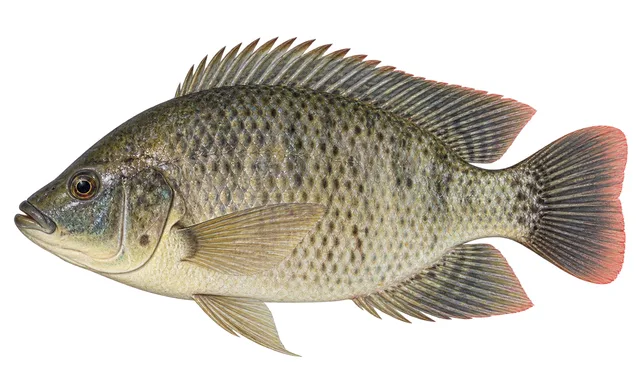
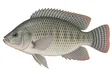
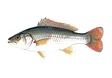
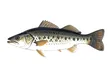
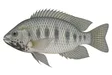
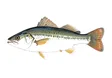
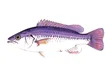
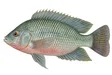
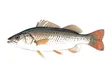
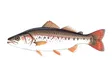
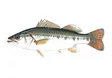
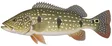
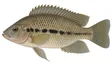
This species reaches up to 44.0 cm (17.3 in) in standard length. This tilapia is found in fresh and brackish waters.
Additional field notes
Wami tilapia combine maternal brood care with a history of aquaculture and hybridization.
Sources: Oreochromis urolepis species summary
Mouthbrooding and cultured fish
FishBase identifies Wami tilapia as a maternal mouthbrooder: the female provides oral brood care. The account also describes historical cultivation using salt tolerance and crosses with Nile and Mozambique tilapia. Those crosses are relevant when identifying introduced or cultured populations; a farmed fish sold under a species name is not automatically a genetically unmixed representative of the wild species.
Sources: Oreochromis urolepis species summary
Guide sources
Research reviewed 2026-10-19.
Article text: Wikipedia contributors, Oreochromis urolepis (source revision). Licensed under CC BY-SA 4.0. Retrieved 2026-10-11.
Habitat preferences
The source records associations with vegetation. An association indicates reported use, rather than an exclusive requirement.
The species is classified as tolerant of a broad range of salinities. This flag does not specify a salinity range for aquarium care.
Size and recorded longevity
FishTraits reports a maximum total length of 44 centimetres. Some entries use an estimated asymptotic length; this value should not be treated as a certified record catch.
Identification and appearance
Other commonly used names or synonyms include Tilapia hornorum, Oreochromis hornorum, and Tilapia urolepis. The Wami tilapia closely resembles O. mossambicus and was previously considered a strain (Zanzibar strain) of that species; it was later elevated to species status (i.e., Tilapia hornorum). Trewavas (1983) more recently determined T. hornorum to be a subspecies of Oreochromis urolepis (i.e., Oreochromis urolepis hornorum). Trewavas (1983) gave distinguishing characteristics, synonyms, illustrations, a key, and a discussion of hybrids. A few distinguishing characteristics were also given by Page and Burr (1991) and by Eccles (1992). A color photograph was given by Axelrod et al. (1993).
Native range
Tropical Africa. Wami River system, Tanzania (Trewavas 1983).
Introduction history
This species was first brought to California prior to the 1970s and survived in isolated colonies in relatively warm waters of the southern part of the state in the area of the Colorado Desert, Imperial and Riverside counties (Legner and Pelsue 1977; Courtenay et al. 1984), but it is unclear whether these fish were restricted to experimental ponds or whether populations were actually released into open waters. In 1972, O. urolepis was stocked into open waters by the University of California, Riverside, and by the Southeast and Orange County Mosquito Abatement districts, to control aquatic plants, mosquitoes, and chironomid midges (Legner and Pelsue 1977; Legner et al. 1980; Courtenay et al. 1984, 1986). These fish were derived from stock obtained from the University of Arizona (Legner et al. 1980).