Redbelly Tilapia

Tilapia zillii

Cichlidae · freshwater and brackish water fish

10 minute read · Species guide

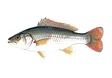
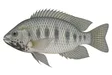
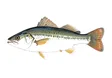
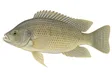
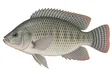
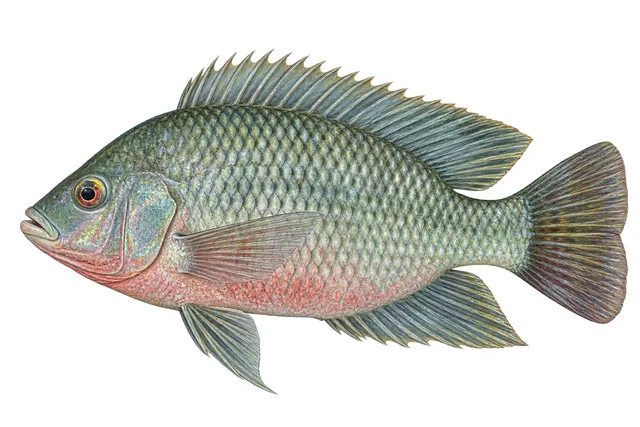
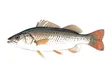
Redbelly Tilapia field guide illustration

About Redbelly Tilapia

The redbelly tilapia (Coptodon zillii, syn. Tilapia zillii), also known as the Zille's redbreast tilapia or St. Peter's fish (a name also used for other tilapia in Israel), is a species of fish in the cichlid family. This fish is found widely in fresh and brackish waters in the northern half of Africa and the Middle East. Elsewhere in Africa, Asia, Australia and North America, it has been introduced as a food fish or as a control of aquatic vegetation. Where introduced, it sometimes becomes invasive, threatening the local ecology and species. The redbelly tilapia is an important food fish and sometimes aquacultured.

The species was named by Paul Gervais in honor of M. (probably Monsieur) Zill, a "distinguished naturalist" who collected the type specimen and sent it to Gervais.

Native distribution and taxonomy

In Africa, the native range of the redbelly tilapia covers the northern half of the continent. In tropical West to Central Africa, from coastal southern Morocco and the Senegal River to the central Congo River basin, its range is almost continuous. In northeastern Africa the redbelly tilapia occurs throughout much of the Nile basin, from its delta in northern Egypt to Lake Albert in DR Congo – Uganda, as well Lake Turkana in Ethiopia – Kenya; it is not native to the other African Great Lakes, although it has been introduced to some of them. In the Maghreb and Sahara where fewer aquatic habitats are available, the range is much more spotty but with several relict populations in seasonal rivers, lakes and oases (gueltas). Outside Africa, its natural distribution is limited to the Jordan River system, including Lake Tiberias (Kinneret), in Israel, Jordan and Syria, as well as coastal systems in Israel.

Cichlids are numerous in Africa, but in parts of the redbelly tilapia's range it is one of the few members of the family. In the Maghreb and Sahara (excluding the species-rich Nile), the only others are the blue tilapia (Oreochromis aureus) and mango tilapia (Sarotherodon galilaeus), and a couple of Astatotilapia and Hemichromis species. In Western Asia, the only other native cichlids are a few species of oreochromine tilapias and the Jordan mouthbrooder (Astatotilapia flaviijosephi).

Although genetic studies have shown that most populations of the redbelly tilapia are very closely related, a few from the outer margins of its range are of questionable taxonomic status and require further study. A population in the Kisangani region, although closely related, appears to be separate. Similarly, those found in coastal northwestern Africa are genetically quite distinct from the other populations. In the Nile system, it has been observed that populations in its delta, the northern White Nile and lakes near Fayum differ from each other in morphology and colors, but whether this is taxonomically significant is unclear. In contrast, the virtually unknown C. ismailiaensis of northeastern Egypt might only be an aberrant redbelly tilapia; it primarily differs in its unspotted tail.

Habitat and ecology

The redbelly tilapia has a preference for shallow waters with vegetation, but it also occurs in more open habitats like sandy shores and as deep as 30 m (100 ft).

Although primarily a species of fresh and brackish water habitats, it tolerates high salinities, up to 4% (sea water is c. 3.5%), but the upper breeding limit is at 2.9%. The redbelly tilapia also can live in a wide range of water temperatures, but in the northern part of its range it sometimes falls below its requirements (minimum 6.5–13 °C [43.7–55.4 °F], depending on a range of factors), resulting in large numbers dying. In Alabama, it was necessary to introduce them each year to maintain a population, as they die during the winter. The upper limit typically is 36 °C (97 °F), but it can survive to 42.5 °C (108.5 °F).

Appearance

The redbelly tilapia can reach up to 300 g (11 oz) in weight and 40 cm (16 in) in length, but usually is no more than 30 cm (12 in). In the Middle East, adults typically are 12–22 cm (5–9 in) long. Males tend to grow larger than females, but otherwise the sexes are similar.

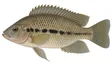
Its base color is brownish- olivaceous and the belly is yellowish or whitish. It often (for example, when agitated) has a faint/poorly defined dark pattern consisting of two horizontal lines on the body crossed by about half a dozen vertical bars. Breeding adults are more greenish overall, have iridescent blue-green spots on the head and bright pinkish-red underparts. This species very closely resembles the redbreast tilapia (C. rendalli) and the two are difficult to distinguish; many reports of introduced populations may involve either species. The two have separate natural distribution (redbelly tilapia in the northern half of Africa, redbreast tilapia in the southern half), but through introductions their ranges now overlap. Whether they can hybridize is unknown. It has hybridized with the spotted tilapia (Pelmatolapia mariae), a quite distant relative.

Behavior

As typical of Coptodon, the redbelly tilapia is a substrate spawner and brooder. The "nest"typically is a small depression in the bottom that is dug by both parents, but sometimes the eggs are placed on the top of a stone or the"nest" is an up to 85-centimetre-deep (2 ft 9 in) tunnel that is dug into muddy substrate. Several pairs may breed quite closely together forming a colony. Each female lays 1,000–6,000 eggs per spawning and she may spawn multiple times in a season. Both parents guard the eggs and fry. In tropical locations it breeds year-round, although peaking in the rainy season. In colder subtropical regions like Israel it only breeds in the summer, at water temperatures of at least 20 °C (68 °F). All other cichlids native to Western Asia are mouthbrooders.

The redbelly tilapia mostly feeds on algae and higher plants (both aquatic plants and land plants that become accessible to the fish), but it also takes smaller quantities of invertebrates and fish eggs. Young redbelly tilapias feed extensively on tiny crustaceans.

Article text: Wikipedia contributors, Redbelly tilapia (source revision). Licensed under CC BY-SA 4.0. Retrieved 2026-10-11.
Diet and feeding

The FishTraits compilation records these diet categories for this species: aquatic or other vascular plants; invertebrates or larval fish. These are broad categories, not a claim that every individual consumes every example in a category.

Habitat preferences

The source records associations with vegetation. An association indicates reported use, rather than an exclusive requirement.

The species is classified as tolerant of a broad range of salinities. This flag does not specify a salinity range for aquarium care.

Reproduction and parental care

The compilation reports a representative maturity age of 2 years. Its maturity field summarizes mean, median, or modal estimates, usually for females; male estimates can be used when female data are unavailable. It is not a fixed age at which every fish first breeds.

Recorded spawning months are Jan, Feb, Mar, Apr, May, Jun, Jul, Aug, Sep, Oct, Nov, Dec for the source’s reporting region (Equator). This is a regional calendar, not a range-wide schedule.

The reproductive-guild classification includes guarding eggs or young at a spawning substrate or nest.

Size and recorded longevity

FishTraits reports a maximum total length of 40 centimetres. Some entries use an estimated asymptotic length; this value should not be treated as a certified record catch.

Recorded longevity in the compilation is 7 years. Wild observations were preferred, but captive records were accepted where wild records were unavailable, and unspecified records were assumed wild. The value is not a guaranteed wild lifespan or an aquarium life expectancy.

Spawning movements

The compilation records significant spawning-related movement. Its combined migration flag covers movements within fresh water as well as between rivers and the sea; this flag alone does not establish which migration pattern applies.

Identification and appearance

Cichlids can be distinguished from superficially similar sunfishes and black basses (Lepomis and Micropterus; family Centrarchidae) by a single nostril opening on each side of the head (vs. two in centrarchids) and the presence of a discontinuous or two-part lateral line (vs. a continuous lateral line in centrarchids). Redbelly tilapia is included in identification keys given in Moyle (1976) and Hubbs et al. (1991). Distinguishing characteristics were given in Taylor et al. (1986), Page and Burr (1991), and Eccles (1992). Photographs appeared in Taylor et al. (1986), and Axelrod (1993). Identification of this species in the United States has been problematic and some reports in the literature may be misidentifications (Lee et al. 1980 et seq.) or reports of hybrids (Courtenay et al. 1984; Taylor et al. 1986; Howells 1991b). Redbelly tilapia is nearly identical to redbreast tilapia T. rendalli; many reports or specimens of T. zillii may have been T. rendalli. Redbelly tilapia is similar to another North American introduced cichlid, spotted tilapia (T. mariae): spotted tilapia lacks the deep red ventral coloration present in T. zillii, has lateral bars that extend onto the dorsal fin, and 5-6 square black blotches along the side (lacking in T. zillii).

Native range

Tropical and subtropical Africa, and the Near East. West Africa through South Morocco, Sahara, Niger-Benue sytem, rivers Senegal, Sassandra, Bandama, Boubo, Mé, Comoé, Bia, Ogun, and Oshun, Volta system, Chad-Shari system (Teugels and Thys van den Audenaerde 1991), middle Congo River basin in teh Ubangi, Uele, Ituri, and Itimbiri (Democratic Republic of the Congo)(Thys van den Audenaerde 1964), Lake Albert, and Lake Turkana through the Nile into Israel and Jordan Valley (Trewavas 1982).

Habitat and ecology

Redbelly tilapia is primarily herbivorous, with aquatic macrophytes, algae, and diatoms generally comprising >80% of its diet and the remainder including aquatic insects and crustaceans and fish eggs. Proportion of diet from animal sources is generally size-related, with larger fish consuming more animal-based food items (Khallaf and Alne-na-ei 1987). Redbelly tilapia is extremely tolerant of saline conditions, with survival and growth occurring in salinities up to 40‰ and reproduction occurring through 29‰ (Stickney 1986). This species is a substrate spawner, with fishes forming monogamous pairs and exhibiting biparental guarding behavior. Nests are primarily small, saucer-shaped depressions in the substrate, but show some variation in morphology due to environmental conditions (Bruton and Gophen 1992). Breeding season is dependent on climate, with warm, temperature-stable equatorial populations breeding year-round, and those in areas with more defined seasons breeding during summer months (Siddiqui 1979; Bruton and Gophen 1992).

Introduction history

Introduced in most locations by state agencies, universities, or private companies for control of aquatic plants, to control mosquitoes and chironomid midges, as forage or food fish, and for aquaculture evaluation (Minckley 1973; Legner and Pelsue 1977; Lee et al. 1980 et seq.; Shapovalov et al. 1981; Grabowski et al. 1984; McGowan 1988; Courtenay and Robins 1989; Page and Burr 1991). For example, the species has been stocked into various North Carolina waters for aquatic plant control by Texas Gulf, Inc., and also by Carolina Power and Light Company (Courtenay et al. 1986; J. Crutchfield, personal communication). There have been both authorized as well as illegal releases. Introductions into Dade County, Florida, probably resulted from escapes from nearby fish farms or aquarium releases (Hogg 1976a, b). Redbelly tilapia and blue tilapia were inadvertently introduced into Hyco Reservoir in North Carolina in 1984 after a small number of fish escaped from a holding cage located in the heated discharge area during an on-site agricultural study (Crutchfield 1995). Agents and reasons for introductions were reviewed by Courtenay et al. (1986).

Ecological impacts

Summary of species impacts derived from literature review. Click on an icon to find out more... The redbelly tilapia is considered a potential competitor with native fish for food and spawning areas, and is potentially detrimental to California rice crops (Pelzman 1973). Juvenile T. zillii were implicated in population declines of desert pupfish Cyprinodon macularius inhabiting shallow irrigation canals near the Salton Sea, California (Lee et al. 1980 et seq.; Schoenherr 1985). In Florida, this species was found to be highly aggressive; it is considered a serious threat to native aquatic plants and to fish that rely on plants for cover, foraging, or spawning sites (Courtenay et al. 1974). In Hyco Reservoir, North Carolina, feeding by introduced redbelly tilapia eliminated all aquatic macrophytes from the reservoir within a 2-year period that coincided with declines in populations of several native fishes; tilapia populations continued expanding in the absence of macrophytes because of its ability to switch to alternate food sources (Crutchfield et al. 1992; Crutchfield 1995).

Range

Where it lives

GBIF holds no US occurrence record for this species under this name. That is a gap in the record, not evidence that the fish is absent: ITIS files it as a US species.

Habitat

Water and movement

Water
WoRMS records this species in fresh water and brackish water.
USGS NAS habitat
Freshwater
US status
Exotic — the USGS Nonindigenous Aquatic Species database lists it as introduced from outside North America.
Migration
Migratory
Pattern

Classification

Taxonomy

Kingdom
Animalia
Phylum
Chordata
Superclass
Actinopterygii
Class
Teleostei
Order
Perciformes
Family
Cichlidae
Genus
Tilapia
Species
Tilapia zillii
ITIS TSN
169813
WoRMS AphiaID
282980
Outside the US
ITIS also files it in Central Pacific Territories.

Common questions about Redbelly Tilapia

What is the scientific name of Redbelly Tilapia?
The scientific name is Tilapia zillii, in the family Cichlidae. Classification follows ITIS.
Does Redbelly Tilapia live in fresh water or salt water?
WoRMS records this species in fresh water and brackish water.

Closest relatives

Other Tilapia species

Same family

More Cichlidae