Taxonomy
The species was originally described by Louis Agassiz in 1831 as Lobotes ocellatus, as he mistakenly believed the species was marine; later work assigned the species to the genus Astronotus. The species also has a number of junior synonyms: Acara compressus, Acara hyposticta, Astronotus ocellatus zebra, and Astronotus orbiculatus.
Description
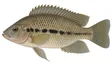
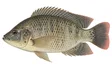
A. ocellatus examples have been reported to grow to about 70 cm (28 in) in length and 9 kilograms (20 lb) in weight. The wild-caught forms of the species are typically darkly coloured with yellow-ringed spots or ocelli on the caudal peduncle and on the dorsal fin. These ocelli have been suggested to function to limit fin-nipping by piranha (Serrasalmus spp.), which co-occur with A. ocellatus in its natural environment. The species is also able to rapidly alter its colouration, a trait which facilitates ritualised territorial and combat behaviours amongst conspecifics. Juvenile oscars have a different colouration from adults, and are striped with white and orange wavy bands and have spotted heads.
Distribution and habitat
A. ocellatus is native to Brazil, Colombia, Ecuador, Guyana, French Guiana, Suriname, Peru, and Venezuela, and occurs in the Amazon River basin, along the Amazon, Içá, Negro, Solimões, and Ucayali River systems, and also in the Approuague and Oyapock River drainages. In its natural environment, the species typically occurs in slow-moving white-water habitats, and has been observed sheltering under submerged branches. Feral populations also occur in China, northern Australia, and Florida, USA as a byproduct of the ornamental fish trade. The species is limited in its distribution by its intolerance of cooler water temperatures, the lower lethal limit for the species is 12.9 °C (55.22 °F).
Reproduction
Although the species is widely regarded as sexually monomorphic, males have been suggested to grow more quickly, and in some naturally occurring strains, males are noted to possess dark blotches on the base of their dorsal fins. The species reaches sexual maturity around one year of age, and continues to reproduce for 9–10 years. Frequency and timing of spawning may be related to the occurrence of rain. A. ocellatus fish are biparental substrate spawners, though detailed information regarding their reproduction in the wild is scarce.
In captivity, pairs are known to select and clean generally flattened horizontal or vertical surfaces on which to lay their eggs. Smaller females lay around 300–500 eggs, while larger female oscars can lay about 2,500-3,000 eggs. Like most cichlids, A. ocellatus practices brood care, although the duration of brood care in the wild remains unknown.
In the aquarium
Oscar fish can live in the aquarium with almost any type of fish around the same size as it gets.
Food
Oscar fish are omnivores. Most fish eaten by A. ocellatus in the wild are relatively sedentary catfish, including Bunocephalus, Rineloricaria, and Ochmacanthus species. The species uses a suction mechanism to capture prey, and has been reported to exhibit "lying-on-side" death mimicry in a similar fashion to Parachromis friedrichsthalii and Nimbochromis livingstonii. Wild oscars also consume shrimp, snails, insects and insect larvae, as well as fruits and nuts on a seasonal basis. The species also has an absolute requirement for vitamin C, and develops health problems in its absence. Captive oscars generally eat fish food designed for large carnivorous fish: crayfish, worms, and insects (such as flies, crickets and grasshoppers).
Territorial behavior
Oscars will often lay claim to an area of the aquarium and will be very aggressive towards other fish encroaching on their newly established territory inside the aquarium or lake. The size of the territory varies depending on the size and aggressiveness of the fish, and its surroundings. Once the oscar establishes a territory, it will vigorously defend it by chasing away other fish.
Varieties
A number of ornamental varieties of A. ocellatus have been developed for the aquarium industry. These include forms with greater intensity and quantities of red marbling across the body, albino, leucistic, and xanthistic forms. A. ocellatus with marbled patches of red pigmentation are sold as red tiger oscars, while those strains with the mainly red colouration of the flanks are frequently sold under the trade name of red oscars. The patterning of red pigment differs between individuals. In recent years long-finned varieties have also been developed. The species is also occasionally artificially coloured by a process known as painting.
Article text: Wikipedia contributors, Oscar (fish) (source revision). Licensed under CC BY-SA 4.0. Retrieved 2026-10-11.
Diet and feeding
The FishTraits compilation records these diet categories for this species: invertebrates or larval fish; larger animal prey (a source category covering fish, crayfish, crabs, or frogs). These are broad categories, not a claim that every individual consumes every example in a category.
Reported feeding positions include bottom feeding and surface or water-column feeding. The compilation combines published observations; diets can vary with age, locality, and available food.
Habitat preferences
Reported habitat associations include medium to large rivers, streams and small rivers, still-water habitats.
The source records associations with muck, clay or silt, sand. An association indicates reported use, rather than an exclusive requirement.
Reproduction and parental care
The compilation reports a representative maturity age of 1 years. Its maturity field summarizes mean, median, or modal estimates, usually for females; male estimates can be used when female data are unavailable. It is not a fixed age at which every fish first breeds.
Recorded spawning months are Jun, Jul, Aug, Sep, Oct for the source’s reporting region (FL). This is a regional calendar, not a range-wide schedule.
The reproductive-guild classification includes guarding eggs or young at a spawning substrate or nest.
Size and recorded longevity
FishTraits reports a maximum total length of 45.7 centimetres. Some entries use an estimated asymptotic length; this value should not be treated as a certified record catch.
Recorded longevity in the compilation is 10 years. Wild observations were preferred, but captive records were accepted where wild records were unavailable, and unspecified records were assumed wild. The value is not a guaranteed wild lifespan or an aquarium life expectancy.
Identification and appearance
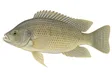
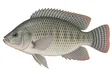
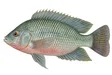
In general, cichlids (Cichlidae) are superficially similar to North American native sunfishes and black basses (Lepomis and Micropterus; family Centrarchidae). Cichlids can be distinguished from centrarchids by a single nostril opening on each side of the head (vs. two openings in centrarchids) and the presence of a discontinuous or two-part lateral line (continuous in centrarchids). For distinguishing characteristics see Kullander (1986) and Page and Burr (1991). The genus is in need of systematic review and future study may reveal that the species in the aquarium trade and in U.S. open waters is another species of Astronotus, not A. ocellatus. Photographs were provided by Kullander (1986) and Axelrod (1993).
Native range
Astronotus is native to South America including Orinoco and Amazon basins; also to French Guiana, and to northern part of Paraguay drainage, Parana basin (Kullander 1986).
Habitat and ecology
Lower lethal limit is 12°C (Shafland and Pestrak 1982). Extremely tolerant to low oxygen conditions (Muusze et al. 1998), and known to perform aquatic surface respiration to help mitigate hypoxia (Kramer and McClure 1982).
Introduction history
The first Florida records were the result of deliberate stockings from an aquarium fish farm in southeastern Dade County in the late 1950s (Courtenay et al. 1974; Courtenay and Hensley 1979a; Courtenay and Stauffer 1990; Jackson 1999). During the same period, attempts were made to popularize the species as a sport fish under the name "velvet cichlid." Anglers have aided dispersal in Florida by transporting fish to new locations (Courtenay et al. 1974). It was sighted at the Anhinga Trail in Everglades National Park in the late 1980s (Loftus and Kushlan 1987). It apparently gained access to the park by way of the South Florida Water Management District's Canal L31W, and it is now considered established (Courtenay 1989). The first introduction of this species into Hawaii was in 1952, for purposes of recreational fishing (Devick 1991a, b); Hawaii's Division of Fish and Game made additional reservoir stockings in 1958; the original source of the Hawaii plants was a small stock obtained from Steinhart Aquarium in San Francisco (Brock 1960). Introductions into all other states and in more northern portions of Florida are apparently the result of aquarium releases (Courtenay and Stauffer 1990; Nico, personal communication).
Ecological impacts
Summary of species impacts derived from literature review. Click on an icon to find out more... Largely unknown. In 1993, the state of Florida issued a health advisory warning people about eating freshwater fish contaminated with mercury. For portions of south Florida, the oscar was included in the list of fish for which limited consumption was recommended. Oscars are considered potential competitors with native centrarchids (sunfishes) for food and possibly for spawning areas (Courtenay and Hensley 1979a), and as predators on native fishes and invertebrates.