Redbreast Tilapia

Tilapia rendalli

Cichlidae · freshwater and brackish water fish

4 minute read · Species guide

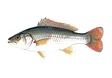
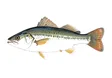
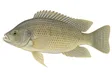
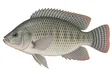
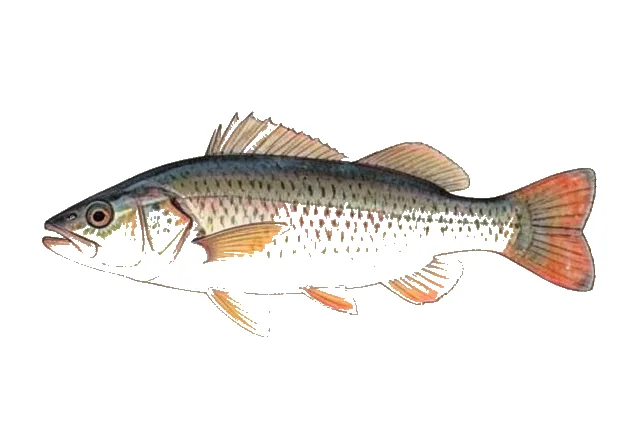
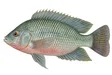
Redbreast Tilapia field guide illustration

About Redbreast Tilapia

The redbreast tilapia (Coptodon rendalli) is a species of fish in the family Cichlidae. It is found widely in the southern half of Africa. Its natural habitats are freshwater lakes and freshwater marshes. It is known as the redbreast kurper in South Africa.

Distribution

The species is found in the drainage basins of the upper Congo River and the Kasai River, in Lake Tanganyika, Lake Malawi, Zambezi River, and the coastal regions of the Zambezi outlet to KwaZulu-Natal, as well as in the Limpopo River, the Okavango River, and the Cunene River. They have been established as edible fish in several countries.

Description

C. rendalli grows to a maximum length of 45 cm and a maximum weight of 2.5 kg, and possesses a high-backed, sideways oblate body. Its body height is 42.2 to 49.4% of its standard length, and its head length is 31.1% to 37.5% of standard length. The top of its head is convex, or sometimes concave in large specimen due to the continued growth of the mouth region. Its mouth is studded with short, wide, thick, two-pointed teeth. Their lower pharyngeal jaw is as wide as it is long. Its toothed back area is longer than its front area. Seven to 10 gill raker streams are located on the lower branch of its first gill arch.

Its head and rump are olive-green on top and paler on the sides. Like all members of the genus Coptodon, its breast and belly are often tinted red. The flanks display a few lateral ligaments. Its olive-green dorsal fin possesses a red rim and white to grey spots on the soft streamed section.

Behaviour

C. rendalli mainly lives near river banks, in oxbow lakes, and swamps. It prefers densely vegetated areas and still waters with small amounts of current. The species has a high temperature tolerance (8 – 41 °C) and also withstands brackish water with a salt content of up to 1.9%. The young fish live on plankton; adults, like all members of the genus Coptodon, are primarily herbivores and eat algae and taller plants, as well as insects and smaller crustaceans.

Classification

The species was described in 1897 by Belgian - British ichthyologist George Albert Boulenger as Chromis rendalli, and later classified as a member of the genus Tilapia, subgenus Coptodon. The subgenus Coptodon was elevated to a genus in early 2013. The specific name honours British zoologist Percy Rendall (1861-1948), the collector of the type from the upper Shire River in British Central Africa.

Article text: Wikipedia contributors, Redbreast tilapia (source revision). Licensed under CC BY-SA 4.0. Retrieved 2026-10-12.
Identification and appearance

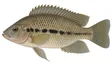
In general, cichlids (Cichlidae) are superficially similar to sunfishes and black basses (Lepomis and Micropterus; family Centrarchidae). Cichlids can be distinguished from centrarchids by a single nostril opening on each side of the head (vs. two openings in centrarchids) and the presence of a discontinuous or two-part lateral line (vs. a continuous lateral line in centrarchids). Distinguishing characteristics, a key, and a color illustration of redbreast tilapia were given by Skelton (1993). Identifying traits and an illustration were also given by Eccles (1992). Color photographs were given in Axelrod (1993). Identification of this species in the United States has been problematic and some reports in the literature on nonindigenous species may be misidentifications (Lee et al. 1980 et seq.) or hybrids (Courtenay et al. 1984; Taylor et al. 1986; Howells 1991b). Redbreast tilapia is nearly identical to redbelly tilapia Tilapia zillii, and the two species frequently hybridize; many reports or specimens of T. rendalli may potentially be T. zillii or their hybrids. Both redbreast and redbelly tilapia are superficially similar to another North American introduced cichlid, spotted tilapia Tilapia mariae: spotted tilapia lacks the red ventral coloration present in T. rendalli, has lateral vertical stripes that extend onto the dorsal fin, and 5-6 square black blotches along the side (lacking in T. rendalli).

Native range

Tropical and subtropical Africa. Kasai drainage, upper Congo River, Cunene, Okavango, Limpopo and Zambezi system, Lakes Tanganyika and Malawi, east coastal rivers south to Phongolo, and coastal lakes to Lake Sibaya; also occurs in estuaries in Mozambique and Natal (Thys van den Audenaerde 1964; de Moor and Bruton 1988; Teugels et al. 1991; Skelton 1993).

Habitat and ecology

Redbreast tilapia is generally an omnivorous, opportunisitc feeder throughout its life, with adult tilapia shifting towards herbivory as the primary feeding mode (Fryer and Iles, 1972; Lazzaro 1991; Arcifa and Meschiatti 1996). Redbreast tilapia is tolerant of a broad range of temperatures (8-40°C; Philippart and Ruwet 1982) and salinity to 19‰ (Skelton 1993), as well a high levels of silt (Buermann et al. 1997). This species is a substrate spawner, with fishes forming monogamous pairs and exhibiting biparental guarding behavior. Nests are generally shallow, saucer-shaped depression in the substrate, but nests may include deeper pits or tunnels (Ribbink et al. 1981).

Introduction history

This species was brought to Hawaii as a shipment of 52 fish from Africa in 1957; these fish were bred in tanks by the state, and resulting offspring were stocked in Wahiawa Reservoir in 1958 and 1959 and on Maui in 1959. According to Devick (1991b), these intentional introductions were undertaken for aquaculture (aku bait) and weed control. The were intentionally introduced into Puerto Rico for week control and angling.

Range

Where it lives

Share of 35 GBIF observation records with a state location, across 4 states.
0%
68.6%
Share of 35 GBIF observation records with a state location, across 4 states.

Habitat

Water and movement

Water
WoRMS records this species in fresh water and brackish water.
USGS NAS habitat
Freshwater
US status
Exotic — the USGS Nonindigenous Aquatic Species database lists it as introduced from outside North America.
Migration
Not migratory

Classification

Taxonomy

Kingdom
Animalia
Phylum
Chordata
Superclass
Actinopterygii
Class
Teleostei
Order
Perciformes
Family
Cichlidae
Genus
Tilapia
Species
Tilapia rendalli
ITIS TSN
169816
WoRMS AphiaID
282979
GBIF key
9312593
Outside the US
ITIS also files it in Caribbean Territories.

Common questions about Redbreast Tilapia

What is the scientific name of Redbreast Tilapia?
The scientific name is Tilapia rendalli, in the family Cichlidae. Classification follows ITIS.
Does Redbreast Tilapia live in fresh water or salt water?
WoRMS records this species in fresh water and brackish water.
Where has Redbreast Tilapia been recorded in the United States?
GBIF has observations in 4 states, with the most records in Hawaii, Texas, Alabama. The map shows observation records, which do not establish the complete natural range.

Closest relatives

Other Tilapia species

Same family

More Cichlidae