Common names

Types of bullhead

7 species carry bullhead in an English common name. They sit in 1 family, so the group is a name, not a scientific rank.

About bullhead

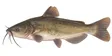
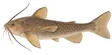
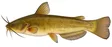
Ameiurus is a genus of catfishes in the family Ictaluridae. It contains the three common types of bullhead catfish found in waters of the United States, the black bullhead (Ameiurus melas), the brown bullhead (Ameiurus nebulosus), and the yellow bullhead (Ameiurus natalis), as well as other species, such as the white catfish (Ameiurus catus or Ictalurus catus), which are not typically called "bullheads".

The species known as bullheads can be distinguished from channel catfish and blue catfish by their squared tailfins, rather than forked.

Taxonomy and fossil record

Ameiurus is recognized as monophyletic, meaning it forms a natural group. It is mostly closely related to the clade formed by the genera Noturus, Prietella, Satan, and Pylodictis. Up to the late 20th century, they were generally considered a subgenus of Ictalurus.

There is a sister group relationship between the species A. melas and A. nebulosus.

Fossil remains of Ameiurus are known throughout North America, dating back to the Late Eocene. These remains suggest that the genus ranged as far west as Idaho, eastern Oregon, and eastern Washington during the Neogene.

Extinct species

There are currently ten recognized fossil species in this genus: The oldest, A. pectinatus, gives a minimum age estimate for the genus at approximately 30 million years, during the Late Eocene.

Distribution

Living species of Ameiurus catfishes are natively distributed east of the North American continental divide, from their westernmost point in central Montana, south to Texas, in streams of the Gulf of Mexico and Atlantic Coast, north to New Brunswick and Quebec, Ontario, Manitoba, and Saskatchewan.

Habitat

Bullheads live in a variety of habitats, including brackish and/or low oxygen ponds, rivers and lakes, although they are seldom stocked intentionally. They are bottom feeders and eat virtually anything edible, including dead fish, insects, other fish, grain, fruit, crayfish and more. Because of their limited use as for sport, they are usually caught while trying to catch other fish, and few anglers pursue them specifically. Persons looking to catch bullheads will use the same bait as they would for channel catfish, including cut bait, chicken livers, blood-soaked meal, or other pungent baits. In the Northeastern US, bullheads are often sold to restaurants in the spring for "fish fries" by amateur fisher folk by the 5 gallon bucket load. Like all catfish, bullheads have a sense of smell that is more developed than most canines.

Description and identification

Bullheads do not get as large as the other catfishes native to North America, with average sizes in the one to two-pound range and world record sizes well under 10 pounds (4.5 kg).

All three major bullheads can be confused with other catfishes by novice anglers. Because they have an unforked tail, many people mistakenly think small flathead catfish are bullheads. Both have the squared tail, and can have a mottled, brown appearance (in the case of the brown bullhead), but the flathead lower lip protrudes farther than its upper lip and it has a flat or "shovel" head. They also have very different habits and habitat.

Flatheads generally eat only live things, while bullheads will freely eat dead fish or other small animals. The flathead is more likely to be found at the bottom of dams or in gravel pits, while bullheads are found more often in the more murky areas. Additionally, flatheads can reach weights well in excess of 100 pounds (45 kg), while the current world's record for any bullhead is a black bullhead, recorded at 8 pounds (3.6 kg) even while the average adult is perhaps 2 pounds (0.91 kg). Brown and yellow bullheads are significantly smaller.

Relationship to humans

They are considered rough fish by many, and are seldom caught for food, although they can be quite edible if caught in clear water and prepared correctly. In Minnesota, bullhead are important to commercial fishermen, who harvest about 1 million pounds a year. Bullheads can make excellent live bait for larger catfish species such as flathead catfish in states where legal. Bullhead catfish can quickly become overpopulated in ponds, and proper management techniques must be employed in order to properly maintain bullhead populations.

On July 12, 1940, in Waterville, southern Minnesota a commercial bullhead fisherman named Bryant Baumgartner killed plainclothes game wardens Marcus Whipps, A. Melvin Holt, and Dudley Brady, who were investigating his operation. The killings became known as The Bullhead Murders, as researched by James M. Keller for his 2012 book, "Tragedy on Fish Row: The Waterville Shootings." Baumgartner then killed himself. The DNR unveiled a memorial to the three slain conservation wardens in June 2011 in nearby New Ulm.

In the early 20th century local people could sell their catch for cents on the pound, more if cleaned. Wholesalers would pack the fish for market where eager customers sought out the cheap protein. However, Minnesota restricted its bullhead limit to 50 per day in 1939 due to concern about overfishing of bullheads with nets, and the state's wardens were actively monitoring commercial fishing operations for compliance at the time of the 1940 murders.

The black bullhead flourished in waters polluted by sewers, mink farms, chicken and livestock processors, and other largely unregulated waste producers. What wasn't sold for human consumption, the guts, bones, skins, and heads became food for mink ranches. Scott Mackenthun, a fisheries biologist with the Minnesota DNR, said black bullhead abundance has declined statewide the past 40 years after the Clean Water Act took effect in 1972.
Bullhead species in focus

These species profiles show how members of the group differ. Their biology describes each named species, rather than every fish in the group.

Snail Bullhead

The snail bullhead (Ameiurus brunneus) is a bony fish in the family Ictaluridae distributed widely in the southeastern United States. Among its bullhead catfish congeners, it has many North American relatives, like the brown bullhead (Ameiurus nebulosus) and black bullhead (Ameirurus melas). The species was described in 1877 by David Starr Jordan in the Ocmulgee River in Georgia.

Little is known about this species of fish and it is not a particularly prized fish due to its small size. The only known alias is the general vernacular term for all catfish in the United States, "mudcat".

Description

The snail bullhead grows to an adult size of approximately 11.4 inches (29 cm) in fluvial habitat and up to 17.6 inches (45 cm) in disturbed habitats, such as reservoirs and impounded rivers. The fish has a has a flat head, typical of North American ictalurids, eight mouth barbels, a rounded anal fin, an emarginate tail, two pectoral fins, an adipose fin and a body lacking scales. The anal fin of A. brunneus typically has 17 to 20 fin rays, fewer than that of a related species, the flat bullhead (A. platycephalus), although some individuals may have as many as 22 rays. They also have three spines, one on the dorsal and two on the pectoral fins, which are coated with a toxic irritant that inflicts local pain and swelling as a defense against predation. The pectoral spines have fine serrations, but lack coarse teeth, which helps to distinguish snail bullheads from spotted bullheads (A. serracanthus). A. brunneus can vary greatly in color but the most commonly observed morphs have brown to yellow-green backs with mottled sides and a white belly. There is a dark spot or bar that colors the base of the dorsal fin. It should also be noted that these fish are ectothermic, bilaterally symmetrical and nocturnal.

Distribution

The snail bullhead has a native range in the Southeast. They primarily occur from Virginia to Florida through Alabama. The uppermost portion of their range is along the Dan River in Virginia along the Atlantic slope, down to the Altamaha River system in Georgia and ends at the St. John's River drainage in Florida. They also occur in the Gulf drainage such as Apalachicola River Drainage. Their range in Georgia includes Tennessee, Coosa, Chattahoochee, Flint, Satilla, Ocmulgee, Oconee, Altamaha, Ogeechee, and Savannah River basins.

The fish is relatively common in its home range. In South Carolina, they are most abundant in smaller streams in the upper Santee drainage but are more rare in coastal streams. The largest abundance is in the Broad River Basin due to absence of introduced species.

Habitat

The snail bullhead is a generalist with its habitat. It has been found in shallow, slow water and, preferred, deep, fast water. They are found in riffles, runs and pools and streams, rivers and lakes. As a nocturnal species, they prefer cover under rock and wood structures during the day and forage in the open at riffles at night. They prefer fast flowing water in high gradient streams due to the purity and clarity of the water but will also live in stagnant water.

Read the full species guide.

White Bullhead

The white bullhead (Ameiurus catus), also known as the white catfish, is a member of the family Ictaluridae of the order Siluriformes.

Distribution

The white bullhead is native to river systems of the Eastern United States from the Hudson River in New York to the Peace River in Florida and west to the Apalachicola River, Florida. White bullheads may have migrated naturally into Connecticut rivers as a result of the white bullhead's salt tolerance. Elsewhere, the white bullhead has been widely introduced as a food and game fish, notably into California waters as a result of intentional stocking near Stockton in 1874. It has additionally become established in the Columbia River basin and in Puerto Rico as an introduced species. It was reportedly introduced to the Philippines but did not become established there. Escapees from fee-fishing ponds and stocked lakes have led to the establishment of white bullhead in Missouri.

Description

Ameiurus catus has a head with eight barbels, two nasal, two maxillary and four chin. It is scaleless. It has a spine on the anterior edge of its dorsal and pectoral fins. It usually has six dorsal soft rays. It does not have palatine teeth. It typically weighs between 0.5 and 2.0 pounds (0.23 and 0.91 kg), however, it can attain weights upwards of 10 pounds (4.5 kg).

Like the yellow bullhead (Ameiurus natalis), white catfish have light-colored chin barbels. In A. catus the tail is forked, while it is rounded or truncate in A. natalis. In comparison to channel catfish (Ictalurus punctatus), A. catus typically has a larger head relative to its body width at maturity and a shorter anal fin relative to its body length bearing 22 to 24 rays.

Habitat

Ameiurus catus prefers sluggish, mud-bottom pools and backwaters of rivers and streams, and does well in lakes and large impoundments.

Read the full species guide.

Black Bullhead

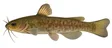
The black bullhead or black bullhead catfish (Ameiurus melas) is a species of bullhead catfish. Like other bullhead catfish, it has the ability to thrive in waters that are low in oxygen, brackish, turbid, and/or very warm. It also has barbels located near its mouth, a broad head, spiny fins, and no scales. It can be identified from other bullheads as the barbels are black, and it has a tan crescent around the tail. Its caudal fin is truncated (squared off at the corners). Like virtually all catfish, it is nocturnal, preferring to feed at night, although young feed during the day. It generally does not get as large as the channel or blue catfish, with average adult weights are in the 1-to-2-pound (0.45 to 0.91 kg) range, and almost never as large as 4 pounds (1.8 kg). It has a typical length of 6–14 inches (15–36 cm), with the largest specimen being 24 inches (61 cm), making it the largest of the bullheads. It is typically black or dark brown on the dorsal side of its body and yellow or white on the ventral side.

Description

Like most of the bullheads and flathead catfish, the black bullhead has a squared tail fin, in contrast to the forked tail of channel and blue catfish. It is a bottom-rover fish, meaning it is well-adapted for bottom living. It is typically dorsoventrally flattened, and has a slightly humped back. Its color depends on the area where it is taken, but it generally is darker than brown or yellow bullheads (A. nebulosus and A. natalis, respectively). It can be distinguished from the flathead catfish (Pylodictis olivaris) by the fact that the black bullhead's lower lip does not protrude past the upper lip. Distinguishing it from the brown bullhead is a bit more difficult, depending on the area where it is caught, but a distinguishing detail between the two includes weak serration on the pectoral spine of the black bullhead, while the brown's corresponding spine is more strongly barbed. The anal fin of the black bullhead also has a gray base, and its caudal fin often has a pale bar at its base. The brown bullhead is also typically mottled brown and gray-green dorsally, instead of the darker black. Both the black and brown bullheads can easily be distinguished from the yellow bullhead by the color of the barbels on their chin: the yellow bullhead has white barbels under its mouth. Black bullhead are typically 165–229 millimetres (6.5–9.0 in) long.

At the base of their pectoral and dorsal fins are spines, which they can use as spurs to cut predators.

Habitat and distribution

Black bullheads are native to the Mississippi and Ohio river basins and are widespread throughout the central and southern United States. They are largely absent from the Atlantic coastal drainages of the eastern US. They typically inhabit stagnant or slow-moving waters with soft bottoms, such as lakes, ponds, oxbows, and low-gradient streams. They have been known to congregate in confined spaces, such as lake outlets or under dams.

They are very tolerant fish, and are able to live in muddy water, with warmer temperatures and in water with lower levels of oxygen, which reduce competition from other fish. They are consistently more tolerant of high water silting, water pollution, and warm water temperatures than other bullhead species.

Introduced range

Black bullheads occur as an invasive species in large parts of Europe. Due to the significant negative impacts of its introduction to the ecosystem, the European Union has included it in the list of invasive alien species of Union concern and hence cannot be imported, bred, transported, commercialized, or intentionally released into the environment in any of its member states.

In the United Kingdom, the species has been eradicated by use of rotenone biocide. It was only found in one place, Lake Meadows, Billericay, Essex, and they grew to a maximum weight of 1.19 pounds (.539 kg).

Read the full species guide.

Range

Where bullhead live

How many of the 7 species are recorded in each state.
0
7
How many of the 7 species are recorded in each state.

Species

All 7 bullhead species