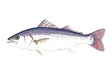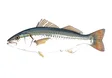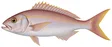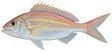
Rosy Snapper

Pristipomoides filamentosus

Lutjanidae · saltwater water fish

8 minute read · Species guide

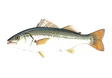
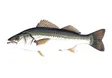
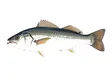
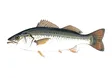
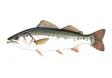
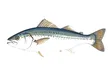
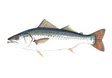
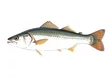
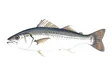
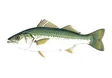
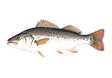
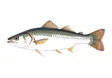
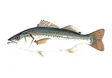
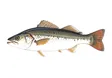
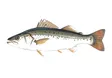
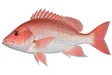
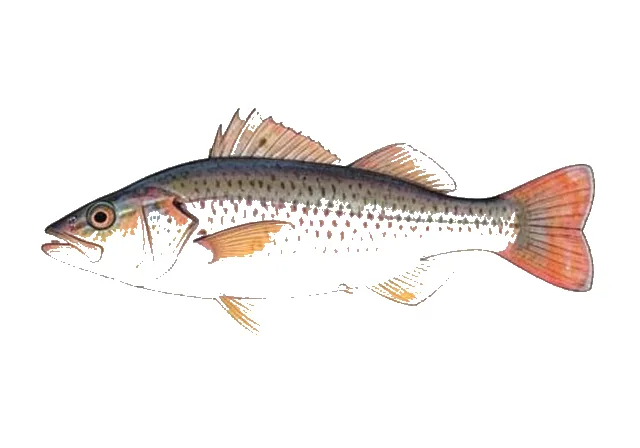
Rosy Snapper field guide illustration

About Rosy Snapper

Pristipomoides filamentosus, also known as the crimson jobfish, rosy snapper, bluespot jobfish, crimson snapper, king emperor, king snapper or rosy jobfish, is a species of ray-finned fish, a snapper belonging to the family Lutjanidae. It is found in the Indian Ocean and in the Pacific Ocean as far east as Hawaii and Tahiti. This species is very important to local commercial fisheries and is sought out as a game fish --one of the Deep Seven species of Hawaiʻi.

Taxonomy

Pristipomoides filamentosus was first formally described as Serranus filamentosus in 1830 by the French zoologist Achille Valenciennes with the type locality given as Saint-Denis on Réunion. The specific name filamentosus means "filamentous" and refers to the filament-like last soft rays in the dorsal and anal fins.

Description

Pristipomoides filamentosus has an elongated, robust body with a depth of roughly a third of its standard length. The space between the eyes is flat, and has a slightly protruding lower jaw. In both upper and lower jaws, there is an outer row of conical and canine-like teeth, the front pair of canines is not highly enlarged, and an inner band of bristle-like teeth. The vomerine teeth are arranged in a triangular patch, and there are no teeth on the tongue. The dorsal fin has ten spines and 12 soft rays, while the anal fin contains three spines and eight soft rays. The bases of the dorsal and anal fins lack scales, and the last soft ray of each of these fins is extended into a short filament. The pectoral fin extend long as far as the anus and contain 15 or 16 rays. The caudal fin is forked. This species has an overall colour which may be brownish to pinkish, lavender or reddish-purple marked with slender yellow lines and blue spots on its snout and the flat space between its eyes. The dorsal and caudal fins are pale blue to lavender and have reddish-orange margins. This species attains a maximum total length of 100 cm (39 in), although 50 cm (20 in) is more typical, and a maximum published weight of 8.2 kg (18 lb).

Distribution and habitat

Pristipomoides filamentosus has a wide Indo-Pacific distribution. It occurs along the eastern African coast from the Gulf of Suez and Gulf of Aqaba in the northern Red Sea to South Africa and across the Indian Ocean archipelagos and coasts into the Pacific, where its range extends east as far as Hawaii and Tahiti, north to Japan and south to Australia. In Australia it is found from Leeman, Western Australia, northwards into the Timor Sea off Darwin, Northern Territory, and east to the Great Barrier Reef off Queensland south at least as far as Seal Rocks, New South Wales, although larvae have been recorded as far south as Sydney. It also occurs at Lord Howe Island in the Tasman Sea. It is a benthopelagic species which is found at depths between 40 and 360 m (130 and 1,180 ft) over rocky substrates and rocky reefs.

Biology

Pristipomoides filamentosus is a nocturnal feeder, migrating upwards through the water column to the part of its habitat closest to the surface to prey on small fishes, crustaceans, ascidians and salps. In the Seychelles spawning occurs between October and April, reaching its peak from February to April and again in November, while in Hawaii, it takes place between March and December, peaking from May to September. This is a slow growing long lived species with the oldest fish recorded at 44 years old.

Parasites

Known parasites of the crimson jobfish include the cymothoid isopod Anilocra gigantea, the pennellid copepod Lernaeolophus sultanus and the nematodes Cucullanus bourdini and Raphidascaris (Ichthyosaurus) eteligis.

Fisheries

Pristipomoides filamentosus is an important species for fisheries and is caught using bottom longlines and deep handlines to be, largely, sold as fresh fish. The flesh is considered to be of good quality. It is of high commercial value in Hawaii and is the second most important quarry for the offshore handline fishery, making up 20% of the total catch of bottomfish.

According to the FAO, the fish have been overexploited in the Seychelles, but the stock is recovering. The commercial capture of crimson jobfish sharply dropped to 4,400 tonnes in 2009 from 25,300 tonnes the previous year.

In Hawaii, it is known as opakapaka and is reported to be the most desirable species of snapper for eating, with moist, white flesh. The peak fishing season in Hawaii runs from October to February.

Article text: Wikipedia contributors, Pristipomoides filamentosus (source revision). Licensed under CC BY-SA 4.0. Retrieved 2026-10-11.
NOAA Fisheries

Life history and status

Length
17 to 20 inches on average
Weight
Up to 18 pounds
Lifespan
Up to 43 years
NOAA management region
Pacific Islands

About the species

Crimson jobfish—commonly known as ‘ōpakapaka—is a species of snapper fish found throughout the tropical Pacific Ocean, including American Samoa, Guam, Hawaii, the Northern Mariana Islands, and the Pacific Remote Island areas. They live at depths from 240 to 720 feet. 'Ōpakapaka is a popular and important species for the fishing industry in and around the Pacific Islands region. It is caught year-round and is highly prized for its mild flavor and premium texture.

Population status

There are six stocks of crimson jobfish. Because golden eye jobfish is often indistinguishable from crimson jobfish, these two stocks are contained in some stock complexes together. Crimson jobfish and golden eye jobfish are contained in stock complexes in American Samoa, Guam, and the Northern Mariana Islands. Crimson jobfish only is contained in stock complexes in the Main Hawaiian Islands, Northwestern Hawaiian Islands, and the Pacific Remote Island Areas. According to the most recent stock assessments: The Golden Eye Jobfish and Crimson Jobfish Complex in American Samoa is not overfished and not subject to overfishing (supported by 2023 stock assessment). Summary stock assessment information can be found on Stock SMART . The Guam Bottomfish Multi-species Complex, which contains crimson jobfish and golden eye jobfish, is not overfished and not subject to overfishing (supported by 2024 stock assessment). Summary stock assessment information can be found on Stock SMART . The Northern Mariana Islands Bottomfish Multi-species Complex, which contains crimson jobfish and golden eye jobfish, is not overfished and not subject to overfishing (supported by 2025 stock assessment). Summary stock assessment information can be found on Stock SMART . The Main Hawaiian Islands Deep 7 Bottomfish Multi-species Complex, which contains crimson jobfish, is not overfished and not subject to overfishing (supported by 2024 stock assessment). Summary stock assessment information can be found on Stock SMART . The Northwestern Hawaiian Islands Bottomfish Multi-species Complex, which contains crimson jobfish, has an unknown overfished and overfishing status. This stock complex occurs within the Papahanaumokuakea Marine National Monument where commercial fishing is prohibited. The Pacific Remote Island Areas Bottomfish Complex, which contains crimson jobfish, has an unknown overfished and overfishing status. The fishing rate has been kept at the recommended level.

Appearance

  • Crimson jobfish have skin that is slightly brown with some brighter colors when caught over hard bottoms.
  • Their caudal fin has an orange edge.
  • Pectoral fins are brownish or yellow.
  • The iris is typically yellow.

Biology

  • Crimson jobfish reach sexual maturity around 1.8 years of age.
  • Spawning occurs between June and December with a peak in August.
  • Large fish reach about 20 lb and 3 feet long.
  • They feed on shrimps, squids, and small fishes.

Where they live

  • They inhabit hard bottoms at depths from 40 to 120 fathoms.
  • Crimson jobfish are distributed throughout the Indo-Pacific region.

Fishery management

NOAA Fisheries and the Western Pacific Fishery Management Council manage crimson jobfish in the United States.

Managed under Fishery Ecosystem Plans for American Samoa , Hawaii Archipelago , Mariana Archipelago , and the Pacific Remote Island Areas . Crimson jobfish is managed as part of multispecies stock complexes under these four ecosystem plans. There are annual catch limits in place for these six stock complexes. Commercial fishermen are required to have permits to fish in federal waters and report their catch. Recreational fishermen fishing in federal waters for Hawaii bottomfish are required to have permits and record their catch. There are no permit or reporting requirements for recreational fishermen fishing in federal waters for Guam, American Samoa, and Northern Mariana Islands bottomfish, but there are prohibited gear types and harvest techniques. Non-commercial fishing is prohibited within 12 nm of emergent land within the Pacific Remote Islands Marine National Monument. Gear restrictions and operational requirements are in place to minimize bycatch and potential gear conflicts among different fisheries. A rebuilding plan was implemented in 2022 with the goal of rebuilding the Guam Bottomfish Multi-species Complex, of which crimson jobfish is a member, by 2031.

Science

Crimson jobfish/‘ōpakapaka—one of the Deep 7 bottomfish species —have been collected across the Hawaiian Archipelago (Northwestern and main Hawaiian Islands) since 1978 from several different sources. Samples have been collected aboard NOAA vessels, purchased from commercial fishermen using NOAA funds, and donated by local recreational fishermen. The Pacific Islands Fisheries Science Center maintains metadata associated with samples, such as location, date, fish length, fish weight, and macroscopic sex identification.

Under the Magnuson-Stevens Act , the Pacific Islands Fisheries Science Center is responsible for conducting stock assessments of the Deep 7 bottomfish complex. These assessments are used to determine stock status from which the Western Pacific Fishery Management Council recommends annual fishery catch limits. NOAA researchers monitor the seven species of bottomfish in Hawai‘i by working with local fishermen and deploying underwater camera technology as part of the Bottomfish Fishery-Independent Survey in Hawaiʻi . These annual surveys assess the numbers and sizes of bottomfish around the main Hawaiian Islands. The center has continually strived to improve data used in the Deep 7 stock assessments and is working towards a single-species assessment for crimson jobfish.

Learn more about our research of the Main Hawaiian Islands Deep 7 Bottomfish group

Range

Where it lives

Share of 69 GBIF observation records with a state location, across 1 states.
0%
100%
Share of 69 GBIF observation records with a state location, across 1 states.

Share of records by state

Habitat

Water and movement

Water
WoRMS records this species in the sea.

Classification

Taxonomy

Kingdom
Animalia
Phylum
Chordata
Superclass
Actinopterygii
Class
Teleostei
Order
Perciformes
Genus
Pristipomoides
Species
Pristipomoides filamentosus
ITIS TSN
168916
WoRMS AphiaID
218511
GBIF key
2385153
Outside the US
ITIS also files it in Central Pacific Territories.

Common questions about Rosy Snapper

What is the scientific name of Rosy Snapper?
The scientific name is Pristipomoides filamentosus, in the family Lutjanidae. Classification follows ITIS.
Does Rosy Snapper live in fresh water or salt water?
WoRMS records this species in the sea.
Where has Rosy Snapper been recorded in the United States?
GBIF has observations in 1 states, with the most records in Hawaii. The map shows observation records, which do not establish the complete natural range.
How long does Rosy Snapper live?
NOAA Fisheries lists its lifespan as Up to 43 years.
How big does Rosy Snapper get?
NOAA Fisheries lists its length as 17 to 20 inches on average and its weight as Up to 18 pounds.

Closest relatives

Other Pristipomoides species

Same family

More Lutjanidae

Amarillo Snapper1 states
Lutjanus argentiventrisLutjanidaeNativeSaltBrackish
Black Snapper
Apsilus dentatusLutjanidaeNativeSalt
Blackfin Snapper2 states
Lutjanus buccanellaLutjanidaeNativeSalt
Blacktail Snapper1 states
Lutjanus fulvusLutjanidaeIntroducedFreshSaltBrackish
Cardinal Snapper2 states
Pristipomoides macrophthalmusLutjanidaeNativeSalt
Colorado Snapper1 states
Lutjanus coloradoLutjanidaeNativeSaltBrackish
Common Bluestripe Snapper1 states
Lutjanus kasmiraLutjanidaeIntroducedSalt
Cubera Snapper5 states
Lutjanus cyanopterusLutjanidaeNativeSaltBrackish
Deepwater Longtail Red Snapper1 states
Etelis coruscansLutjanidaeNativeSalt
Dog Snapper5 states
Lutjanus jocuLutjanidaeNativeFreshSaltBrackish
Goldflag Snapper1 states
Pristipomoides auricillaLutjanidaeNativeSalt
Gray Snapper16 states
Lutjanus griseusLutjanidaeNativeFreshSaltBrackish
Green Jobfish
Aprion virescensLutjanidaeNativeSalt
Humpback Red Snapper
Lutjanus gibbusLutjanidaeIntroducedSalt
Ironjaw1 states
Aphareus rutilansLutjanidaeNativeSalt
Lane Snapper8 states
Lutjanus synagrisLutjanidaeNativeSalt
Lavender Snapper1 states
Pristipomoides sieboldiiLutjanidaeNativeSalt
Mahogany Snapper4 states
Lutjanus mahogoniLutjanidaeNativeSalt
Mutton Snapper7 states
Lutjanus analisLutjanidaeNativeSaltBrackish
Northern Red Snapper12 states
Lutjanus campechanusLutjanidaeNativeSalt
Oblique-banded Snapper1 states
Pristipomoides zonatusLutjanidaeNativeSalt
Queen Snapper2 states
Etelis oculatusLutjanidaeNativeSalt
Randall's Snapper
Randallichthys filamentosusLutjanidaeNativeSalt
Ruby Snapper1 states
Etelis carbunculusLutjanidaeNativeSalt

All 32 species in Lutjanidae