Black Snapper

Apsilus dentatus

Lutjanidae · saltwater water fish

3 minute read · Species guide

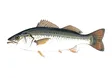
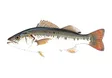
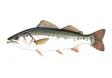
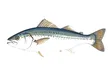
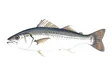
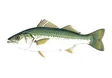
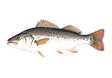
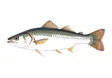
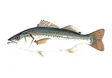
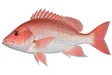
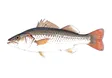
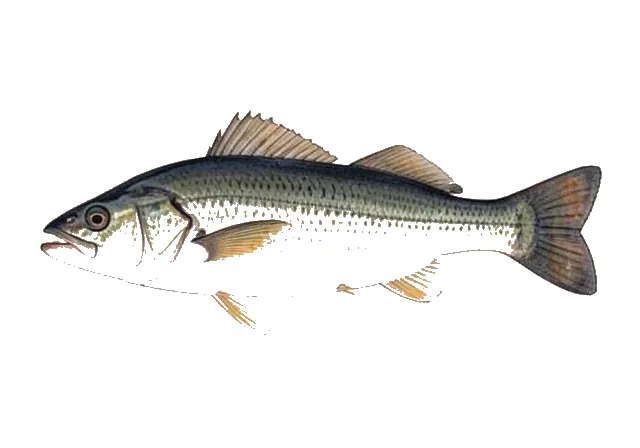
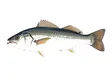
Black Snapper field guide illustration

About Black Snapper

Apsilus dentatus, the black snapper, is a species of marine ray-finned fish, a snapper belonging to the family Lutjanidae. It is found in the western Atlantic Ocean.

NativeSalt

Description

Apsilus dentatus has an elongated, oval shaped body. The intraorbital area is convex and the upper jaw can be protruded to a moderate extent, slipping under the cheek bone for much of its length when the mouth is closed. The jaws have distinct canine-like teeth with an inner band of simple teeth and an outer band of conical teeth. There are small conical teeth on the front and sides of the palate, as well as a central tooth triangular or v-shaped patch. The preoperculum is serrated. The dorsal fin is continuous with not incision between the spined and soft-rayed portions. The bases of the dorsal and anal fin are scaleless, the dorsal fin contains 10 spines and 9-10 soft rays while the anal fin has 3 spines and 8 soft rays. The colour of this species are that the back and upper flanks are violet or dark brown, deeper on head with the lower flanks and the abdomen being paler. The juveniles have a bright blue body, a black margined bronze iris, dark fins with the caudal fin having a pale rear margin, here may be some blue on the fins. The maximum total length attained by this species is 65 cm (26 in), although 40 cm (16 in) is more typical, while the maximum published weight is 3.2 kg (7.1 lb).

Distribution

Apsilus dentatus is present throughout the Caribbean Sea and the Gulf of Mexico. They are found from the Florida Keys and the Bahamas south through the West Indies to the islands off Venezuela and Belize. In the Gulf of Mexico they have been recorded from the Flower Garden Banks. They are thought to be more widely distributed than this.

Habitat and biology

Apsilus dentatus is found at depths between 12 and 300 m (39 and 984 ft), typically deeper than 40 m (130 ft), although young fish have been found near the surface. It prefers rocky substrates. It is a predatory species which eats fishes and benthic invertebrates, including cephalopods and tunicates. Spawning takes place nearly year round, peaking in the period February to April, in September and October and, off Jamaica, in November.

Systematics and etymology

Apsilus dentatus was first formally described in 1853 by the French zoologist Alphonse Guichenot with the type locality given as Havana. The specific name dentatus means "toothed" and refers to the obvious upper front jaw canine teeth.

Utilisation

Apsilus dentatus is of limited interest to fisheries, although the flesh has been described as being of good quality. The only part of their range where they are regular in markets is on Cuba, usually sold fresh, although freezing is nor unknown. They are caught using handlines. They have been a source of ciguatera poisoning in humans following consumption.

Article text: Wikipedia contributors, Apsilus dentatus (source revision). Licensed under CC BY-SA 4.0. Retrieved 2026-10-11.
Range

Where it lives

GBIF holds no US occurrence record for this species under this name. That is a gap in the record, not evidence that the fish is absent: ITIS files it as a US species.

Habitat

Water and movement

Water
WoRMS records this species in the sea.

Classification

Taxonomy

Kingdom
Animalia
Phylum
Chordata
Superclass
Actinopterygii
Class
Teleostei
Order
Perciformes
Genus
Apsilus
Species
Apsilus dentatus
ITIS TSN
168899
WoRMS AphiaID
277617
GBIF key
5209891
Outside the US
ITIS also files it in Caribbean Territories, Mexico.

Common questions about Black Snapper

What is the scientific name of Black Snapper?
The scientific name is Apsilus dentatus, in the family Lutjanidae. Classification follows ITIS.
Does Black Snapper live in fresh water or salt water?
WoRMS records this species in the sea.

Same family

More Lutjanidae

Amarillo Snapper1 states
Lutjanus argentiventrisLutjanidaeNativeSaltBrackish
Blackfin Snapper2 states
Lutjanus buccanellaLutjanidaeNativeSalt
Blacktail Snapper1 states
Lutjanus fulvusLutjanidaeIntroducedFreshSaltBrackish
Cardinal Snapper2 states
Pristipomoides macrophthalmusLutjanidaeNativeSalt
Colorado Snapper1 states
Lutjanus coloradoLutjanidaeNativeSaltBrackish
Common Bluestripe Snapper1 states
Lutjanus kasmiraLutjanidaeIntroducedSalt
Cubera Snapper5 states
Lutjanus cyanopterusLutjanidaeNativeSaltBrackish
Deepwater Longtail Red Snapper1 states
Etelis coruscansLutjanidaeNativeSalt
Dog Snapper5 states
Lutjanus jocuLutjanidaeNativeFreshSaltBrackish
Goldflag Snapper1 states
Pristipomoides auricillaLutjanidaeNativeSalt
Gray Snapper16 states
Lutjanus griseusLutjanidaeNativeFreshSaltBrackish
Green Jobfish
Aprion virescensLutjanidaeNativeSalt
Humpback Red Snapper
Lutjanus gibbusLutjanidaeIntroducedSalt
Ironjaw1 states
Aphareus rutilansLutjanidaeNativeSalt
Lane Snapper8 states
Lutjanus synagrisLutjanidaeNativeSalt
Lavender Snapper1 states
Pristipomoides sieboldiiLutjanidaeNativeSalt
Mahogany Snapper4 states
Lutjanus mahogoniLutjanidaeNativeSalt
Mutton Snapper7 states
Lutjanus analisLutjanidaeNativeSaltBrackish
Northern Red Snapper12 states
Lutjanus campechanusLutjanidaeNativeSalt
Oblique-banded Snapper1 states
Pristipomoides zonatusLutjanidaeNativeSalt
Queen Snapper2 states
Etelis oculatusLutjanidaeNativeSalt
Randall's Snapper
Randallichthys filamentosusLutjanidaeNativeSalt
Rosy Snapper1 states
Pristipomoides filamentosusLutjanidaeNativeSalt
Ruby Snapper1 states
Etelis carbunculusLutjanidaeNativeSalt

All 32 species in Lutjanidae