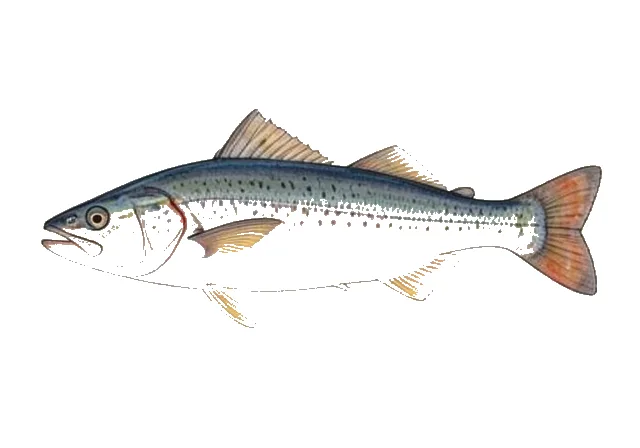
Appearance and identification
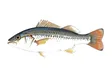
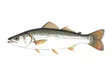
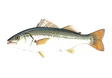
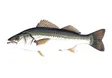
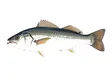
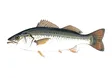
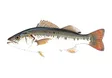
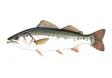
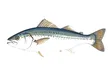
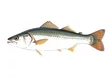
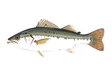
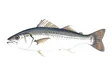
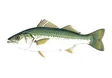
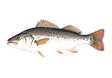
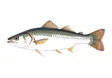
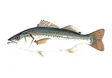
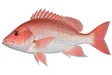
The back and upper sides are deep pink to red, fading toward pink or white on the lower body and belly. Onaga have small teeth and proportionately large red eyes.
The tail is especially distinctive. Its lobes end in narrow, extended points, and the upper lobe becomes particularly elongated in adults. NOAA notes that the tips may be red or black, rather than white.
Sources: Longtail Red Snapper species profile
Size and lifespan
NOAA's summary gives an average length of 25 to 30 inches, with fish exceeding 40 inches. Its lifespan summary gives up to 55 years, while the biology account describes maximum ages of more than 50 years. Both descriptions identify onaga as a long-lived fish.
The agency's weight descriptions are less consistent: its quick-fact box says up to 18 pounds, while its biology text describes large fish exceeding 30 pounds. The smaller figure should therefore not be presented as an absolute maximum. These differing source figures are kept explicit rather than silently choosing one.
Sources: Longtail Red Snapper species profile
Range and habitat
Onaga occur across tropical and subtropical parts of the Indo-Pacific. NOAA's account describes them over hard ocean bottoms at depths of roughly 300 to 1,000 feet. That habitat distinguishes them from snappers commonly encountered on shallow inshore reefs.
The Pacific-island management regions in NOAA's profile identify the populations discussed by U.S. managers. They do not define the entire worldwide distribution of the species.
Sources: Longtail Red Snapper species profile
Diet and feeding
Other fishes form the main part of the diet. NOAA also lists salps, which are pelagic tunicates, and pelagic crustaceans among important prey. Their diet therefore includes animals from the water column as well as the fishes emphasized in the term piscivorous.
Sources: Longtail Red Snapper species profile
Reproduction in Hawaiian waters
For the Hawaiian Islands, NOAA describes spawning from September through December. Female maturity occurs at around 25 inches in length. The spawning season is explicitly tied to the Hawaiian account; it should not automatically be applied to every population throughout the Indo-Pacific.
A fish may become mature while still smaller than the largest adults reported for the species. Length at maturity, average adult length, and maximum observed size are separate measurements.
Sources: Longtail Red Snapper species profile
Long life and regional assessments
Onaga are evaluated within several regional bottomfish complexes rather than under one universal population estimate. NOAA describes separate assessment groupings for Hawaiʻi, American Samoa, Guam, the Northern Mariana Islands, and other Pacific island areas.
The profile reports assessed stock complexes in some regions and unknown status in others. A favorable result for one complex does not establish the condition of every onaga population. The official source lists the assessment years and regional groupings behind those distinctions.
Sources: Longtail Red Snapper species profile