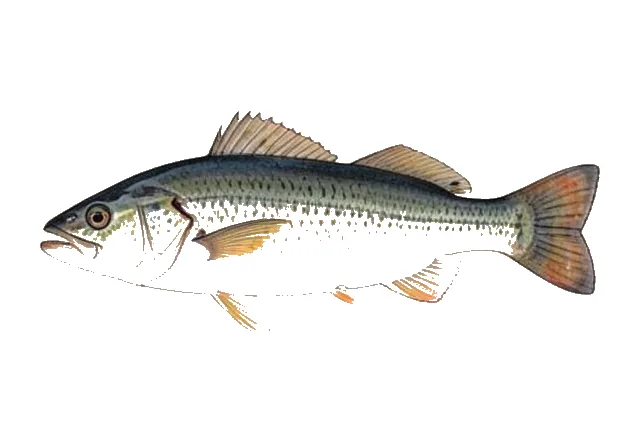
Blacktail Snapper

Lutjanus fulvus

Lutjanidae · freshwater and saltwater and brackish water fish

5 minute read · Species guide

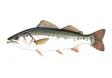
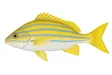
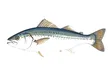
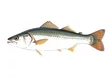
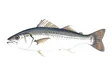
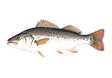
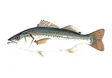
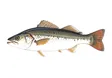
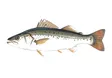
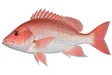
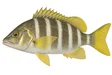
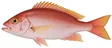
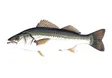
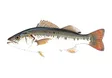
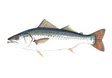
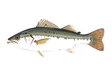
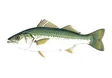
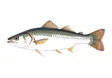
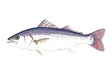
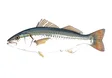
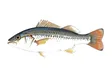
Blacktail Snapper field guide illustration

About Blacktail Snapper

Lutjanus fulvus, the blacktail snapper, flametail snapper, redmargined seaperch, Waigeu snapper or yellowmargined sea perch, is a species of marine ray-finned fish, a snapper belonging to the family Lutjanidae. It is native to the Indo-West Pacific region. It is an important species for fisheries within its range.

Taxonomy

Lutjanus fulvus was first formally described in 1801 as Holocentrus fulvus by the German speaking Polish born naturalist Johan Reinhold Forster with the type locality given as Ota-haitee, which is Tahiti. Forster's description was published in Systema Ichthyologiae by Marcus Elieser Bloch and Johann Gottlob Schneider, and the description is sometimes attributed to either Bloch & Scheider or to Schneider. The specific name, fulvus which means "brownish yellow", a reference to the overall tan or brownish to pale yellow-white colour of the body.

Description

Lutjanus filvus has a body which has a standard length that is around four times its depth. It has a steeply sloped forehead and a well developed known and notch in the preoperculum. The vomerine teeth are arranged in a crescent shaped patch with no rearwards extension and the tongue is smooth, lacking any teeth. The dorsal fin has 10 spines and 14 soft rays while the anal fin has 3 spines and 8 soft rays, the rear profile of both these fins is rounded. The pectoral fins contain 16 rays and the caudal fin is slightly emarginate. This fish attains a maximum total length of 40 cm (16 in), although 25 cm (9.8 in) is more typical. This species has an overall colour which ranges from orange-brown or brownish to pale yellowish or whitish. The dark reddish to blackish dorsal and caudal fins have a white margin, the anal fin, pectoral and pelvic fins are yellow. The scales have brownish to yellow margins, and there is a yellow patch over the eye. The juveniles are marked with yellowish horizontal stripes and have a black band just underneath the margin of the dorsal fin.

Distribution and habitat

Lutjanus fulvus has a wide Indo Pacific distribution. It is found from the Gulf of Aden and East Africa south to South Africa through the Indian Ocean but it is absent from the Persian Gulf, east as far as the Marquesas and the Line Islands. It occurs north to southern Japan and south to Australia. In Australia it is found from the Scott Reef of Western Australia, and the Ashmore Reef in the Timor Sea to Sydney, they also occur at Christmas Island and Cocos (Keeling) Islands, as well as Norfolk Island in the Tasman Sea. During the 1950s the Hawaiian Division of Fish and Game released blacktail snappers into Pearl Harbor and off Oahu and it is now found throughout the Hawaiian archipelago but it is nowhere abundant. They have a depth range of 2 to 75 m (6 ft 7 in to 246 ft 1 in) and can be found in lagoons and semi-sheltered seaward reefs. This species was one of the first to re-colonise an area of reef which had been recently dredged off Pohnpei. It shows a preference for sheltered areas where there are deep holes or large boulders. The juveniles are occasionally recorded in shallow mangrove swamps and in the lower reaches of freshwater streams.

Biology

Lutjanus fulvus is a nocturnal predator of fishes, crustaceans, holothurians and cephalopods. A study in the Yaeyama Islands of Japan found that the oldest individual was 34 years old and most of the population were older than 3 years old. The mean length at sexual maturity was 22.5 cm (8.9 in), around 4 years old for females and 20.7 cm (8.1 in), around 3 years old, for males. They were thought to spawn there between April and October.

Fisheries

Lutjanus fulvus is commonly recorded in markets, normally as fresh fish. Fishers catch it using handlines, traps and gillnets. Consumption of this species has been known to cause ciguatera poisoning, especially in the Pacific. The blacktail snapper is among the most important fishes which are taken by gill netting and handlining in Kiribati and it is regarded as a commercial species in the Ryukyu Islands of Japan. The introduction of this species to Hawaii was intended to supplement the commercially exploited reef fish there.

Article text: Wikipedia contributors, Lutjanus fulvus (source revision). Licensed under CC BY-SA 4.0. Retrieved 2026-10-11.
Identification and appearance

Lutjanus fulvus has a moderately large mouth with sharp teeth. Randall (2005) describes the body as pale yellow-white; caudal (tail) fin is emarginate (indented in the center) and reddish black with a narrow white margin; dorsal (back) fin is also reddish with a narrow white margin and a broad black submarginal band. The remaining fins are yellow.

Native range

Found in the IndoPacific Ocean from the Red Sea to French Polynesia, north to southern Japan, and south to South Africa and New Caledonia (Lieske and Myers 2004).

Habitat and ecology

Lutjanus fulvus inhabit lagoons and seaward reefs at depths from 1-75 m preferring sheltered areas with deep holes (Myers 1999). At times this species enters mangrove areas and lower reaches of rivers (Myers 1999). The juveniles seek shelter in brackish areas and seagrass beds (Lieske and Myers 2004). Lutjanus fulvus feeds primarily at night on crabs and shrimps in the winter and spring and favors crabs and fishes in the summer and fall (Nanami and Shimose 2013). Spawning occurs at night around the full moon throughout the year (Allen 1985, Myers 1999).

Introduction history

Stocked by the Hawaiian Division of Fish and Game in the 1950s (Randall 1987).

Range

Where it lives

Share of 458 GBIF observation records with a state location, across 1 states.
0%
100%
Share of 458 GBIF observation records with a state location, across 1 states.

Share of records by state

Habitat

Water and movement

Water
WoRMS records this species in fresh water, brackish water and the sea.
USGS NAS habitat
Marine
US status
Exotic — the USGS Nonindigenous Aquatic Species database lists it as introduced from outside North America.

Classification

Taxonomy

Kingdom
Animalia
Phylum
Chordata
Superclass
Actinopterygii
Class
Teleostei
Order
Perciformes
Genus
Lutjanus
Species
Lutjanus fulvus
ITIS TSN
168863
WoRMS AphiaID
218475
GBIF key
2385096
Outside the US
ITIS also files it in Central Pacific Territories.

Common questions about Blacktail Snapper

What is the scientific name of Blacktail Snapper?
The scientific name is Lutjanus fulvus, in the family Lutjanidae. Classification follows ITIS.
Does Blacktail Snapper live in fresh water or salt water?
WoRMS records this species in fresh water, brackish water and the sea.
Where has Blacktail Snapper been recorded in the United States?
GBIF has observations in 1 states, with the most records in Hawaii. The map shows observation records, which do not establish the complete natural range.

Closest relatives

Other Lutjanus species

Same family

More Lutjanidae

Amarillo Snapper1 states
Lutjanus argentiventrisLutjanidaeNativeSaltBrackish
Black Snapper
Apsilus dentatusLutjanidaeNativeSalt
Blackfin Snapper2 states
Lutjanus buccanellaLutjanidaeNativeSalt
Cardinal Snapper2 states
Pristipomoides macrophthalmusLutjanidaeNativeSalt
Colorado Snapper1 states
Lutjanus coloradoLutjanidaeNativeSaltBrackish
Common Bluestripe Snapper1 states
Lutjanus kasmiraLutjanidaeIntroducedSalt
Cubera Snapper5 states
Lutjanus cyanopterusLutjanidaeNativeSaltBrackish
Deepwater Longtail Red Snapper1 states
Etelis coruscansLutjanidaeNativeSalt
Dog Snapper5 states
Lutjanus jocuLutjanidaeNativeFreshSaltBrackish
Goldflag Snapper1 states
Pristipomoides auricillaLutjanidaeNativeSalt
Gray Snapper16 states
Lutjanus griseusLutjanidaeNativeFreshSaltBrackish
Green Jobfish
Aprion virescensLutjanidaeNativeSalt
Humpback Red Snapper
Lutjanus gibbusLutjanidaeIntroducedSalt
Ironjaw1 states
Aphareus rutilansLutjanidaeNativeSalt
Lane Snapper8 states
Lutjanus synagrisLutjanidaeNativeSalt
Lavender Snapper1 states
Pristipomoides sieboldiiLutjanidaeNativeSalt
Mahogany Snapper4 states
Lutjanus mahogoniLutjanidaeNativeSalt
Mutton Snapper7 states
Lutjanus analisLutjanidaeNativeSaltBrackish
Northern Red Snapper12 states
Lutjanus campechanusLutjanidaeNativeSalt
Oblique-banded Snapper1 states
Pristipomoides zonatusLutjanidaeNativeSalt
Queen Snapper2 states
Etelis oculatusLutjanidaeNativeSalt
Randall's Snapper
Randallichthys filamentosusLutjanidaeNativeSalt
Rosy Snapper1 states
Pristipomoides filamentosusLutjanidaeNativeSalt
Ruby Snapper1 states
Etelis carbunculusLutjanidaeNativeSalt

All 32 species in Lutjanidae