Ironjaw

Aphareus rutilans

Lutjanidae · saltwater water fish

3 minute read · Species guide

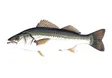
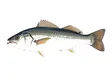
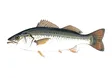
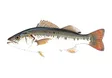
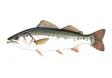
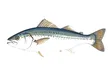
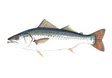
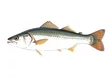
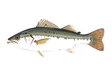
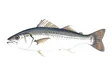
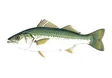
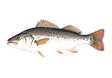
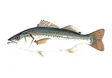
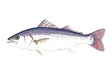
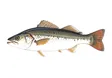
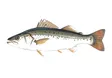
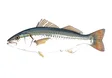
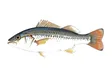
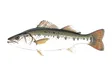
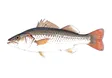
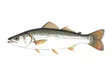
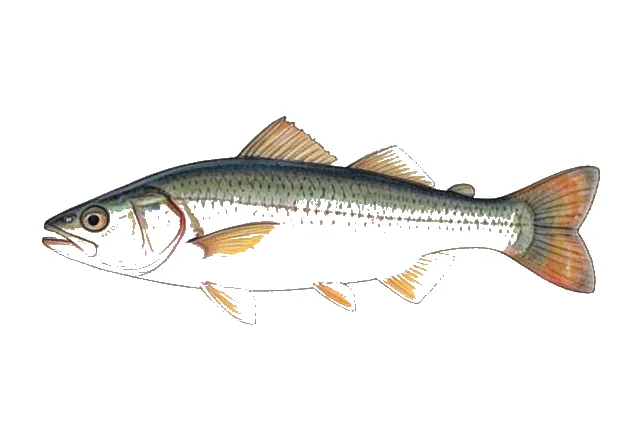
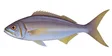
Ironjaw field guide illustration

About Ironjaw

Aphareus rutilans, the rusty jobfish, ironjaw snapper, red smalltooth job, silvermouth or small tooth jobfish, is a species of marine ray-finned fish, a snapper belonging to the family Lutjanidae. It is found in the Indo-Pacific region.

Description

Aphareus rutilans has an elongated, compressed and fusiform body. It has a lower jaw which projects beyond the upper and the mouth extends to the centreline of the eye. It has a flat area between the eyes. The jaws are quilted with thin bands of small teeth and there are no teeth on the roof of the mouth. The dorsal fin has 10 spines and 10, occasionally 11, soft rays while the anal fin has 3 spines and 8 soft rays. These fins lack scales. The rearmost ray in both the dorsal and anal fins are elongated. The caudal fin is deeply forked or lunate in shape. The overall colour is bluish-grey to mauve or reddish with the dorsal, pectoral and caudal fins being yellowish to reddish. The lips of the upper jaw are dark. This species attains a maximum total length of 110 cm (43 in), although 79 cm (31 in) is more typical, and a maximum weight of 11.3 kg (25 lb).

Distribution

Aphareus rutilans has a wide Indo-Pacific distribution. It extends from the Gulf of Aqaba in Israel and Jordan south through the Red Sea and along the East African coast as far south as South Africa through the Indian Ocean, including its islands, and east into the Pacific Ocean. In the Pacific its range extends east to Hawaii, north to the Ryukyu and Ogasawara islands of southern Japan and south to Australia. in Australia it is found at the Scott Reef of Western Australia, in the Arafura Sea off the Northern Territory, and the northern Great Barrier Reef as well as reefs in the Coral Sea off Queensland. The larvae have been recorded as far south as Crowdy Head in New South Wales.

Habitat and biology

Aphareus rutilans is found at depths between 10 and 330 m (33 and 1,083 ft) where it is found in reefs and areas with rocky bottoms, although it is most common at depths of 100 to 250 m (330 to 820 ft). It is a predatory species which feeds on fish, squid and crustaceans. Spawning was recorded as taking place in the spring and summer in Vanuatu, reaching its peak in November and December.

Taxonomy

Aphareus rutilans was first formally described in 1830 by the French zoologist Georges Cuvier with the type locality given as the Red Sea but it may also have been Mauritius or Indonesia. The specific name rutilans means "rusty", a reference to the reddish colour of the back and fins.

Fisheries

Aphareus rutilans is frequently encountered in fish markets in its range, it is largely caught using handlines and vertical long lines. It is also caught by spear fishing. It is a locally common species throughout much of its range and so makes up an important component of the catch for many deep water fisheries. In Hawaii it is not targeted and is caught as bycatch, the stock is considered to have been depleted and catch limits have been imposed.

Article text: Wikipedia contributors, Aphareus rutilans (source revision). Licensed under CC BY-SA 4.0. Retrieved 2026-10-11.
Range

Where it lives

Share of 1 GBIF observation records with a state location, across 1 states.
0%
100%
Share of 1 GBIF observation records with a state location, across 1 states.

Share of records by state

Habitat

Water and movement

Water
WoRMS records this species in the sea.

Classification

Taxonomy

Kingdom
Animalia
Phylum
Chordata
Superclass
Actinopterygii
Class
Teleostei
Order
Perciformes
Genus
Aphareus
Species
Aphareus rutilans
ITIS TSN
168929
WoRMS AphiaID
218468
GBIF key
5209907
Outside the US
ITIS also files it in Central Pacific Territories.

Common questions about Ironjaw

What is the scientific name of Ironjaw?
The scientific name is Aphareus rutilans, in the family Lutjanidae. Classification follows ITIS.
Does Ironjaw live in fresh water or salt water?
WoRMS records this species in the sea.
Where has Ironjaw been recorded in the United States?
GBIF has observations in 1 states, with the most records in Hawaii. The map shows observation records, which do not establish the complete natural range.

Closest relatives

Other Aphareus species

Same family

More Lutjanidae

Amarillo Snapper1 states
Lutjanus argentiventrisLutjanidaeNativeSaltBrackish
Black Snapper
Apsilus dentatusLutjanidaeNativeSalt
Blackfin Snapper2 states
Lutjanus buccanellaLutjanidaeNativeSalt
Blacktail Snapper1 states
Lutjanus fulvusLutjanidaeIntroducedFreshSaltBrackish
Cardinal Snapper2 states
Pristipomoides macrophthalmusLutjanidaeNativeSalt
Colorado Snapper1 states
Lutjanus coloradoLutjanidaeNativeSaltBrackish
Common Bluestripe Snapper1 states
Lutjanus kasmiraLutjanidaeIntroducedSalt
Cubera Snapper5 states
Lutjanus cyanopterusLutjanidaeNativeSaltBrackish
Deepwater Longtail Red Snapper1 states
Etelis coruscansLutjanidaeNativeSalt
Dog Snapper5 states
Lutjanus jocuLutjanidaeNativeFreshSaltBrackish
Goldflag Snapper1 states
Pristipomoides auricillaLutjanidaeNativeSalt
Gray Snapper16 states
Lutjanus griseusLutjanidaeNativeFreshSaltBrackish
Green Jobfish
Aprion virescensLutjanidaeNativeSalt
Humpback Red Snapper
Lutjanus gibbusLutjanidaeIntroducedSalt
Lane Snapper8 states
Lutjanus synagrisLutjanidaeNativeSalt
Lavender Snapper1 states
Pristipomoides sieboldiiLutjanidaeNativeSalt
Mahogany Snapper4 states
Lutjanus mahogoniLutjanidaeNativeSalt
Mutton Snapper7 states
Lutjanus analisLutjanidaeNativeSaltBrackish
Northern Red Snapper12 states
Lutjanus campechanusLutjanidaeNativeSalt
Oblique-banded Snapper1 states
Pristipomoides zonatusLutjanidaeNativeSalt
Queen Snapper2 states
Etelis oculatusLutjanidaeNativeSalt
Randall's Snapper
Randallichthys filamentosusLutjanidaeNativeSalt
Rosy Snapper1 states
Pristipomoides filamentosusLutjanidaeNativeSalt
Ruby Snapper1 states
Etelis carbunculusLutjanidaeNativeSalt

All 32 species in Lutjanidae