Vermilion Snapper

Rhomboplites aurorubens

Lutjanidae · saltwater water fish

8 minute read · Species guide

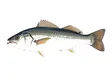
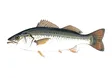
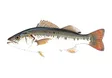
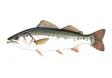
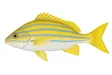
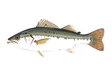
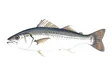
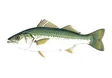
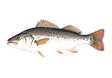
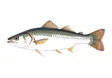
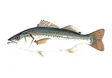
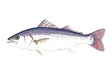
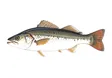
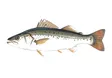
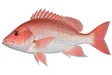
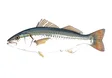
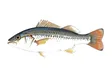
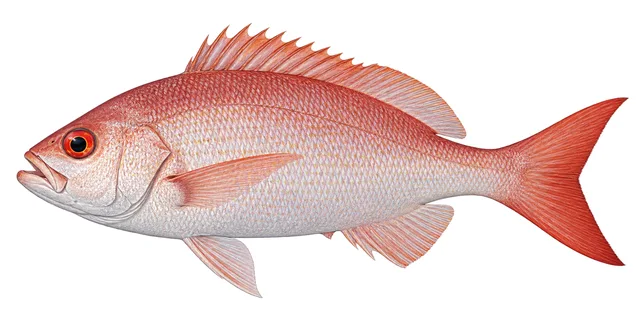
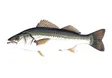
Vermilion Snapper field guide illustration

About Vermilion Snapper

The vermilion snapper (Rhomboplites aurorubens), the clubhead snapper, night snapper or beeliner is a species of marine ray-finned fish, a snapper belonging to the family Lutjanidae. It is native to the western Atlantic Ocean.

Taxonomy

The vermilion snapper was first formally described in 1829 as Centropristis aurorubens by the French zoologist Georges Cuvier with the type locality given as Brazil, Martinique and Santo Domingo. It is now classified as the only species in the monotypic genus Rhomboplites which was created by Theodore Nicholas Gill in 1862, which is within the subfamily Lutjaninae.

The generic name Rhomboplites is a compound of rhombo meaning rhombus-shaped and hoplites meaning "armed"a reference to rhombic shape of the patch of vomerine teeth. The specific name is also a compound, aureus meaning"golden"and rubens meaning"reddish", a reference to the golden-red colour these specimens develop when preserved in alcohol.

Description

The vermilion snapper has an elongated, oblong body, With a short snout, a slightly protruding lower jaw and a small mouth. There are two pairs of nostrils on the snout, front and rear, which are simple holes. The upper jaw slides under neath the cheekbones when the mouth is shut. There are no enlarged canines in the jaws and the vomerine teeth are arranged in a triangular or rhombus shaped patch with a wide rearwards extension and there is a patch of granular teeth on the tongue. The dorsal fin has 12–13 spines and 10–11 soft rays while the anal fin contains 3 spines and 8 soft rays, and the anal fin is rounded. The pectoral fins contain 17–19 fin rays and are comparatively short, not extending as far as the level of the anus. The caudal fin is forked, but not extremely so. This species attains a maximum total length of 60 cm (24 in), although of 35 cm (14 in) is more typical, and the maximum published weight is 3.2 kg (7.1 lb). The overall colour is bright red fading to pink on the lower flanks and then to whitish on the abdomen. There is a series of short wavy oblique blue lines on the sides flanks above the lateral line which are created by spots on the scales, there may be yellow streaks below the lateral line. The anal fin is pinkish red; the caudal fin is red with a black margin, the dorsal fin is red with a yellow margin and the pectoral fins are red.

Distribution and habitat

The vermilion snapper is found in the Western Atlantic Ocean. It ranges from North Carolina and Bermuda south along the eastern coast of the United States to the Bahamas. Then through the Gulf of Mexico and Caribbean Sea southwards along the eastern coast of South America as far as Santa Catarina, Brazil. It is found at depths between 20 and 300 m (66 and 984 ft). The adults occur at moderate depths, most frequently where there are rock, gravel or sand substrates close to the edge of the continental and island shelves, juveniles are found in shallower waters.

Biology

The vermilion snapper frequently aggregates in large schools, often with red snapper species Lutjanus campechanus and Lutjanus purpureus, especially the younger individuals. It is a predatory species which forages for benthic and pelagic fishes, shrimps, crabs, polychaetes, cephalopods and other invertebrates. In the Gulf of Mexico the spawning season of the vermilion snapper runs from mid-April until mid-September, this is also the case off the eastern coast of the United States. Off Trinidad and Tobago, spawning takes place all year, peaking from around June until November. Over the Abrolhos Bank off Brazil spawning takes place in February and March. Vermilion snapper are slow growing fish and have a longevity of more than 15 years. They reach sexual maturity when they are between 1 and 2 years old.

Fisheries and conservation

The vermilion snapper is subjected to severe fishing pressure almost everywhere it is found, being a target species for commercial, artisanal and recreational fisheries. They are taken using hook and line, as well as trawling and traps. The flesh is considered good eating but the catch could be also used for fish meal. The vermilion snapper is often sold as red snapper.

The IUCN assess the vermilion snapper as Vulnerable because of overfishing that happens in many parts of its range, leading to an overall decline in the population of up to 30%. in United States waters three stocks are recognised, two for this species alone in the southern Atlantic coast and the Gulf of Mexico, and a "snapper complex" in the Caribbean. None of these stocks is regarded as subject to overfishing.

Article text: Wikipedia contributors, Vermilion snapper (source revision). Licensed under CC BY-SA 4.0. Retrieved 2026-10-11.
NOAA Fisheries

Life history and status

NOAA management region
Southeast

About the species

U.S. wild-caught vermilion snapper is a smart seafood choice because it is sustainably managed and responsibly harvested under U.S. regulations.

Population status

There are five stocks of vermilion snapper: South Atlantic, Gulf of America, and three stocks contained in the Puerto Rico Snapper 1 Complex, the St. Croix Snapper 1 Complex, and the St. Thomas/St. John Snapper 1 Complex. According to the most recent stock assessments: The South Atlantic stock is not overfished (2018), and is not subject to overfishing based on 2023 catch data. Summary stock assessment information can be found on Stock SMART . The Gulf of America stock is not overfished (2020), and is not subject to overfishing based on 2023 catch data. Summary stock assessment information can be found on Stock SMART . In Puerto Rico, vermilion snapper is contained in the Puerto Rico Snapper 1 Complex. Scientists have not assessed the Puerto Rico Snapper 1 Complex, so the population status is unknown. The Puerto Rico Snapper 1 Complex is not subject to overfishing based on 2021 catch data. In St. Croix, vermilion snapper is contained in the St. Croix Snapper 1 Complex. Scientists have not assessed the St. Croix Snapper 1 Complex, so the population status is unknown. The St. Croix Snapper 1 Complex is not subject to overfishing based on 2022 catch data. In St. Thomas/St. John, vermilion snapper is contained in the St. Thomas/St. John Snapper 1 Complex. Scientists have not assessed the St. Thomas/St. John Snapper 1 Complex, so the population status is unknown. The St. Thomas/St. John Snapper 1 Complex is not subject to overfishing based on 2022 catch data.

Appearance

  • Vermilion snapper have streamlined bodies.
  • They are pale to silvery white below and vermilion (orange-red) above. They have narrow, yellow-gold streaks (some horizontal and others diagonal) below the lateral line.
  • Their back (dorsal) fin is rose-colored with a yellow edge, and the tail (caudal) fin is red with a faint black edge.

Biology

  • Vermilion snapper grow slowly, up to 2 feet long and 7 pounds.
  • They can live to at least 15 years.
  • Vermilion snapper are able to reproduce when they’re young, between 1 and 2 years old.
  • They spawn multiple times from April to September, but most often from June to August.
  • Vermilion snapper eat fish, shrimp, crabs, worms, and other bottom-dwelling invertebrates, as well as squids and plankton (tiny floating plants and animals).

Where they live

  • Vermilion snapper are found in waters 60 to 400 feet deep, but are most abundant in water less than 180 feet deep.
  • They live on the seafloor, and are commonly found over rock, gravel, or sand bottoms near the edge of the continental and island shelves.
  • They often swim in large schools but do not travel very far.
  • Vermilion snapper are found in the Atlantic Ocean from Cape Hatteras, North Carolina, to southeastern Brazil, including the West Indies, Gulf of America, and Caribeean Sea.

Fishery management

NOAA Fisheries , the South Atlantic , Gulf , and Caribbean Fishery Management Councils, and the governments of Puerto Rico and the U.S. Virgin Islands, manage the vermilion snapper fishery.

In the South Atlantic, managed under the Snapper-Grouper Fishery Management Plan : Commercial fishermen must have a permit to harvest vermilion snapper. The number of available permits is limited to control fishing pressure on vermilion snapper. Annual catch limits divided between the commercial and recreational sectors. The commercial quota is divided into two 6-month fishing seasons. Seasons can close early if quotas are reached. Trip limits for commercial vessels. Minimum size limit to allow fish time to mature and spawn. Areas closed to fishing to protect a portion of the vermillion snapper population and their habitat. Gear restrictions prohibit the use of trawls, traps, and longlines (in some areas) to reduce bycatch.

In the Gulf of America, managed under the Fishery Management Plan for the Reef Fish Resources of the Gulf of America : Commercial fishermen must have a permit to harvest vermilion snapper. Annual catch limit combined for the commercial and recreational fishery. Seasons can close early if the catch limit is projected to be reached. Minimum size limit to allow fish time to mature and spawn. Gear requirements and restrictions to reduce bycatch. Areas closed to fishing to protect sensitive fish populations and habitats.

In the U.S. Caribbean, managed under the Puerto Rico Fishery Management Plan , the St. Croix Fishery Management Plan , and the St. Thomas and St. John Fishery Management Plan : Managed with other snappers under each fishery management plan: Snapper 1 complex in Puerto Rico (black, blackfin, silk, vermilion, and wenchman snappers), Snapper 1 complex in St. Croix (black, blackfin, silk, and vermilion snappers), and Snapper 1 complex (black, blackfin, silk, and vermilion snappers) in St. Thomas and St. John. Commercial and recreational annual catch limits for the Snapper 1 complex in Puerto Rico and commercial annual catch limits for the two Snapper 1 complexes in St. Croix and St. Thomas/S. John. Included in the recreational bag limit for select reef fish: 5 fish per person/day, of which no more than 2 may be parrotfish, or if 3 or more persons are aboard, 15 fish total per vessel/day, of which no more than 6 may be parrotfish. Seasonal closure for vermilion snapper in federal waters around Puerto Rico, St. Croix, and St. Thomas/St. John from October 1 through December 31 each year.

Range

Where it lives

Share of 15,711 GBIF observation records with a state location, across 9 states.
0%
99%
Share of 15,711 GBIF observation records with a state location, across 9 states.

Habitat

Water and movement

Water
WoRMS records this species in the sea.

Classification

Taxonomy

Kingdom
Animalia
Phylum
Chordata
Superclass
Actinopterygii
Class
Teleostei
Order
Perciformes
Genus
Rhomboplites
Species
Rhomboplites aurorubens
ITIS TSN
168909
WoRMS AphiaID
159807
GBIF key
2384721
Outside the US
ITIS also files it in Caribbean Territories, Mexico.

Common questions about Vermilion Snapper

What is the scientific name of Vermilion Snapper?
The scientific name is Rhomboplites aurorubens, in the family Lutjanidae. Classification follows ITIS.
Does Vermilion Snapper live in fresh water or salt water?
WoRMS records this species in the sea.
Where has Vermilion Snapper been recorded in the United States?
GBIF has observations in 9 states, with the most records in Florida, Texas, South Carolina. The map shows observation records, which do not establish the complete natural range.

Same family

More Lutjanidae

Amarillo Snapper1 states
Lutjanus argentiventrisLutjanidaeNativeSaltBrackish
Black Snapper
Apsilus dentatusLutjanidaeNativeSalt
Blackfin Snapper2 states
Lutjanus buccanellaLutjanidaeNativeSalt
Blacktail Snapper1 states
Lutjanus fulvusLutjanidaeIntroducedFreshSaltBrackish
Cardinal Snapper2 states
Pristipomoides macrophthalmusLutjanidaeNativeSalt
Colorado Snapper1 states
Lutjanus coloradoLutjanidaeNativeSaltBrackish
Common Bluestripe Snapper1 states
Lutjanus kasmiraLutjanidaeIntroducedSalt
Cubera Snapper5 states
Lutjanus cyanopterusLutjanidaeNativeSaltBrackish
Deepwater Longtail Red Snapper1 states
Etelis coruscansLutjanidaeNativeSalt
Dog Snapper5 states
Lutjanus jocuLutjanidaeNativeFreshSaltBrackish
Goldflag Snapper1 states
Pristipomoides auricillaLutjanidaeNativeSalt
Gray Snapper16 states
Lutjanus griseusLutjanidaeNativeFreshSaltBrackish
Green Jobfish
Aprion virescensLutjanidaeNativeSalt
Humpback Red Snapper
Lutjanus gibbusLutjanidaeIntroducedSalt
Ironjaw1 states
Aphareus rutilansLutjanidaeNativeSalt
Lane Snapper8 states
Lutjanus synagrisLutjanidaeNativeSalt
Lavender Snapper1 states
Pristipomoides sieboldiiLutjanidaeNativeSalt
Mahogany Snapper4 states
Lutjanus mahogoniLutjanidaeNativeSalt
Mutton Snapper7 states
Lutjanus analisLutjanidaeNativeSaltBrackish
Northern Red Snapper12 states
Lutjanus campechanusLutjanidaeNativeSalt
Oblique-banded Snapper1 states
Pristipomoides zonatusLutjanidaeNativeSalt
Queen Snapper2 states
Etelis oculatusLutjanidaeNativeSalt
Randall's Snapper
Randallichthys filamentosusLutjanidaeNativeSalt
Rosy Snapper1 states
Pristipomoides filamentosusLutjanidaeNativeSalt

All 32 species in Lutjanidae