Rainbow Smelt

Osmerus mordax

Osmeridae · freshwater and saltwater and brackish water fish

12 minute read · Species guide

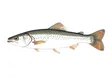
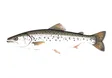
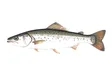
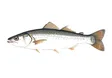
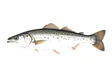
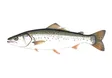
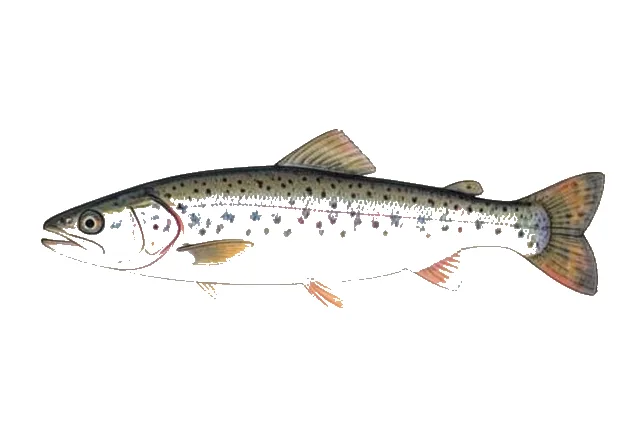
Rainbow Smelt field guide illustration

About Rainbow Smelt

The rainbow smelt (Osmerus mordax) is a North American species of fish of the family Osmeridae. Walleye, trout, and other larger fish prey on these smelt. The rainbow smelt prefer juvenile ciscoes, zooplankton such as calanoid copepods (Leptodiaptomus ashlandi, L. minutus, L. sicilis), and other small organisms, but are aggressive and will eat almost any fish they find. They are anadromous spring spawners and prefer clean streams with light flow and light siltation. The rainbow smelt face several barriers. They are weak swimmers and struggle to navigate fish ladders preventing them from making it past dams to the headwater streams where they spawn. The rise in erosion and dams helped to decimate the smelt population in the 1980s. There are currently plans to try to reduce damming and to help control erosion.

Description

The body of the rainbow smelt is slender and cylindrical. It has a silvery, pale green back and is iridescent purple, blue, and pink on the sides, with a light underside. When full grown, the rainbow smelt is between 7 and 9 inches (18 and 23 cm) long and weighs about 3 ounces (85 g). Individuals over 12 inches (30 cm) long are known.

Distribution and habitat

The rainbow smelt is widespread across North American watersheds. The North American native range of the rainbow smelt extends through the Atlantic drainages between New Jersey and Labrador to Arctic drainages, and the Pacific drainages as far south as Vancouver Island. The rainbow smelt has been introduced into water bodies in the U.S. states of Colorado, Connecticut, Georgia, Idaho, Illinois, Indiana, Iowa, Kansas, Kentucky, Louisiana, Maine, Maryland, Massachusetts, Michigan, Minnesota, Missouri, Montana, Nebraska, New Hampshire, New York, North Carolina, North Dakota, Ohio, Pennsylvania, South Dakota, Tennessee, Vermont, Virginia, and Wisconsin.

Rainbow smelt invaded the Great Lakes watershed through the intentional introduction of eggs from historically known landlocked populations in Maine to Crystal Lake, Michigan in 1912. This lake drains into Lake Michigan, from which fish escaped into Lake Michigan and spread quickly throughout the Great Lakes and their tributaries. Early records documenting the smelt's range expansion in the Great Lakes include Lake Michigan, Lake Erie, Lake Huron, Lake Ontario, and Lake Superior. Rainbow smelt were first reported from Lake Ontario in 1929, and probably reached it by dispersal along natural waterways from the Finger Lakes, New York, where they were intentionally introduced in 1917. The ability of rainbow smelt to disperse is determined by the connectivity of lakes, the ability of smelt to move through connecting streams, and the suitability of connected lakes as habitat. Rainbow smelt are weak swimmers so they cannot make it over fish ladders. This has helped to prevent an even wider spread of their range.

Rainbow smelt occur in rivers, coastal areas and ponds. In their anadromous territories, they spend the summers along the coast, normally in waters no more than 20 feet (6.1 m) deep and no more than 1 mile (1.6 km) from shore. They overwinter under the ice in estuaries, producing an antifreeze protein and glycerol. In the spring, they spawn at night in small streams, often ones that go dry in the summer.

Ecology

In 1883 Stedman and Argyle found that the rainbow smelt consumed bloaters (Coregonus hoyi) and alewives (Alosa pseudoharengus). However, they also stated that this predator had not affected the population of bloaters but that impact could be a possibility. A 2003 study by Horppila et al. shows that smelt densities can exceed 40,000 individuals per hectare and may create a large predation pressure on the lake. Horppila et al. also states that a single smelt can consume between 0.12 and 0.14 grams food wet weight per day. Another study showed that in Lake Ontario the primary food sources for rainbow smelt were slimy sculpins (Cottus cognatus) and opossum shrimp (Mysis relicta), but nothing was said on whether this predation had significant impact on the populations. In 1973 Havey reported that there was increased growth in landlocked Atlantic salmon populations after the introduction of the smelt. It was also shown by Brandt and Madon in 1986 that adult lake trout (Salvelinus namaycush) could be a keystone predator species for the smelt. Hrabik et al. (1998) found evidence of competition for food between introduced rainbow smelt and native yellow perch (Perca flavescens) in Wisconsin lake habitats, and smelt may be partially responsible for the decline of Great Lakes whitefish (Coregonus spp.). The U.S. EPA stated in 2008 that they believe the smelt contributed to the extinction of the blue pike (Stizostedion vitreum glaucum) by outcompeting for food. Acidity may alter smelt distributions because they were not found in small lakes with pH less than 6.0 in several surveys. Because of snowmelt, rainbow smelt eggs might be exposed to lethal pH decreases in poorly buffered lakes.

Life history

Rainbow smelt are anadromous, ascending from saltwater to freshwater to spawn. Smelt are also capable of completing their life history exclusively in freshwater. Landlocked adult rainbow smelt spawn shortly after ice-off at night in the lower reaches of streams. Shaw found in his research that no shoreline spawning had ever occurred. McKenzie states that the number of eggs extruded by a female is positively related to its size and Nellbring stated in his 1989 research that the eggs are adhesive and attach to substrates such as gravel, sand, mud, or submerged vegetation. Eggs are left unattended and hatch in 1–4 weeks, depending on water temperature. The time to sexual maturity is dependent on food supply and water temperature and abundant food and warmer temperatures encourage faster growth. Crossman and Scott state that in optimal conditions and large lakes, rainbow smelt may reach 35.6 centimetres (14.0 in) and can live for over seven years.

Fishing

Rainbow smelt are fished both commercially and for sport. Commercial harvests are down from historic levels; for example around 1880 an annual harvest from the Charles River alone was around 9 million fish, while today few smelt are found in the Charles River. They are commonly processed into animal feed, but are also eaten by humans. They are a popular winter game fish and the spring smelt run is a tradition in many parts of their distribution. Fishing for rainbow smelt using a gill net has historically been a popular activity along the City of Chicago's lakefront.

Management

The populations of the rainbow smelt in areas where it has been introduced, such as the Great Lakes, have been increasing in many regions, even with efforts to control its spread. Several things are being done to manage this species. Massive fish removal by over-fishing reduced the rainbow smelt populations in some lakes by the 1980s. Some people are taking a chemical approach to this growing problem, using Rotenone. While this is effective, it also harms other organisms and is unpopular with the public. Cox and Kitchell state that declines in smelt numbers, following natural recovery or stocking of grown predator fish, have been reported from lakes ranging in size from Lake Superior and Hessen. Additionally, similar results were found in a small pond near Lillehammer, Norway in 1983. This research shows that the reintroduction of large piscivores such as walleye can help lead to the reduction of chemicals and poison needing to be used.

The rainbow smelt is a U.S. National Marine Fisheries Service Species of Concern, one of those species about which the U.S. Government's National Oceanic and Atmospheric Administration has some concerns regarding status and threats, but for which insufficient information is available to indicate a need to list the species under the U.S. Endangered Species Act (ESA).

Article text: Wikipedia contributors, Rainbow smelt (source revision). Licensed under CC BY-SA 4.0. Retrieved 2026-10-11.
Diet and feeding

The FishTraits compilation records these diet categories for this species: invertebrates or larval fish; larger animal prey (a source category covering fish, crayfish, crabs, or frogs). These are broad categories, not a claim that every individual consumes every example in a category.

Reported feeding positions include bottom feeding and surface or water-column feeding. The compilation combines published observations; diets can vary with age, locality, and available food.

Habitat preferences

Reported habitat associations include medium to large rivers, streams and small rivers, creeks, still-water habitats.

The source records associations with gravel, cobble. An association indicates reported use, rather than an exclusive requirement.

The species is classified as tolerant of a broad range of salinities. This flag does not specify a salinity range for aquarium care.

Reproduction and parental care

The compilation reports a representative maturity age of 2.5 years. Its maturity field summarizes mean, median, or modal estimates, usually for females; male estimates can be used when female data are unavailable. It is not a fixed age at which every fish first breeds.

Batch or serial spawning has been reported somewhere in the species’ range. This does not establish the same spawning pattern for every population.

Recorded spawning months are Mar, Apr for the source’s reporting region (PA). This is a regional calendar, not a range-wide schedule.

The reproductive-guild classification includes spawning on open substrates without guarding the brood.

Size and recorded longevity

FishTraits reports a maximum total length of 35.6 centimetres. Some entries use an estimated asymptotic length; this value should not be treated as a certified record catch.

Recorded longevity in the compilation is 5 years. Wild observations were preferred, but captive records were accepted where wild records were unavailable, and unspecified records were assumed wild. The value is not a guaranteed wild lifespan or an aquarium life expectancy.

Spawning movements

The compilation records significant spawning-related movement. Its combined migration flag covers movements within fresh water as well as between rivers and the sea; this flag alone does not establish which migration pattern applies.

Identification and appearance

Rainbow Smelt have a silvery, pale green back and a white underside. The sides of the fish are iridescent purple, blue, and pink with a bright silvery stripe. They have less than 75 scales on the lateral line, which are easily removed. Rainbow Smelt have three characteristic fins, a dorsal in the middle of the back, an adipose, and a deeply forked rear tail fin. The snout is pointed with well developed, canine-like teeth on the tongue and roof of the mouth. Rainbow Smelt resemble the minnow family (Cyprinidae spp.), Lake Whitefish (Coregonus clupeaformis) and Cisco (C. artedi), however, minnows lack an adipose fin and Lake Whitefish and Cisco have deeper bodies than Rainbow Smelt but no teeth on the roof of their mouths or tongues. See Scott and Crossman (1973); Becker (1983); Smith (1985); Page and Burr (1991).

Native range

Atlantic drainages from Lake Melville, Newfoundland, to Delaware River, and Pennsylvania; Arctic and Pacific drainages from Bathurst Inlet, Northwest Territories, to Vancouver Island, British Columbia. Also, Pacific drainages of Asia (Page and Burr 1991). The origin of Osmerus mordax in Lake America is disputed, as they are thought to be either native or introduced from the Atlantic through the Erie Canal (Mills et al. 1993). Another alternative is that O. mordax migrated downstream from the upper Great Lakes, where it is considered nonindigenous.

Habitat and ecology

Spawning of Rainbow Smelt occurs after ice-out in early spring once water temperatures reach ~4.4°C with a peak at 10°C (Becker, 1983). In the Great Lakes, spawning occurs in tributary streams and occasionally on the shoreline. Eggs of the Rainbow Smelt are adhesive, negatively buoyant, and adhere to substrate until hatching 2 to 3 weeks later (Scott and Crossman 1973; Becker 1983). Age of maturation ranges between 1 to 4 years amongst populations (McKenzie 1958; Murawski and Cole 1978) and life expectancy can reach 8 years (Bailey 1964; Kirn and Labar 1996). They are sexually dimorphic, with females growing larger and living longer than males (McKenzie 1958; Bailey 1964).

Rainbow Smelt can survive in a broad range of environmental conditions. They inhabit temperatures from -1.8°C to around 20°C (Nellbring 1989; Raymond 1995), and can acclimate to extreme cold (< 5°C) by producing an antifreeze protein, glycerol, to facilitate faster-swimming speeds and increased muscle function (Coughlin et al. 2019). A laboratory study that assessed embryonic and larval Rainbow Smelt survival in response to various abiotic factors (dissolved oxygen, pH, salinity, nitrates, and phosphates) found that their survival was only significantly reduced when dissolved oxygen levels were less than 20% and the pH<5 (Fuda et al. 2007). However,a review of data from 8,842 Ontario lakes found that Rainbow Smelt were only caught in lakes with a pH>6 despite adequate opportunity to invade lakes with lower pH values (Evan and Loftus 1987).

Rainbow Smelt are zooplanktivorous at small sizes (<150 mm SL), consuming copepods and cladocerans (e.g., Daphnia and Bosmina); while at larger sizes (>150 mm SL) diet includes benthic crustaceans, and larval and small fishes (Sheppard et al. 2012). They are an important forage fish for many predators, including Atlantic Salmon (Salmo salar), Walleye (Sander vitreus), and Lake Trout (Salvelinus namaycush) (Gorman 2019).

Introduction history

Two means have been proposed to explain the introduction of Rainbow Smelt into the Missouri and Mississippi rivers. It may have spread from Lake Michigan via the Chicago sanitary canal to the Illinois River and then to the Mississippi and Missouri rivers (Burr and Mayden 1980). Alternatively, the species may have gained access to these rivers as a result of a stocking at Lake Sakakawea, North Dakota, in 1971 (Bouc 1987; Mayden et al. 1987; Holton 1990). The second explanation seems more plausible because of a lack of records from the Illinois River. Records of first occurrences in other areas include the Mississippi River, Illinois, and Kentucky, 1978; Mississippi River, Louisiana, 1979; Mississippi River, Tennessee, and Arkansas, 1980; Missouri River, Missouri, 1980; Missouri River, Kansas, 1982 (Mayden et al. 1987). Mayden et al (1987) provided a map of the species' distribution, dates of first observation in new areas, and possible introduction pathways. The species was originally introduced into Lake Sakakawea, North Dakota, as forage for Salmonids (Mayden et al. 1987).

Ecological impacts

Dominant prey form for salmonids; contributed to extinction of Blue Pike; affect imperiled species (U.S.EPA 2008; Crossman 1991). In the Great Lakes, Rainbow Smelt compete with Lake Herring Coregonus artedii for food (Becker 1983). Christie (1974) supplied some evidence to support this, correlating lake herring decline with smelt increases in most of the lakes. Todd (1986) also reported that smelt may be partially responsible for the decline of whitefish Coregonus spp. in the Great Lakes. Havey (1973) reported increased growth of landlocked Atlantic Salmon following the introduction of smelt as a forage species in a lake in Maine. Hrabik et al. (1998) found evidence of competition for food between introduced Rainbow Smelt and native Yellow Perch Perca flavescens in Wisconsin lake habitats. Stedman and Argyle (1985) found the diet of O. mordax to include young-of-the-year fish. The species that were consumed by O. mordax depended upon the prey availability (Stedman and Argyle 1985). Stedman and Argyle (1985) discovered that in Lake Michigan in late October of 1982, O. mordax consumed Bloaters (Coregonus hoyi) and Alewives (Alosa pseudoharegus). The authors also noted that although O. mordax does not appear to have had an impact on Bloater populations in the last five years, future impact is possible. A study on nighttime consumption of O. mordax in Lake America revealed their primary food source to be Slimy Sculpin (Cottus cognatus) and opossum shrimp (Mysis relicta) (Brandt and Madon 1986). Juvenile Lake Trout (Salvelinus namaycush) rely heavily on C. cognatus, competing directly with O. mordax, while adult S. namaycush consume O. mordax (Brandt and Madon 1986). The authors point out that S. namaycush may be a keystone predator in the relationship between O. mordax and C. cognatus. Rainbow Smelt contain high levels of thiaminase, which reduces absorption and assimilation of thiamine in predators such as salmonids can cause reduced body condition, swim performance, and other potenial impacts (Houde et al. 2015)

Record fish

State records in 2 states

  • Wisconsin0 lbs. 5.5 oz.

    Green Bay · Door · 02/03/2022

  • Montana0.08 lbs.

    Fort Peck Dredge Cuts · 2/18/20 · Nathan Cooper

Each figure is the state agency’s own certified record. The site holds record tables for 11 states so far, so a state missing here has not been read yet. It is not a state where this fish holds no record.

Range

Where it lives

Habitat

Water and movement

Water
WoRMS records this species in fresh water, brackish water and the sea.
USGS NAS habitat
Freshwater;Marine
US status
Native transplant — native to part of the United States, moved to other waters inside it.
Migration
Undetermined
Pattern
Disagreement
9 published references do not agree on the pattern: Anadromous, Non-migratory, Potamodromous. The site shows every assignment rather than picking one.

Classification

Taxonomy

Kingdom
Animalia
Phylum
Chordata
Superclass
Actinopterygii
Class
Teleostei
Order
Osmeriformes
Family
Osmeridae
Genus
Osmerus
Species
Osmerus mordax
ITIS TSN
162041
WoRMS AphiaID
126737
GBIF key
4283983
Outside the US
ITIS also files it in Canada.

Common questions about Rainbow Smelt

What is the scientific name of Rainbow Smelt?
The scientific name is Osmerus mordax, in the family Osmeridae. Classification follows ITIS.
Does Rainbow Smelt live in fresh water or salt water?
WoRMS records this species in fresh water, brackish water and the sea.
Where has Rainbow Smelt been recorded in the United States?
GBIF has observations in 29 states, with the most records in Maine, Minnesota, Michigan. The map shows observation records, which do not establish the complete natural range.

Closest relatives

Other Osmerus species

Same family

More Osmeridae