Eulachon

Thaleichthys pacificus

Osmeridae · freshwater and saltwater and brackish water fish

10 minute read · Species guide

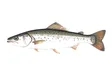
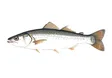
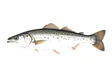
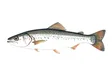
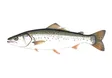
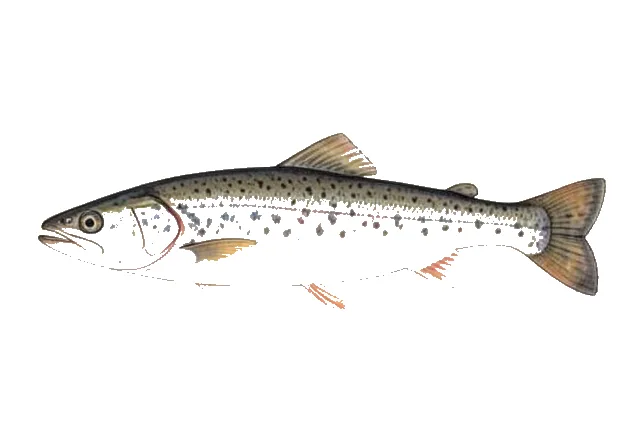
Eulachon field guide illustration

About Eulachon

The eulachon (/ ˈ j uː l ə k ɒ n, - l ɪ k ə n /; Thaleichthys pacificus), or the candlefish, is a small anadromous species of smelt that spawns in some of the major river systems along the Pacific coast of North America from northern California to Alaska.

Etymology

The name "candlefish"derives from it being so fatty during spawning, with up to 15% of the total body weight in fat, that if caught, dried, and strung on a wick, it can be burned as a candle. This is the name most often used by early explorers. The name eulachon (occasionally seen as oolichan / ˈ uː l ɪ k ɑː n /, ooligan / ˈ uː l ɪ ɡ ə n /, hooligan / ˈ h uː l ɪ ɡ ə n /, oulachon, and uthlecan) is from the Chinookan language and the Chinook Jargon based on that language. One of several theories for the origin of the name of the state of Oregon is that it was a corruption from the term"Oolichan Trail", the native trade route for oolichan oil. In some parts it is also known as "halimotkw", which can be translated as "savior fish"or"salvation fish", due to its availability for fishing often coming at the end of winter, when food supplies typically run low.

The unrelated sablefish Anoplopoma fimbria is also called "candlefish" in the United Kingdom.

Species description

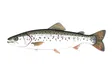
Eulachon are distinguished by the large canine-like teeth on the vomer bone and 19 to 31 rays in the anal fin. Like salmon and trout they have an adipose fin (aft of the dorsal); it is sickle-shaped. The paired fins are longer in male fish than in females. All fins have well-developed breeding tubercles (raised tissue "bumps") in ripe males, but these are poorly developed or absent in females. Adult coloration is brown or blue on the back extending to the top of the head, lighter to silvery white or light blue on the sides, and white on the ventral surface; speckling is extra fine, sparse, and restricted to the back. Adults can reach maximum lengths of 30 cm (12 in) but most adults are between 15 and 20 cm (6 and 8 in). Adults have striae on their operculum that aid in distinguishing Thaleichthys pacificus from other smelt. They feed on plankton but only while at sea.

Ecology

Eulachon feed primarily on plankton as well as fish eggs, insect larvae, ocean debris and small crustaceans. It forms an important part of the diet of many ocean and shore predators, and serves as a prominent food source for people living near its spawning streams.

Eulachon, as anadromous fish, spend most of their adult lives in the ocean but return to their natal freshwater streams and rivers to spawn and die. As such, one stream may see regular large runs of eulachon while a neighboring stream sees few or none at all. Regular annual runs are common but not entirely predictable, and occasionally a river which has large runs sees a year with no returns; the reasons for such variability are not known. The eulachon run is characteristic for the early portion being almost entirely male, with females following about midway through the run to its conclusion. Males are easily distinguished from females during spawning by fleshy ridges which form along the length of their bodies.

Economics and trade

Indigenous communities of the Pacific Coast from California to Alaska have long made eulachon an important part of their diet, as well as a valuable trade item with peoples whose territories do not include spawning rivers. Eulachon are so important that the Nisga'a, for instance, define the beginning of the new year as the month of X saak, literally translated as "to eat eulachons", when the fish returns to freshwater to spawn. This marks the end of winter foods and the start of feasting, both for the Nisga'a and the many animals that arrive at the Nass River at that time of year.

Eulachon is caught using traps, rakes, and nets, with other residents taking part in the exploitation of the large runs. Today harvested eulachon are typically stored frozen and thawed as needed. They may also be fried, dried, smoked, or canned. Eulachon are also processed for their rich oil. The usual process allows the fish to decompose (rot) for a week or more in a hole in the ground, then add boiling hot water and skim off the oil, which would rise to the surface, being less dense than water. Eulachon oil (also known as "Eulachon grease") is traded with inland communities; as a result, the trails over which the trade was conducted came to be known as grease trails. Other uses of eulachon by non-Natives include bait for sportfishing and food for cats and dogs.

Conservation status

In November 2008, the National Marine Fisheries Service (NMFS) received a petition from the Cowlitz Tribe to list a distinct population segment (DPS) of eulachon from Washington, Oregon, and California, (the so-called Southern DPS) as an endangered or threatened species under the Endangered Species Act. (ESA). NMFS found that this petition presented enough information to warrant conducting a status review of the species. Based on the status review NMFS proposed listing this species as threatened on March 13, 2009. On March 16, 2010, NOAA announced that the Southern DPS of eulachon will be listed as threatened under the ESA, effective on May 17, 2010 (See: the Federal Register notice published on May 18, 2010, at 74 FR 3178). On September 6, 2017, the NMFS approved a recovery plan intended to serve as a blueprint for the protection and recovery of the southern Distinct Population Segment (DPS) of eulachon (Thaleichthys pacificus) using the best available science per the requirements of the Endangered Species Act.

In Canada, the Central Pacific Coast and Fraser River populations were classified as endangered by the Committee on the Status of Endangered Wildlife in Canada (COSEWIC) in 2011. At that time, the Nass / Skeena Rivers population was given threatened status, but this was downgraded to Special Concern status when the Nass / Skeena Rivers population was individually reassessed by COSEWIC in 2013. As of May 2023, a decision is pending on the listing of these populations under Schedule 1 of the Species at Risk Act.

Overall, the species faces multiple threats, including overharvest, pollution, loss of freshwater spawning habitat due to logging, diversion and dam construction and climate change. Canadian spawning runs have been severely depleted compared to historic levels, while abrupt declines were reported in the Columbia, Fraser and Klinaklini rivers in 1994.

Article text: Wikipedia contributors, Eulachon (source revision). Licensed under CC BY-SA 4.0. Retrieved 2026-10-11.
Diet and feeding

The FishTraits compilation records these diet categories for this species: invertebrates or larval fish; larger animal prey (a source category covering fish, crayfish, crabs, or frogs). These are broad categories, not a claim that every individual consumes every example in a category.

Habitat preferences

Reported habitat associations include medium to large rivers.

The source records associations with gravel, open water. An association indicates reported use, rather than an exclusive requirement.

The species is classified as tolerant of a broad range of salinities. This flag does not specify a salinity range for aquarium care.

Reproduction and parental care

The compilation reports a representative maturity age of 3 years. Its maturity field summarizes mean, median, or modal estimates, usually for females; male estimates can be used when female data are unavailable. It is not a fixed age at which every fish first breeds.

Recorded spawning months are Jan, Feb, Mar, Apr, May for the source’s reporting region (CA). This is a regional calendar, not a range-wide schedule.

Size and recorded longevity

FishTraits reports a maximum total length of 20 centimetres. Some entries use an estimated asymptotic length; this value should not be treated as a certified record catch.

Recorded longevity in the compilation is 4 years. Wild observations were preferred, but captive records were accepted where wild records were unavailable, and unspecified records were assumed wild. The value is not a guaranteed wild lifespan or an aquarium life expectancy.

NOAA Fisheries

Life history and status

ESA Threatened
Southern DPS
Length
8.5 inches
Weight
2.5 ounces
Lifespan
Unknown
NOAA management region
Alaska, West Coast

About the species

Eulachon are an anadromous (moving between freshwater and saltwater) smelt in the family Osmeridae. The binomial species name is derived from Greek roots; thaleia meaning rich, ichthys meaning fish, and pacificus meaning of the Pacific.

Eulachon are found from northern California to southwest Alaska. The southern distinct population segment (DPS) is listed as threatened under the Endangered Species Act .

Eulachon have many other names—smelt, hooligan, oolichan, and fathom fish. First Nations people called eulachon "salvation" fish because the return of spawning runs to coastal rivers meant the difference between life and starvation after a hard winter. Native people continue to fish for eulachon by traditional methods for use as an important subsistence food and medicine.

NOAA Fisheries is committed to conserving and protecting eulachon. Our scientists and partners use a variety of innovative techniques to study, learn more about, and protect this species.

Population status

The 2010 status review concluded that the southern DPS of eulachon experienced an abrupt decline in abundance throughout its range, beginning in the mid-1990s. Although eulachon abundance in monitored rivers improved in the 2013–2015 return years, sharp declines in eulachon abundance occurred in monitored rivers in 2016–2018. Recent improvements in ocean conditions in the northern California Current, beginning in 2020, suggest that eulachon may rebound in numbers in the near future. The 2022 ESA five-year review concluded that the DPS’s threatened designation remained appropriate.

Appearance

  • Eulachon are an anadromous smelt in the family Osmeridae and are distinguished from other osmerids by having 4–6 gill rakers on the upper half of the gill arch (others have 8–14 gill rakers) and distinct concentric striations on the operculum and suboperculum (gill plate). Eulachon have a prominent adipose fin, and exhibit strong countershading on the body; blue above and silver below. Eulachon mature when they are about 160–250 mm (6–10 inches) in length. Small, pointed teeth occur on both jaws and tongue, but these are usually resorbed in spawning specimens.

Biology

  • Juvenile eulachon from 30–100 mm in length disperse within the first year of life to open, marine waters on the continental shelf and reside near the bottom at depths of 50–200 m. Eulachon do not undergo diel vertical migrations from their preferred depths. Postlarval and juvenile (20–157 mm) eulachon consume various planktonic crustaceans, particularly adult copepods. Adult eulachon consume euphausiids, cumaceans, and copepods, with euphausiids (aka, “krill”) being the primary prey.

Lifespan and reproduction

  • Adult eulachon typically spawn at age 2–5. Many rivers within the range of eulachon have consistent yearly spawning runs; however, eulachon may appear in other rivers only on an irregular or occasional basis. The spawning migration typically begins when river temperatures are between 0 and 10⁰ C, which usually occurs between December and June. Like other anadromous fish, most eulachon are semelparous (i.e., they die after spawning) and females release from 7,000–60,000 eggs, which are approximately 1 mm in diameter. Milt and eggs are released over sand or coarse gravel. Eggs become adhesive after fertilization and hatch in 3–8 weeks depending on temperature. River flow carries newly hatched larvae (4–8 mm in length) down-river to estuaries, and juveniles disperse onto the marine continental shelf within the first year of life.

Where they live

  • The Southern distinct population segment of eulachon can be found in the northeastern Pacific Ocean from the Mad River in northern California to the Nass River in British Columbia.

Threats

  • The 2010 status review categorized long term changes in ocean conditions as the most serious threat to the persistence of eulachon throughout the Southern DPS. Long term changes in freshwater habitat and eulachon bycatch in offshore shrimp fisheries were also ranked within the top four threats in all areas of the DPS.

Management

We listed the southern DPS of eulachon as threatened under the Endangered Species Act in 2010.

Recovery

September 2017: Final Recovery Plan for the Southern distinct population segment (DPS) of Eulachon

October 20, 2016: Draft Eulachon Recovery Plan (PDF, 120 pages)

October 20, 2016: Notice of Availability of Draft Eulachon Recovery Plan (81 FR 72572, 10/20/2016)

July 3, 2013: Notice of Intent to Prepare a Recovery Plan for the Southern DPS of Eulachon (78 FR 40104, 07/03/2013)

June 21, 2013: Recovery Plan Outline for the Southern DPS of Eulachon (PDF, 27 pages)

Conservation

News release: NOAA Lists Pacific Smelt as “Threatened”

Designation of Critical Habitat for Southern DPS of Eulachon

References for eulachon critical habitat (PDF, 12 pages)

A biological report describing how we mapped fish distribution, determined which areas meet the definition of critical habitat, and rated the conservation value of different areas: Critical Habitat for the Southern Distinct Population Segment of Eulachon: Biological Report .

An economics report describing how we estimated the economic impact of this proposal on different areas: Economic Analysis of Critical Habitat for the Southern Distinct Population Segment of Eulachon (PDF, 103 pages).

A report describing how we weighed the benefits of exclusion versus the benefits of designation, to recommend the exclusion of particular areas: Designation of Critical Habitat for the Southern Distinct Population Segment of Eulachon: Section 4(b)(2) Report (PDF, 42 pages).

Washington Department of Fish and Wildlife

Oregon Department of Fish and Wildlife — Eulachon publications and reports

California Department of Fish and Wildlife

Department of Fisheries and Oceans, Canada — Studies of Eulachon Smelt in OR and WA, 2014 (PDF, 168 pages)

Range

Where it lives

Share of 530 GBIF observation records with a state location, across 4 states.
0%
43.4%
Share of 530 GBIF observation records with a state location, across 4 states.

Habitat

Water and movement

Water
WoRMS records this species in fresh water, brackish water and the sea.
Migration
Migratory
Pattern
  • Diadromous — moves between fresh water and the sea
  • Anadromous — spawns in fresh water, grows at sea

Classification

Taxonomy

Kingdom
Animalia
Phylum
Chordata
Superclass
Actinopterygii
Class
Teleostei
Order
Osmeriformes
Family
Osmeridae
Genus
Thaleichthys
Species
Thaleichthys pacificus
ITIS TSN
162051
WoRMS AphiaID
282959
GBIF key
2410903
Outside the US
ITIS also files it in Canada.

Common questions about Eulachon

What is the scientific name of Eulachon?
The scientific name is Thaleichthys pacificus, in the family Osmeridae. Classification follows ITIS.
Does Eulachon live in fresh water or salt water?
WoRMS records this species in fresh water, brackish water and the sea.
Where has Eulachon been recorded in the United States?
GBIF has observations in 4 states, with the most records in Alaska, Oregon, Washington. The map shows observation records, which do not establish the complete natural range.
How long does Eulachon live?
NOAA Fisheries lists its lifespan as Unknown.
How big does Eulachon get?
NOAA Fisheries lists its length as 8.5 inches and its weight as 2.5 ounces.

Same family

More Osmeridae