How feeding works
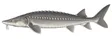
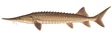
FishBase describes a feeding sequence in which the sturgeon locates food with its barbels and draws edible material into the mouth by suction. Food may be partly expelled and taken in again while it is manipulated. This method explains how a fish moving slowly above the bed can exploit a variety of food items without chasing each one through open water.
Adults occupy lake and large-river bottoms over mud, sand, and gravel. The species is mainly freshwater, although occasional entry into brackish water is recorded. Rocky and boulder-strewn river areas provide spawning habitat, including sites along outer river bends.
Sources: Acipenser fulvescens species summary
A notably long life
FishBase reports an exceptional age estimate of 152 years for a specimen caught in 1952. This is a reported extreme, not the expected age of a typical sturgeon. The combination of great potential longevity and dependence on suitable river spawning areas makes age and habitat important parts of understanding its life history.
Sources: Acipenser fulvescens species summary
Guide sources
Research reviewed 2026-10-19.
Diet and feeding
The FishTraits compilation records these diet categories for this species: algae or phytoplankton; aquatic or other vascular plants; invertebrates or larval fish; larger animal prey (a source category covering fish, crayfish, crabs, or frogs); fish or frog eggs. These are broad categories, not a claim that every individual consumes every example in a category.
Reported feeding positions include bottom feeding. The compilation combines published observations; diets can vary with age, locality, and available food.
Habitat preferences
Reported habitat associations include medium to large rivers, streams and small rivers, still-water habitats.
The source records associations with muck, clay or silt, sand, gravel. An association indicates reported use, rather than an exclusive requirement.
Reproduction and parental care
The compilation reports a representative maturity age of 18 years. Its maturity field summarizes mean, median, or modal estimates, usually for females; male estimates can be used when female data are unavailable. It is not a fixed age at which every fish first breeds.
Recorded spawning months are Apr, May, Jun for the source’s reporting region (WI). This is a regional calendar, not a range-wide schedule.
The reproductive-guild classification includes spawning on open substrates without guarding the brood.
Size and recorded longevity
FishTraits reports a maximum total length of 274 centimetres. Some entries use an estimated asymptotic length; this value should not be treated as a certified record catch.
Recorded longevity in the compilation is 43 years. Wild observations were preferred, but captive records were accepted where wild records were unavailable, and unspecified records were assumed wild. The value is not a guaranteed wild lifespan or an aquarium life expectancy.
Native range
St. Lawrence-Great Lakes, Hudson Bay, and Mississippi River basins from Quebec to Alberta and south to Alabama and Louisiana; Coosa River system (Mobile Bay drainage), Alabama and Georgia (Page and Burr 1991).
Introduction history
Intentionally stocked.