Appearance and anatomy
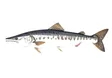
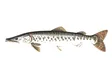
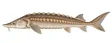
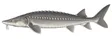
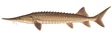
A green sturgeon has an olive-colored body protected by rows of hard external plates called scutes. Much of its internal skeleton is cartilage. Its body plan includes an unevenly lobed tail and a mouth suited to feeding near the bottom.
Green and white sturgeon both occur on the North American West Coast. NOAA distinguishes them using coloration, the placement of the barbels and vent, and the number and shape of scutes. Color alone is only one of several identification features.
Sources: Green Sturgeon species profile and recovery overview
Size, growth, and lifespan
NOAA lists an average adult length of 4.5 to 6.5 feet and weights reaching 350 pounds. Green sturgeon can live for 60 to 70 years and reach reproductive maturity at about 15. They have a very different schedule of growth and reproduction from fish that mature within their first few years.
Sources: Green Sturgeon species profile and recovery overview
Range and connected habitats
The species occurs along the Pacific coast from Alaska to Mexico, with most encounters north of Point Conception in California. It spends more time at sea than many other sturgeons, but marine habitat alone cannot support its entire life cycle.
Spawning rivers, downstream nursery areas, estuaries, coastal bays, and the ocean form a connected sequence of habitats. Young fish use river and estuary environments before moving into marine waters. Adults later return to rivers to reproduce.
Sources: Green Sturgeon species profile and recovery overview
How green sturgeon feed
Sturgeon lack teeth. They extend a flexible mouth and draw food up from the bottom. Specialized sensory pores can detect electrical signals from prey, helping them find food in murky water and bottom substrates. These features explain why feeding is tied closely to the environment beneath the fish.
Sources: Green Sturgeon species profile and recovery overview
Spawning and juvenile development
Adults can reproduce repeatedly during their long lives, returning to natal rivers at intervals of roughly three to five years. For the southern population, NOAA describes adults entering San Francisco Bay from mid-February to early May before moving up the Sacramento River.
Spawning takes place in cool reaches with deep, turbulent flow and clean, hard bottom material. Larvae and juveniles move downstream toward the Sacramento–San Joaquin Delta and estuary, where they rear for several years before entering the ocean.
Sources: Green Sturgeon species profile and recovery overview
Seasonal movement and population structure
Adult fish gather in Washington, Oregon, and California bays and estuaries during summer and fall. In winter and spring, NOAA describes concentrations off northern Vancouver Island. Tagged fish and genetic studies have helped researchers connect these movements with distinct spawning populations.
Northern population fish spawn in the Klamath, Eel, and Rogue river systems. Southern population fish spawn in the Sacramento, Feather, and Yuba systems. These groups can look alike while differing genetically.
Sources: Green Sturgeon species profile and recovery overview
Threats and protection
The southern distinct population segment is federally listed as threatened. That designation applies to the southern population segment, not automatically to every green sturgeon throughout the species' range.
NOAA identifies inadequate spawning flows, water-quality problems, contaminants, bycatch, poaching, invasive species, vessel strikes, and harmful algal blooms among the threats. Recovery work therefore involves both protecting fish and maintaining the connected habitats they need at different ages.
Sources: Green Sturgeon species profile and recovery overview
Guide sources
Research reviewed 2026-10-13.
- Green Sturgeon species profile and recovery overview — NOAA Fisheries