Shortnose Sturgeon

Acipenser brevirostrum

Acipenseridae · freshwater and saltwater and brackish water fish

26 minute read · Species guide

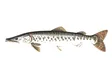
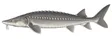
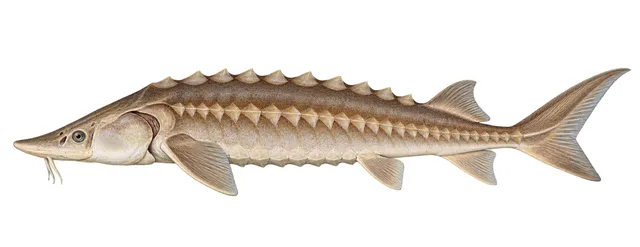
Shortnose Sturgeon field guide illustration

About Shortnose Sturgeon

The shortnose sturgeon (Acipenser brevirostrum) is a small and endangered species of North American sturgeon. As with most sturgeons, it is an anadromous bottom-feeder, which migrates upstream to spawn but spends most of its life feeding in rivers, deltas and estuaries.

Shortnose sturgeons are long-lived and slow to sexually mature. The shortnose sturgeon is often mistaken as a juvenile Atlantic sturgeon (A. oxyrinchus) because of its small size. Prior to 1973, U.S. commercial fishing records did not differentiate between the two species: both were reported as "common sturgeon", although it is believed based on sizes that the bulk of the catch was Atlantic sturgeon. The shortnose is distinguishable from the Atlantic sturgeon due to its shorter and rounder head.

Taxonomy

The species is currently placed in the genus Acipenser. However, some have suggested that the genus Acipenser is paraphyletic, and it is more accurately placed in the genus Huso. If followed, shortnose sturgeon would be one of two species of Huso found in North America alongside the lake sturgeon (H. fulvescens). However, later studies found that Huso is a junior synonym of the genus name Sterletus, coined for the sterlet. After previously placing the species in Huso in 2025, Eschmeyer's Catalog of Fishes returned all the reclassified species to Acipenser later that same year, until the nomenclature could be clarified.

Distribution

Historically, shortnose sturgeon were found in the coastal rivers along the East Coast of North America. Living from the Saint John River in New Brunswick all the way to the Indian River in Florida. Currently, shortnose sturgeon can be found in 41 bays and rivers along the East Coast. Their distribution across this range is broken up, with a large gap of about 250 miles separating the northern and mid-Atlantic metapopulations from the southern metapopulation. There has been a shift slightly with lower sturgeon levels in river systems particularly further south. Modern spawning locations for the sturgeon include areas such as the Saint John River, Bay of Fundy, and the Altamaha River with noticeable absences in North Carolina rivers. It is considered extirpated from Washington, D.C., and may be extirpated in Rhode Island and Virginia.

The southern metapopulations of shortnose sturgeon are currently found in the Great Pee Dee, Waccamaw, Edisto, Cooper, Santee, Altamaha, Ogeechee, and Savannah rivers. They may also be found in the Black, Sampit, Ashley, Roanoke, and Cape Fear rivers. Shortnose sturgeon were considered extinct in the Satilla, St. Marys, and the St. Johns rivers, but were recently found again in both the Satilla and St. Marys rivers.

In the northern and mid-Atlantic metapopulations, shortnose sturgeon are currently found in Saint John (Canada), Penobscot, Kennebec, Androscoggin, Piscataqua, Merrimack, Connecticut, Hudson, Delaware, and Potomac rivers. They have also been spotted foraging and transiting in the St. George, Medomak, Damariscotta, Sheepscot, Saco, Deerfield, East, and Susquehanna rivers. On rare occasions, they have been seen in the Narraguagus, Presumpscot, Westfield, Housatonic, Schuylkill, Rappahannock, and James rivers.

A healthy, recovering population has been recorded in New York Harbor, representing a rare example of an endangered fish thriving in an urbanized landscape. This population is the largest known individual population of any sturgeon species worldwide.

Habitat

Shortnose sturgeon live in rivers and coastal waters and streams that run from Canada to Florida. Because shortnose sturgeon are amphidromous fish, after spawning most of their time is spent in estuaries and rivers. Shortnose sturgeon rarely spend time in the Atlantic Ocean. However, if the sturgeon do enter marine waters to feed or migrate they stay close to the shore. Shortnose sturgeon are more likely to move through all areas of a river system. Times they remain at sites for an extended period of time include resting and feeding periods.

Critical habitat has not been designated for the shortnose sturgeon. This is an area of the conservation plan that is essential to the conservation of the species. Research needs to be done to identify what habitats are critical to ensure the protection of each life stage.

One area of research for discovering and designating critical habitat of shortnose sturgeon will be the study of foraging ecology and growth of the various life stages, as well as defining the benthic habitats that support preferred prey. To enhance this understanding, results on the mapping of the benthic organisms will be needed to better define both the available and preferred diets of sturgeon. Probabilistic or generalized linear models or similar approaches used to map benthic habitat should be constructed to help identify the distribution of shortnose sturgeon density. Additionally, obtaining information on nursery areas and characterization of nursery habitat is a major priority.

Description

The shortnose sturgeon is the smallest of three sturgeon species that are present in the eastern seaboard of North America. It has a cylindrical body and compared to the Atlantic sturgeon, its head and snout are relatively small. Younger shortnose sturgeons tend to have longer snouts compared to their older counterparts. Adult sturgeons have bony plates along their esophagus that help them crush hard items instead of having teeth.

Shortnose sturgeon are cartilaginous with bones only in the skull, jaw and pectoral girdle. It is a physostome fish, so its swim bladder is connected to the intestinal tract by a special duct. This duct allows for gas pressure regulation through swallowing air or releasing air through the gut. The intestines for shortnose sturgeon are dark and have a spiral valve (important for nutrient absorption), similar to that of sharks and rays. These sturgeons tend to be generally dark brown to olive/black on the dorsal surface.

Shortnose sturgeon tend to consume small bivalves, gastropods, polychaetes, and small benthic fishes based on studies of their gut contents. The most common prey are amphipods, while Atlantic sturgeon primarily consume polychaetes. Some reports have found that female adult shortnose sturgeon feed throughout the year, but a study from the Saint John River found that pre-spawning females rarely had food in their stomachs and likely stopped feeding about eight months prior to spawning while ripening males generally had full stomachs.

Sturgeon are often called "living fossils", due to their ancient lineage and a fossil record that points to a holarctic distribution. With the earliest reported remains of North American sturgeon dating to the late Cretaceous period. Sturgeons have bony plates called scutes that extend from the skull to the caudal peduncle and are divided into five rows on the body: one dorsal row, then two lateral and ventral rows respectively. The fins on the shortnose sturgeon are located far back on the body. The pectoral fins are positioned low, while the pelvic fins are along with the abdominal position. Prominent features of the shortnose sturgeon are the scutes, protractile tube-like mouth, and chemosensory barbels. Sturgeon tend to be long-lived, slow-maturing, and spawn infrequently, which have served the species well through evolutionary time but poorly to anthropogenic impacts like overharvesting, habitat loss, and degradation.

There is little data around predation on shortnose sturgeon. Known predators include yellow perch for fry, and grey seals for adults. Potential predators include alligators, sharks, eagles, and large fish such as gar or catfish. Known predators of other sturgeon species include sea lampreys, gar, striped bass, common carp, northern pikeminnow, channel catfish, smallmouth bass, walleye, fallfish, and sea lions.

Behavior

The life history of shortnose sturgeon begins with adults that lay their eggs in freshwater and then return to saltwater. The eggs are left to fend for themselves after spawning. As they age, the young fish slowly move to more saline water. Living in fresh or brackish water until they are at least a year old. Males can live up to around 30 years old while females can live to be close to 70 years old.

Shortnose sturgeon spawn in moving freshwater water, over rubble or gravel bottoms. Time of spawning varies by latitude and is likely based on water temperatures in the range from 6.5–15 °C (43.7–59.0 °F); this may be as early as January in South Carolina or as late as May in Canada. The eggs hatch after 13 days when incubated at water temperatures of 8 to 12 °C (46 to 54 °F), into 7- to 11-mm-long hatchlings with a large yolk sac, minimal swimming ability that is used for negative phototaxis, and a strong tendency to seek cover. After another 8–12 days, at about 15 mm in length, they will have resorbed their yolk sacs and matured to a swimming larval stage. They resemble a miniature adult by the time they have reached 20 mm in length and begun feeding. They then drift downstream in the deep channels of the river, remaining in freshwater for the first year of their lives. Juveniles, up to 18 in long, generally move to brackish water, and move with it through the tidal cycle.

Adults mature sexually around 18 to 22 inches in length. Males mature after 2–3 years in their warmest habitats or 10–14 years in colder climates, and females mature between 6 and 17 years of age (again, earlier in southern rivers). Adults continue to grow to between 3 and 4 ft in length. A male may breed every year or every other year and seldom lives beyond age 30. Females usually breed every third to the fifth year, lying between 40,000 and 200,000 eggs when they breed and can live to age 67. Females spend multiple years with reduced feeding and growth while they are producing the gonadal material needed for spawning.

Behavioral information has been collected and demonstrated differences in the innate dispersal patterns in early life stages of shortnose sturgeon from the Connecticut River versus those of Savannah River origin. This research suggested that shortnose sturgeon are likely behaviorally adapted to unique features of their watershed.

Major conservation threats and human impact

The history of the shortnose sturgeon exploitation goes back 4,000 years. Native American fishermen harvested shortnose and Atlantic sturgeon for their meat and eggs. This continued with the Jamestown settlers in 1607 who utilized sturgeon as the primary food source for survival. Profitable fishery business using shortnose sturgeon began to grow in the 1800s leading to a rapid decline of the species population and distribution. By the late-1800s, sturgeon were being over-exploited. In 1890, over 7 million pounds of sturgeon were harvested in 1 year and as a result, in 1920, only 23,000 pounds of sturgeon were caught. Today, the shortnose sturgeon is in danger of extinction throughout its range and was listed as endangered under the Endangered Species Act on March 11, 1967. Shortnose sturgeon are protected in accordance with Section 1(c) of the Endangered Species Preservation Act of October 15, 1966 (80 Stat. 926: 16 U.S.C. 668aa(c)) after consulting the States, interested organizations and individual scientists, and finding that it was threatened with extinction. The IUCN has listed the shortnose sturgeon as a vulnerable species in 2004 with increasing action plans needed. NatureServe similarly lists the species as globally vulnerable to extinction.

Although there are now about 12,000 adult shortnose sturgeon living within the Delaware River estuary, the population faces serious human-induced threats. Water quality contaminants such as endocrine distributing chemicals (EDCs) have been linked to reproductive and developmental disorders in many fish species. These contaminants were found in shortnose sturgeon tissue collected in 2001 and include PCDDs/TCDFs, DDE, PCBs, and cadmium. Other threats to Delaware River shortnose sturgeon include heavy industrialization and waterfront development. This destruction of habitat can affect the sturgeon's ability to travel to freshwater and spawn or can degrade the quality of the habitat. For example, some dams impede sturgeon travel back and forth between salt and fresh water, resulting in the disruption of natural spawning cycles and preventing the reproduction of the already struggling species.

More human-induced threats include ship/boat strikes, poaching, bycatch in commercial and recreational fisheries, injury to early life stages from water intake systems, instream construction projects within the spawning area, and dredging, including the ongoing Delaware River deepening project. Additional research has been done to prove that algal blooms, which can be caused by increased nitrogen levels in runoff or other anthropogenic factors, sometimes result in Shortnose Sturgeon die-offs. Overall, the combination of human-induced destruction of habitat and overconsumption have devastated many species along the Atlantic Coast. The future effects of climate change are not fully understood, however, these could potentially exacerbate many of these struggling populations even further.

Conservation efforts

Conservation efforts for the shortnose sturgeon include removing outdated dams from their habitats. The most recent recovery plan was enacted in December 1998, for the National Marine Fisheries Service National Oceanic and Atmospheric Administration. The stated goal of this plan is to recover populations to levels of abundance at which they no longer require protection under the ESA. For each population segment, the minimum population size will be large enough to maintain genetic diversity and avoid extinction. NOAA Fisheries work with conservation organizations, energy companies, states, tribes, and citizens to evaluate barriers—big and small—to improve upon fish passage.

Breeding programs are currently being used to help the dwindling sturgeon populations. The fish are captured and bred to help provide important insight into the physical, chemical, and biological parameters necessary for the optimal growth, survival, and reproduction of shortnose sturgeon in the wild. Juvenile fish may die if the salinity of the water is not optimal. Captive-bred animals are also used in permanent educational displays that promote public awareness of the plight of the species.

Efforts are also being made to educate the public on the shortnose sturgeon. Scientists are working with students and teachers to learn more about the movements, behavior, and threats to sturgeons. An example of this initiative is the SCUTES program—Students Collaborating to Undertake Tracking Efforts for Sturgeon. It provides lesson plans, educational kits, and an opportunity for classrooms to adopt a tagged sturgeon.

Original recovery plan

After listing the shortnose sturgeon as an endangered species in 1967, the 1998 Recovery Plan was enacted. The goal was to delist shortnose sturgeon populations throughout their range. The plan listed actions that if followed could restore the populations by the year 2024. Each of the population segments could become a candidate for downlisting when it reached a minimum population size that: 1) is large enough to prevent extinction, and 2) will make the loss of genetic diversity unlikely. This minimum population size for each population segment had not yet been determined. To achieve and preserve minimum population sizes for each population segment, essential habitats were identified and maintained, and mortality, monitored and minimized. This plan has since been outdated and replaced.

Five-year reviews

A Shortnose Sturgeon Status Review Team collected data and presented a "A Biological Assessment of Shortnose Sturgeon" to the National Marine Fisheries Service in 2010. In their assessment, the team identified aspects of shortnose sturgeon ecology which requires continued research. Continuing research is needed in areas such as determining population size and structure, modelling larval distribution to identify effects of river manipulation by humans, and enhancing the effectiveness of mass rearing.

The team suggested the following research projects to be conducted in order to improve understanding of the shortnose sturgeons' status. Firstly, continue the survey and tracking of adults to gather additional tissue samples and detect changes in population status (abundance, residency ranges, winter ecology, and spawning success). Secondly, determine status of juveniles (an indication of recruitment) and characterize ecology and habitat use.

This review concluded that the shortnose sturgeon still requires conservation efforts to support populations. The species is still at high risk under the IUCN and ESA listings.

Article text: Wikipedia contributors, Shortnose sturgeon (source revision). Licensed under CC BY-SA 4.0. Retrieved 2026-10-11.
Diet and feeding

The FishTraits compilation records these diet categories for this species: invertebrates or larval fish; larger animal prey (a source category covering fish, crayfish, crabs, or frogs). These are broad categories, not a claim that every individual consumes every example in a category.

Reported feeding positions include bottom feeding. The compilation combines published observations; diets can vary with age, locality, and available food.

Habitat preferences

Reported habitat associations include medium to large rivers, streams and small rivers.

The source records associations with sand. An association indicates reported use, rather than an exclusive requirement.

The species is classified as tolerant of a broad range of salinities. This flag does not specify a salinity range for aquarium care.

Reproduction and parental care

The compilation reports a representative maturity age of 10 years. Its maturity field summarizes mean, median, or modal estimates, usually for females; male estimates can be used when female data are unavailable. It is not a fixed age at which every fish first breeds.

Recorded spawning months are Mar, Apr, May for the source’s reporting region (NC). This is a regional calendar, not a range-wide schedule.

The reproductive-guild classification includes spawning on open substrates without guarding the brood.

Size and recorded longevity

FishTraits reports a maximum total length of 143 centimetres. Some entries use an estimated asymptotic length; this value should not be treated as a certified record catch.

Recorded longevity in the compilation is 67 years. Wild observations were preferred, but captive records were accepted where wild records were unavailable, and unspecified records were assumed wild. The value is not a guaranteed wild lifespan or an aquarium life expectancy.

NOAA Fisheries

Life history and status

ESA Endangered
Throughout Its Range
CITES Appendix I
Throughout Its Range
Length
Up to 4.5 feet
Weight
Up to 50 pounds
Lifespan
Average of 30 years but may live up to 67
NOAA management region
New England/Mid-Atlantic, Southeast

About the species

Shortnose sturgeon live in rivers and coastal waters from Canada to Florida. They hatch in the freshwater of rivers and spend most of their time in the river estuaries (areas where rivers meet the sea). New information shows that some shortnose sturgeon move between coastal estuaries and spawn in one river system but spend most of their time in another. Shortnose sturgeon transit nearshore ocean waters for these coastal movements but do not spend as much time in the ocean environment as Atlantic sturgeon . In the spring, adults move far upstream and away from saltwater to spawn. After spawning, the adults move rapidly back downstream to the estuaries, where they feed, rest, and spend most of their time.

Shortnose sturgeon have five rows of external, bony plates along the length of their body known as scutes, giving them the appearance they are covered in armor. Shortnose sturgeon are slow-growing and late-maturing, and they have been recorded to reach up to 4.5 feet in length and live 30 years or more.

Native American fishermen harvested shortnose and Atlantic sturgeon for their meat and eggs (roe) beginning some 4,000 years ago, and sturgeon are credited as the primary food source that saved the Jamestown settlers in 1607. In the mid-1800s, Atlantic and shortnose sturgeon began to support a thriving and profitable fishery for caviar, smoked meat, and oil. For the most part, historical landings records failed to differentiate between shortnose sturgeon and the larger Atlantic sturgeon, making it difficult to determine historical trends in abundance for populations of either species. By the late-1800s, sturgeon were being over-exploited and abundance was declining. In 1890, over 7 million pounds of sturgeon were caught in 1 year alone. By 1920, only 23,000 pounds of sturgeon were caught; a decline of more than 99 percent.

Although shortnose sturgeon are no longer fished, threats remain that continue to affect recovery efforts. Bycatch in commercial fisheries and increased industrial uses of the nation’s large coastal rivers during the 20th century (e.g., hydropower, nuclear power, treated sewage disposal) became the primary barriers to shortnose sturgeon recovery.

Today, the shortnose sturgeon is in danger of extinction throughout its range and is listed as an endangered species under the Endangered Species Act . The primary threats to this species are habitat degradation, water pollution, dredging, water withdrawals, fisheries bycatch, habitat impediments (e.g., dams), and changing environmental conditions.

NOAA Fisheries and its partners are dedicated to conserving and rebuilding shortnose sturgeon populations along the East Coast. We use a variety of innovative techniques to study these endangered fish, monitor existing and emerging threats, and to fill critical data gaps. Working closely with our partners, these efforts bring us closer to our goal of recovering shortnose sturgeon.

Distribution

Historically, shortnose sturgeon were found in the coastal rivers along the East Coast of North America—from the Saint John River in New Brunswick, Canada, to the St. Johns River in Florida, and perhaps as far south as the Indian River in Florida. Currently, shortnose sturgeon can be found in at least 41 bays and rivers along the East Coast, but their distribution across this range is broken up, with a large gap of about 250 miles separating the northern and mid-Atlantic metapopulations from the southern metapopulation. (A metapopulation is a group of separate but interacting populations such that there is gene flow occurring among the populations.) Some shortnose sturgeon have made coastal migrations of over 260 miles. Therefore, shortnose sturgeon can traverse the distance between the mid-Atlantic/northern metapopulations and the southern metapopulation. However, there is no evidence yet that adults from the two regions traverse this distance, whether for breeding or for other purposes such as foraging.

In the southern metapopulation, shortnose sturgeon are currently found in the Great Pee Dee, Waccamaw, Sampit, Edisto, Cooper, Altamaha, Ogeechee, Savannah, and Cape Fear rivers. They may also be found in the Black, Ashley, Santee, and Roanoke rivers, as well as Albemarle Sound and Pamlico Sound. Shortnose sturgeon used to be considered extinct in the Satilla, St. Marys, and the St. Johns rivers, but were recently found again in both the Satilla and St. Marys rivers. A single specimen was found in the St. Johns River by the Florida Fish and Wildlife Conservation Commission during extensive sampling of the river in 2002 and 2003. Following a hiatus of over 20 years, another shortnose sturgeon was incidentally captured by researchers in the river in 2025.

In the northern and mid-Atlantic metapopulations, shortnose sturgeon are currently found in the Saint John (Canada), Kennebec, Androscoggin, Merrimack, Connecticut, Hudson, Delaware, and Potomac rivers. They have also been frequently spotted opportunistically foraging and transiting in the Penobscot, St. George, Medomak, Damariscotta, Sheepscot, Saco, Piscataqua, Deerfield, East, and Susquehanna rivers. On rare occasions, they have been seen in the Narraguagus, Presumpscot, Westfield, Housatonic, Schuylkill, Rappahannock, and James rivers.

There are also two dam-locked populations of shortnose sturgeon that were trapped upstream of dams upon completion of their construction. Populations can be found above the Holyoke Dam on the Connecticut River. In South Carolina, shortnose sturgeon are also trapped in Lake Moultrie and Lake Marion above the dams on the Santee-Cooper river system (i.e., Pinopolis, Wilson, and St. Stephens dams). This population likely spawns in the Congaree River and has been detected in the Wateree River.

Population status

The historical range of shortnose sturgeon included major estuaries and river systems from Canada to Florida. No estimate of the historical population size of shortnose sturgeon is available. While shortnose sturgeon were rarely the target of a commercial fishery, they were often taken incidentally in the commercial fishery for Atlantic sturgeon. In the 1950s, sturgeon fisheries declined on the East Coast, which resulted in a lack of records of shortnose sturgeon. Shortnose sturgeon was originally listed as an endangered species in 1967 under the Endangered Species Preservation Act. It remained on the endangered species list with the subsequent implementation of the Endangered Species Act of 1973.

Learn more about the population status of the different metapopulations

Appearance

  • Shortnose sturgeon can grow to approximately 4.5 feet long and weigh up to 50 pounds. They are yellowish-brown and generally have a black head, back, and sides. Their bellies are white to yellow. They have five major rows of scutes (external, bony plates) along the length of their body and a protruding snout with four barbels (fleshy, whisker-like projections).
  • Shortnose sturgeon are similar in appearance to Atlantic sturgeon , but can be distinguished by their smaller size, larger mouth, smaller snout shape, and tail scute pattern.

Biology

  • Spawning adults generally migrate upriver in spring, from January to April in the South, April to May in the Mid-Atlantic, and May to June in Canadian waters. After spawning, the adults typically move quickly back downstream to the lower river and estuaries. In most rivers, juveniles and adults show similar patterns of non-spawning habitat use. For example, in the Southeast, juveniles make seasonal migrations like adults, moving upriver into relatively freshwater during warmer months where they shelter in deep holes, before returning to the fresh/saltwater interface when temperatures cool.
  • Shortnose sturgeon use their four barbels to search for food in the sandy, muddy bottom of rivers. They use a vacuum-like mouth to suck up a variety of prey from the substrate, typically invertebrates such as insects, crustaceans, worms, and mollusks.

Lifespan and reproduction

  • Shortnose sturgeon growth and lifespan is correlated with water temperature. In general, the colder the water in which they live, the slower their growth, the later their age to maturity, and the longer their lifespan. For example, shortnose sturgeon from the Saint John River, Canada, population mature at 12 to 18 years old and live up to 60 years. Shortnose sturgeon from the South Carolina and Georgia populations mature at 2 to 5 years of age and likely have a lifespan of about 10 to 20 years.
  • Male shortnose sturgeon usually spawn every 1 to 2 years once they mature, while females typically spawn every 3 to 5 years. The number of eggs females can produce is correlated with age and body size and ranges from 30,000 to 200,000 per year.

Where they live

  • Historically, shortnose sturgeon were found in the coastal rivers along the East Coast of North America from the Saint John River, New Brunswick, Canada, to the St. Johns River, Florida, and perhaps as far south as the Indian River in Florida. Currently, shortnose sturgeon occur in at least 41 bays and rivers along the East Coast, reproducing in 19 of them.
  • For the most part, shortnose sturgeon are amphidromous fish—meaning they are born in freshwater, then live in their birth (natal) river, make short feeding or migratory trips into salt water, and then return to freshwater to feed and escape predation. All sturgeon, including shortnose sturgeon, spawn in freshwater.

Threats

  • The most significant threats to the species are dams that block access to spawning areas or lower parts of rivers, poor water quality, dredging, water withdrawals from rivers, unintended catch in some commercial fisheries (i.e., bycatch), and changing environmental conditions.
  • Habitat Impediments
  • Locks and dams on the Cape Fear River, North Carolina; Santee-Cooper River, South Carolina; Savannah River, South Carolina/Georgia; and the Connecticut River impede access to upstream spawning habitat. The dams on the Santee-Cooper system also prevent the dam-locked population of shortnose sturgeon from consistently traveling downstream, below the dams, to areas with better food sources.
  • For the past several years, NOAA Fisheries has been working with Holyoke Gas and Electric to improve fish passage on the Holyoke Dam on the Connecticut River. In 2017, the station opened a modified fishway, which consists of two “lifts” that carry migrating fish up and over the dam. For the first time in 20 years, shortnose sturgeon passed upstream of the dam. Prior to this effort, from 1996 to 2015, the greatest number of shortnose sturgeon passed by the lift was 16 in 1996. Since the modified fishway became operational, the number of shortnose sturgeon passing upstream at the lift has increased. From 2016-2019, the number of shortnose sturgeon passed at the dam ranged from 20 (2019) to 94 (2016). Many sturgeon also approach the dam but do not enter the lift.
  • Habitat Degradation
  • Habitats can be altered, degraded, or destroyed because of various human activities, such as dredging, damming, groundwater pumping. Industrialization and development has also impacted water quality through introduction of nutrients and other contaminants.
  • Fisheries Interactions and Bycatch
  • Shortnose sturgeon bycatch primarily occurs in gillnet fisheries. Shortnose sturgeon have also been captured in pound nets, fyke/hoop nets, catfish pots, shrimp trawls, and even recreational hooks and lines.
  • The likelihood of sturgeon bycatch is influenced by environmental factors, the abundance of shortnose sturgeon in the fishing area, and the gear characteristics (e.g., mesh size). Survival of the fish that are caught is influenced by factors such as the water temperature and the length of time that the fish is captured in the gear. Fisheries conducted in rivers where shortnose sturgeon spawn may intercept any life stage, while fisheries conducted in nearshore and ocean areas are more likely to capture older juveniles and adults.
  • Changing Environment
  • A changing environment poses several risks to shortnose sturgeon including saltwater intrusion into rivers where the development of shortnose sturgeon larvae rely on freshwater. Changes in precipitation and water temperature may also affect riverine habitat and alter spawning cues. For example, reduced river flows can increase the concentration of nutrients and toxic chemicals due to a reduced flushing rate and decrease dissolved oxygen concentrations in surface waters, particularly when combined with warmer water temperatures. Both of these can reduce survival of juveniles. A warmer, wetter climate could ameliorate poor water quality conditions in places where human-caused concentrations of nutrients and pollutants currently degrade water quality. However, significantly higher river flows could impede spawning by affecting spawning cues or making traversing up river too difficult to attempt. A warming ocean can also alter the growth rates of shortnose sturgeon which in turn influence age to maturity and lifespan.
  • Learn more about how to report an injured or dead sturgeon

Management

Appendix I of the Convention on International Trade in Endangered Species of Wild Fauna and Flora (CITES)

Recovery

Develop criteria for assessing the status of shortnose sturgeon populations

Protect shortnose sturgeon and their habitats

Rehabilitate shortnose sturgeon populations and habitats

Implement recovery tasks

Conservation

Restoring Habitat and Fish Passage

Sturgeon and other migrating fish, such as salmon, shad, and alewives, need access to freshwater habitat for spawning and rearing. In some cases, shortnose sturgeon need to swim long distances to reach their destination, but man-made barriers such as dams may block them from completing their journey. These barriers have had serious impacts on shortnose sturgeon spawning runs, particularly in the Southeast, and their habitats along the entire East Coast. Removing certain outdated dams or providing ways for fish to get around those dams can greatly improve shortnose sturgeon access to their historical habitats. NOAA Fisheries works with conservation organizations, hydroelectric power companies, states, tribes, and citizens to evaluate barriers—big and small—to fish passage. Most barriers have the same general impact on fish (blocking migrations), but each requires a specific set of conservation actions.

Learn more about improving fish passage

Providing Captive Breeding Programs

Some shortnose sturgeon are bred and held in captivity at research facilities in accordance with specific permits. These captive-bred animals can provide important insight into the physical, chemical, and biological parameters necessary for the optimal growth, survival, and reproduction of shortnose sturgeon in the wild. Some captive-bred animals are also used in permanent educational displays that promote public awareness of the plight of the species.

Educating the Public

One of the best ways to help save this amazing species is through outreach. Our biologists work with students and teachers to share information about the movements, behavior, and threats to Atlantic and shortnose sturgeons along the East Coast. The SCUTES program— Students Collaborating to Undertake Tracking Efforts for Sturgeon —provides lesson plans, educational kits, and an opportunity for classrooms to adopt a tagged sturgeon.

Cooperating Internationally

The Convention on International Trade in Endangered Species of Wild Fauna and Flora (CITES) protects shortnose sturgeon and other sturgeons by regulating international trade in listed species of plants and animals.

Science

NOAA Fisheries conducts various research activities on the biology, behavior, and ecology of shortnose sturgeon. The results of this research are used to inform management decisions and enhance recovery efforts for endangered shortnose sturgeon populations.

Tagging and Tracking

Scientists use various tagging techniques to learn about the migration patterns of shortnose sturgeon and identify important juvenile habitats. Commonly used tags are T-bar, passive integrated transponder, radio, satellite, pop off, and acoustic tags (tags detected using sound). T-bar, dart, and PIT tags allow other researchers to identify an individual fish when it is captured. Acoustic and satellite telemetry tags (tags using radios to locate) let researchers learn where shortnose sturgeon travel, at what depths, and at what speeds.

Genetics

Shortnose sturgeon researchers take small fin clips from sturgeon they catch to better understand the genetic composition of the populations. In 2010, geneticists determined that all shortnose sturgeon can be identified as belonging to one of three regional groups or metapopulations. Shortnose sturgeon that are accidentally captured or killed can be identified to one of these metapopulations using information in their DNA (genotype). By comparing the differences in the DNA of animals within a population, researchers can work backward to determine how many genetically different spawning adults would be needed to create that amount of genetic difference. All this information helps us learn more about where animals come from and their family history. NOAA Fisheries, in cooperation with the U.S. Geological Survey, has been maintaining stored tissue and DNA samples and records of shortnose sturgeon, as well as Atlantic sturgeon .

Side Scan Sonar

Recently, researchers and managers have used a type of sonar known as side scan sonar to estimate the number of sturgeon that appear on the sonar image. While promising, this approach is still being perfected. Most rivers are wide enough that multiple passes are needed to cover the entire width. Likewise, most rivers are so long that sampling the entire river is not possible. Therefore, an equation to account for unsampled areas and fish counted multiple times is needed to correct the estimate. Additionally because shortnose sturgeon are smaller than other sturgeon species, their images can sometimes be hard to differentiate from large gar, catfish, or juvenile Atlantic sturgeon. As a result, researchers and managers will need to refine this approach to make sure they accurately detect shortnose sturgeon.

Range

Where it lives

Share of 83 GBIF observation records with a state location, across 8 states.
0%
71.1%
Share of 83 GBIF observation records with a state location, across 8 states.

Habitat

Water and movement

Water
WoRMS records this species in fresh water, brackish water and the sea.
Migration
Migratory
Pattern
Disagreement
12 published references do not agree on the pattern: Amphidromous, Anadromous, Potamodromous, Semi-anadromous. The site shows every assignment rather than picking one.

Classification

Taxonomy

Kingdom
Animalia
Phylum
Chordata
Superclass
Actinopterygii
Class
Chondrostei
Order
Acipenseriformes
Genus
Acipenser
Species
Acipenser brevirostrum
ITIS TSN
161069
WoRMS AphiaID
157869
GBIF key
2402192
Outside the US
ITIS also files it in Canada.

Common questions about Shortnose Sturgeon

What is the scientific name of Shortnose Sturgeon?
The scientific name is Acipenser brevirostrum, in the family Acipenseridae. Classification follows ITIS.
Does Shortnose Sturgeon live in fresh water or salt water?
WoRMS records this species in fresh water, brackish water and the sea.
Where has Shortnose Sturgeon been recorded in the United States?
GBIF has observations in 8 states, with the most records in Massachusetts, Connecticut, North Carolina. The map shows observation records, which do not establish the complete natural range.
How long does Shortnose Sturgeon live?
NOAA Fisheries lists its lifespan as Average of 30 years but may live up to 67.
How big does Shortnose Sturgeon get?
NOAA Fisheries lists its length as Up to 4.5 feet and its weight as Up to 50 pounds.

Closest relatives

Other Acipenser species

Same family

More Acipenseridae