Atlantic Sturgeon

Acipenser oxyrinchus

Acipenseridae · freshwater and saltwater and brackish water fish

21 minute read · Species guide

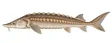
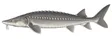
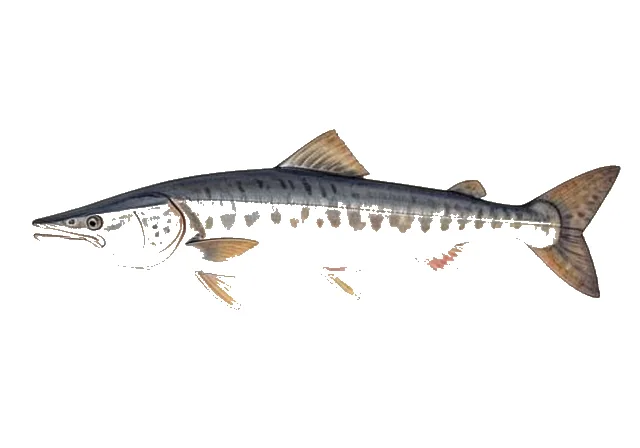
Atlantic Sturgeon field guide illustration

About Atlantic Sturgeon

The Atlantic sturgeon (Acipenser oxyrinchus) is a large species of sturgeon native to both sides of the Atlantic Ocean, and associated river basins. It is a member of the family Acipenseridae, and, along with other sturgeon, it is sometimes considered a living fossil. The main range of the Atlantic sturgeon is in eastern North America, extending from New Brunswick, Canada, to the eastern coast of Florida, United States. A highly endangered disjunct population occurs in the Baltic region of Europe (today only through a reintroduction project).

The Atlantic sturgeon was in great abundance when the first European settlers came to North America, but has since declined due to overfishing, water pollution, and habitat impediments such as dams. It is considered threatened, endangered, and even locally extirpated in many of its original habitats. The fish can reach 60 years of age, 15 ft (4.6 m) in length and over 800 lb (360 kg) in weight.

Taxonomy

Alongside its relative the European sea sturgeon (A. sturio), the Atlantic sturgeon is one of the most basal members of the sturgeon lineage. The Gulf sturgeon (A. desotoi), endemic to Gulf of Mexico -draining rivers in the southeastern United States, was formerly considered a subspecies of the Atlantic sturgeon. However, phylogenetic studies suggest that both have sufficient genetic divergence to qualify as distinct species. The two species appear to have diverged during the Pleistocene.

Baltic population

The now nearly extinct sturgeon population in the Baltic Sea area belongs to the Atlantic sturgeon A. oxyrinchus rather than to the European species A. sturio as had been thought. A. oxyrinchus migrated to the Baltic about 1300 years ago and displaced the native A. sturio.

The last known specimen of the Atlantic sturgeon in the Baltic region was caught in 1996 near Muhumaa in Estonia. It was 2.9 m (9.5 ft) long, weighed 136 kg (300 lb), and was estimated to be about 50 years old.

Physical appearance

Rather than having true scales, the Atlantic sturgeon has five rows of bony plates known as scutes. Specimens weighing over 800 lb and nearly 15 ft in length have been recorded, but they typically grow to be 6–8 ft (1.8–2.4 m) and no more than 300 lb (140 kg). Its coloration ranges from bluish-black and olive green on its back to white on its underside. It has a longer snout than other sturgeons and has four barbels at the side of its mouth.

Behavior

Sturgeon are an anadromous species that live solitarily or in small groups. They migrate upriver in the spring to spawn. Sturgeons tend to inhabit the shallow waters of coastal shelves, coastal and estuarine areas on soft bottom in the sea, and can live down to a depth of 160 ft (49 m). Adults are migratory while at sea and will make long migrations to coastal areas, while juveniles will stay in fresh or brackish water until they are between two and five years of age. However, many larvae and juveniles do start to migrate and disperse small distances from their spawning sites.

Sturgeons are most generally known for feeding on crustaceans, worms, and molluscs.

Sturgeons may have dominance hierarchies with large fish being dominant when competing for limited foraging space.

Life cycle

Atlantic sturgeon under six years of age stay in the brackish water where they were born before moving into the ocean. They may be 3–5 ft (0.91–1.52 m) long at this stage. In areas where shortnose sturgeon are also present, the adults of that species can be, and historically were for centuries, confused with immature Atlantic sturgeon. When mature, they travel upstream to spawn. The females may lay 800,000 to 3.75 million eggs in a single year, doing so every two to six years. After laying their eggs, females travel back downstream, but males may remain upstream after spawning until forced to return downstream by the increasingly cold water. They may even return to the ocean, where they stay near the coastline.

The species is also known for its occasional 'leaping' behavior, during which the fish will emerge completely out of the water in a forceful motion that can be hazardous to anything unlucky enough to be struck. The exact reason why sturgeon leap remains unknown, although some scholars believe leaping is a form of group communication.

Threats

Sturgeons are widely distributed along the Atlantic coast of the United States. Their wide distribution and tendency to disperse has led to numerous subpopulations of sturgeon. This species is recorded to be Vulnerable and at risk of becoming an endangered species due to dam construction, dredging, dredge spoil disposal, groundwater extraction, irrigation, flow alterations, and other surface water withdrawals.

Harvest

Originally, the Atlantic sturgeon was considered a worthless fish. Its rough skin would often rip nets, keeping fishermen from catching more profitable fish. Sturgeon were one of the types of fish harvested at the first North American commercial fishery, and were the first cash "crop" harvested in Jamestown, Virginia. Other fisheries along the Atlantic coast harvested them for use as food, a leather material used in clothing and bookbinding, and isinglass, a gelatinous substance used in clarifying jellies, glues, wines and beer. However, the primary reason for catching sturgeon was the high-quality caviar that could be made cheaply from its eggs, called black gold by watermen. In the late 19th century, seven million pounds of sturgeon meat were exported from the US per year. Within years, however, that amount dropped to 22,000 pounds. The number later rose to about 200,000 pounds a year in the 1950s.

Susceptibility to anthropogenic disturbances

There are many wide-ranging subspecies along the Atlantic Coast of North America. Identification of distinct population segments (DPS) is problematic because of sturgeons' ability to disperse so widely. However, it is possible to do some characterization of genetic differentiation and estimate gene flow. This method has been used to determine possibility for listing under the U.S. Endangered Species Act.

The sturgeon's characteristics and life history make it susceptible to anthropogenic disturbances and make population restoration particularly difficult. They have late sexual maturity, only moderate fecundity, and spawn at low frequencies. Females spawn once every three to five years, and males every one to five years. This is due to their ability to live for an extremely long time (various sub-species can have a lifespan ranging from ten years to sixty years).

The population of Atlantic sturgeons has decreased dramatically due to overharvesting. The late 19th century saw a surge in demand for caviar, which led to overfishing of the Atlantic sturgeon. Today, only 22 out of its 38 original spawning rivers still have viable populations of the species. They are particularly susceptible to bycatch mortality due to the many fisheries that exist within their natal estuaries. Their habitat range, which usually includes coastal spawning sites and coastal migrations, makes sturgeon well within contact of coastal fisheries.

Effects of hypoxia

Hypoxia combined with high water temperatures in the summer has been shown to be consistent with decreased survival rates of young of the year sturgeon in Chesapeake Bay.

Hypoxia is defined as low ambient oxygen levels, which may be very harmful to organisms living in the hypoxic body of water. Often, lower regions of the water column will be more hypoxic than upper levels, closer to the surface. When surface access is denied, the situation is lethal to sturgeon. Increased incidences of summertime hypoxia have led, in part, to degradation of many sturgeon nursery habitats in the United States.

Conservation status

In February 2012, the Atlantic sturgeon was listed by the National Oceanic and Atmospheric Administration Fisheries Service under the Endangered Species Act (ESA). Four distinct population segments (DPSs) were listed as endangered (New York Bight, Chesapeake Bay, Carolina, and South Atlantic) while one DPS was listed as threatened (Gulf of Maine). There are concerns that the construction of the bridge to replace the Tappan Zee connecting Rockland County to Westchester County in New York, in the Hudson River, may impact the sturgeon's ecological stability in the region.

The American Fisheries Society considers the fish as threatened throughout its entire range, although it is believed to no longer inhabit the full range it once did. In the Chesapeake watershed, the James River in Virginia is one of the last confirmed holdouts for that region's population. In May 2007, a survey captured 175 sturgeon in the river, with 15 specimens exceeding 5 ft (1.5 m). A bounty-based survey of live Atlantic sturgeon in Maryland's portion of the bay found a high number of captures reported in 2005–06.

In 2016, the National Marine Fisheries Service considered designating sixteen rivers as endangered habitat, which would require more attention to be given to uses of the rivers that affect the fish. Then in 2018, NMFS actually mapped a total of thirty-one critical river habitats along the United States' Atlantic shores.

Populations have declined dramatically over the last centuries, and even became extinct in Baltic range states in the later 20th century. Channelisation and barriers were part of the causes for declines affecting migration, along with pollution. Since 1996 Baltic sturgeon recovery has been attempted, with American donor populations used due to genetic similarities. Re-introduction with focus on returning these sturgeon to their native spawning grounds. NatureServe considers the species Vulnerable. A German-Polish project was underway in 2009 to reintroduce the sturgeon into the Baltic by releasing specimens caught in the Canadian Saint John River into the Oder, a river at the border between Germany and Poland where the species once spawned. The project expanded in 2013 to include Estonia, where one-year-old juveniles were released into the Narva River. The Baltic sturgeon population is considered Critically Endangered by the IUCN.

In 2012, the Atlantic sturgeon received protection under the Endangered Species Act.

Conservation designation

The American Fisheries Society considers it endangered in all stream systems except conservation-dependent in the Hudson, Delaware, and Altamaha Rivers.

The Atlantic sturgeon of the Delaware River are listed under the ESA as part of the New York Bight distinct population segment (DPS), which includes all Atlantic sturgeon that spawn in watersheds draining to coastal waters from Chatham, Massachusetts, to the Delaware-Maryland border on Fenwick Island, the Chesapeake Bay DPS, the Carolina DPS and the South Atlantic DPS, while the Gulf of Maine DPS is listed threatened. Canadian-origin populations are not currently listed under the U.S. ESA. NMFS believes fewer than 300 spawning adults are in the Delaware River population; just over 100 years ago the estimated population was 180,000 spawning adult females.

Management

Atlantic sturgeon are now a threatened species. Management of the species is largely based on the restriction of fishing of the species. This helps limit fishing mortalities of sturgeon to bycatch.

Article text: Wikipedia contributors, Atlantic sturgeon (source revision). Licensed under CC BY-SA 4.0. Retrieved 2026-10-11.
Diet and feeding

The FishTraits compilation records these diet categories for this species: invertebrates or larval fish; larger animal prey (a source category covering fish, crayfish, crabs, or frogs). These are broad categories, not a claim that every individual consumes every example in a category.

Reported feeding positions include bottom feeding. The compilation combines published observations; diets can vary with age, locality, and available food.

Habitat preferences

Reported habitat associations include medium to large rivers, streams and small rivers.

The source records associations with cobble, boulders, bedrock. An association indicates reported use, rather than an exclusive requirement.

The species is classified as tolerant of a broad range of salinities. This flag does not specify a salinity range for aquarium care.

Reproduction and parental care

The compilation reports a representative maturity age of 18 years. Its maturity field summarizes mean, median, or modal estimates, usually for females; male estimates can be used when female data are unavailable. It is not a fixed age at which every fish first breeds.

Recorded spawning months are Mar, Apr for the source’s reporting region (NC). This is a regional calendar, not a range-wide schedule.

The reproductive-guild classification includes spawning on open substrates without guarding the brood.

Size and recorded longevity

FishTraits reports a maximum total length of 267 centimetres. Some entries use an estimated asymptotic length; this value should not be treated as a certified record catch.

Recorded longevity in the compilation is 60 years. Wild observations were preferred, but captive records were accepted where wild records were unavailable, and unspecified records were assumed wild. The value is not a guaranteed wild lifespan or an aquarium life expectancy.

NOAA Fisheries

Life history and status

ESA Endangered
Carolina DPS; Chesapeake Bay DPS; New York Bight DPS; South Atlantic DPS
ESA Threatened
Gulf of Maine DPS
CITES Appendix II
Throughout Its Range
Length
Up to 14 feet
Weight
Up to 800 pounds
Lifespan
Up to 60 years
NOAA management region
New England/Mid-Atlantic, Southeast

About the species

Atlantic sturgeon live in rivers and coastal waters from Canada to Florida. Hatched in the freshwater of rivers, Atlantic sturgeon transition to the marine environment, and return to their birthplace to spawn, or lay eggs, when they reach adulthood.

The Atlantic sturgeon has five rows of bony plates known as scutes that run along its body and a snout with four slender, soft tissue projections called barbels in front of its mouth. In addition, the heterocercal tail is like a shark’s where one side, or lobe, is larger than the other. All of these features give the fish its unique look.

Atlantic sturgeon are slow-growing and late-maturing, and have been recorded to reach up to 14 feet in length and up to 60 years of age.

Indigenous tribes have harvested Atlantic and shortnose sturgeon for their meat and eggs (roe) beginning some 4,000 years ago, and sturgeon are credited as the primary food source that saved the Jamestown settlers in 1607. Atlantic sturgeon were once found in great abundance, but their populations have declined greatly due to overfishing and habitat loss. Atlantic sturgeon were prized for their eggs, which were valued as high-quality caviar. During the late 1800s, people flocked to the eastern United States in search of caviar riches from the sturgeon fishery, known as the “Black Gold Rush.” By the beginning of the 1900s, sturgeon populations had declined drastically and continued to decline until the coastwide moratorium . However, historical landings records generally failed to differentiate between Atlantic sturgeon and the smaller shortnose sturgeon, making it difficult to determine historical trends in abundance for populations of either species.

Today, all five U.S. Atlantic sturgeon distinct population segments are listed as endangered or threatened under the Endangered Species Act . The populations in Canada are not protected species under the U.S. Endangered Species Act. The primary threats currently facing Atlantic sturgeon are entanglement in fishing gear, habitat degradation, habitat impediments, such as dams and other barriers, vessel strikes, and changing environmental conditions.

NOAA Fisheries and our partners are dedicated to conserving and rebuilding Atlantic sturgeon populations along the East Coast. We use a variety of innovative techniques to study these endangered fish, monitor existing and emerging threats, and to fill critical data gaps. Working closely with our partners, these efforts bring us closer to our goal of recovering Atlantic sturgeon populations.

Population status

The historical and current range of Atlantic sturgeon includes major estuaries, river systems, and marine waters from Canada to Florida. While still found throughout their historical range, some spawning populations have likely been extirpated and the remainder are small and face on-going threats.

Learn more about the population estimates for Atlantic sturgeon

Atlantic sturgeon were listed under the ESA in 2012 as five distinct population segments. A distinct population segment is the smallest division of a species permitted to be protected under the ESA. Atlantic sturgeon that hatch out in Gulf of Maine rivers are listed as threatened, and those that hatch out in other U.S. rivers are listed as endangered. Atlantic sturgeon that hatch out in Canadian rivers are not listed as protected species under the ESA but are protected in Canadian waters under Canada’s Species At Risk Act.

Appearance

  • Atlantic sturgeon can grow to approximately 14 feet long and can weigh up to 800 pounds. They are bluish-black or olive brown dorsally (on their back) with paler sides and a white belly. They have five major rows of dermal "scutes,” or bony plates, along the length of their body.
  • Atlantic sturgeon are similar in appearance to shortnose sturgeon but can be distinguished by their larger size, smaller mouth, different snout shape, and tail scute pattern.

Biology

  • An Atlantic sturgeon typically spawns in the same river in which it hatched. Water temperature plays a role in the timing of spawning. In rivers from Georgia to the Chesapeake Bay, scientists have confirmed that adult sturgeon spawn during the late summer and fall as water temperatures decline. In some of these rivers, a separate Atlantic sturgeon population spawns in the spring before water temperatures rise for the summer. In rivers from Delaware to Canada, adults spawn in the spring and early summer. There is no evidence of late summer or early fall spawning in these more northern rivers.
  • After spawning, males in northern rivers may remain in the river or lower estuary until the fall; females typically exit the rivers within 4 to 6 weeks after spawning. In southern rivers, spawning behavior tends to be specific to a given river and season. However, the general pattern for spring spawning migrations is for males to begin moving upstream to the spawning sites in February to March as waters begin to warm. Males may remain near the spawning grounds for several days to weeks. Females tend to follow days or weeks later. Fall spawning males tend to begin spawning runs in August to September as water temperatures decline with females following thereafter. In both fall and spring spawning seasons, once spawning is complete both sexes tend to leave the spawning grounds quickly, with many animals leaving the river system completely.
  • Upon hatching, larvae hide along the bottom and drift downstream until they reach brackish waters where they may reside for 1 to 5 years before moving into nearshore coastal waters. Juvenile fish can leave their natal rivers as early as 1 year of age. Tagging data indicate that these immature Atlantic sturgeon travel widely once they leave their birth rivers.So, juvenile aggregations within a river may be composed of two or more different natal populations of fish.
  • Atlantic sturgeon are bottom feeders. They typically consume invertebrates, such as crustaceans, worms, and mollusks, and bottom-dwelling fish, such as sand lance.

Lifespan and reproduction

  • Atlantic sturgeon growth and lifespan is correlated with water temperature. In general, the colder the water in which they live, the slower their growth, the later their age to maturity, and the longer their lifespan. For example, Atlantic sturgeon from the Saint Lawrence River population mature at 22 to 34 years old and they live up to 60 years. Atlantic sturgeon from the South Carolina populations mature at 5 to 19 years of age and likely live only 25 to 30 years.
  • Atlantic sturgeon spawning intervals range from 1 to 5 years for males and 2 to 5 years for females, with males returning almost every year and females usually returning every other year or every third year. Female egg production correlates with age and body size, and ranges from 400,000 to 2 million eggs. Atlantic sturgeon take approximately 3 to 10 times longer than other bony fish species to reach 50 percent of their maximum lifetime egg production. In the Hudson River, females reach 50 percent of their maximum lifetime egg production at approximately 29 years. Fish from more southern rivers reach this production metric at an earlier age and fish from Maine and Canada reach it at a later age.

Where they live

  • Historically, Atlantic sturgeon ranged along the Canadian and U.S. Atlantic Coast from Labrador to Florida. The abundance of natal populations is much less than historical levels and some populations have likely been extirpated. Those that remain have the same basic traits of all anadromous fish. Atlantic sturgeon eggs are spawned in freshwater of a river, upon hatching the fish live in the river for at least several months before migrating to the sea and, upon reaching adulthood, back again to the same freshwater to spawn. Tagging data indicate that immature Atlantic sturgeon travel widely up and down the East Coast and as far as Iceland when they are at sea.

Threats

  • The most significant threats to Atlantic sturgeon are unintended catch (bycatch) in some commercial fisheries, dams that block access to spawning areas, poor water quality (which harms development of sturgeon offspring), dredging of spawning areas, water withdrawals from rivers, vessel strikes , and changing environmental conditions.
  • Fisheries Interactions and Bycatch
  • Bycatch of Atlantic sturgeon can occur in multiple fisheries including those that use gillnets, pound nets, or trawls. The likelihood of bycatch is influenced by environmental factors, the abundance of Atlantic sturgeon in the fishing area, and the gear characteristics (e.g., mesh size). The likelihood of sturgeon survival in the gear is influenced by factors such as the water temperature and the length of time that the sturgeon is caught in the gear with survivals more likely in cooler waters. Fisheries conducted within rivers where Atlantic sturgeon spawn may intercept Atlantic sturgeon of any life stage, while fisheries conducted in the nearshore and ocean waters are more likely to capture older juveniles and adults.
  • Learn more about fishing gear and risks to protected species
  • Habitat Degradation
  • Atlantic sturgeon habitat can be disrupted, degraded, or lost because of various human activities, such as dredging, damming, and withdrawing water. Groundwater pumping and dredging has resulted in saltwater intrusion, and industrialization and development has impacted sediments and water quality through the introduction of nutrients and other contaminants. Sturgeon need hard bottom substrates in freshwater reaches for successful spawning, so any activity that affects those features directly (e.g., dredging) or indirectly (e.g., sedimentation or saltwater intrusion) would affect Atlantic sturgeon habitat. All life stages of Atlantic sturgeon also require sufficient water quantities and qualities, which are often impacted by the activities above.
  • Habitat Impediments
  • Locks and dams on the Cape Fear River, North Carolina; the Santee-Cooper rivers, South Carolina; Savannah River, South Carolina/Georgia impede access to upstream spawning habitat. Dam removal projects on the Penobscot River, Maine and Rappahannock River, Virginia, have increased accessibility to upstream habitats.
  • Vessel Strikes
  • Atlantic sturgeon can be struck by boats or by the blades of boats’ propellers. They are struck and killed by large commercial vessels as well as smaller vessels such as recreational vessels throughout their range. The risk of injury and mortality can be high in areas with high ship traffic, including the Hudson, Delaware, and James rivers. Information is emerging that suggests vessel strikes are also a threat to Atlantic sturgeon in the Savannah, Cooper, and Cape Fear rivers. We do not know how many sturgeon are struck by vessels or how many sturgeon are struck and survive their injuries.
  • Changing Environmental Conditions
  • A changing environment poses several risks to the Atlantic sturgeon populations, including saltwater intrusion into rivers where the development of Atlantic sturgeon larvae relies upon very low salinity waters. Changes in precipitation and water temperature may also affect riverine habitat and alter spawning cues. For example, reduced river flows can increase the concentration of nutrients and toxic chemicals due to a reduced flushing rate and decrease dissolved oxygen concentrations in surface waters, particularly when combined with warmer water temperatures. Both of these can reduce survival of juveniles. A warmer, wetter climate could ameliorate poor water quality conditions in places where human-caused concentrations of nutrients and pollutants currently degrade water quality. However, significantly higher river flows could impede spawning by affecting spawning cues or making traversing up river too difficult to attempt. A warming ocean can also alter the growth rates of Atlantic sturgeon which in turn influence age to maturity and lifespan. Given the Atlantic sturgeon’s strong affinity to return to its natal river to spawn, a population will likely continue to return to its spawning river even when a changing environment results in poor offspring survival in that river.
  • Learn more about how to report an injured or dead sturgeon

Management

Appendix II of the Convention on International Trade in Endangered Species of Wild Fauna and Flora (CITES)

Recovery

Carolina and South Atlantic DPSs: Andrew Herndon

Gulf of Maine, New York Bight, and Chesapeake Bay DPSs: Lynn Lankshear

Conservation

Restoring Habitat and Fish Passage

Sturgeon and other migrating fish, such as salmon, shad, and alewives, need access to freshwater habitat for spawning and rearing. In the Southeast, barriers have had serious impacts on Atlantic sturgeon populations where the fish cannot pass the dams that block access to the most suitable, historic, spawning habitat. In those rivers, Atlantic sturgeon must spawn in less suitable habitat below a dam which can reduce the survival of eggs and larvae. The control of water in a river system as a result of dam operations can also have negative impacts on habitat used for spawning or foraging that is downriver of a dam. Providing ways for sturgeon to move past a dam in both directions, improving water flow from dams, and removing obsolete dams can greatly improve Atlantic sturgeon access to and use of quality habitat. NOAA Fisheries works with conservation organizations, energy companies, states, tribes, and citizens to evaluate barriers and improve fish passage, and to improve the water quality and quantity downriver of a barrier.

Learn more about improving fish passage

The Penobscot River—New England’s second largest river—has been designated a NOAA Habitat Focus Area, as human activities have caused adverse impacts to the watershed. Recovery of endangered and threatened Atlantic sturgeon, shortnose sturgeon, and Atlantic salmon are a key objective of the ongoing habitat improvement efforts.

Learn more about the Penobscot River Habitat Focus Area

Providing Captive Breeding Programs

Some Atlantic sturgeon are bred and held in captivity at research facilities, in accordance with specific permits. These captive-bred animals can provide important insight into the physical, chemical, and biological parameters necessary for the optimal growth, survival, and reproduction of Atlantic sturgeon in the wild. Some captive-bred animals are also used in permanent educational displays that promote public awareness of the plight of the species.

Educating the Public

Everyone can contribute to recovering this amazing species. Our biologists work with the public, conservation groups, and scientists to share information about the movements, behavior, and threats to Atlantic and shortnose sturgeons along the East Coast.

Learn more about the SCUTES program

Cooperating Internationally

The Convention on International Trade in Endangered Species of Wild Fauna and Flora (CITES) protects Atlantic sturgeon and other sturgeons by regulating international trade in listed species of plants and animals.

Science

St. Lawrence River - between 28 and 44 individuals

St. John River - between 75 and 104 individuals

Kennebec River - between 52 and 89 individuals

Connecticut River - between 2 and 3 individuals

Hudson River - between 138 and 176 individuals

Delaware River - between 34 and 46 individuals

James River - between 29 and 36 individuals

York River - between 6 and 12 individuals

Albemarle Sound (likely Roanoke River population) - between 16 and 21 individuals

Edisto River - between 52 and 69 individuals

Savannah River - between 99 and 288 individuals

Ogeechee River - between 23 and 29 individuals

Altamaha River - between 74 and 400 individuals

Satilla River - between 18 and 23 individuals

St. Marys River - between 1 and 2 individuals

Actions

Range

Where it lives

Share of 605 GBIF observation records with a state location, across 19 states.
0%
22%
Share of 605 GBIF observation records with a state location, across 19 states.

Habitat

Water and movement

Water
WoRMS records this species in fresh water, brackish water and the sea.
Migration
Migratory
Pattern
  • Diadromous — moves between fresh water and the sea
  • Anadromous — spawns in fresh water, grows at sea

Classification

Taxonomy

Kingdom
Animalia
Phylum
Chordata
Superclass
Actinopterygii
Class
Chondrostei
Order
Acipenseriformes
Genus
Acipenser
Species
Acipenser oxyrinchus
ITIS TSN
553269
WoRMS AphiaID
151802
GBIF key
4287132
Outside the US
ITIS also files it in Canada.

Common questions about Atlantic Sturgeon

What is the scientific name of Atlantic Sturgeon?
The scientific name is Acipenser oxyrinchus, in the family Acipenseridae. Classification follows ITIS.
Does Atlantic Sturgeon live in fresh water or salt water?
WoRMS records this species in fresh water, brackish water and the sea.
Where has Atlantic Sturgeon been recorded in the United States?
GBIF has observations in 19 states, with the most records in Florida, North Carolina, New Jersey. The map shows observation records, which do not establish the complete natural range.
How long does Atlantic Sturgeon live?
NOAA Fisheries lists its lifespan as Up to 60 years.
How big does Atlantic Sturgeon get?
NOAA Fisheries lists its length as Up to 14 feet and its weight as Up to 800 pounds.

Closest relatives

Other Acipenser species

Same family

More Acipenseridae