Key Anchovy

Anchoa cayorum

Engraulidae · saltwater water fish

1 minute read · Species guide

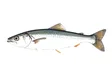
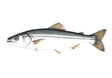
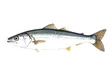
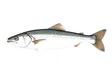
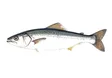
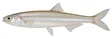
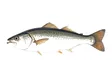
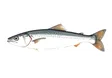
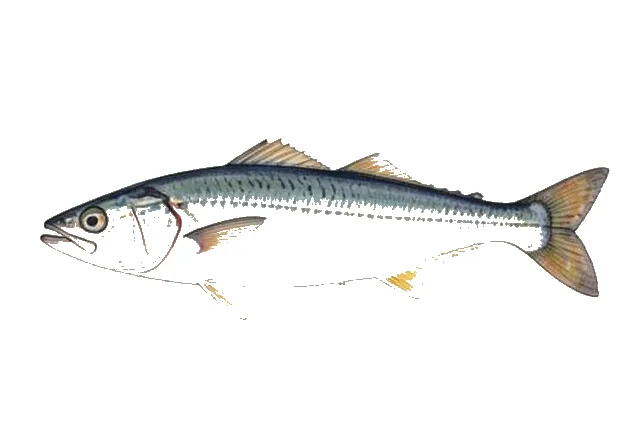
Key Anchovy field guide illustration

About Key Anchovy

Key anchovy is a schooling western Atlantic fish associated with clear oceanic water. Its distribution includes the Florida Keys, Bahamas, Cuba, Antilles and Los Roques off Venezuela. FishBase excludes the Gulf of Mexico from its range.

Identification

The slender, somewhat compressed body carries a silver stripe slightly narrower than the eye. The long, pointed upper jaw nearly reaches the gill opening. A pale area remains on the underside of the snout where dark pigment does not reach the front of the upper jaw.

Sources: Anchoa cayorum species summary

Range and spawning

It spawns in schools. Some records toward the Yucatán region and the mainland Caribbean coast are less certain, and a Belize river record is explicitly dependent on correct identification. Such qualifications are useful because similar anchovies can easily be confused in regional lists.

Sources: Anchoa cayorum species summary
Guide sources

Research reviewed 2026-10-19.

Range

Where it lives

Share of 33 GBIF observation records with a state location, across 3 states.
0%
57.6%
Share of 33 GBIF observation records with a state location, across 3 states.

Habitat

Water and movement

Water
WoRMS records this species in the sea.

Classification

Taxonomy

Kingdom
Animalia
Phylum
Chordata
Superclass
Actinopterygii
Class
Teleostei
Order
Clupeiformes
Genus
Anchoa
Species
Anchoa cayorum
ITIS TSN
161846
WoRMS AphiaID
275508
GBIF key
2413895
Outside the US
ITIS also files it in Caribbean Territories, Mexico.

Common questions about Key Anchovy

What is the scientific name of Key Anchovy?
The scientific name is Anchoa cayorum, in the family Engraulidae. Classification follows ITIS.
Does Key Anchovy live in fresh water or salt water?
WoRMS records this species in the sea.
Where has Key Anchovy been recorded in the United States?
GBIF has observations in 3 states, with the most records in Florida, Virginia, Maryland. The map shows observation records, which do not establish the complete natural range.

Closest relatives

Other Anchoa species

Same family

More Engraulidae