Additional field notes
Broad-striped anchovy use sheltered coastal water for schooling and reproduction.
Sources: Anchoa hepsetus species summary
Salinity and spawning
FishBase describes dense schools close to shore and an ability to tolerate conditions ranging from nearly fresh water to water saltier than normal seawater. This tolerance helps explain why a coastal fish can occur well inside estuarine settings. The summary gives a broad recorded depth range of 1–70 metres, although shallow schools are particularly conspicuous.
Spawning is reported from harbors, estuaries, and sounds. At Beaufort, North Carolina, the documented breeding season runs from April through July; that local observation should not be read as a fixed calendar for the entire Atlantic range. The eggs are transparent and elliptical, with no oil globule.
Sources: Anchoa hepsetus species summary
Features beyond the stripe
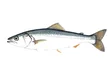
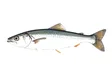
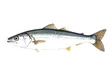
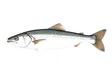
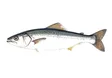
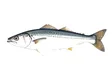
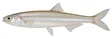
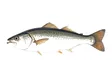
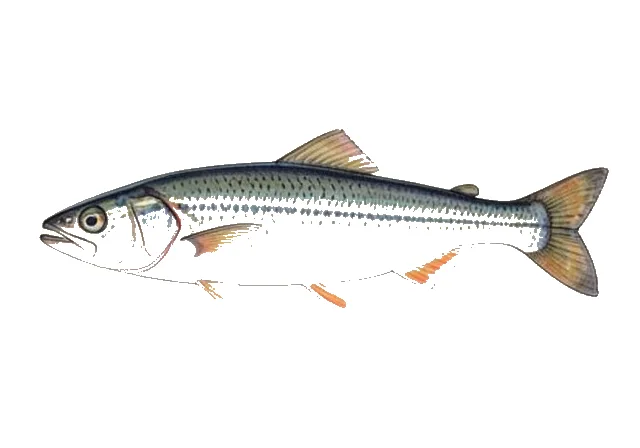
The upper jaw extends well back toward the gill opening, an important detail that is easier to assess in a close side view than in a swimming school. FishBase places the beginning of the anal fin approximately beneath the middle of the dorsal-fin base. The pointed snout, long jaw, and fin positions provide additional characters to compare when several small silvery anchovies occur together.
FishBase also describes a greenish back with yellowish color on the head, and dark pigment outlining the dorsal scales above the silver flank stripe.
Sources: Anchoa hepsetus species summary
Article text: Wikipedia contributors, Anchoa hepsetus (source revision). Licensed under CC BY-SA 4.0. Retrieved 2026-10-11.