Common names

Types of drum

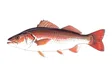
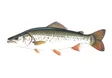
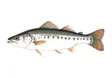
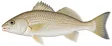
5 species carry drum in an English common name. They sit in 1 family, so the group is a name, not a scientific rank.

About drum

Sciaenidae is a family of ray-finned fishes belonging to the order Acanthuriformes. They are commonly called drums or croakers in reference to the repetitive throbbing or drumming sounds they make. The family consists of about 293 to 298 species in about 66 or 67 genera.

Taxonomy

Sciaenidae was first proposed as a family in 1829 by the French zoologist Georges Cuvier. The 5th edition of Fishes of the World classifies the family in the suborder Sciaenoidei, alongside the rover family Emmelichthyidae, in the order Acanthuriformes. Other authorities classify the Sciaenidae and the Emmelichthyidae as incertae sedis within the series Eupercaria. The Catalog of Fishes retains this family within the Acanthuriformes but does not recognise the suborder Sciaenoidei.

The 5th edition of Fishes of the World, Fishbase and Catalog of Fishes do not recognise subfamilies within the Sciaenidae but many workers on these fishes do recognise subfamilies and tribes within the family. For example, in 1989 Kunio Sasaki erected a number of subfamilies and tribes.

Genera

The following genera are classified within the family Sciaenidae:

Fossil genera

The fossil genus Ioscion may be either a drumfish or belong to its own family more closely related to carangids.

The former Paratethys Sea appears to have been a hotspot of endemism for many of these extinct sciaenid taxa, as many articulated remains and otoliths are known from this region.

Etymology

Sciaenidae takes its name from its type genus Sciaena which is derived from the Greek skiaina, which was used to refer to marine perch -like fishes.

Characteristics

A sciaenid has a long dorsal fin reaching nearly to the tail, and a notch between the rays and spines of the dorsal, although the two parts are actually separate. Drums are somberly coloured, usually in shades of brown, with a lateral line on each side that extends to the tip of the caudal fin. The anal fin usually has two spines, while the dorsal fins are deeply notched or separate. Most species have a rounded or pointed caudal fin. The mouth is set low and is usually inferior. Their croaking mechanism involves the beating of abdominal muscles against the swim bladder.

Sciaenids are found worldwide, in both fresh and salt water, and are typically benthic carnivores, feeding on invertebrates and smaller fish. They are small to medium-sized, bottom-dwelling fishes living primarily in estuaries, bays, and muddy river banks. Most of these fish types avoid clear waters, such as coral reefs and oceanic islands, with a few notable exceptions (e.g. reef croaker, high-hat, and spotted drum). They live in warm-temperate and tropical waters and are best represented in major rivers in Southeast Asia, northeast South America, the Gulf of Mexico, and the Gulf of California.

In the United States most fishers consider freshwater drum to be rough fish not suitable for eating, similar to carp, gar, and buffalo fish, although there are a number of people that enjoy fishing for these species and eating them, despite their limitations.

Fisheries

They are excellent food and sport fish, and are commonly caught by surf and pier fishers. Some are important commercial fishery species, notably small yellow croaker with reported landings of 218,000–407,000 tonnes in 2000–2009; according to FAO fishery statistics, it was the 25th most important fishery species worldwide. However, a large proportion of the catch is not reported at species level; in the FAO fishery statistics, the category "Croakers, drums, not elsewhere included", is the largest one within sciaenids, with annual landings of 431,000–780,000 tonnes in 2000–2009, most of which were reported from the western Indian Ocean (FAO fishing area 51) and northwest Pacific (FAO fishing area 61). The future of croakers, like many other fish species in the United States and around the world is uncertain because overfishing continues to be a major threat. The population has decreased significantly which will affect their ability reproduce. In United States Croakers are managed by the federal and state governments to ensure that they're harvested sustainably.

Croaking mechanism

A notable trait of sciaenids is the ability to produce a "croaking" sound. However, the pitch and use of croaking varies from species to species. The croaking ability is a distinguishing characteristic of sciaenids. The croaking mechanism is used by males as a mating call in some species.

To produce the croaking sound, special muscles vibrate against the swim bladder. These muscles are called sonic muscle fibres, and run horizontally along the fish's body on both sides around the swim bladder, connected to a central tendon that surrounds the swim bladder ventrally. These sonic muscle fibres are repeatedly contracted against the swim bladder to produce the croaking sound that gives drum and croaker their common name, effectively using the swim bladder as a resonating chamber. The sciaenids' large swim bladder is more expansive and branched than other species, which aids in the croaking. In some species the sonic muscle fibres are only present in males. These muscles strengthen during the mating season and are allowed to atrophy the rest of the time, deactivating the croaking mechanism. In other species, most notably the Atlantic croaker, the croaking mechanism is present in both sexes and remains active year-round. These species are thought to use croaking for communication, such as announcing hazards and location when in turbid water.

Croaking in communication

In some species, croaking is used for communication aside from attracting mates. For those species that have year-round croaking ability, the croaks may serve as a low-aggression warning during group feeding, as well as to communicate location in cloudy water. In those species that lack the ability to croak year-round, croaking is usually restricted to males for attracting mates. A disadvantage to the croaking ability is that it allows bottlenose dolphin to easily locate large groups of croaker and drum as they broadcast their position, indicating large amounts of food for the dolphins.
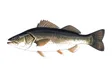
Drum species in focus

These species profiles show how members of the group differ. Their biology describes each named species, rather than every fish in the group.

Black Drum

The black drum (Pogonias cromis), also known as the drum or drummer, is a species of marine ray-finned fish belonging to the family Sciaenidae, the drums and croakers. It is found in the western Atlantic Ocean off the eastern coast of North and South America. Though most specimens are generally found in the 5-30 lb (2–14 kg) range, the largest black drum was just over 113 lb (51 kg), while in Argentina in 1971, a 48 kg black drum was captured. They are often black and/or gray in color with juvenile fish having distinctive dark stripes over a gray body. Their teeth are rounded and they have powerful jaws capable of crushing oysters and other shellfish. Black drum are capable of producing tones between 100 Hz and 500 Hz when performing mating calls.

Black drum over 15 pounds (6.8 kg) should be released, as their flesh is very coarse and tough.

Taxonomy

The black drum was first formally described as Labrus cromis by Carl Linnaeus in 1766 with one of its type localities given as Carolina. In 1801, the Bernard Germain de Lacépède described a new species, Pogonias fasciatus, without giving a type locality, but it is thought to be Charleston, South Carolina, and placed it a new monospecific genus, Pogonias. This taxon is a junior synonym of Linnaeus's Labrus cromis. This species was thought to have an antitropical distribution, but in 2019, the South American population was recognized as a valid species Pogonias courbina, originally described as Pogonathus courbina by Lacépède in 1803. The genus Pogonias has been placed in the subfamily Sciaeninae by some workers, but the 5th edition of Fishes of the World does not recognise subfamilies within the Sciaenidae, which it places in the order Acanthuriformes.

Habits, distribution, and characteristics

The black drum is usually found in or near brackish waters. Larger, older fish are more commonly found in the saltier areas of an estuary (closer to the ocean) near oyster beds or other plentiful food sources. Juvenile fish have four or five bold, vertical, black bars on a light background and can be mistaken for sheepshead at first glance, but are distinguished on closer inspection because sheepshead have teeth and black drum have chin barbels. These stripes usually fade to dull gray as the fish grow from 12 to 24 inches (30 to 61 cm) in length. Juvenile fish are more commonly found in less salty areas and relate more strongly to structure and cover. In the western Atlantic, black drum are found from Nova Scotia to Florida, the Gulf of Mexico, the Antilles (uncommon), and the southern Caribbean coast. They are common between the Delaware Bay and Florida coasts, and most abundant along the Texas coast. After reaching maturity by the end of their second year, black drum spawn in and around estuarine waters. In Texas, most spawning takes place in February and March.

Feeding

Black drum larvae eat mostly zooplankton, and young black drum (less than 20 cm long) eat worms and small fish. Black drum are mostly bottom feeders, with adults eating mostly mollusks and crabs. In shallow water, they have been reported to feed with their heads down so that their tails show above the water surface. Their sensitive chin barbels help locate food and strong pharyngeal teeth crush the shells of these preferred foods. In captivity, large drum reportedly were able to eat more than two commercial-sized oysters per kilogram of body weight each day. This translates into the potential for a 20 kg drum (about 45 lb) to eat 40 oysters a day. Fishing advice for black drum along the east and southeast coasts of the United States often includes the suggestion to locate an oyster bed. This preference, though, has also caused black drum to be a nuisance for those who raise oysters commercially. A group of black drum can do great damage to an oyster bed in a single day.

Read the full species guide.

Red Drum

The red drum (Sciaenops ocellatus), also known as redfish, channel bass, puppy drum, spottail bass, or simply red, is a game fish found in the Atlantic Ocean from Massachusetts to Florida and in the Gulf of Mexico from Florida to northern Mexico. It is the only species in the genus Sciaenops.

The red drum is related to the black drum (Pogonias cromis), and the two species are often found near to each other; they can interbreed and form a robust hybrid, and younger fish are often indistinguishable in flavor.

Characteristics

Red drum are a dark red color on the back, which fades into white on the belly. The red drum has a characteristic eyespot near the tail and is somewhat streamlined. Three-year-old red drum typically weigh 6 to 8 pounds (2.7–3.6 kg). The largest red drum on record weighed just over 94 pounds (43 kg) and was caught in 1984 on Hatteras Island. Male red drum make a knocking or drumming sound during spawning by vibrating their swim bladders.

The most distinguishing mark on the red drum is one large black spot on the upper part of the tail base. Having multiple spots is not uncommon for this fish, but having no spots is extremely rare. As the fish with multiple spots grow older, they seem to lose their excess spots. Scientists believe that the black spot near their tail helps fool predators into attacking the red drum's tail instead of its head, allowing the red drum to escape. The red drum uses its senses of sight and touch, and its downturned mouth, to locate forage on the bottom through vacuuming or biting. On the top and middle of the water column, it uses changes in the light that might look like food. In the summer and fall, adult red drum feed on crabs, shrimp, and mullet; in the spring and winter, adults primarily feed on menhaden, mullet, pinfish, sea robin, lizardfish, spot, Atlantic croaker, and mudminnows.

Distribution

Red drum naturally occur along the eastern and southern Atlantic and Gulf of Mexico coasts of Louisiana, Texas, Alabama, Mississippi, Florida, Georgia, the Carolinas, and Virginia. They are a highly prized game fish in the Gulf of Mexico. Aquaculture activities involving them occur around the world. Several individuals have been recently reported from the Mediterranean Sea off Israel and Sicily, all likely escapees from aquaculture farms.

Immature red drum prefer grass marsh areas of bays and estuaries when available. Both younger mature red drum (3–6 years of age) and bull red drum prefer rocky outcroppings including jetties and manmade structures, such as oil rigs and bridge posts. Around this type of structure, they are found throughout the water column.

Reproduction and growth

Mature red drum spawn in near shorelines from mid-August to mid-October. The red drum's eggs incubate for 24 hours. A female lays about 1.5 million (with a range of 200,000 up to more than three million) eggs per batch. Scharf (2000) reported that in the first year, young red drum in Texas estuaries grew about 0.6 mm per day, though the rates varied with location and year and were higher in more southerly estuaries. Larvae are approximately 0.07 inches (1.8 mm) long at hatching. After the first year, they may be 271 – 383 mm long. About half of red drum are able to reproduce by age 4 years, when they are 660–700 mm long and 3.4 – 4 kg in weight. Red drum can live to be 60 years old.

As red drum grow longer, they increase in weight exponentially. The relationship between length (L) and weight (W) for nearly all species of fish can be expressed by an equation of the form:

Read the full species guide.

Freshwater Drum

The freshwater drum, Aplodinotus grunniens, is a fish endemic to North and Central America. It is the only species in the genus Aplodinotus, and is a member of the family Sciaenidae. It is the only North American member of the group that inhabits freshwater for its entire life. Its generic name, Aplodinotus, comes from Greek meaning "single back", and the specific epithet, grunniens, comes from a Latin word meaning "grunting". It is given to it because of the grunting noise that mature males make. This noise comes from a special set of muscles within the body cavity that vibrate against the swim bladder. The purpose of the grunting is unknown, but due to it being present in only mature males and during the spawning season, it is assumed to be linked to spawning.

The freshwater drum is also called Russell fish, shepherd's pie, gray bass, Gasper goo, Gaspergou, gou, grunt, grunter, grinder, gooble gobble, and croaker. It is commonly known as sheephead and sunfish in parts of Canada, and the United States.

Distribution

Freshwater drum are the only North American member of their family to exclusively inhabit freshwater (freshwater family members in genera Pachypops, Pachyurus, Petilipinnis and Plagioscion are from South America, while Boesemania is Asian). Their great distribution range goes as far north as the Hudson Bay, and reaches as far south as Guatemala. Their longitudinal distribution goes as far east as the eastern Appalachians and stretches as far west into Texas, Kansas, and Oklahoma. Freshwater drum are considered to be one of the most wide-ranging species in North America.

Description

The drum typically weighs 5–15 lb (2.3–6.8 kg). The world record was caught on Nickajack Lake in Tennessee, and weighed in at 54 lb 8 oz (24.7 kg). The freshwater drum is frequently gray or silvery but may be more bronze or brown colored, common in the Lake Erie population. It is a deep-bodied fish with a divided dorsal fin consisting of 10 spines and approximately 30 rays. The pectoral fins are elongated and pointed, and the lateral line extends into the caudal fin, which has a rounded or pointed margin.

The eye of the freshwater drum contains a tapetum lucidum within the retinal pigmented epithelium, as in other sciaenids. In other sciaenids this structure has been found to contain packed lipid spherules which contribute to its reflective properties.

Ecology

The freshwater drum prefers clear water, but it is tolerant of turbid and murky water. They prefer the bottom to be clean sand and gravel substrates.

The diet of the freshwater drum is generally benthic and composed of macroinvertebrates (mainly aquatic insect larvae and bivalve mussels), as well as small fish in certain ecosystems. Freshwater drum show distinct seasonal differences in their diet. In April and May, the drum feeds on dipterans. During these months, dipterans make up about 50 percent of the freshwater drum's diet. In August through November, they tend to eat fish (which are primarily young-of-the-year Gizzard shad). The percentage of fish in their diet at this time ranges from 52 to 94 percent. Other items in the drum's diet are mollusks and crayfish.

Read the full species guide.

Range

Where drum live

How many of the 5 species are recorded in each state.
0
5
How many of the 5 species are recorded in each state.

Species

All 5 drum species